Overview
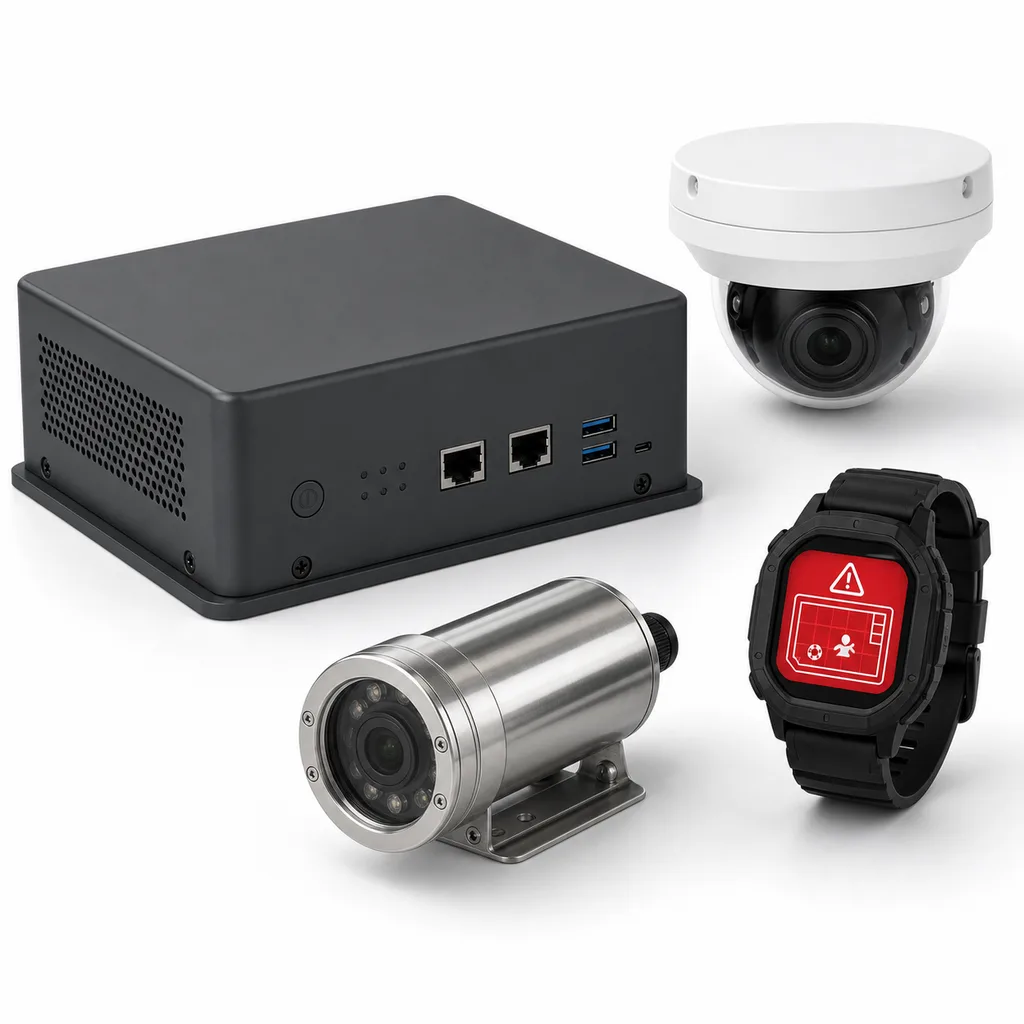
The RC-DDS-600 is a grid-powered, AI-driven drowning detection and aquatic safety monitoring system engineered for public swimming pools, water parks, hotel and resort pools, school and university aquatic centers, and swim training facilities. It combines overhead 4K cameras, optional underwater cameras, and an on-site edge AI unit to continuously track every swimmer in the water, recognize submersion and distress events in real time, and push alarms to lifeguard smartwatches, poolside strobe beacons, and the facility PA system within seconds. Even well-trained lifeguards face scanning fatigue, surface glare, refraction, and crowded water — studies consistently show that a submerged victim can go unnoticed for critical minutes in a busy pool. The RC-DDS-600 closes that vigilance gap: it never blinks, it watches below the surface where human eyes cannot, and it turns every second saved into survival probability. REDCOAST.LTD delivers it as a complete solution — cameras, self-developed electronics, edge AI, web management platform, and mobile app — designed, built, and integrated by one team.
Key Features
- Dual-view perception: overhead 4K cameras track surface behavior and swimmer trajectories; IP68 underwater cameras see submerged swimmers that lifeguards physically cannot, eliminating blind spots caused by glare and refraction.
- Edge AI event engine aligned with ISO 20380 detection logic: motionless-swimmer detection, submersion beyond a configurable time threshold (10–30 s), and abnormal distress-motion patterns, with self-learning false-alarm suppression per pool zone.
- Sub-10-second alerting chain: alarms reach lifeguard smartwatches, poolside strobes/sounders, the control-room workstation, and the facility PA over the local network — no internet dependency for life-safety alerts.
- Continuous swimmer tracking of up to 250 concurrent bathers with per-zone occupancy counting, lane usage statistics, and heatmaps for staffing and operations planning.
- Self-developed hardware: REDCOAST.LTD designs its own multi-channel PoE++ camera interface board, edge AI inference carrier board, underwater camera signal-conditioning PCB, supervised alarm I/O board, and LiFePO4 UPS power-management PCB — every board can be adapted to the project.
- Retrofit friendly: ONVIF-compliant, so existing overhead CCTV cameras can be reused in overhead-only configurations to reduce cost for smaller pools.
- Privacy by design: all video analytics run on the local edge unit; optional automatic face blurring and configurable retention support strict data-protection regimes worldwide.
- After-hours protection mode: outside opening hours the same cameras detect unauthorized entry into the water and trigger intrusion alarms — one system, two safety functions.
- Full management stack included: web platform for incident review, audit logs, and multi-site fleets, plus a mobile app for managers and duty supervisors.
Technical Architecture
The system is organized in three layers. The perception layer consists of ceiling- or pole-mounted overhead 4K cameras (one camera typically covers up to ~300 m² of water surface depending on mounting height and geometry) and wall-recessed or surface-mounted underwater cameras in 316L stainless-steel housings with optically corrected acrylic windows. Both camera families terminate on REDCOAST.LTD's self-developed multi-channel PoE++ interface board, which provides per-port power budgeting, surge protection, and link diagnostics, and on a dedicated underwater camera signal-conditioning PCB that handles long cable runs from pool walls to the equipment room.
The edge intelligence layer is the RC-DDS-600 edge AI unit: a fanless industrial controller built around a REDCOAST.LTD carrier board with an NPU delivering up to 32 TOPS. It decodes up to 32 camera streams, runs person detection, pose estimation, and multi-object trajectory tracking, then fuses overhead and underwater views into a unified 3D model of each swimmer's position and depth. The event engine classifies situations — a swimmer motionless at the surface, a body descending and remaining below the surface past the configured threshold, erratic vertical distress motion — and scores them against zone-specific baselines that the system learns over the first weeks of operation (diving wells, slide splash-down zones, and teaching areas each behave differently).
The alerting and management layer dispatches confirmed events in parallel: over the local Wi-Fi 6 network to rugged lifeguard smartwatches showing the alarm type and pool-map location; through the supervised alarm I/O board to strobes, sounders, and the facility PA/voice-alarm system; and to the control-room workstation with live video pop-up. Every event is logged with a video clip for debriefing and liability documentation. A cloud connection (Ethernet, fiber, or 4G/5G backup) synchronizes logs, analytics, and multi-site dashboards to the REDCOAST.LTD web platform — but detection and alarming remain fully functional if the facility loses internet connectivity.
Connectivity & Power
The RC-DDS-600 is a mains-powered (grid) product: swimming facilities are by definition powered buildings or serviced outdoor venues, so no solar configuration applies. The edge AI unit and PoE++ camera power system accept AC 100–240 V, 50/60 Hz, with total consumption from roughly 60 W (small 8-channel retrofit) to 450 W (large 32-channel water park deployment including camera PoE budget). An integrated LiFePO4 UPS module rides through power dips and keeps detection and alarming alive for 30–60 minutes during an outage — precisely the situation in which supervision must not fail. Networking options include Gigabit Ethernet, 10G SFP+ fiber uplinks for multi-pool campuses, a dedicated Wi-Fi 6 access-point channel for the lifeguard smartwatches, and an optional 4G/5G router for cloud backhaul at venues without fixed broadband. ONVIF, RTSP, REST API, and MQTT interfaces allow integration with existing VMS, BMS, and facility PA systems.
Protection & Reliability
Indoor pool halls are among the harshest electronic environments in civil buildings: 100 % condensing humidity, chloramine-laden air, and washdown cleaning. Overhead cameras are rated IP66 with anti-fog heated front glass and corrosion-resistant coated housings; underwater cameras are IP68, pressure-rated to 1.5 bar, built in 316L stainless steel, and sealed for continuous immersion in chlorinated or saltwater pools. Outdoor variants operate from -30 to +60 °C with strong-sunlight HDR imaging for glare-heavy open-air pools. The edge unit is fanless, uses industrial-grade components (0 to +50 °C equipment-room rating), mirrors recordings across dual storage drives, and supervises itself with hardware watchdogs, camera-tamper detection, and line-monitoring on all alarm outputs, so a cut cable or failed strobe is reported as a fault rather than discovered during an emergency. The design targets a service life of 10 years with proactive health monitoring from the cloud platform.
Application Scenarios
- Municipal and community indoor pools: augment small lifeguard teams during crowded public sessions and school hours; the system watches the bottom of every zone while staff manage the deck, cutting detection time for submersion events from minutes to seconds.
- Water parks and wave pools: agitated, opaque water and huge bather loads overwhelm human scanning; per-zone AI baselines handle wave cycles and slide splash-downs while smartwatch alerts route each alarm to the nearest guard station.
- Hotel and resort pools: many resort pools are unguarded or lightly guarded; RC-DDS-600 provides continuous supervision, after-hours intrusion detection, and documented duty-of-care that insurers increasingly ask for.
- School and university aquatic centers: protect learn-to-swim classes and training sessions, with lane-usage analytics that help schedule coaching and public access.
- Competition and training venues: monitor breath-hold training risks (shallow-water blackout) in diving wells and 50 m pools where depth makes visual supervision hardest.
- Residential community pools: overhead-only configurations give property managers an affordable safety layer plus occupancy analytics for maintenance planning.
Case-style Examples
- Municipal aquatic center retrofit: a 25 m, 6-lane public pool with an existing ONVIF CCTV system needed drowning detection without rebuilding the hall. REDCOAST.LTD reused four existing overhead cameras, added six wall-mounted IP68 underwater cameras during a scheduled drain-down, and installed a 16-channel edge unit in the plant room. Lifeguards received smartwatch alerts from day one; in the first season the system flagged two genuine submersion incidents in under 15 seconds, both resolved without injury.
- Water park multi-pool deployment: a large water park with a wave pool, kids' lagoon, and slide splash pools deployed a 32-channel system with zone-specific AI baselines and three guard-station strobe/sounder loops driven by the supervised I/O board. Heatmap analytics also revealed overcrowding patterns that reshaped the park's guard rotation and admission pacing.
- Resort outdoor pool with heavy glare: an oceanfront resort pool suffered constant surface glare that made both human and camera surface-observation unreliable. The configuration prioritized underwater cameras with HDR overhead units on powder-coated corrosion-resistant poles; saltwater-rated 316L housings handled the chlorinated seawater fill, and the unguarded night period is covered by after-hours intrusion mode pushing alerts to the duty manager's app.
Customization & Selection Guide
Choose the camera mix first: overhead-only (budget retrofits, shallow residential pools), overhead + underwater (recommended for any pool deeper than 1.4 m or with public sessions), or underwater-heavy (glare-prone outdoor and deep diving pools). Size the edge unit by channel count: 8 channels for a single small pool, 16 for a standard municipal center, 32 for water parks or multi-pool campuses — units can be cascaded for larger estates. Select alert endpoints to match staffing: smartwatches and strobes for guarded pools; app push, PA voice messages, and remote monitoring-center forwarding for unguarded ones. Because REDCOAST.LTD designs its own PCBs, project-level adaptations — extra supervised outputs for legacy alarm panels, custom housing geometries for architectural ceilings, saltwater or thermal-spa variants — are engineering options, not exceptions.
Deployment & After-sales
Underwater cameras install in pool walls during a scheduled drain-down or via surface-mount kits that avoid draining entirely; overhead cameras mount to ceilings, trusses, or powder-coated poles for outdoor pools. A typical single-pool deployment completes in 3–5 working days including calibration, followed by a 2–4 week self-learning period during which sensitivity is tuned against real bather behavior. REDCOAST.LTD provides remote commissioning support, lifeguard and operator training materials, firmware and AI-model updates over the air, spare-parts availability, and SLA-based technical support with remote diagnostics through the cloud platform.
Standards & Compliance
The detection logic and alerting chain are designed toward ISO 20380:2017 (computer-vision drowning-detection systems for public pools) and the German DIN 79002 direction, complementing facility safety management per EN 15288. Electronics follow CE/RoHS and IEC 62368-1; ingress protection is rated per IEC 60529 (IP66 overhead / IP68 underwater); cameras are ONVIF conformant. Privacy-relevant processing stays on the edge device with optional face blurring and configurable retention, supporting GDPR-style data-protection requirements in any jurisdiction. The system is designed for worldwide deployment across climates, water chemistries, and regulatory environments.
Why REDCOAST.LTD
REDCOAST.LTD is an end-to-end smart-IoT solution provider: we deliver the complete system — cameras, edge AI hardware, alarm devices, web platform, and mobile app — integrated by one engineering team. What sets us apart from integrators assembling off-the-shelf parts is that we develop our own hardware, down to custom PCBs: the PoE++ camera interface, underwater signal-conditioning, edge AI carrier, supervised alarm I/O, and UPS power-management boards in the RC-DDS-600 are all REDCOAST.LTD designs. That means every layer can be adapted to your pool geometry, alarm infrastructure, and regulatory context — and supported for the long life of the installation.
Contact REDCOAST.LTD to discuss a customized drowning-detection configuration for your pool, aquatic center, or water park.
Specifications
AI Detection & Analytics
- Detection Events
- Submersion, motionless swimmer, distress motion, after-hours intrusion
- Submersion Alert Threshold
- 10-30 (configurable) s
- Alarm Dispatch Latency
- <3 (from event confirmation) s
- Concurrent Swimmer Tracking
- up to 250 persons
- Coverage per Overhead Camera
- up to 300 m²
- Analytics
- Occupancy count, zone heatmap, lane usage, incident video clips
- Self-learning Calibration Period
- 2-4 weeks
Camera Subsystem
- Overhead Camera Resolution
- 3840×2160 (8 MP)
- Overhead Camera Dynamic Range
- 120 (HDR, glare suppression) dB
- Underwater Camera Resolution
- 1920×1080 / 2560×1440
- Underwater Housing Material
- 316L stainless steel, acrylic optical window
- Underwater Pressure Rating
- 1.5 bar
- Camera Power
- PoE IEEE 802.3at/bt
- Interface Standard
- ONVIF Profile S/T, RTSP
Edge AI Unit
- AI Compute
- up to 32 TOPS
- Camera Channels
- 8 / 16 / 32 ch
- Storage
- 2 × 4 (mirrored) TB
- Video Retention
- 7-90 (configurable) days
- Cooling
- Fanless, industrial-grade
- Reliability Functions
- Hardware watchdog, camera tamper detection, supervised alarm lines
Alerting
- Lifeguard Smartwatch
- Wi-Fi 6 / BLE 5.0, IP68, vibration + pool-map alarm display
- Watches per System
- up to 32
- Local Alarm Outputs
- 8-16 supervised relay/0-24 V channels (strobe, sounder, PA trigger)
- PA / Voice Alarm Integration
- Dry contact, SIP, or line audio
- Workstation & App
- Control-room client with live pop-up, iOS/Android manager app
- Offline Operation
- Full detection and local alarming without internet
Power (Grid)
- Input Voltage
- AC 100-240, 50/60 Hz V
- System Power Consumption
- 60-450 (incl. camera PoE budget) W
- PoE Budget
- up to 720 W
- UPS Backup
- LiFePO4, 30-60 min autonomy
- Surge Protection
- Per-port PoE surge protection + AC SPD Type 2/3
Environment & Protection
- Overhead Camera IP Rating
- IP66
- Underwater Camera IP Rating
- IP68 (continuous immersion)
- Operating Temperature (Outdoor Cameras)
- -30 to +60 °C
- Operating Temperature (Edge Unit)
- 0 to +50 °C
- Humidity Tolerance
- up to 100 (condensing, pool-hall rated) %RH
- Water Chemistry Compatibility
- Chlorinated, saltwater, thermal-spa variants
- Anti-fog Front Glass Heating
- Automatic, thermostat-controlled
Connectivity
- LAN
- Gigabit Ethernet, 10G SFP+ fiber uplink
- Smartwatch Network
- Dedicated Wi-Fi 6 AP channel
- Cloud Backhaul
- Ethernet / fiber / optional 4G/5G router
- Integration APIs
- REST, MQTT, ONVIF, SIP
- Platform
- REDCOAST.LTD web platform + mobile app, multi-site dashboard
Capabilities — configurable per project
Specifications are tailored to each project — the options below show what we can support.
Camera Configuration
- Overhead-only (retrofit existing ONVIF CCTV)
- Overhead + underwater (recommended)
- Underwater-heavy (deep / glare-prone pools)
System Scale
- 8-channel single pool
- 16-channel aquatic center
- 32-channel water park / multi-pool campus
- Cascaded multi-unit estate
Alert Endpoints
- Lifeguard smartwatches + strobes
- PA / voice-alarm integration
- Manager app + monitoring-center forwarding
- Legacy alarm-panel supervised outputs
Pool Type Variant
- Indoor chlorinated
- Outdoor high-glare
- Saltwater / seawater fill
- Thermal spa / high-temperature
Privacy Options
- On-edge processing only
- Automatic face blurring
- Configurable retention 7-90 days
Related solution guidance
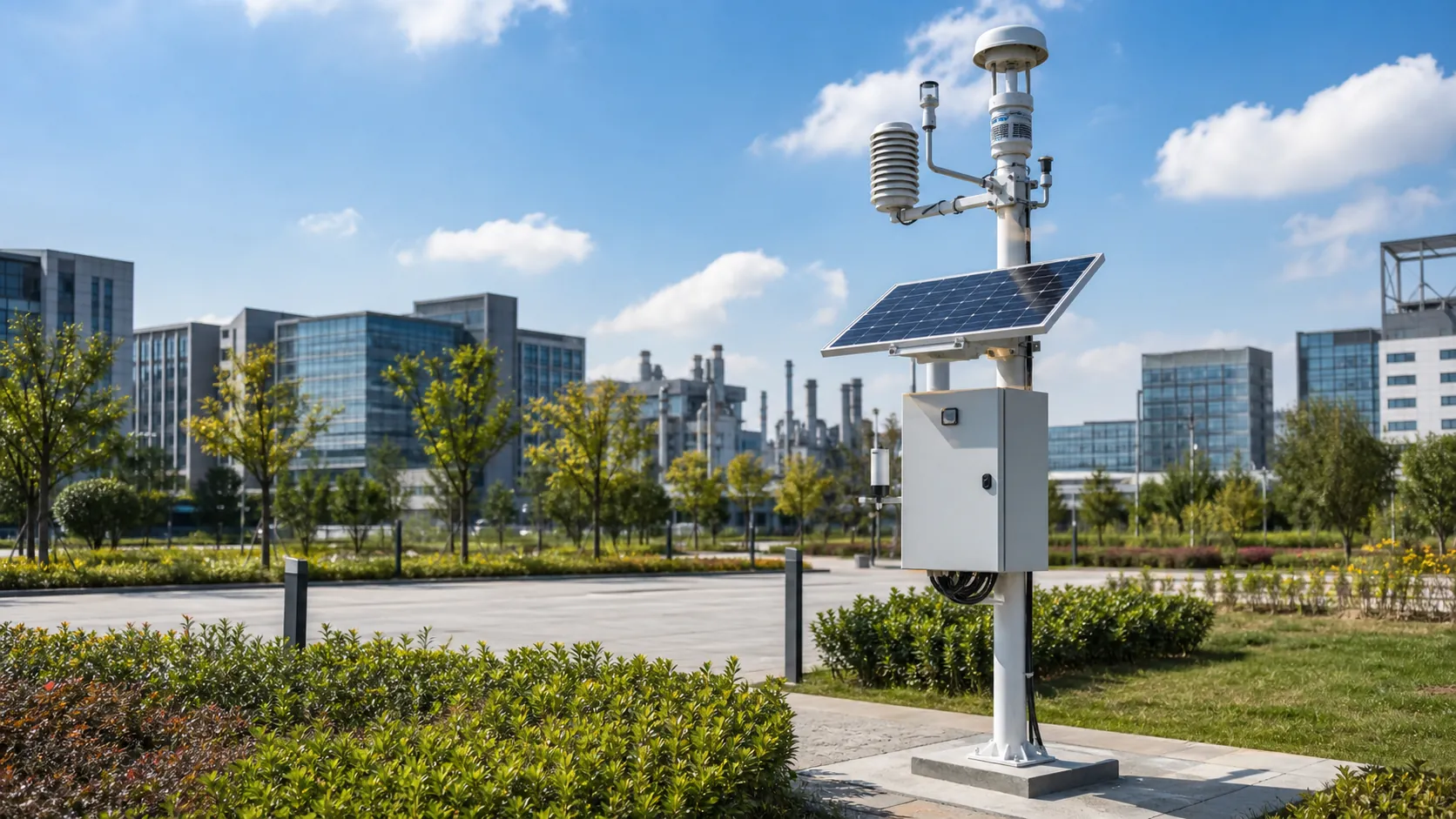
Environmental Monitoring
Deploy environmental monitoring stations with sensors, solar power, gateways, dashboards, alarms and data integration for city and industrial sites.
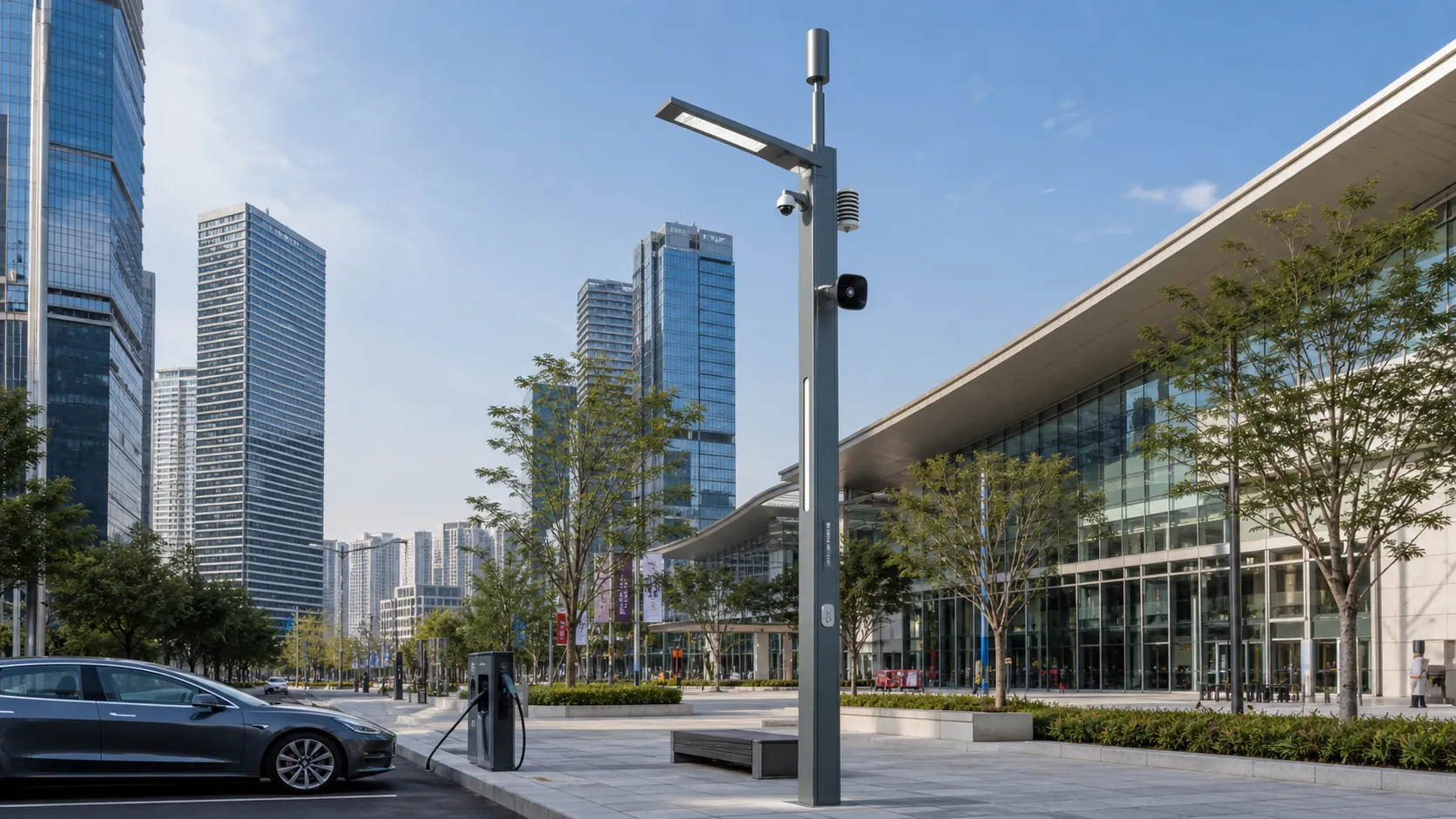
Campuses
Campus IoT for lighting, parking, safety, smart poles, environmental data and facility maintenance workflows.
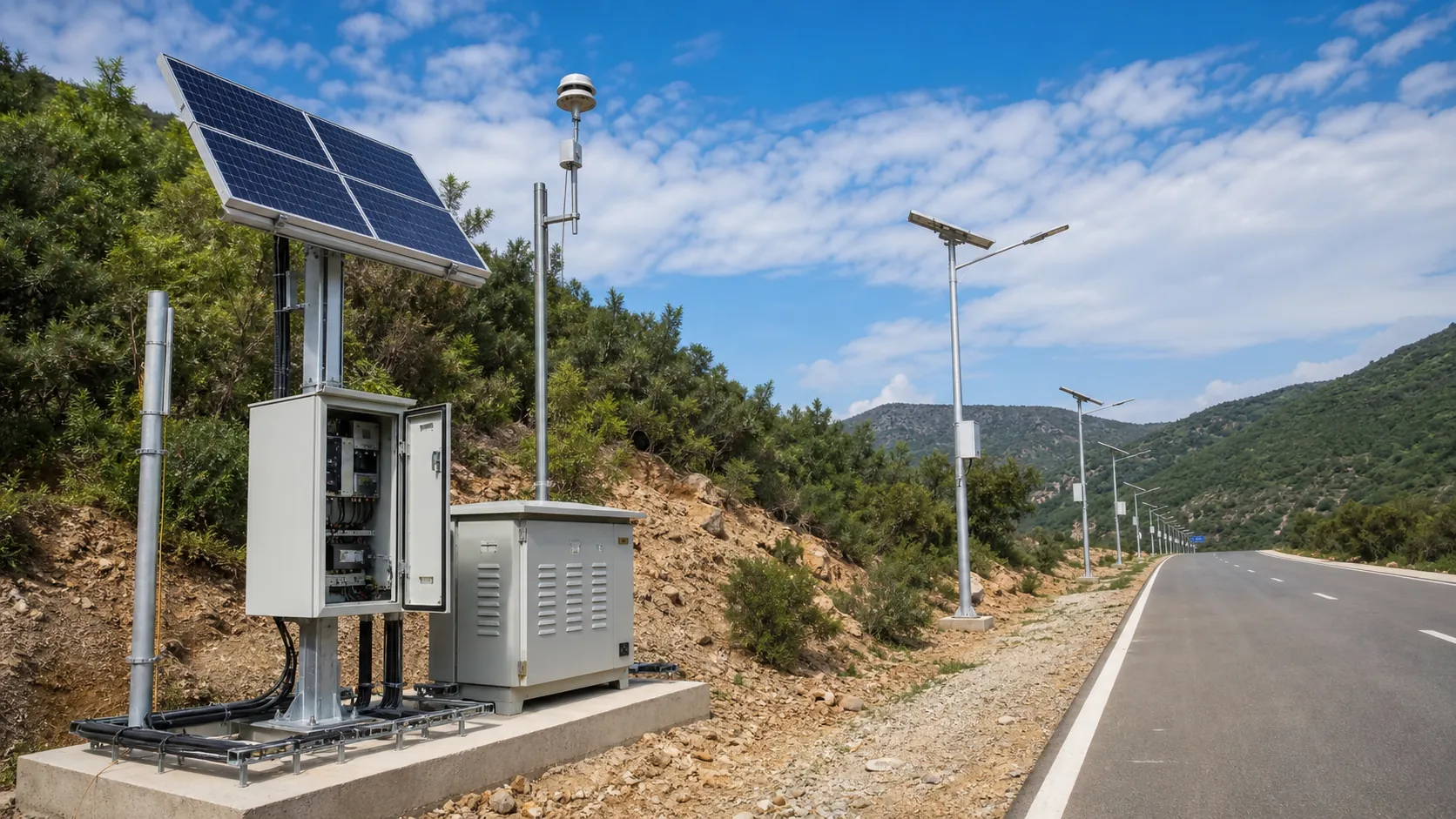
Ports and Logistics
Outdoor IoT infrastructure for ports, yards and logistics areas: lighting, guidance, safety, solar power, monitoring and maintenance visibility.
Frequently Asked Questions
How quickly does the AI drowning detection system alert lifeguards?
The submersion alert threshold is configurable from 10 to 30 seconds, and alarms are dispatched in under 3 seconds after event confirmation to lifeguard smartwatches (up to 32 per system), local strobes, sounders or PA triggers, and the control-room client.
Does an AI drowning detection system replace lifeguards?
No. The RC-DDS-600 is designed to assist trained lifeguards, who remain responsible for supervision and rescue. It adds continuous overhead and underwater vision that flags submersion, motionless swimmers and distress motion.
Do we need underwater cameras, or are overhead cameras enough?
Overhead-only layouts suit budget retrofits and shallow residential pools. Overhead plus underwater cameras are recommended for any pool deeper than 1.4 m or with public sessions, and underwater-heavy layouts suit glare-prone outdoor and deep diving pools. Each overhead camera covers up to 300 m².
Can existing pool CCTV cameras be reused?
Suitable ONVIF overhead cameras can be reused after resolution and viewing-angle checks. The system's own overhead cameras are 8 MP (3840×2160) with 120 dB HDR glare suppression, and its underwater cameras use 316L stainless steel housings rated IP68 for continuous immersion.
Does detection keep working if the internet or mains power fails?
Yes. Detection and local alarming run fully on the on-site edge AI unit without internet; remote dashboards and the mobile app need connectivity. A LiFePO4 UPS provides 30-60 minutes of autonomy during mains outages.
How is swimmer privacy and video data protected?
Video is processed on the edge device, with optional face blurring and configurable video retention from 7 to 90 days, supporting GDPR-style data-protection requirements.
Which standards is the drowning detection system designed around?
The detection logic and alerting chain are designed toward ISO 20380:2017 for computer-vision drowning detection in public pools and the German DIN 79002 direction, complementing facility safety management per EN 15288.
How is the system sized and deployed for a pool or water park?
Edge AI units come in 8, 16 or 32 channels: 8 for a single small pool, 16 for a standard municipal center, and 32 for water parks or multi-pool campuses, and units can be cascaded for larger estates. A typical single-pool deployment takes 3-5 working days, followed by a 2-4 week self-learning period to tune sensitivity.