Campuses need infrastructure that is safe, maintainable and understandable to facility teams. REDCOAST.LTD connects outdoor assets, platform permissions and mobile maintenance into one operating model.
Campus IoT decision matrix
| Decision factor | Recommended approach | Buyer risk to avoid |
|---|---|---|
| User groups | Separate facility, security, contractor, student or tenant-facing needs before platform design. | One generic dashboard can be too complex for daily facility teams and too limited for management. |
| Safety and privacy | Review cameras, audio, Wi-Fi, location and environmental data against campus policy. | Privacy concerns can delay otherwise useful infrastructure projects. |
| Repeatable maintenance | Standardize device packages by zone type and keep spare parts predictable. | Too many one-off device variants increase long-term maintenance cost. |
Campus-scale coordination
A campus combines roads, walkways, buildings, parking, public spaces and service teams in one operating environment.
- Lighting, parking, safety and monitoring assets can share one map and alarm model.
- Mobile workflows support inspection, QR scan, photos and repair closure.
- Permissions can separate facility, security, contractor and management views.
User-facing clarity
Campus systems must be easy for drivers, pedestrians and facility staff to understand.
- Parking and guidance signs placed around real decision points.
- Lighting schedules and safety devices configured by zone and event calendar.
- Dashboards that show exceptions instead of overwhelming staff with raw data.
Maintenance-friendly design
Campuses benefit from repeatable device standards and clear service routines.
- Device models and mounting details standardized by zone type.
- Spare parts and maintenance access planned before rollout.
- Reports for recurring faults, response time and asset condition.
Checklist
Planning checkpoints
Map campus zones and user flows before selecting devices.
Keep platform roles aligned with facility and security responsibilities.
Use standard device packages for repeatable maintenance.
Make mobile inspection part of the acceptance plan.
Standards
Standards and interface notes
- Campus device placement should account for pedestrian flow, accessibility and maintenance access.
- Camera, audio or Wi-Fi modules may need privacy review and user notice depending on site policy.
- Platform roles should match facility, security and contractor responsibilities.
- Device packages should be standardized by road, walkway, parking, plaza and building-edge zones.
Procurement
Commercial questions to settle
- Does the campus need public-facing guidance or only operator dashboards?
- Which departments own lighting, parking, safety and environmental data?
- What privacy review is required before installing cameras or Wi-Fi modules?
- Can device packages be standardized across similar zones?
Acceptance
Evidence buyers should request
| Acceptance test | Pass criteria | Evidence |
|---|---|---|
| Campus zone workflow | A fault can be found, assigned and closed by the correct facility or contractor role. | Work order record and mobile screenshots. |
| User permission review | Each role can only view and operate permitted assets. | Role matrix and screenshots. |
| Zone standard package | Device model, mounting and maintenance notes are documented for each campus zone type. | Deployment standard sheet. |
Related Products
Product capabilities for this page
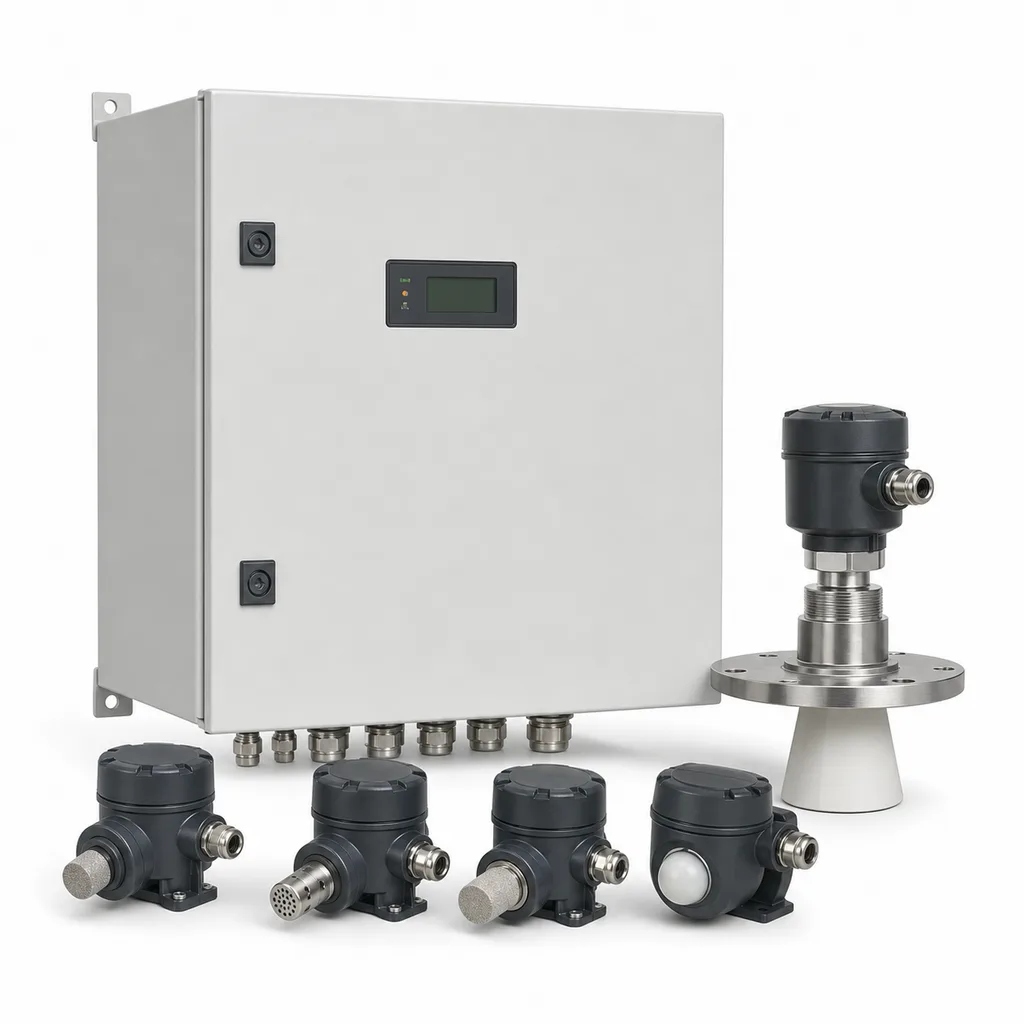
Smart Utility Tunnel Monitoring & Control System (Underground Utility Corridor Environmental Safety, Ventilation, Flood & Access Linkage)
Grid-powered monitoring and control system for underground utility tunnels: gas, flood, fire and intrusion sensing with automatic ventilation, drainage and lighting linkage, fiber-ring networked ACUs and a unified SCADA platform with mobile app.
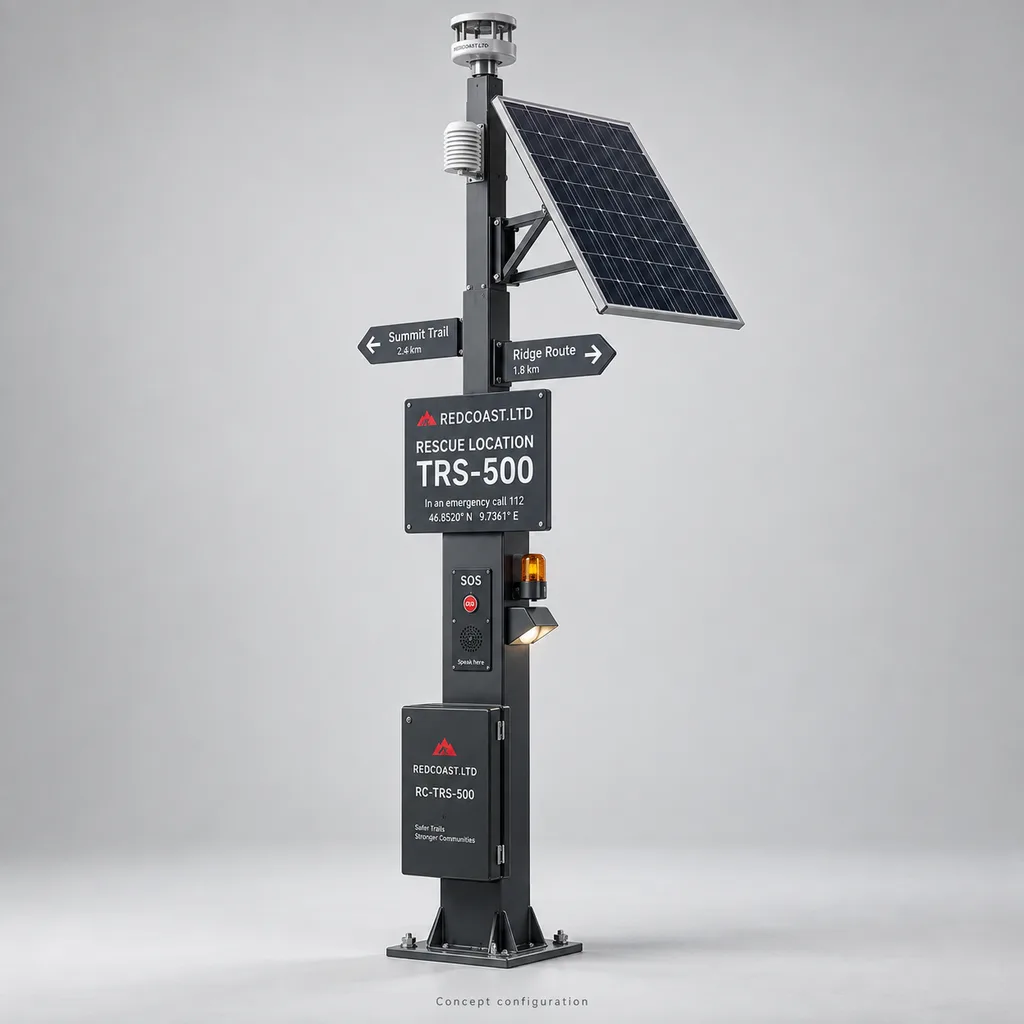
Mountain Trail Safety Pole with SOS Intercom, Weather Monitoring and Rescue Location Codes
Off-grid mountain trail safety pole combining coded rescue locations, SOS intercom, local weather alerts and illuminated wayfinding with a unified Web platform and mobile app.
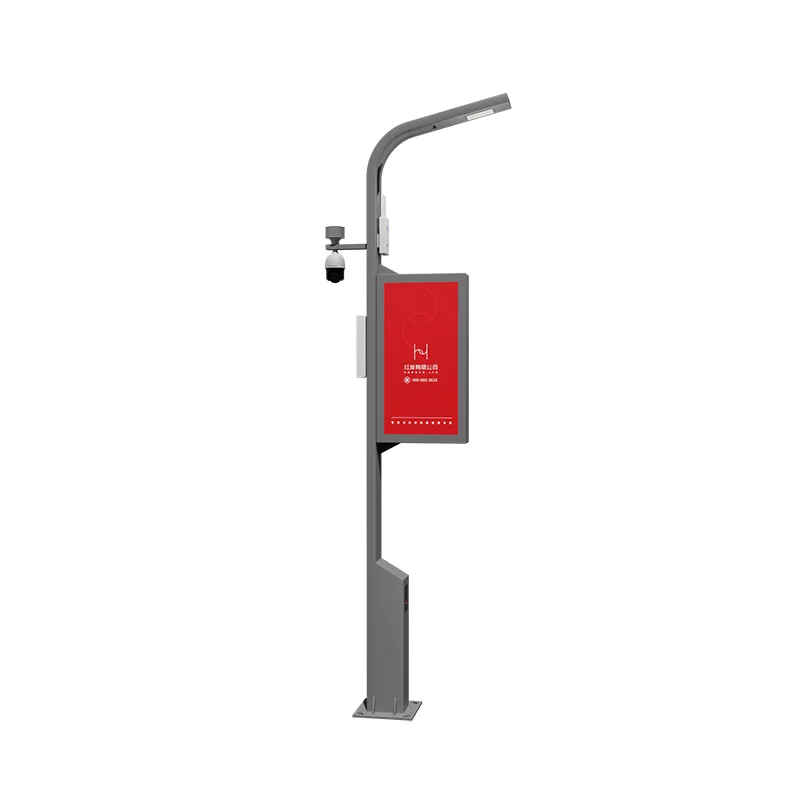
Multifunctional Smart Pole Platform with Edge Gateway Controller
Modular 4-12 m multifunctional smart pole integrating smart lighting, CCTV, 5G/small-cell mounting, environmental sensing, public WiFi, EV charging and digital signage, unified by REDCOAST.LTD's self-developed pole-top edge gateway controller.
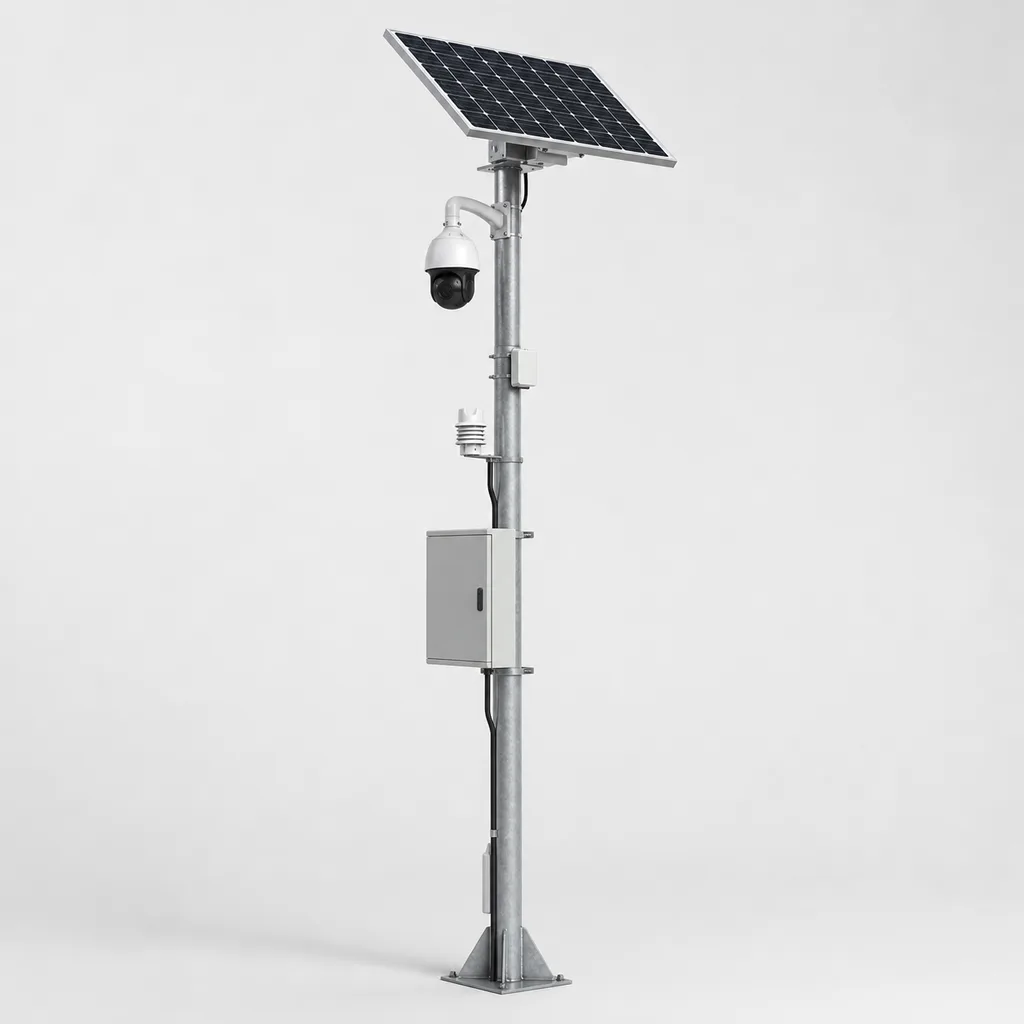
Off-Grid Solar Surveillance & Telemetry Station
Off-grid solar station pairing an AI PTZ or fixed camera with optional weather, water-level, tilt and energy telemetry, LiFePO4 storage, 4G/5G or satellite backhaul, and a Web platform and mobile app for remote pipelines, mines and yards.
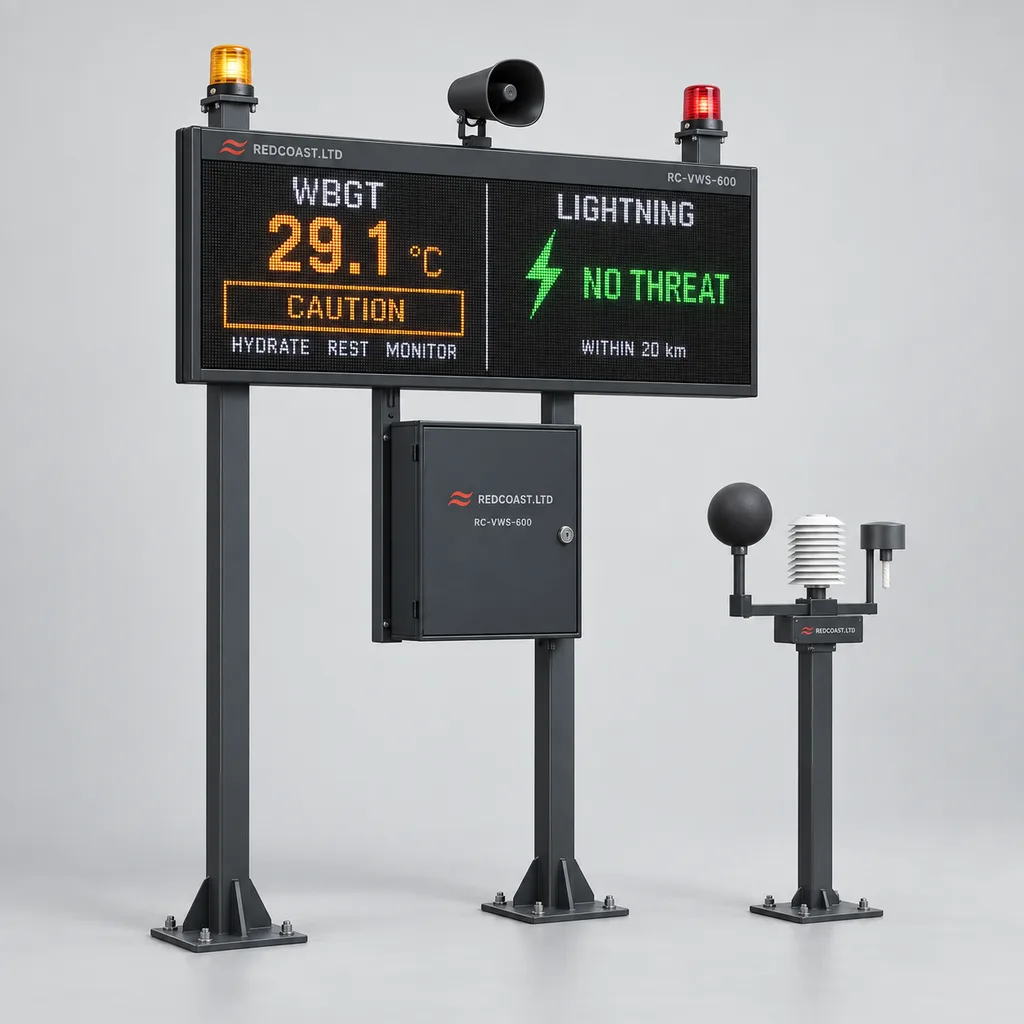
Outdoor Venue WBGT & Lightning Safety Station
A mains-powered venue safety station combining on-site WBGT measurement, licensed lightning alerts, outdoor LED messages, sirens, and a Web platform with mobile apps.
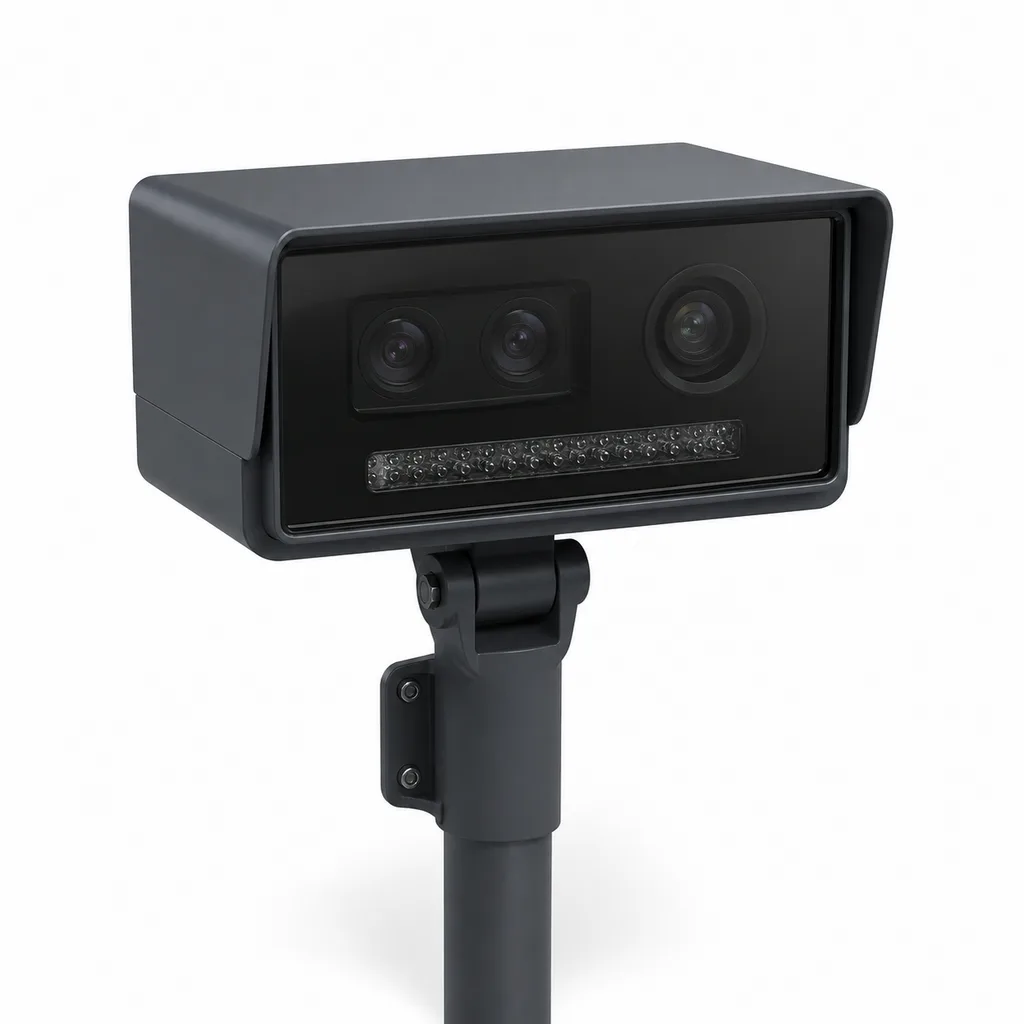
AI Bus Lane & Illegal Parking Enforcement System
Grid-powered, pole-mounted edge-AI enforcement unit that detects bus-lane, no-stopping, illegal-parking and restricted-zone violations, reads plates with ANPR and builds signed, time-synced evidence packages for automated back-office adjudication.
Next
Related guidance
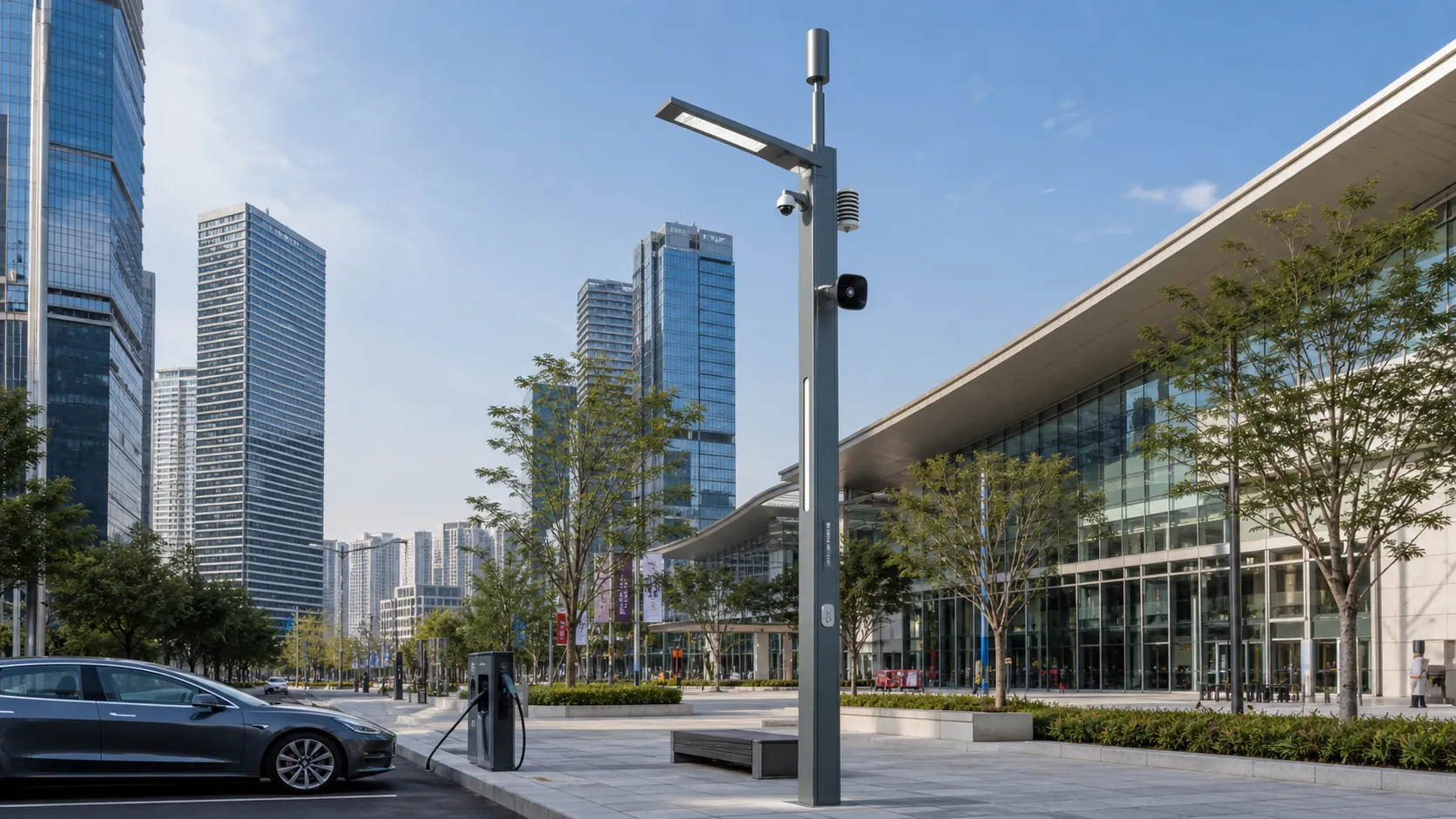
Smart Pole
Build smart pole infrastructure with lighting, cameras, environmental sensors, communication modules, public safety devices and a unified management platform.
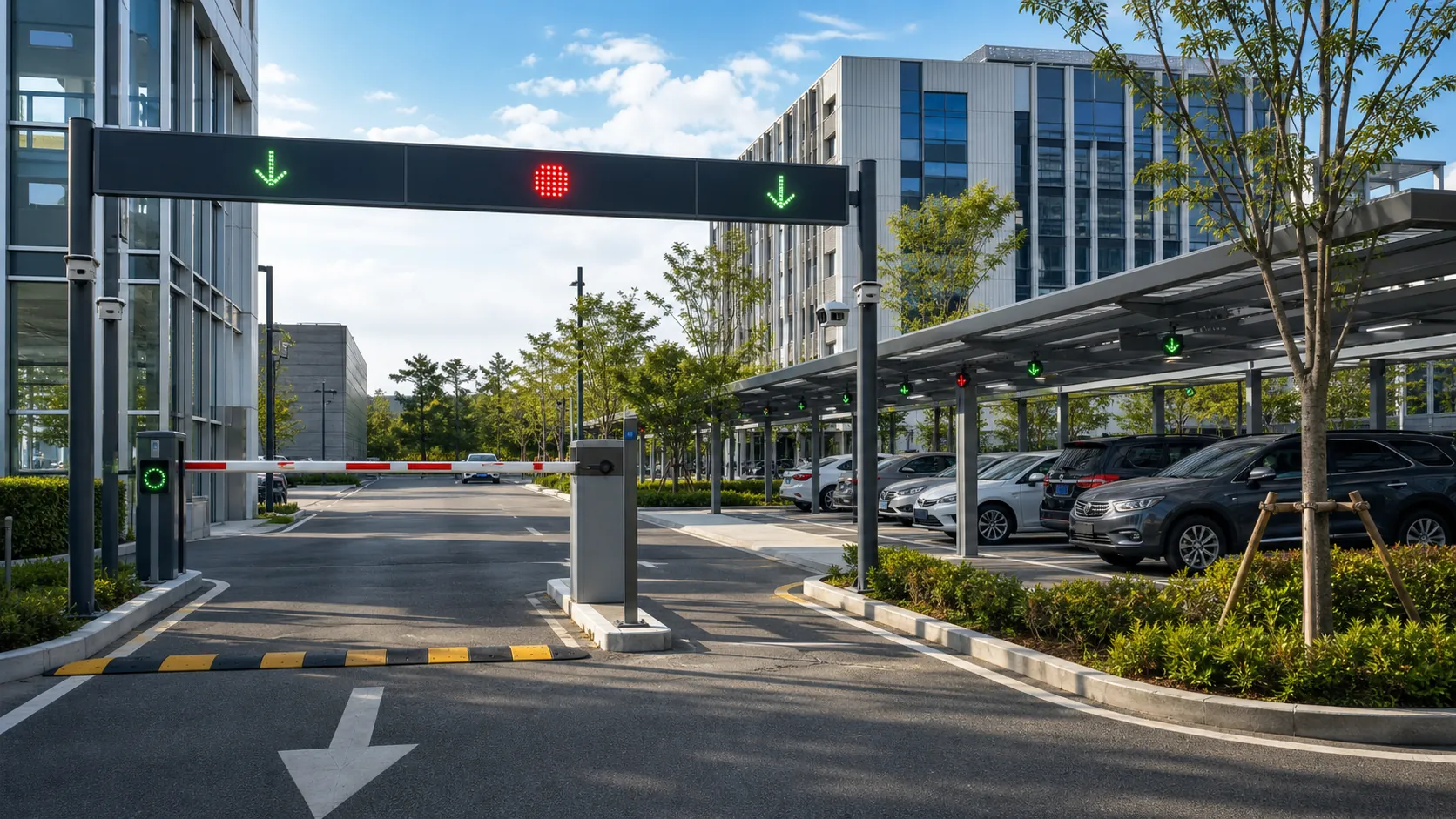
Parking Guidance
Design outdoor and indoor parking guidance with occupancy detection, entrance displays, bay indicators, operator dashboards and integration-ready APIs.

Environmental Monitoring
Deploy environmental monitoring stations with sensors, solar power, gateways, dashboards, alarms and data integration for city and industrial sites.
Frequently asked questions
Which campus IoT projects are easiest to start with?
Outdoor lighting, parking guidance, smart poles and environmental monitoring are common starting points because assets are visible and maintenance value is clear.
Can campus IoT support different departments?
Yes. The platform can support separate views and permissions for facilities, security, contractors and management.
How should a campus pilot be scoped?
Choose a zone with real traffic, lighting, parking or maintenance complexity so the pilot proves workflow and reliability, not only device installation.
How can campuses keep IoT projects manageable?
Use standard zone packages, clear platform roles, documented maintenance workflow and a pilot zone that includes real facility operations.
What campus IoT data should not be over-collected?
Avoid collecting camera, location, Wi-Fi or user-related data unless it has a clear operating purpose and passes site policy review.
Need this engineered for your project?
Tell us the site type, required devices, power and connectivity conditions. REDCOAST.LTD will respond with a tailored approach.