Overview
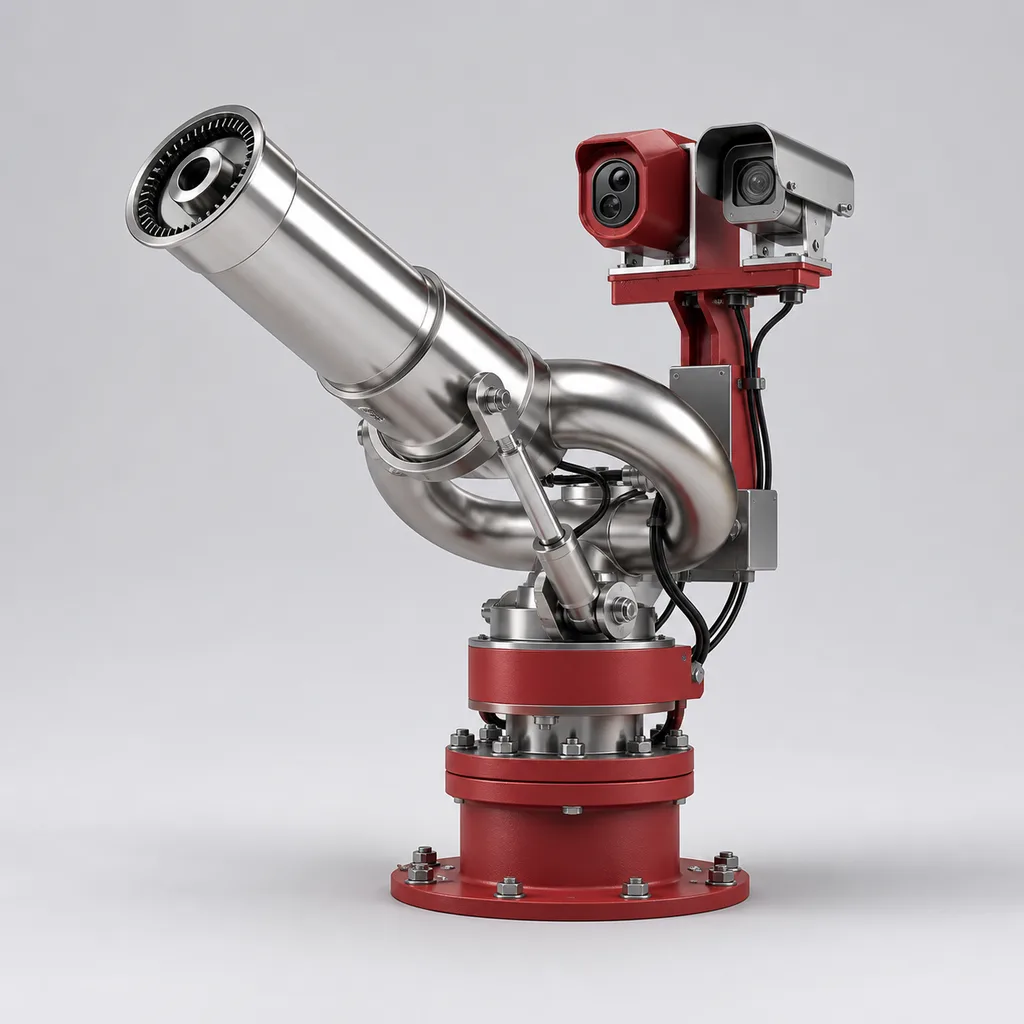
The REDCOAST.LTD RC-AFM-800 is a fixed, grid-powered Intelligent Automatic Fire-Fighting Monitor System — a remote-controlled water/foam cannon paired with dual-band flame detection and camera-based auto-targeting for the protection of large, high-value or high-hazard spaces. It is built for facilities where sprinklers cannot cover the throw distance and where seconds matter: fuel and oil terminals, chemical parks, port and container terminals, timber and coal yards, warehouses and logistics halls, waste-to-energy plants, aircraft hangars, and large public venues such as stadiums and exhibition atriums. The system continuously scans its protected zone, detects an incipient flame within seconds, computes the fire coordinates, drives the monitor to aim precisely at the seat of the fire, and opens the water or foam supply — fully automatically, semi-automatically with operator confirmation, or under manual remote control. The goal is simple: suppress a fire in its earliest stage, before it grows beyond control and before responders arrive.
Key Features
- Dual-band UV/IR (and optional triple-IR) flame detection with high false-alarm immunity, discriminating real hydrocarbon flames from sunlight, welding arcs, hot surfaces and reflections.
- Camera-based auto-targeting: an integrated CCTV/thermal head cross-references the flame detector bearing to compute azimuth/elevation and drive the monitor onto the fire seat within seconds.
- High-capacity monitor with 20–60 L/s (1,200–3,600 L/min) flow, 60–90 m effective throw, and selectable straight-jet / wide-spray patterns for cooling and knock-down.
- Water or foam operation with an optional in-line foam proportioner for Class B (flammable-liquid) fires.
- Three operating modes — Automatic, Semi-automatic (operator confirmation) and Manual remote — with hard-wired manual override.
- Self-developed motion and control electronics: brushless pan/tilt actuator driver, UV/IR flame-detector signal-conditioning front end, valve/pump I/O interlock board and UPS power-management PCB, all designed and built in-house.
- Zoned protection: multiple monitor stations and detectors managed as coordinated zones from one controller and one operator workstation.
- Full remote monitoring: live status, alarms, video and event logs delivered to a control room and mobile app, with dry contacts to the site fire alarm control panel (FACP).
- Corrosion-resistant construction for coastal, petrochemical and marine-deck environments; optional explosion-proof (Ex) variant for hazardous areas.
- Continuous supervision of actuators, detectors, power and water supply, with fault reporting to meet reliability expectations of fixed fire-protection installations.
Technical Architecture
Each protection zone combines three functional layers. The detection layer uses UV/IR or multi-spectrum IR flame detectors, each with an on-board or co-located CCTV/thermal camera; detectors report both an alarm state and an angular bearing to the fire. REDCOAST's self-developed signal-conditioning front end filters and digitizes the raw UV and IR sensor channels, applies ratio/flicker discrimination logic and reports a validated flame signal to the controller, minimizing false trips from arc welding, direct sunlight or radiant heat. The decision and control layer is a hardened edge controller (PLC/industrial edge computer) that fuses detector bearings with the camera field of view to compute the fire's azimuth and elevation, then commands the monitor. The actuation layer is the fire monitor itself: a stainless-steel water/foam cannon driven by REDCOAST's brushless pan/tilt actuator driver board, with absolute position feedback for repeatable ±1° aiming, plus solenoid/motorized valve and fire-pump start interlocks handled by the in-house I/O board.
The control logic runs a continuous cycle: scan → detect → verify (dual-sensor or detector-plus-video confirmation) → localize → aim → discharge → track. In Automatic mode the system suppresses without human input; in Semi-automatic mode it aims and waits for a one-click confirmation; in Manual mode an operator drives the monitor from a joystick or the software HMI while watching live video. All events — detection, targeting, valve/pump commands, discharge duration and video clips — are time-stamped and logged locally and to the cloud platform. Edge autonomy ensures the system still detects and suppresses even if the network link is down; the cloud/app layer adds multi-site oversight, analytics and maintenance management.
Connectivity & Power
The RC-AFM-800 integrates over standard industrial and fire-system interfaces: hard-wired dry contacts and 4–20 mA to the site Fire Alarm Control Panel, plus Modbus TCP/RS-485, and options for BACnet, OPC-UA and IEC 61850 for SCADA/DCS integration. On-site links use industrial Ethernet or fiber ring; remote sites can add 4G/5G or, where wired backhaul is impractical, a wireless bridge. Because these installations protect terminals, ports and industrial parks that sit on the electrical grid, the system is mains-powered (AC 100–240 V or three-phase for high-flow pump packages) with an integrated UPS/battery backup that keeps detection, control, valve actuation and communications alive through a mains outage for a specified ride-through period. No solar array is used — this is a fixed, grid-connected industrial-protection product; battery backup covers only the control and actuation electronics, while the water/foam supply comes from the site fire main, tank or pump.
Protection & Reliability
The monitor and wetted parts are stainless steel (SS304/SS316 for coastal and marine environments) with brass/bronze options; the control enclosures are IP66-rated with a smooth fluorocarbon-painted or powder-coated finish over hot-dip-galvanized/corrosion-protected steel for long outdoor and salt-fog service. Electronics operate from −25 °C to +70 °C with heaters/thermostats for cold climates. An optional explosion-proof (Ex d IIC / IECEx / ATEX) variant is available for Zone 1/Zone 2 hazardous areas such as fuel-loading racks. The system runs continuous self-supervision of actuators, detectors, power and supervised valve position, reporting any fault so the installation stays mission-ready — the core reliability expectation for any fixed fire-protection asset. Redundant detector coverage and dual-confirmation logic balance fast response against nuisance discharge.
Application Scenarios
- Fuel & oil terminals / tank farms: protect loading racks, manifolds and bund areas where flammable-liquid pool fires demand foam and long-throw cooling beyond sprinkler reach.
- Ports & container terminals: cover open weather decks, RoRo ramps, fuel jetties and dangerous-goods yards with corrosion-hardened, long-range monitors.
- Warehouses & logistics halls: guard high-bay racking and large open floors where roof sprinklers alone cannot reach a growing fire seat.
- Chemical & petrochemical parks / waste-to-energy plants: automatic suppression of process areas, pump skids and refuse pits that are hazardous for manual first response.
- Aircraft hangars & maintenance bays: rapid knock-down of fuel or hydraulic fires around high-value aircraft.
- Large public venues: stadiums, exhibition atriums and transport terminals where high ceilings put fires far above conventional protection.
Case-style Examples
Coastal fuel-terminal loading rack: An operator protecting a marine fuel-loading rack specified SS316 monitors with the explosion-proof detection variant and foam proportioning. Two RC-AFM-800 stations cover the rack with overlapping fields; on a simulated pool-fire test the system detected, localized and delivered foam onto the seat within seconds, with the event and video pushed to the port control room. The corrosion-hardened finish and marine-grade stainless were chosen for the salt-laden deck environment.
Automated warehouse high-bay: A logistics hub with 12 m racking installed four water-only monitors on the perimeter, integrated to the FACP via dry contacts and to the WMS control room over Modbus TCP. Semi-automatic mode was adopted so a control-room operator confirms each discharge, preventing water damage from false alarms while keeping response time in seconds.
Waste-to-energy refuse pit: A plant protecting its refuse bunker — an area unsafe for manual attack — deployed roof-mounted monitors in full Automatic mode with dual-detector confirmation, tied into the plant DCS over OPC-UA for centralized supervision and maintenance alerts.
Customization & Selection Guide
- Flow & throw: match monitor capacity (20–60 L/s, 60–90 m) to hazard size and standoff distance; oversize for pool-fire cooling loads.
- Agent: water-only for solids/cooling; add a foam proportioner for flammable-liquid (Class B) hazards.
- Detection: UV/IR for general use, multi-spectrum triple-IR for hydrocarbon-heavy or high-false-alarm environments; scale detector count to zone geometry.
- Area classification: choose the standard or explosion-proof (ATEX/IECEx) build per the site hazardous-area drawings.
- Corrosion class: SS304 for general sites, SS316 and fluorocarbon-finished enclosures for coastal/marine/petrochemical exposure.
- Autonomy: select Automatic, Semi-automatic or Manual as the default mode per operator risk policy; UPS ride-through sized to site requirements.
Deployment & After-sales
REDCOAST.LTD delivers the system as an integrated package — monitors, detectors, controllers, enclosures, software platform and mobile app — engineered to the site's protection-zone layout. Typical delivery is project-based: site survey and hazard/zone design, factory build and FAT, installation supervision or turnkey installation, on-site commissioning with live detection-and-discharge testing, and operator training. We provide a Web management platform and mobile app for real-time monitoring, alarm handling, event review and maintenance scheduling, plus remote diagnostics, spare-parts support and a warranty-backed maintenance program. Because the hardware and firmware are our own, we can adapt interfaces, mounting, materials and control logic to each project rather than forcing a fixed catalog product.
Standards & Compliance
The RC-AFM-800 is engineered toward recognized fire-protection and industrial standards, including NFPA 15 (water spray) / NFPA 11 (foam) / NFPA 72 (detection) design references, FM/UL-approved monitor and detector components where specified, EN 54 detection alignment, IEC 60079 / ATEX / IECEx for hazardous-area variants, and CE/RoHS for electronics. Enclosure protection is IP66; wetted parts are corrosion-rated for the target environment. Exact certifications are configured per project and destination market.
Why REDCOAST.LTD
REDCOAST.LTD delivers end-to-end smart outdoor-infrastructure and safety solutions — hardware, Web platform and mobile app — integrated and commissioned by one team. Our differentiator is that we design and build the electronics ourselves: the brushless pan/tilt actuator driver, the UV/IR flame-detection signal-conditioning front end, the valve/pump I/O interlock board and the UPS power-management PCB are all self-developed (custom PCB on demand). That means the detection logic, targeting accuracy, interlocks and integration protocols can be tuned to your hazard and your control room, not constrained by an off-the-shelf box.
Protect your highest-value assets with a fire monitor system engineered around your site — contact REDCOAST.LTD for a hazard-based design and custom quotation.
Specifications
Fire Monitor (Cannon)
- Type
- Fixed remote-control water/foam monitor
- Flow Rate
- 20-60 (1,200-3,600 L/min) L/s
- Working Pressure
- 0.8-1.6 MPa
- Effective Throw Range
- 60-90 m
- Horizontal Rotation
- 0-340 °
- Vertical Elevation
- -45 to +80 °
- Nozzle Pattern
- Straight jet / wide spray, adjustable
- Wetted Material
- SS304 / SS316 (marine)
Flame Detection & Targeting
- Detector Type
- UV/IR dual-band, optional triple-IR
- Flame Detection Distance
- up to 90 (0.1 m² n-heptane) m
- Detection Response Time
- 3-5 s
- Localization Method
- Detector bearing + CCTV/thermal fusion
- Aiming Accuracy
- ±1 °
- Confirmation Logic
- Dual-sensor / detector+video
- Camera
- 1080p CCTV, optional thermal
Control & Automation
- Controller
- Hardened PLC / industrial edge computer
- Operating Modes
- Automatic / Semi-auto / Manual remote
- Actuator
- Brushless pan/tilt with absolute encoder
- Valve/Pump Interlock
- Motorized valve + fire-pump start I/O
- Manual Override
- Hard-wired local override
- Event Logging
- Time-stamped local + cloud, video clips
Connectivity & Integration
- Fire Panel Interface
- Dry contacts, 4-20 mA to FACP
- Industrial Protocols
- Modbus TCP/RS-485, BACnet, OPC-UA, IEC 61850
- On-site Network
- Industrial Ethernet / fiber ring
- Remote Link
- 4G/5G, wireless bridge (optional)
- Management
- Web platform + mobile app
Power (grid)
- Input Voltage
- AC 100-240 (1P) / 380-415 (3P pump pack) V
- Control Power Consumption
- 80-300 W
- Actuator Supply
- DC 24 / 48 V
- UPS Backup
- Integrated, ≥30 (control & comms) min
- Solar
- Not used (fixed grid-connected installation)
Protection & Environment
- Enclosure IP Rating
- IP66
- Operating Temperature
- -25 to +70 °C
- Hazardous-area Option
- Ex d IIC / ATEX / IECEx (Zone 1/2)
- Corrosion Protection
- Fluorocarbon-painted / powder-coated over galvanized steel
- Supervision
- Continuous actuator/detector/power self-check
Standards & Compliance
- Suppression Design Ref.
- NFPA 15 / NFPA 11
- Detection Ref.
- NFPA 72 / EN 54
- Component Approvals
- FM / UL (specified components)
- Ex Certification
- IEC 60079 / ATEX / IECEx
- Electronics
- CE / RoHS
Capabilities — configurable per project
Specifications are tailored to each project — the options below show what we can support.
Extinguishing Agent
- Water only
- Water + foam proportioner
- High-flow deluge pack
Flame Detection
- UV/IR dual-band
- Multi-spectrum triple-IR
- Detector + thermal camera fusion
Area Classification
- Standard industrial
- Explosion-proof ATEX/IECEx (Zone 1/2)
Corrosion Class
- SS304 general
- SS316 marine/coastal
- Fluorocarbon-finished enclosures
Autonomy Mode
- Full automatic
- Semi-automatic (operator confirm)
- Manual remote
Integration
- FACP dry contacts
- SCADA/DCS Modbus/OPC-UA/IEC 61850
- Cloud + mobile app
Related solution guidance
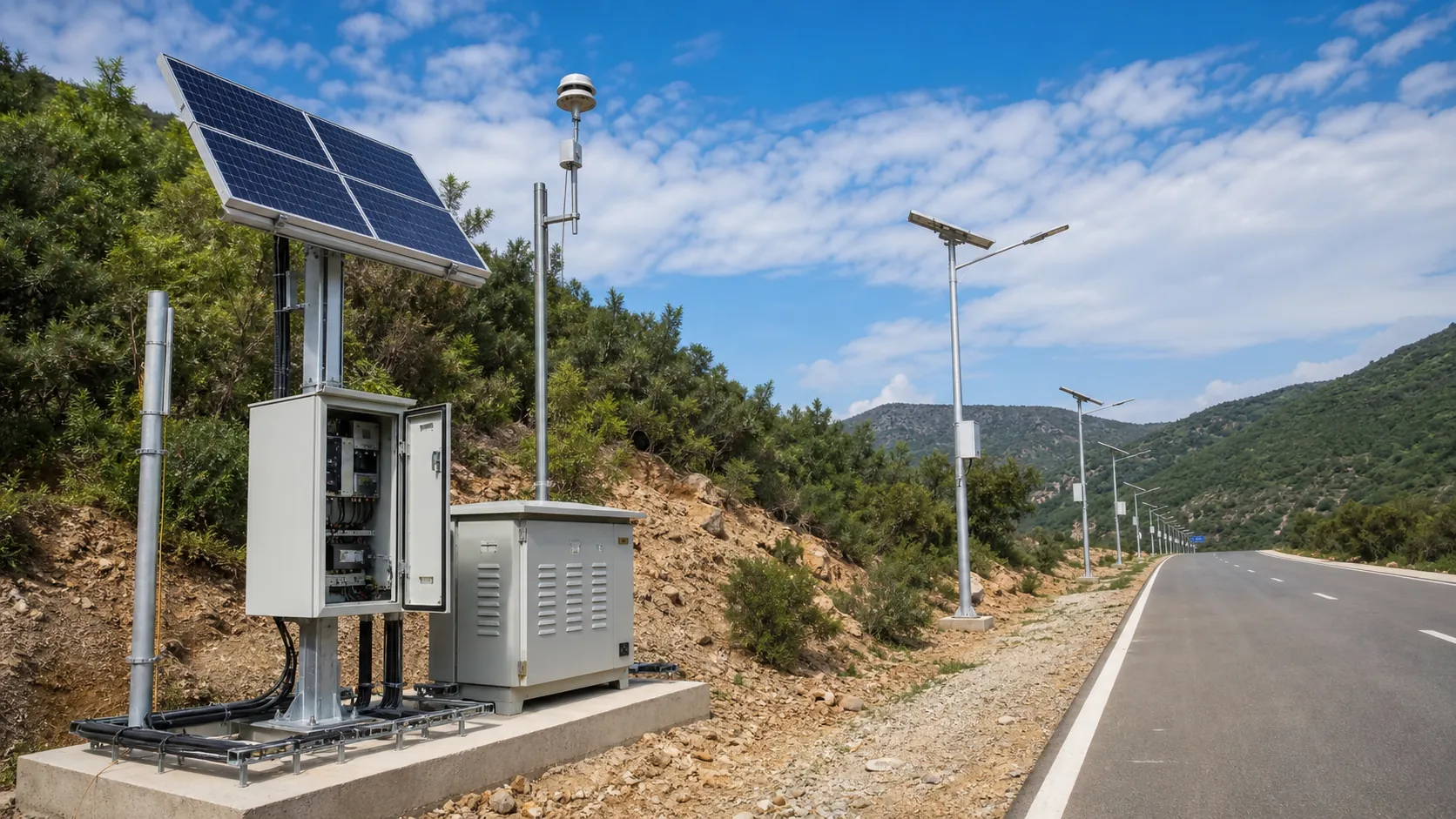
Ports and Logistics
Outdoor IoT infrastructure for ports, yards and logistics areas: lighting, guidance, safety, solar power, monitoring and maintenance visibility.
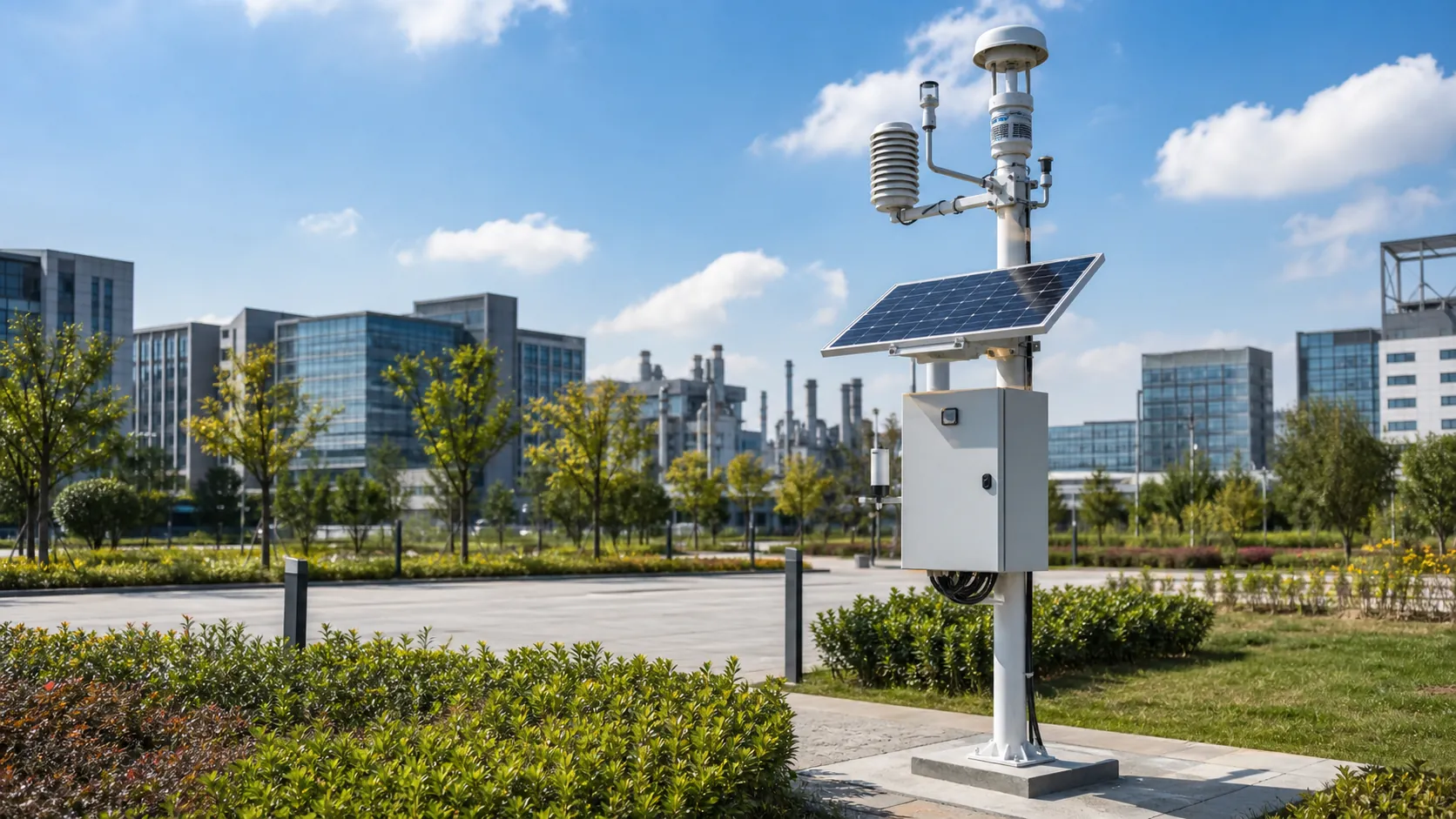
Environmental Monitoring
Deploy environmental monitoring stations with sensors, solar power, gateways, dashboards, alarms and data integration for city and industrial sites.
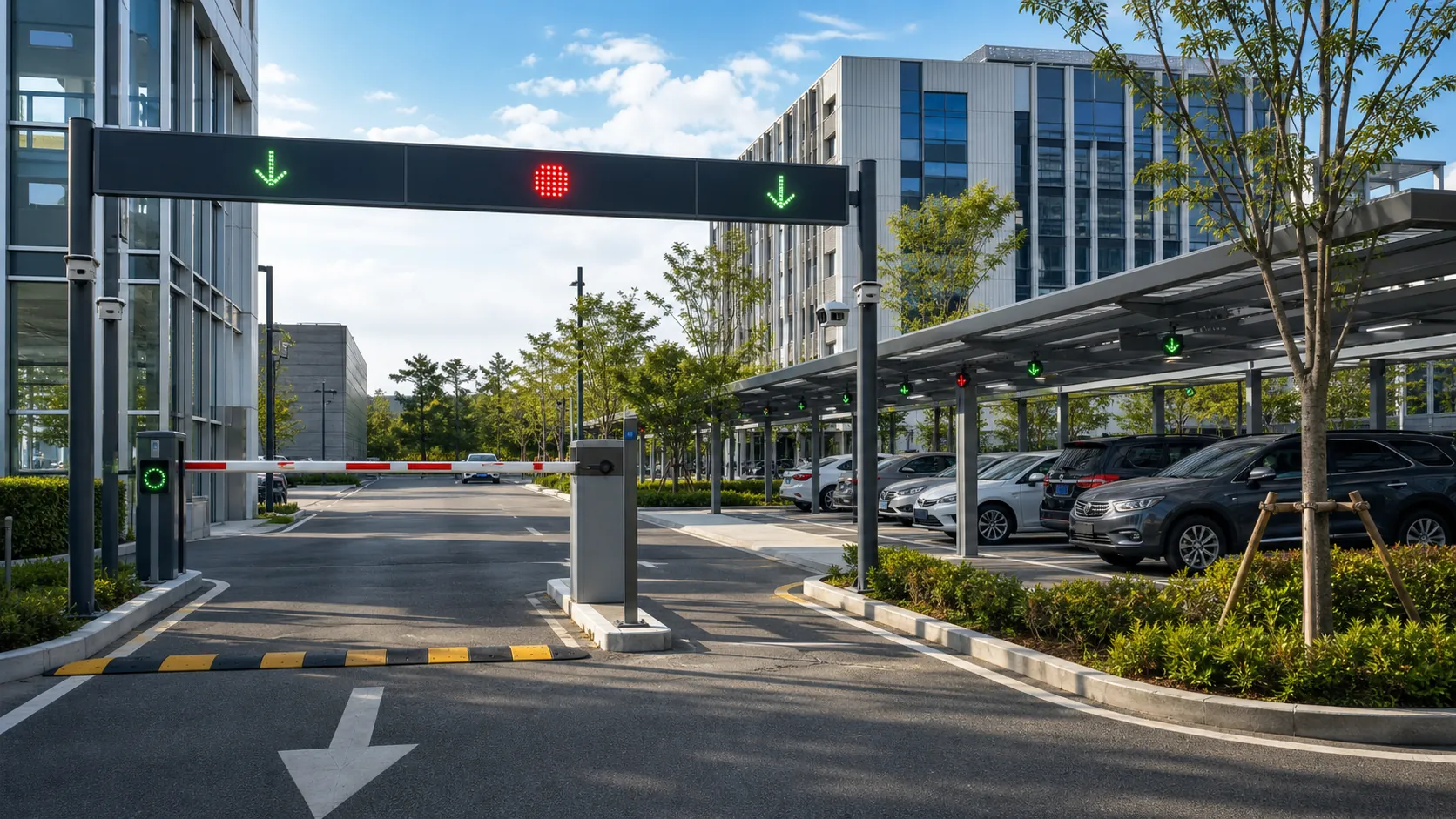
Parking Guidance
Design outdoor and indoor parking guidance with occupancy detection, entrance displays, bay indicators, operator dashboards and integration-ready APIs.
Frequently Asked Questions
What is an automatic fire-fighting monitor system?
It is a fixed water or foam cannon combined with flame detectors and a camera that automatically detects a fire, computes its location, aims the monitor at the fire seat and discharges — with no need for a person to be present. The REDCOAST.LTD RC-AFM-800 also supports semi-automatic (operator-confirmed) and manual remote modes.
How does the system aim the cannon at the fire automatically?
UV/IR flame detectors report both an alarm and a bearing to the flame. The edge controller fuses that bearing with the CCTV/thermal camera's field of view to compute azimuth and elevation, then drives the brushless pan/tilt actuator onto the fire seat within seconds at about ±1° accuracy. Dual-sensor or detector-plus-video confirmation prevents false discharge.
What flow rate and throw range does the RC-AFM-800 provide?
Standard configurations flow 20–60 L/s (1,200–3,600 L/min) with a 60–90 m effective throw, adjustable between straight jet for reach and wide spray for cooling. Capacity is matched to the hazard size and standoff distance during project design; higher-flow deluge packages are available.
Can it use foam for flammable-liquid fires?
Yes. An in-line foam proportioner option lets the monitor deliver foam for Class B (flammable-liquid) fires such as fuel pool fires at loading racks and tank farms, while water-only builds suit solids and cooling duties.
Is it suitable for explosive or hazardous areas like fuel terminals?
Yes. An explosion-proof variant certified to IEC 60079 / ATEX / IECEx (Ex d IIC, Zone 1/2) is available for hazardous areas, with SS316 wetted parts and corrosion-hardened enclosures for coastal and petrochemical environments.
How is it powered — does it need solar?
No. It is a fixed installation at facilities that are on the electrical grid, so it runs on mains power (AC 100–240 V, or three-phase for high-flow pump packages) with an integrated UPS that keeps detection, control and communications alive for at least 30 minutes during an outage. Solar is not used for this product.
Can it integrate with our existing fire alarm panel and SCADA?
Yes. It provides dry contacts and 4–20 mA to the Fire Alarm Control Panel and supports Modbus TCP/RS-485, BACnet, OPC-UA and IEC 61850 for SCADA/DCS integration, plus a Web platform and mobile app for remote monitoring, alarms and video.
What standards does the system follow?
Design references include NFPA 15 (water spray), NFPA 11 (foam) and NFPA 72 (detection), with FM/UL-approved components where specified, EN 54 detection alignment, IEC 60079/ATEX/IECEx for Ex variants and CE/RoHS for electronics. Exact certifications are configured per project and destination market.