Overview
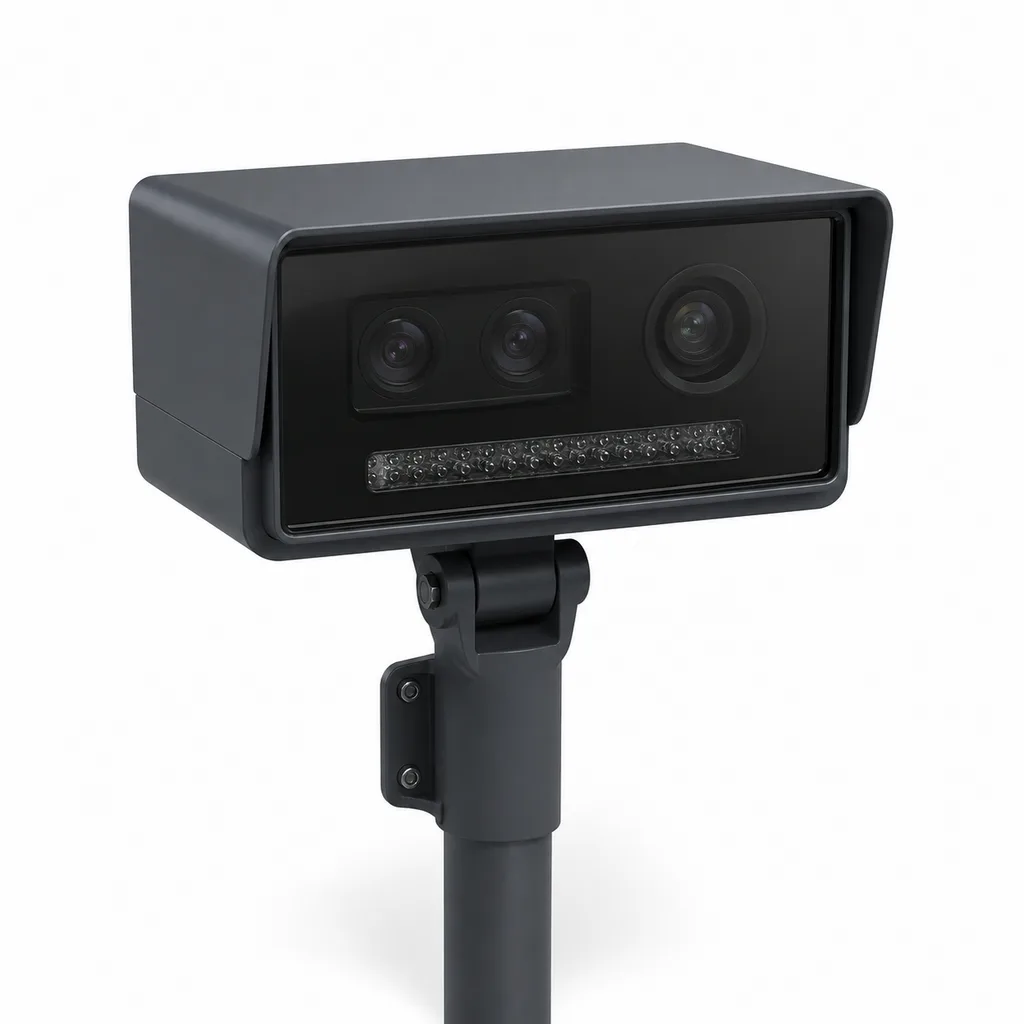
The REDCOAST.LTD RC-PKE-700 is a grid-powered, pole-mounted AI enforcement system built for one job: keeping urban restricted lanes and no-parking zones clear, automatically and around the clock. It combines high-resolution ANPR (Automatic Number Plate Recognition) cameras, an edge-AI violation-detection engine, GNSS/PTP time synchronisation and tamper-evident evidence packaging into a single street-hardened unit. Municipalities, transit authorities, campus operators and PPP enforcement contractors use it to detect bus-lane incursions, illegal parking and stopping, box-junction blocking, cycle-lane obstruction and turn/one-way violations without a human officer on site. Because congested bus corridors and blocked no-stopping zones directly slow public transport, endanger pedestrians and cost cities revenue, unattended enforcement pays for itself quickly — and the RC-PKE-700 delivers the capture rate, evidence integrity and integration flexibility a defensible enforcement programme requires.
Key Features
- Multi-violation edge AI: on-camera detection of bus-lane use, illegal parking/stopping (configurable dwell time), no-stopping zones, box junctions, cycle-lane and one-way/turn restrictions — no server round-trip needed to flag an event.
- High-accuracy ANPR: ≥98% plate-recognition and ≥99% capture rate, supporting 100+ national and regional plate formats, day and night, at 0–150 km/h.
- Dual-view evidence: a global-shutter LPR camera reads the plate while a 4K context camera records the wider scene, so each package proves both identity and the offence in situ.
- Tamper-evident chain of custody: every package is SHA-256 hashed and digitally signed in a hardware secure element, with GNSS/PTP time stamping to ±1 ms — evidence that survives legal challenge.
- Self-developed hardware: REDCOAST.LTD designs the multi-camera PoE++ interface/capture board, the edge-AI inference board, the IR illumination constant-current driver, the GNSS/PTP time-sync + secure-element evidence board and the UPS power-management PCB in-house.
- All-weather illumination: switchable 850 nm / 940 nm IR arrays with driver dimming deliver clean plate capture in darkness, glare and headlight wash.
- Grid-native power with ride-through: mains-powered with a LiFePO4 UPS that keeps the unit enforcing and preserves buffered evidence through outages.
- Open integration: ONVIF/RTSP video, HTTPS/REST and SFTP evidence export to on-prem VMS, cloud SaaS back office or a hybrid deployment.
- Privacy by design: role-based access, AES-256/TLS 1.3 encryption and configurable redaction to align with data-protection regimes.
Technical Architecture
Each RC-PKE-700 unit is a self-contained enforcement node. The imaging front end pairs a global-shutter LPR camera — optimised for motion-frozen plate reads with a fast electronic shutter — with a wide-angle 4K context camera that captures the full offence scene, lane markings and surrounding signage. Both feed a self-developed multi-channel PoE++ capture board that powers and synchronises the cameras and hands frames to the edge-AI inference board. There, a neural accelerator (up to 24 TOPS) runs vehicle detection, tracking, classification and the violation state-machine locally: a vehicle entering a bus lane, or dwelling in a no-stopping zone beyond the configured threshold, is flagged in real time at the roadside.
When a violation is confirmed, the evidence board assembles a package — a burst of full-resolution plate frames, a context clip, the recognised plate string and confidence, GNSS coordinates, lane/zone ID and a precise timestamp — then hashes and digitally signs it inside a secure element before buffering it to encrypted local storage. Packages are pushed over cellular or fibre to the back office, where operators review, adjudicate and issue notices; the signed hash lets any downstream system verify the file has not been altered. Time synchronisation is anchored by an on-board GNSS receiver and IEEE 1588 PTP, so multi-unit corridors and mobile-court evidence stay coherent to the millisecond. The self-developed UPS/power-management PCB conditions mains input, manages the LiFePO4 pack and reports health telemetry — voltage, temperature, door/tamper, camera and link status — to the platform for predictive maintenance.
Connectivity & Power
Backhaul is chosen per site. Dense city corridors with duct infrastructure use Gigabit Ethernet or fibre (SFP) for high-bandwidth review video; distributed poles and pilot sites use 4G LTE or 5G NR with IPsec/OpenVPN tunnelling. Cameras connect over PoE++ (IEEE 802.3bt) so a single cable carries power and data. The RC-PKE-700 is a grid-powered product for the electrified urban environments it serves — city avenues, bus corridors, school frontages, campus gates and building facades all have mains available, so it runs on AC 100–277 V, 50/60 Hz and does not use solar. A LiFePO4 UPS provides 2–8 hours of ride-through to keep enforcement and evidence intact during grid interruptions, and IEC-61643 surge protection guards against transients on the power and signal lines.
Protection & Reliability
The enclosure is rated IP66 with IK10 impact resistance and a powder-coated aluminium housing; cameras are IP67. The unit operates from -40 to +70 °C across 5–95% RH, suiting hot, humid, dusty and cold climates alike, with conformal-coated boards for coastal salt-fog resistance. Active thermal management prevents lens fogging and sensor drift. Tamper detection, door sensors and watchdog supervision protect uptime and evidence integrity, and modular boards let field teams swap a camera or power module without replacing the whole unit — supporting a long service life and a maintainable warranty.
Application Scenarios
- Bus corridor enforcement: mounted along BRT and priority-bus routes to catch cars illegally using bus lanes, restoring schedule reliability and cutting bus journey times.
- No-stopping and clearway zones: main-road clearways and junction approaches where stopped vehicles cause congestion and crashes — dwell-time logic distinguishes a brief pass from a genuine stop.
- School and hospital frontages: enforcing no-parking and no-stopping outside schools and emergency entrances to protect vulnerable road users at peak times.
- Cycle lanes and box junctions: keeping protected cycle lanes and yellow-box junctions clear to safeguard cyclists and keep intersections flowing.
- Loading bays and permit zones: monitoring time-limited or permit-only bays, flagging over-stays and unauthorised vehicles via plate whitelists.
- Campus and airport kerbside: managing drop-off/pick-up kerbs and restricted service roads on private estates, airports and ports.
Case-style Examples
- Downtown bus-priority corridor: A transit authority upgraded a 6 km bus-priority corridor with RC-PKE-700 units at key incursion points, each covering up to three lanes with fibre backhaul into an existing VMS. Signed evidence flowed into the city's back-office adjudication platform, and measured bus lane violations fell sharply within the first enforcement cycles while average bus speeds improved.
- School-zone safety programme: A municipality deployed pole-mounted units on 4–6 m columns outside a cluster of schools, using 4G backhaul and dwell-time thresholds tuned for drop-off behaviour. The programme replaced sporadic officer patrols with continuous, defensible enforcement, reducing dangerous stopping at the gates.
- Mixed no-stopping and cycle-lane rollout: An enforcement contractor configured a single hardware platform for multiple violation types across a city centre — bus lane, cycle lane and box junction — using cloud SaaS hosting so several districts shared one back office, keeping per-site cost low.
Customization & Selection Guide
Start from the violation types you must enforce: single-purpose bus-lane sites can use a fixed LPR + context pair, while multi-violation city-centre sites benefit from a wider context camera and, where lanes are many, a multi-lane array. Choose backhaul by infrastructure — fibre/Ethernet where ducts exist, 5G/4G for distributed or pilot poles. Match storage buffering to your connectivity reliability (larger buffers for cellular sites). Select hosting — on-prem VMS for authorities with existing control rooms, cloud SaaS for fast multi-district rollout, or hybrid. Add a thermal or PTZ overview camera where scene context or wide-area tracking is needed. REDCOAST.LTD tunes board configuration, plate-format libraries and mounting to the project.
Deployment & After-sales
Units mount on roadside poles (4–8 m), gantries or building facades and are commissioned with lane/zone calibration, plate-library loading and back-office integration. REDCOAST.LTD supports factory pre-configuration, on-site commissioning assistance, remote diagnostics and firmware updates over the air, plus spares and modular board replacement. Delivery timelines and support tiers are scoped per project, and the platform's health telemetry enables proactive, condition-based maintenance.
Standards & Compliance
Designed toward CE, RoHS and REACH; EMC per IEC 61000; electrical safety per IEC 62368-1; enclosure IP66 / IK10; surge protection per IEC 61643; data security aligned to ISO/IEC 27001 practices with AES-256/TLS 1.3 and configurable privacy redaction to support GDPR-style regimes. Enforcement signage and evidentiary workflows are configured to the local traffic-regulation and adjudication framework.
Why REDCOAST.LTD
REDCOAST.LTD delivers end-to-end smart-infrastructure solutions — hardware, web management platform and mobile app, integrated by one team. Because we design and fabricate our own PCBs (custom boards on demand) — the multi-camera capture board, edge-AI inference board, IR driver, GNSS/PTP evidence board and UPS power-management board — the RC-PKE-700 is deeply customisable and fully controllable, not a repackaged off-the-shelf camera. That means we can adapt violation logic, plate libraries, evidence formats, connectivity and mounting to exactly what your enforcement programme and legal framework require.
Contact REDCOAST.LTD to scope a custom bus-lane and illegal-parking enforcement deployment for your city, campus or corridor.
Specifications
Cameras & Imaging
- LPR Camera
- 2 MP (1920x1080) global shutter
- Context/Overview Camera
- 4K (8 MP)
- Capture Distance
- 6-30 m
- Lane Coverage per Unit
- up to 3 lanes
- IR Illumination
- 850 / 940 nm, up to 40 m
- Max Frame Rate (LPR)
- up to 60 fps
- Min Electronic Shutter
- 1/10000 s
ANPR & AI Detection
- Plate Recognition Rate
- >=98 %
- Capture Rate
- >=99 %
- Supported Plate Formats
- 100+ countries/regions
- Vehicle Speed Range
- 0-150 km/h
- Edge AI Compute
- up to 24 TOPS
- Violation Types
- bus lane, no-stopping, illegal parking, box junction, cycle lane, one-way/turn
- Parking Dwell Threshold
- 30 s - 30 min configurable
Time Sync & Evidence Integrity
- Time Source
- GNSS (GPS/GLONASS/Galileo/BeiDou) + PTP IEEE 1588
- Time Accuracy
- <=1 ms
- Evidence Hashing
- SHA-256 + digital signature (secure element)
- Encryption
- AES-256, TLS 1.3
- Evidence Package
- multi-frame JPEG + video clip + metadata
- Local Edge Storage
- up to 512 GB
Connectivity
- Cellular
- 4G LTE / 5G NR
- Wired
- Gigabit Ethernet / Fiber SFP
- Camera Link
- PoE++ (IEEE 802.3bt)
- Protocols
- ONVIF, RTSP, HTTPS/REST, SFTP
- VPN
- IPsec / OpenVPN
Power (Grid) & UPS
- Input Voltage
- AC 100-277 V
- Frequency
- 50/60 Hz
- Power Consumption
- 45-120 W
- UPS Battery
- LiFePO4
- UPS Ride-through
- 2-8 h
- Surge Protection
- Class II, up to 20 kA (IEC 61643)
Enclosure & Environmental
- Enclosure IP Rating
- IP66
- Camera IP Rating
- IP67
- Impact Rating
- IK10
- Operating Temperature
- -40 to +70 °C
- Humidity
- 5-95 (non-condensing) %RH
- Housing
- powder-coated aluminium
Physical & Mounting
- Mounting
- roadside pole / gantry / facade
- Mounting Height
- 4-8 m
- Unit Weight
- ~12 kg
- Overview Camera
- fixed or motorized PTZ (optional)
- Wind Resistance
- up to 200 (pole dependent) km/h
Capabilities — configurable per project
Specifications are tailored to each project — the options below show what we can support.
Enforcement Type
- Bus lane
- Illegal parking / no-stopping
- Box junction
- Cycle lane
- One-way / turn restriction
Camera Configuration
- Fixed LPR + context pair
- Multi-lane array
- PTZ overview add-on
- Thermal add-on
Connectivity
- 5G NR
- 4G LTE
- Fiber SFP
- Gigabit Ethernet
Hosting / Back Office
- On-prem VMS
- Cloud SaaS
- Hybrid
Mounting
- Roadside pole
- Gantry
- Building facade
Related solution guidance
Municipalities
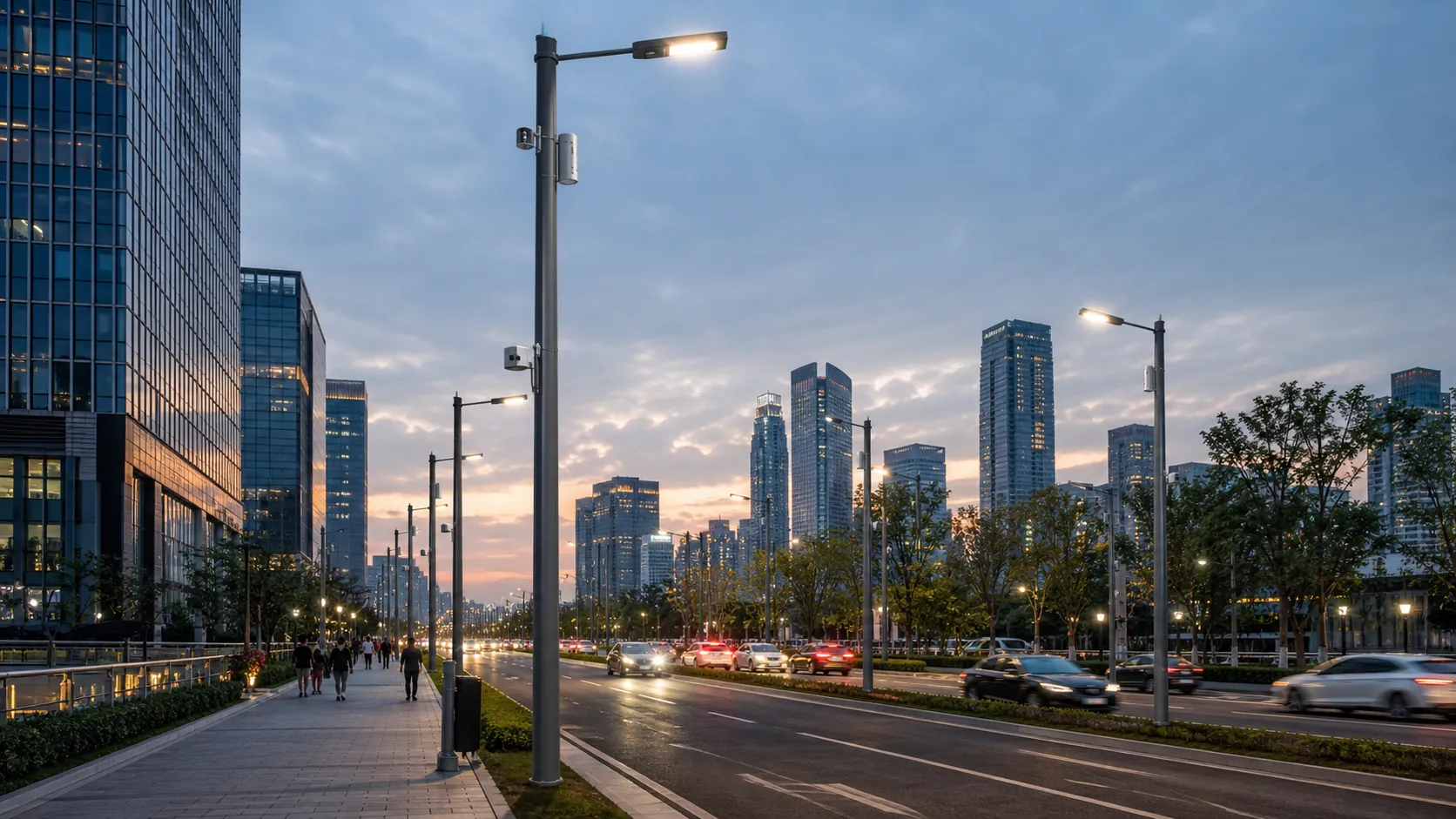
Municipal smart city programs for lighting, traffic safety, parking, smart poles and environmental monitoring with one hardware and software partner.
Airports and Hubs
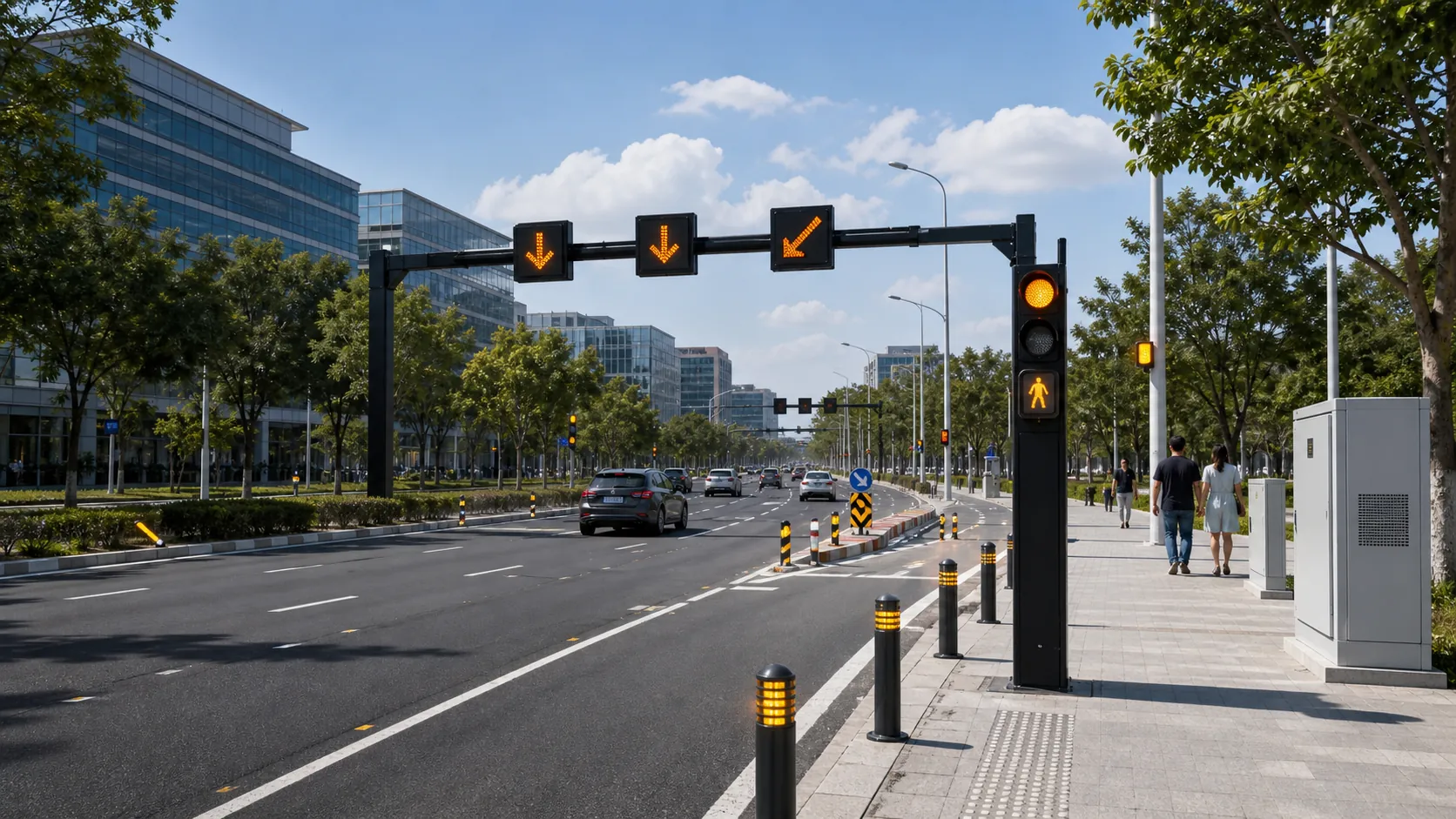
IoT infrastructure for transport hubs: parking guidance, road safety, outdoor lighting, signage, monitoring and operational dashboards.
Campuses
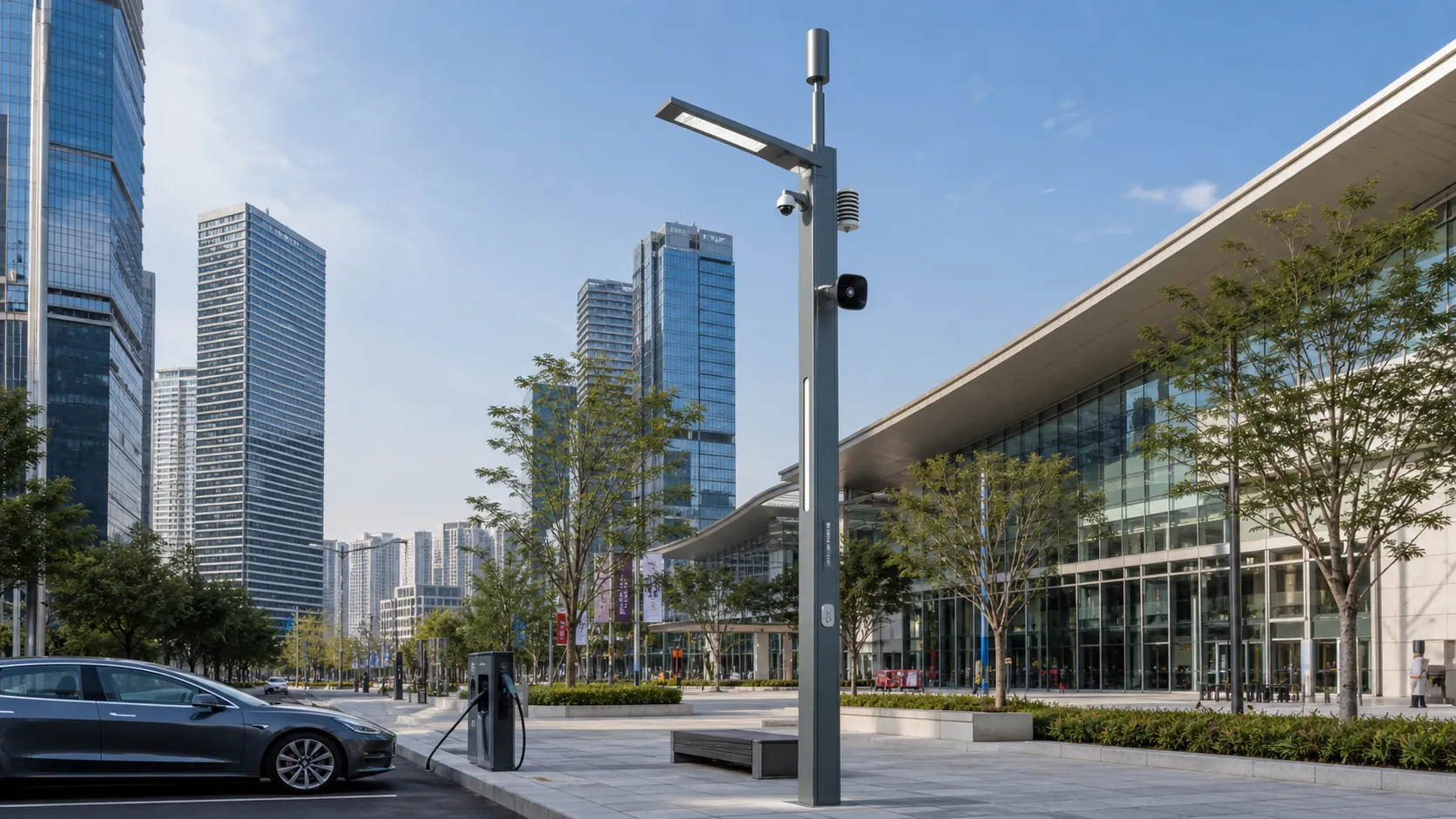
Campus IoT for lighting, parking, safety, smart poles, environmental data and facility maintenance workflows.
Frequently Asked Questions
How accurate is the plate recognition for enforcement?
The RC-PKE-700 achieves a plate-recognition rate of at least 98% and a capture rate of at least 99%, day and night, for vehicles moving from 0 to 150 km/h. It supports over 100 national and regional plate formats and reads plates under headlight glare and low light using switchable 850/940 nm IR illumination.
What violations can the system detect automatically?
It detects bus-lane incursions, illegal parking and stopping, no-stopping/clearway zones, box-junction blocking, cycle-lane obstruction and one-way/turn restrictions. Parking is judged by a configurable dwell-time threshold (30 seconds to 30 minutes) so brief passes are not falsely flagged as stops.
Is the evidence legally defensible?
Yes. Each package contains multiple full-resolution plate frames, a wider context clip and metadata, is time-stamped to ±1 ms via GNSS and PTP, and is SHA-256 hashed and digitally signed inside a hardware secure element. The signed hash lets any downstream system verify the evidence has not been altered.
Does it run on solar power?
No. The RC-PKE-700 is designed for electrified urban environments — city avenues, bus corridors, school frontages and campus kerbs — so it runs on mains power (AC 100–277 V) with a LiFePO4 UPS that keeps it enforcing through outages. Solar is not used for this grid product.
How is the system connected to the back office?
Backhaul is chosen per site: fibre or Gigabit Ethernet for high-bandwidth city corridors, or 4G LTE / 5G NR with IPsec/OpenVPN for distributed poles. Evidence exports via HTTPS/REST or SFTP to an on-prem VMS, cloud SaaS back office or a hybrid setup, and video is available over ONVIF/RTSP.
Can one unit cover multiple lanes and multiple violation types?
Yes. A single unit can cover up to three lanes and be configured for several violation types simultaneously (for example bus lane plus box junction plus cycle lane). Wider corridors use a multi-lane camera array, and a PTZ or thermal overview camera can be added for scene context.
How does it handle privacy and data protection?
The system uses AES-256 storage encryption and TLS 1.3 in transit, role-based access control, and configurable redaction of non-relevant data, following ISO/IEC 27001 practices to support GDPR-style regimes. Retention and redaction rules are set to the local legal framework.
Does REDCOAST.LTD design the hardware or just integrate off-the-shelf cameras?
REDCOAST.LTD designs and fabricates the core boards in-house — the multi-camera PoE++ capture board, the edge-AI inference board, the IR illumination driver, the GNSS/PTP evidence board and the UPS power-management board — so violation logic, plate libraries, evidence formats, connectivity and mounting can all be customised per project.