Overview
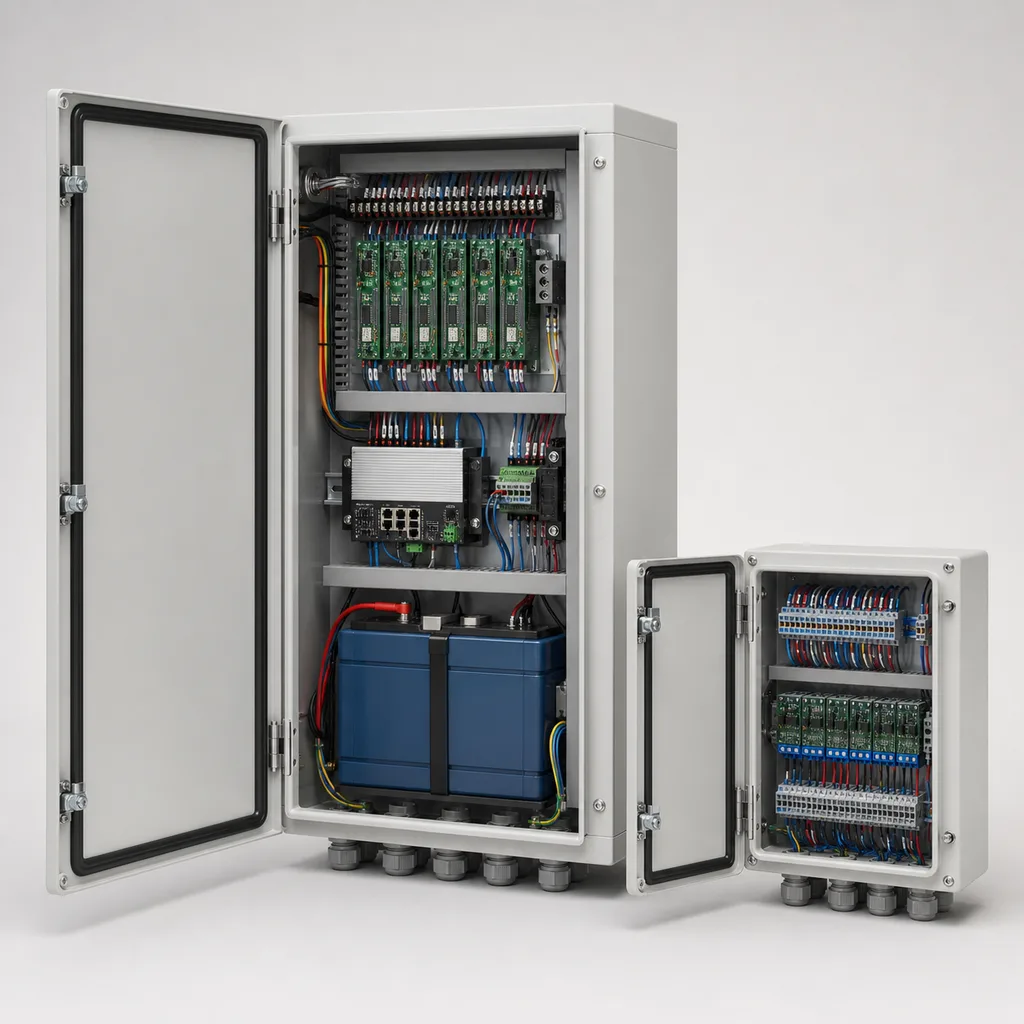
The REDCOAST.LTD RC-DAM-800 is a grid-powered Automated Data Acquisition System (ADAS) for dam and reservoir safety monitoring. It continuously measures the parameters that govern the safe behaviour of embankment, concrete gravity, arch and roller-compacted-concrete (RCC) dams — pore-water pressure and uplift, seepage flow, crest and body deformation, joint movement, reservoir level, and seismic response — and turns that raw data into rate-of-change and correlation alarms that reach dam operators and safety authorities in real time. It is built for dam owners, hydropower utilities, water authorities and dam-safety regulators who must replace slow, error-prone manual instrument reading with a continuous, auditable, standards-aligned monitoring program. REDCOAST.LTD delivers the full stack — field data acquisition units, sensor signal-conditioning hardware, edge warning controller, redundant communications, the web management platform and mobile App — engineered and integrated by one team.
Key Features
- Multi-instrument acquisition: native support for vibrating-wire (piezometers, crackmeters, joint meters, strain gauges, load cells), 4-20 mA / 0-10 V analog, digital/SDI-12, potentiometric and thermistor sensors on one distributed backbone.
- Vibrating-wire precision: sweep-excitation measurement with better than 0.1 Hz reading resolution, preserving the ±0.025% full-scale accuracy of quality VW instruments, plus integrated thermistor temperature reading per channel.
- mm-level deformation: dual-frequency multi-constellation GNSS (GPS/GLONASS/Galileo/BeiDou) plus MEMS biaxial tiltmeters for continuous 3D displacement of crest, abutments and galleries.
- Seepage and level: V-notch/Thomson weir flow, turbidity-ready seepage measurement, and radar/pressure/ultrasonic reservoir level with headwater–tailwater differential.
- Seismic response: triaxial strong-motion MEMS accelerometer with event triggering and post-event structural response capture.
- Edge early-warning: on-site controller runs threshold, rate-of-change and multi-parameter correlation rules so alarms fire even during a WAN outage.
- Redundant, self-healing comms: fiber-optic ring backbone across the dam with 4G/5G, radio or satellite failover.
- Self-developed hardware: REDCOAST.LTD designs the multi-channel VW/analog signal-conditioning boards, the distributed data-acquisition unit (DAU), the edge warning controller and the UPS power-management PCB — no black-box OEM modules.
Technical Architecture
The system uses a distributed, gallery-friendly topology. Field Data Acquisition Units (DAU) are installed in the dam galleries, on the crest and at the toe/seepage measurement house, each carrying REDCOAST.LTD-designed signal-conditioning cards: a vibrating-wire card with sweep excitation and frequency counting, isolated analog cards for 4-20 mA/voltage sensors, digital/SDI-12 and pulse inputs for weirs and tipping-flow devices, and thermistor channels. DAUs are field-expandable so a single gallery node can grow from tens to hundreds of channels as instrumentation is added over the dam's life.
DAUs connect over a fiber-optic industrial ring (self-healing, immune to the long cable runs and EMI of a powerhouse environment) back to the central cabinet, which houses the edge warning controller. The controller time-stamps every reading (PTP/NTP synchronised), applies engineering-unit conversion and sensor calibration polynomials, and evaluates the alarm logic locally: absolute thresholds, rate-of-change (e.g. rapid pore-pressure rise during reservoir drawdown), and correlation rules that cross-check related instruments to suppress the false and missed alarms typical of single-parameter systems. GNSS baselines are processed to relative mm-level displacement and fused with tilt data. All records are buffered locally (over one million readings) and streamed to the cloud platform, where operators see dashboards, correlation plots against reservoir level and rainfall, automatic instrument health checks, and full audit trails for regulatory reporting. The mobile App pushes graded alerts and lets duty engineers acknowledge, annotate and escalate from the field.
Connectivity & Power
The field backbone is fiber-optic Gigabit ring for reliability across large structures, with copper Ethernet/RS-485 spurs to nearby DAUs. Uplink from the central cabinet to the cloud uses wired WAN as primary, with 4G/5G, licensed/unlicensed radio or satellite as automatic failover — suited to dams from urban water-supply reservoirs to remote hydropower sites. As a fixed asset at a dam or powerhouse, the RC-DAM-800 is mains-powered (AC 100-240 V / 50-60 Hz) and does not use solar as a primary source; instead it carries a LiFePO4 UPS sized for multi-hour ride-through so acquisition and alarming continue through station power dips and switchovers. For a truly off-grid auxiliary station (e.g. a remote spillway or downstream gauge), a solar/LiFePO4 option is available as a scenario-specific configuration.
Protection & Reliability
Outdoor DAUs and the central cabinet are rated IP66 with an internal conformal-coated electronics tray; gallery humidity, condensation and dust are handled by sealed enclosures and optional heater/anti-condensation control. The system operates from -30 to +60 °C, tolerates high humidity and the salt/mineral-laden air of powerhouse and spillway zones, and includes multi-stage surge/lightning protection (SPD) on power, signal and fiber-transceiver lines — essential for tall, exposed structures. Redundant power paths, the self-healing fiber ring and per-channel sensor health diagnostics (open circuit, out-of-range, drift) keep the monitoring program running and flag instrument faults before they masquerade as structural events. Hardware is designed for long service life with a reliability- and warranty-oriented BOM.
Application Scenarios
- Embankment / earth-fill dams: dense grids of grouted-in vibrating-wire piezometers track pore pressure and phreatic surface; seepage weirs and rate-of-change alarms give early notice of internal erosion or piping.
- Concrete gravity & arch dams: uplift pressure cells, joint/crackmeters, plumb-line/pendulum readouts and GNSS crest monitoring watch for excessive deformation and uplift.
- Hydropower reservoirs: correlation of deformation and seepage against reservoir level and generation cycles supports safe operation and first-filling surveillance.
- Tailings & mine-waste dams: high-density pore-pressure and displacement monitoring with strict, graded alarms for a class of structures under intense global regulatory scrutiny.
- Levees & flood-control embankments: seepage and pore-pressure monitoring along critical reaches with rapid alerting during high-water events.
- Ageing-dam rehabilitation: retrofit automation of legacy manual instruments to create a continuous, auditable safety record.
Case-style Examples
Embankment dam automation retrofit — An operator with a decades-old earth-fill dam still read by hand monthly needed continuous surveillance. RC-DAM-800 DAUs were placed in the gallery and toe measurement house, wiring in existing VW piezometers and a new V-notch seepage weir; a fiber ring linked them to a central cabinet with UPS. Correlation alarms between pore pressure, seepage and reservoir level replaced monthly spreadsheets with real-time dashboards and regulator-ready reports.
Concrete gravity dam deformation program — For a gravity dam requiring sub-centimetre crest monitoring, GNSS reference and monitoring stations were installed on the abutments and crest, fused with MEMS tiltmeters and joint meters. Processed mm-level 3D displacement, plotted against headwater level and temperature, let engineers separate seasonal thermal movement from anomalous behaviour.
Off-grid downstream gauge — A remote downstream flow/level station outside the powerhouse grid used the solar/LiFePO4 auxiliary configuration, telemetering to the same platform over 4G so the dam safety picture stayed complete end to end.
Customization & Selection Guide
Start from the instrumentation plan and dam class: define sensor counts and types per gallery/zone to size DAU channels (VW, analog, digital, thermistor) with 20-30% spare capacity for future instruments. Choose deformation depth: MEMS tilt only for smaller structures, or add GNSS reference/monitoring pairs where mm-level absolute displacement is mandated. Select seismic (triaxial strong-motion) for high-seismicity sites. Pick the communications tier by remoteness — fiber+wired WAN for accessible dams, 4G/5G or satellite failover for remote ones. Set the alarm regime (threshold-only vs. full rate-of-change + correlation, with optional ML-assisted anomaly detection) to match the regulator's dam-safety plan. Add local HMI/annunciator at the powerhouse where an operator display is required.
Deployment & After-sales
REDCOAST.LTD supports the full delivery cycle: instrumentation review, channel sizing, cabinet and DAU manufacture, factory acceptance testing (FAT), on-site installation supervision, sensor wiring and calibration, site acceptance testing (SAT), and operator/engineer training. Delivery timelines are project-driven and confirmed at order based on channel count and civil readiness. Post-delivery we provide remote diagnostics, firmware/platform updates, spare-parts support, scheduled calibration service and a warranty-backed support agreement, with SLA options for critical structures.
Standards & Compliance
Engineered to align with international dam-safety and instrumentation practice — ICOLD bulletins on dam monitoring, FERC/USACE instrumentation guidance, and applicable ISO geotechnical instrumentation methods. Hardware targets CE/RoHS, IP66 ingress protection, IEC 61000 EMC and IEC 61643/62305 surge & lightning-protection references. Data handling and reporting are designed to satisfy auditable regulatory dam-safety review requirements across differing national frameworks.
Why REDCOAST.LTD
REDCOAST.LTD delivers an end-to-end solution — hardware, web platform and mobile App — integrated by one team, and backs it with genuine in-house hardware engineering: we design and fabricate our own multi-channel vibrating-wire/analog signal-conditioning boards, the distributed DAU, the edge warning controller and the UPS power-management PCB. That means the channel mix, alarm logic, protocols and enclosures are tailored to each dam rather than forced onto an off-the-shelf logger — and the whole system is supportable and extensible over the dam's service life.
Contact REDCOAST.LTD to discuss your dam's instrumentation plan and receive a tailored channel count, deformation and communications configuration.
Specifications
Data Acquisition & Channels
- Architecture
- Distributed DAU + central edge controller
- Channels per DAU
- 8-64 (field-expandable) ch
- System capacity
- up to 2000+ channels
- Sensor types
- VW, 4-20 mA, 0-10 V, RS-485/SDI-12, thermistor, pulse
- Local storage
- >1,000,000 records
- Time sync
- PTP / NTP / GNSS
- Sampling interval
- 1 s to 24 h (per sensor)
Vibrating-Wire & Geotechnical Sensing
- VW frequency range
- 400-6000 Hz
- VW reading resolution
- better than 0.1 Hz
- Supported VW accuracy
- ±0.025 (FS) %
- Excitation
- Swept-frequency (auto-tuning)
- Thermistor per channel
- -50 to +150 °C
- Analog input accuracy
- ±0.05 (FS) %
Deformation & Seismic
- GNSS constellations
- GPS/GLONASS/Galileo/BeiDou (dual-freq)
- GNSS deformation accuracy
- ±2 to ±7 (3D, post-processed) mm
- MEMS tilt range / resolution
- ±15 / 0.001 °
- Strong-motion accelerometer
- ±2 (triaxial, event-triggered) g
- Displacement update
- 1 to 60 (configurable) min
Seepage & Reservoir Level
- Seepage flow (V-notch weir)
- 0.01-100 L/s
- Reservoir level (radar)
- 0-70 m
- Level accuracy
- ±0.02 (or ±0.03% FS) %
- Headwater/tailwater differential
- dual-channel
- Turbidity monitoring
- optional (0-4000 NTU)
Connectivity & Platform
- Field backbone
- Self-healing fiber-optic ring (Gigabit)
- Field spurs
- Ethernet / RS-485
- WAN uplink
- Wired + 4G/5G / radio / satellite failover
- Protocols
- MQTT, Modbus TCP/RTU, SNMP, REST API
- Alarm logic
- Threshold, rate-of-change, correlation, ML anomaly (opt.)
- Interfaces
- Web platform + iOS/Android App
Power (grid-connected)
- Input voltage
- AC 100-240 (50/60 Hz) V
- Backup
- LiFePO4 UPS
- Ride-through autonomy
- 8-48 (configurable) h
- Central cabinet power
- 60-250 W
- Per-DAU power
- 3-15 W
- Off-grid aux option
- Solar PV + LiFePO4 (remote stations only)
Enclosure & Environment
- Ingress protection
- IP66
- Operating temperature
- -30 to +60 °C
- Humidity
- 0-100 (condensation-managed) %RH
- Surge protection
- Multi-stage SPD on power/signal/fiber
- Cabinet material
- Powder-coated steel / 304 stainless (option)
- Electronics coating
- Conformal-coated boards
Capabilities — configurable per project
Specifications are tailored to each project — the options below show what we can support.
Deformation package
- MEMS tilt only
- GNSS reference + monitoring pairs
- GNSS + robotic total station integration
- Plumb-line / pendulum readout
Alarm intelligence
- Threshold only
- Threshold + rate-of-change
- Full correlation rules
- ML-assisted anomaly detection
Communications tier
- Fiber + wired WAN
- 4G/5G failover
- Satellite failover
- Licensed radio
Dam type tuning
- Embankment / earth-fill
- Concrete gravity
- Arch / RCC
- Tailings dam
- Levee / flood embankment
Power
- Grid + LiFePO4 UPS
- Off-grid solar aux station
Related solution guidance
Environmental Monitoring
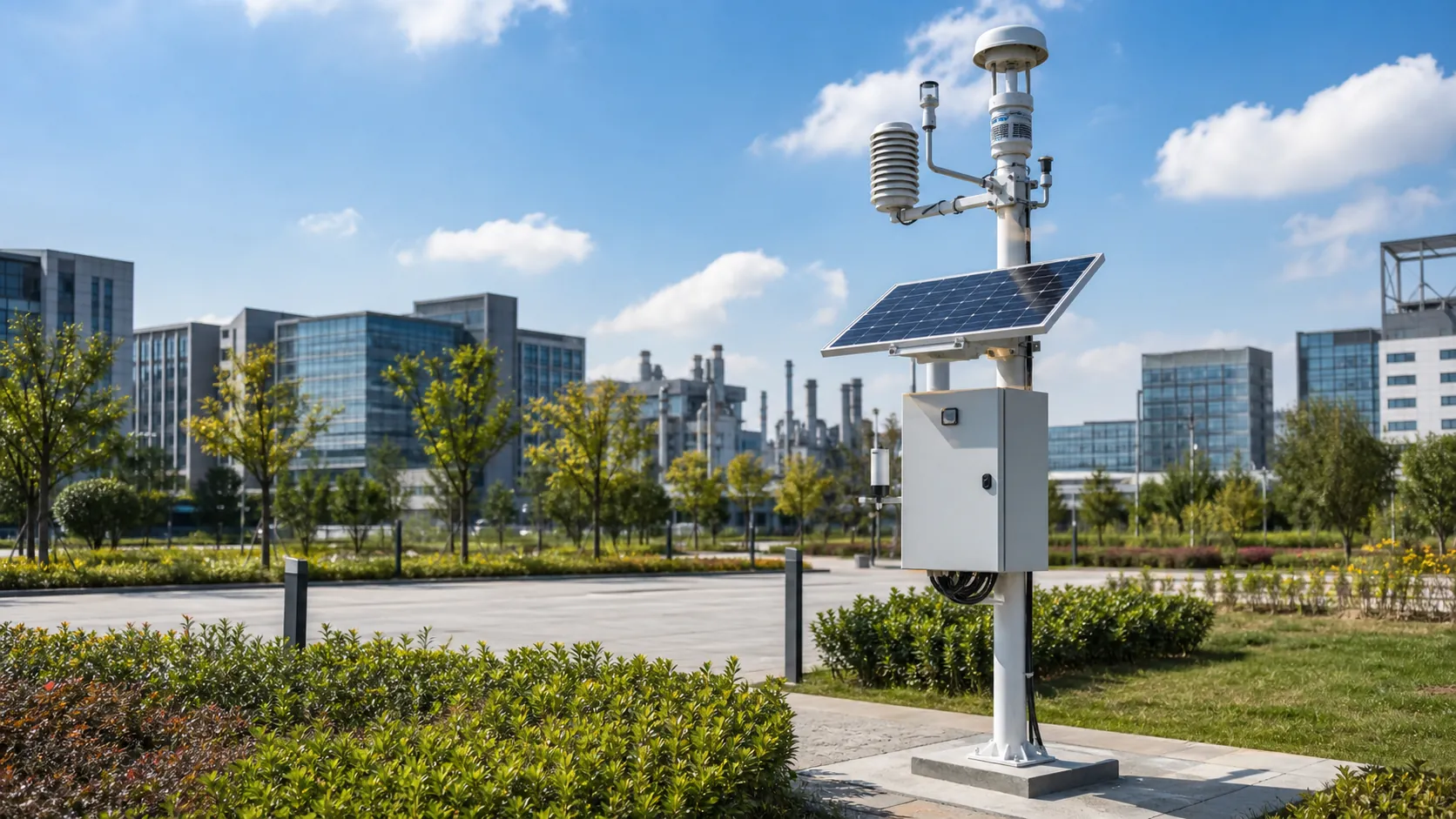
Deploy environmental monitoring stations with sensors, solar power, gateways, dashboards, alarms and data integration for city and industrial sites.
Ports and Logistics
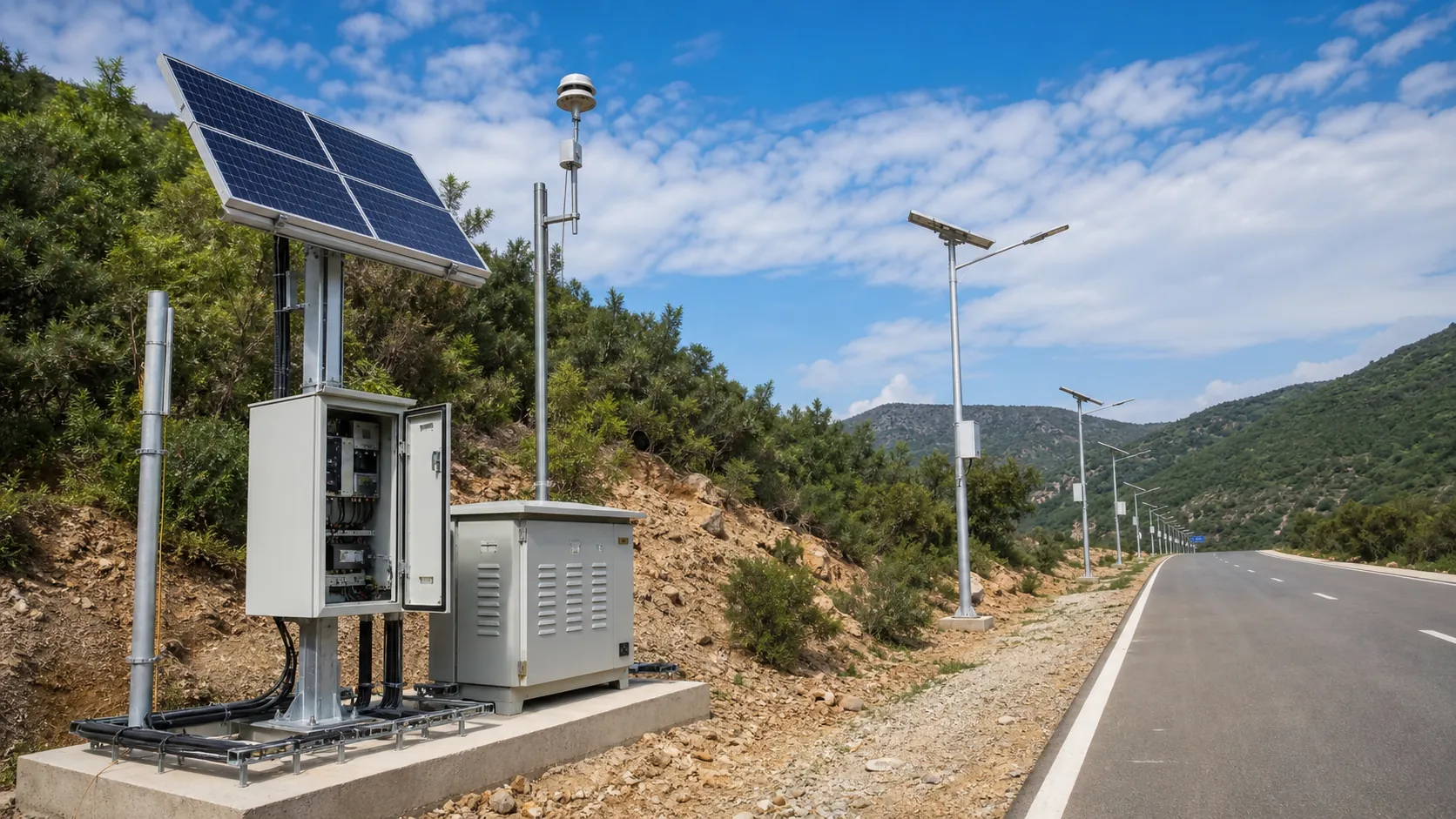
Outdoor IoT infrastructure for ports, yards and logistics areas: lighting, guidance, safety, solar power, monitoring and maintenance visibility.

Traffic Safety Checklist
Deployment checklist for connected traffic warning signs, beacons, road guidance devices, power, visibility, monitoring and acceptance tests.
Frequently Asked Questions
What is an automated dam safety monitoring system?
It is a system that continuously reads a dam's instruments — piezometers, seepage weirs, deformation and reservoir-level sensors — instead of relying on periodic manual readings. The RC-DAM-800 acquires this data in real time, converts it to engineering units, evaluates safety alarms, and delivers dashboards and reports to operators and regulators through a web platform and mobile App.
Which sensors and instruments does the RC-DAM-800 support?
It supports vibrating-wire instruments (piezometers, crackmeters, joint meters, strain gauges, load cells), 4-20 mA / 0-10 V analog sensors, RS-485/SDI-12 digital sensors, thermistors and pulse inputs. It also integrates GNSS receivers, MEMS tiltmeters, strong-motion accelerometers, seepage weirs and radar/pressure reservoir-level sensors on one platform.
How accurate is the deformation and pore-pressure monitoring?
GNSS deformation reaches roughly ±2 to ±7 mm in 3D after processing, complemented by MEMS tilt at 0.001° resolution. For vibrating-wire pore-pressure sensing, the acquisition provides better than 0.1 Hz reading resolution, which preserves the ±0.025% full-scale accuracy of quality VW piezometers.
Is the system solar-powered or mains-powered?
As a fixed installation at a dam or powerhouse, it is mains-powered (AC 100-240 V) with a LiFePO4 UPS for multi-hour ride-through during power interruptions. Solar is not the default; a solar/LiFePO4 configuration is available only for remote auxiliary stations outside the grid, such as a downstream gauge.
How does it reduce false and missed alarms?
The edge controller applies not only fixed thresholds but also rate-of-change and multi-parameter correlation rules — for example cross-checking pore pressure against reservoir level and rainfall — and continuously monitors sensor health. This suppresses the false and missed alarms typical of single-parameter systems, and optional ML-assisted anomaly detection can be added.
Can it automate an existing dam's manual instruments?
Yes. The RC-DAM-800 is commonly used to retrofit ageing dams: existing vibrating-wire and analog instruments are wired into gallery DAUs, new seepage and level sensors are added as needed, and a fiber ring links them to a central cabinet — converting manual readings into a continuous, auditable safety record.
What standards does the system align with?
It is engineered to align with ICOLD dam-monitoring guidance, FERC/USACE instrumentation practice and applicable ISO geotechnical methods, and the hardware targets CE/RoHS, IP66, IEC 61000 EMC and IEC 61643/62305 surge and lightning protection. Reporting is designed to support auditable regulatory dam-safety reviews.
Can REDCOAST.LTD customize the channel count and configuration?
Yes. Because REDCOAST.LTD designs its own signal-conditioning boards, DAU and edge controller, the channel mix, alarm logic, communications and enclosures are tailored to each dam's instrumentation plan and dam class, with spare capacity built in for future instruments over the structure's service life.