Traffic safety projects need clear field function and measurable acceptance. This checklist helps teams avoid deploying signs or beacons that are visible on paper but weak in real operation.
Traffic safety deployment matrix
| Decision factor | Recommended approach | Buyer risk to avoid |
|---|---|---|
| Road user behavior | Define what driver or pedestrian behavior should change before selecting device type. | Hardware can be installed correctly yet fail the safety goal. |
| Installation position | Validate visibility, mounting height, angle and approach distance on site. | A sign placed after the decision point has little value. |
| Monitoring need | Connect devices that are critical, remote or hard to inspect manually. | Unmonitored safety assets can remain failed for long periods. |
Confirm the safety function
Each device should map to a road risk and expected driver or pedestrian behavior.
- Define whether the device warns, guides, slows, alerts or marks a lane.
- Select mounting height, angle and brightness for real approach conditions.
- Define when the device should activate, dim, flash or stay steady.
Engineer field reliability
Outdoor traffic devices need power, protection and safe service access.
- Check grid or solar power against load and operating schedule.
- Specify ingress protection, surge protection and cabinet layout.
- Plan safe maintenance access without disrupting traffic more than necessary.
Use platform acceptance tests
Acceptance should include remote monitoring and event behavior.
- Verify online status, alarms, event logs and manual control where supported.
- Test offline behavior and recovery after power or network interruption.
- Confirm reports can support maintenance accountability.
Checklist
Planning checkpoints
Test readability at driver approach distance, not only at the installation point.
Confirm fail-safe behavior for communication loss.
Keep maintenance records tied to each device.
Include platform monitoring in the acceptance document.
Standards
Standards and interface notes
- Local road authority requirements should define sign content, placement and approval process.
- Define power, enclosure, surge and grounding requirements before installation.
- Document fail-safe behavior for loss of network, sensor trigger or power.
- Use event logs and maintenance records as part of acceptance, not optional extras.
Procurement
Commercial questions to settle
- What specific safety outcome is expected?
- Who approves traffic sign behavior and content?
- What maintenance response time is required for failed devices?
- Does the site need grid, solar or hybrid power?
Acceptance
Evidence buyers should request
| Acceptance test | Pass criteria | Evidence |
|---|---|---|
| Approach visibility | Device is visible and understandable at the required approach distance. | Photo or video from vehicle or pedestrian approach. |
| Mode behavior | Normal, triggered, manual and failure modes operate as documented. | Event log and test checklist. |
| Maintenance alarm | Device failure creates an actionable alarm with asset ID and location. | Alarm record and work order. |
Related Products
Product capabilities for this page
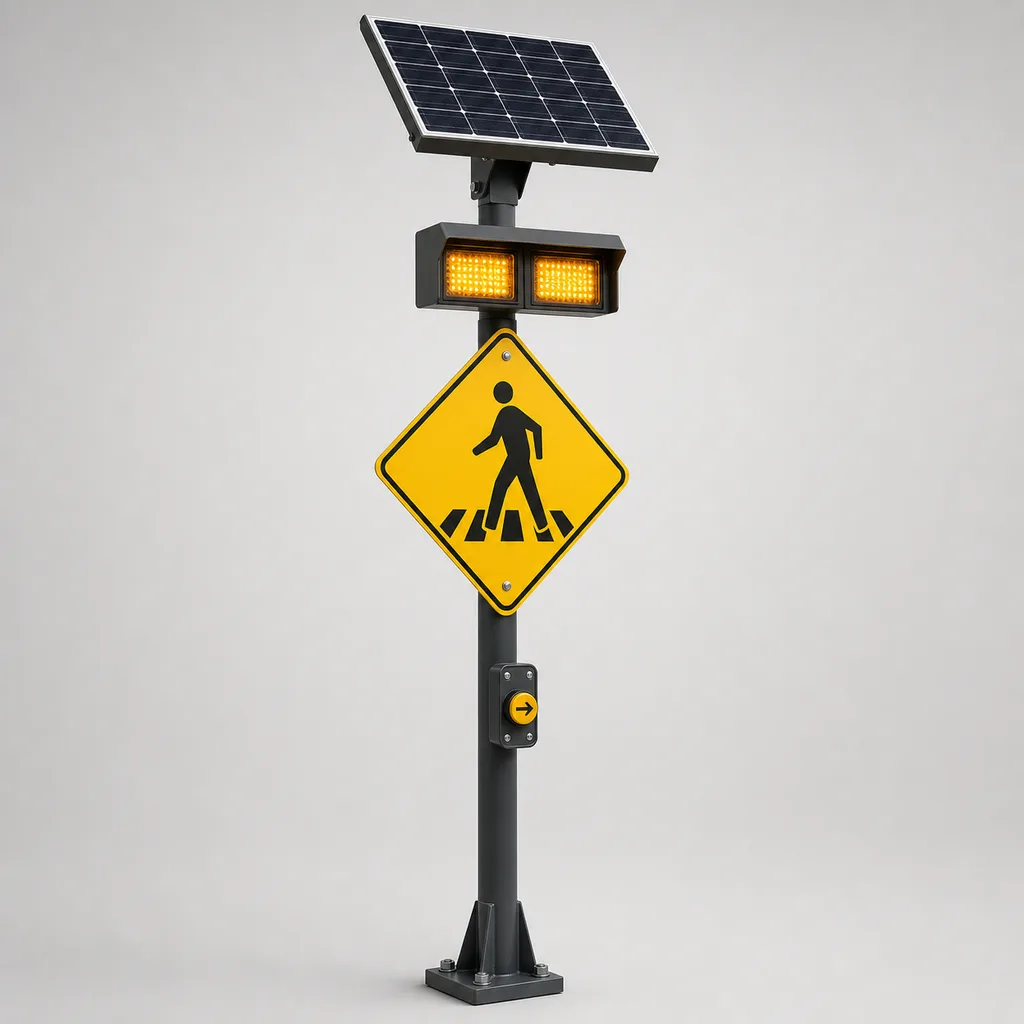
Solar-Powered Smart Pedestrian Crossing & Active Crosswalk Warning System
Off-grid solar crosswalk safety system with FHWA/MUTCD-style RRFB beacons, in-road LED studs, radar/PIR pedestrian detection and IoT remote monitoring — REDCOAST.LTD custom PCB and software-hardware integration.
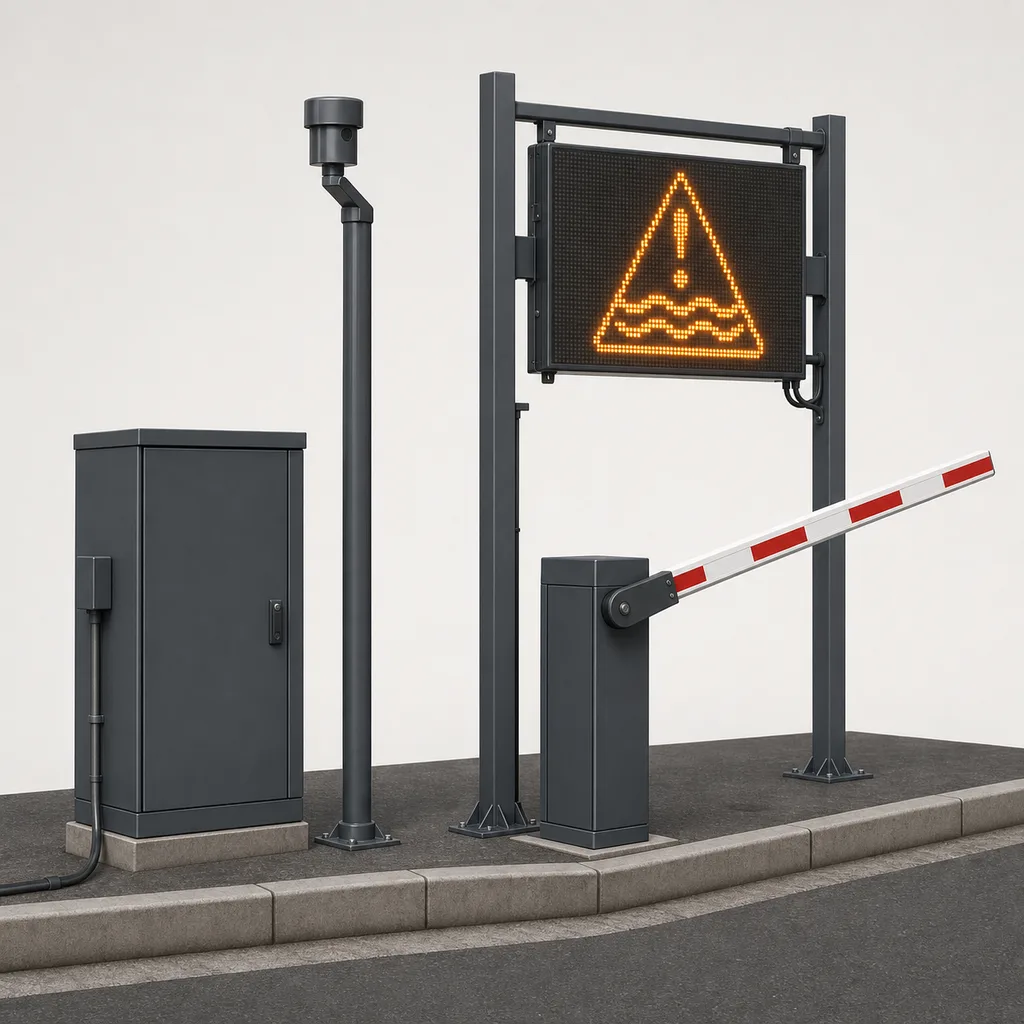
Underpass & Low-Lying Road Flood Warning and Automatic Barrier System
Grid-powered flood warning and automatic barrier system for urban underpasses and low-water crossings: redundant radar water-level sensing, full-matrix LED warning signs, flashing beacons and a boom barrier that closes flooded roads before vehicles enter.
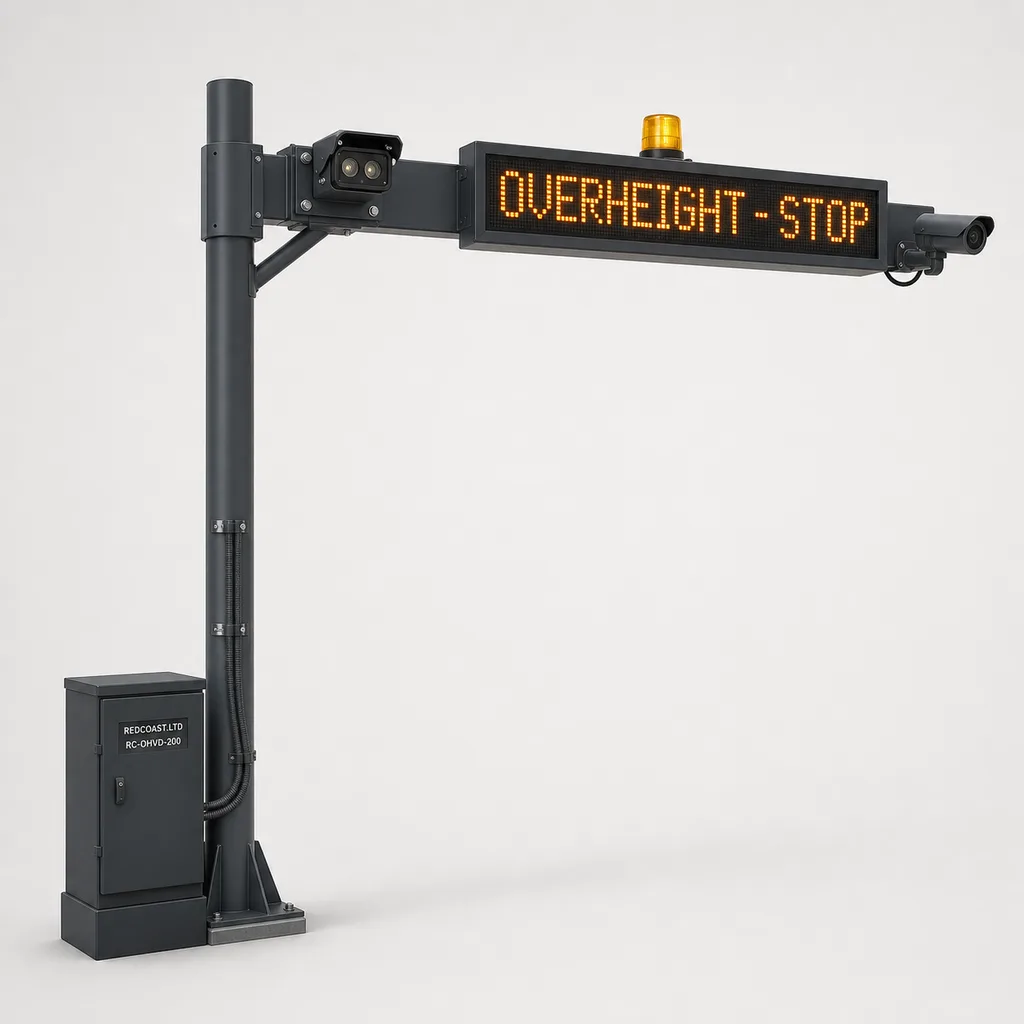
Grid-Powered Over-Height Vehicle Detection and Warning System for Low Bridges and Tunnels (OHVDS)
Mains-powered roadside system that detects over-height trucks with a dual laser/IR curtain, commands an LED warning sign and beacon, ANPR-captures the violator, and pushes the event to traffic management centers over NTCIP — fully engineered by REDCOAST.LTD.
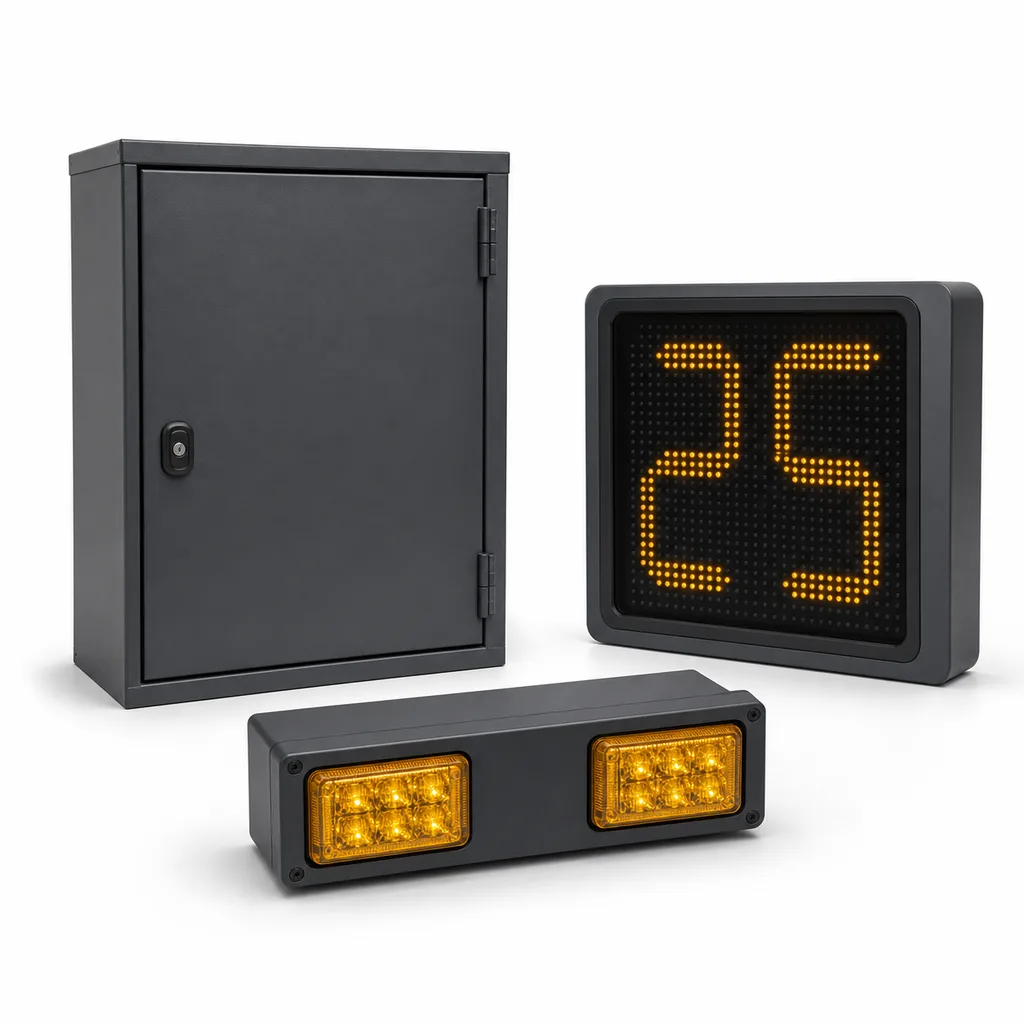
Grid-Powered Smart School Zone Active Safety Management System
Zone-coordinated school zone safety platform: 24 GHz radar speed detection, full-matrix LED speed feedback displays, RRFB-class amber flashing beacons, and electronic variable speed limit signs — all schedule-aware, grid-powered, MUTCD/EN 12899 compatible.
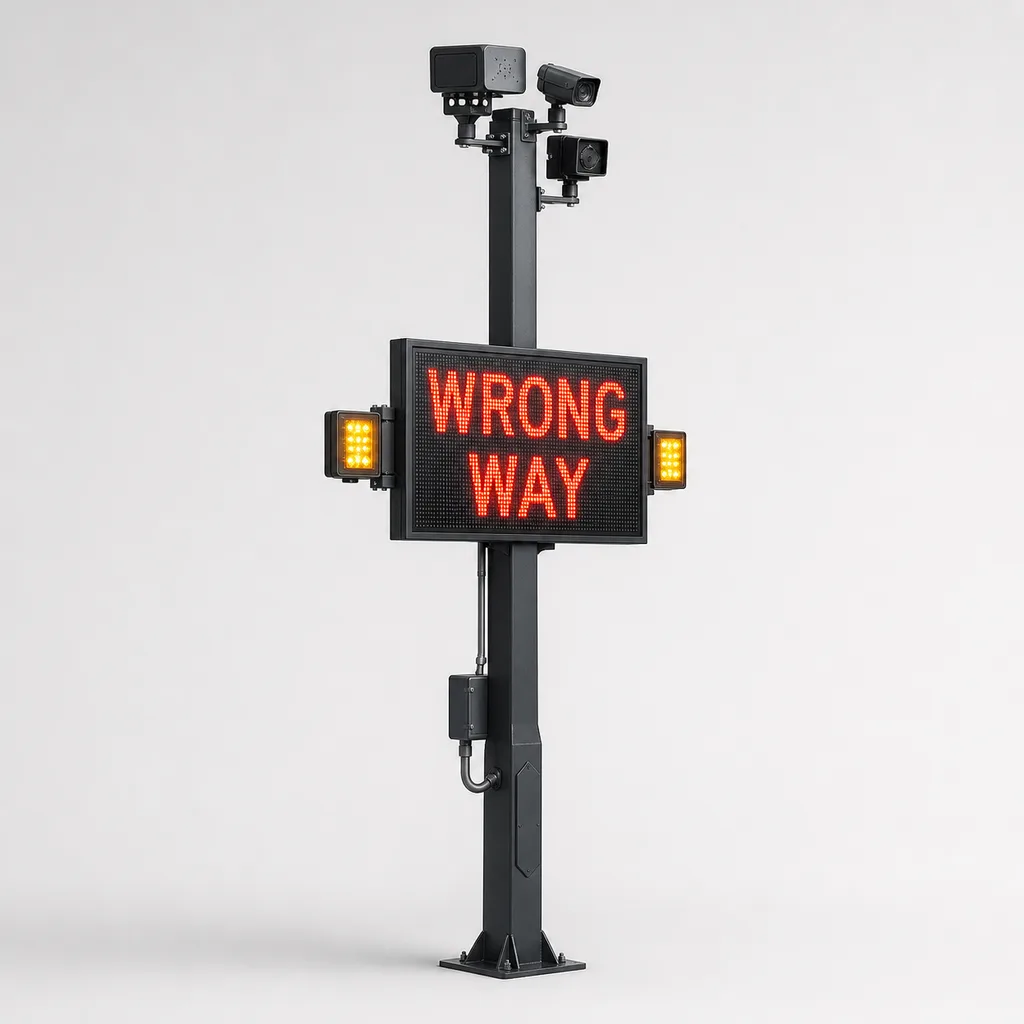
Grid-Powered Wrong-Way Driver (WWD) Detection and Active Warning System
Mains-powered ITS solution that detects wrong-way vehicles on highway off-ramps and one-way access roads within seconds, fires active LED warnings and alerts the TMC.
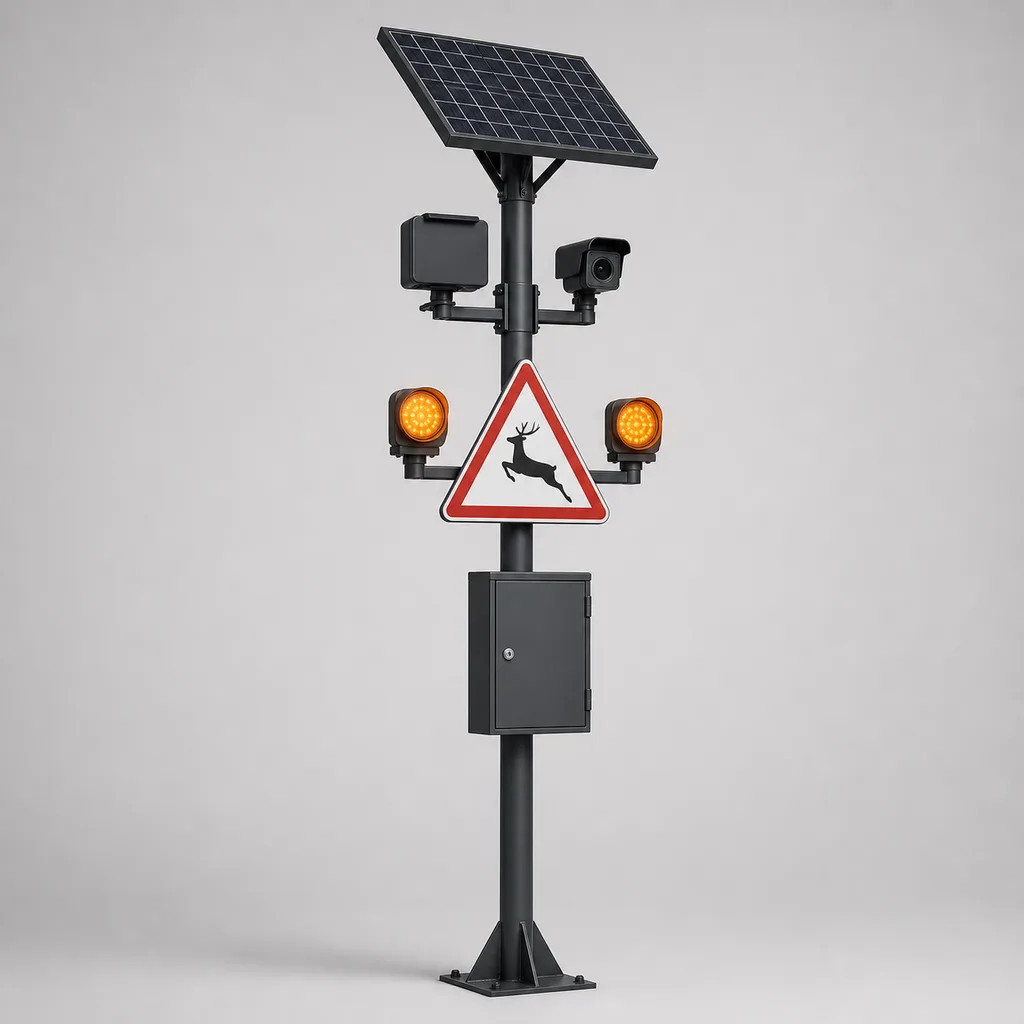
Off-Grid Solar AI Wildlife & Large Animal Detection and Driver Warning System
Off-grid solar roadside system that detects camels, deer, elk, moose and livestock near rural highways with radar (optional thermal AI), triggers upstream LED warning signs in under 2 seconds, and reports to a cloud dashboard and mobile app.
Next
Related guidance
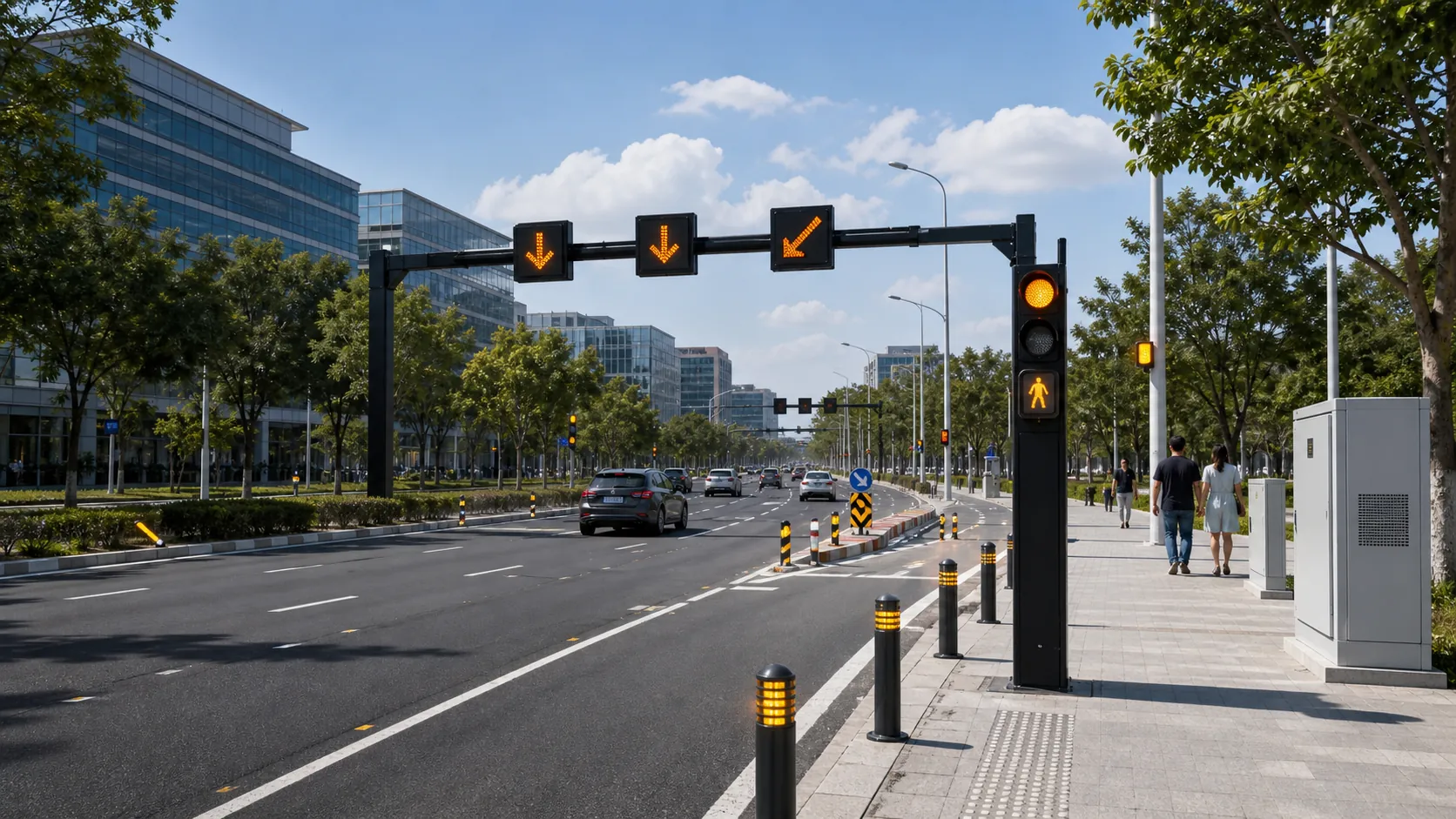
Traffic Safety
Plan connected traffic safety systems with warning beacons, LED signs, road guidance devices, sensing, control cabinets and monitoring software.
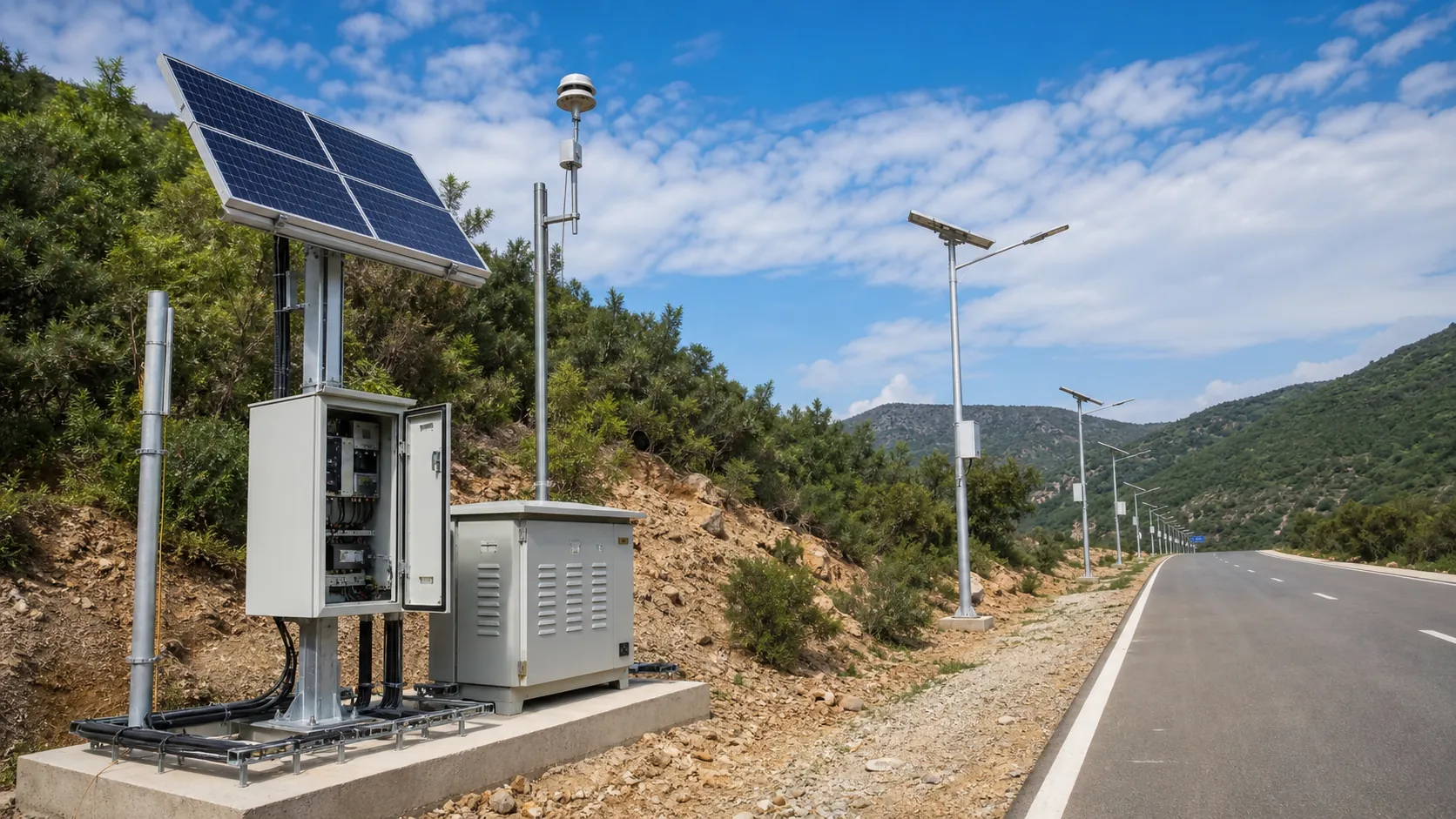
Power and Connectivity
How to choose power, battery, solar, NB-IoT, LTE, LoRaWAN, gateways and monitoring strategy for outdoor IoT infrastructure.
Ports and Logistics
Outdoor IoT infrastructure for ports, yards and logistics areas: lighting, guidance, safety, solar power, monitoring and maintenance visibility.
Frequently asked questions
What should be checked before installing LED warning signs?
Check road risk, visibility distance, mounting position, brightness, power, protection, control logic and maintenance access.
Can traffic beacons be connected to a platform?
Yes, when equipped with suitable communication modules, beacons can report status, alarms and event history to a platform.
What is a good acceptance test for road safety IoT?
A good test confirms device visibility, control behavior, online status, alarms, recovery after interruption and maintenance reporting.
What should not be missing from a traffic safety checklist?
Do not miss road risk, visibility distance, mounting position, power design, fail-safe behavior, alarm workflow and local approval requirements.
Why include event logs in traffic safety acceptance?
Event logs prove that sensors, timers, manual controls and alarms behaved as expected, which is more useful than visual inspection alone.
Need this engineered for your project?
Tell us the site type, required devices, power and connectivity conditions. REDCOAST.LTD will respond with a tailored approach.