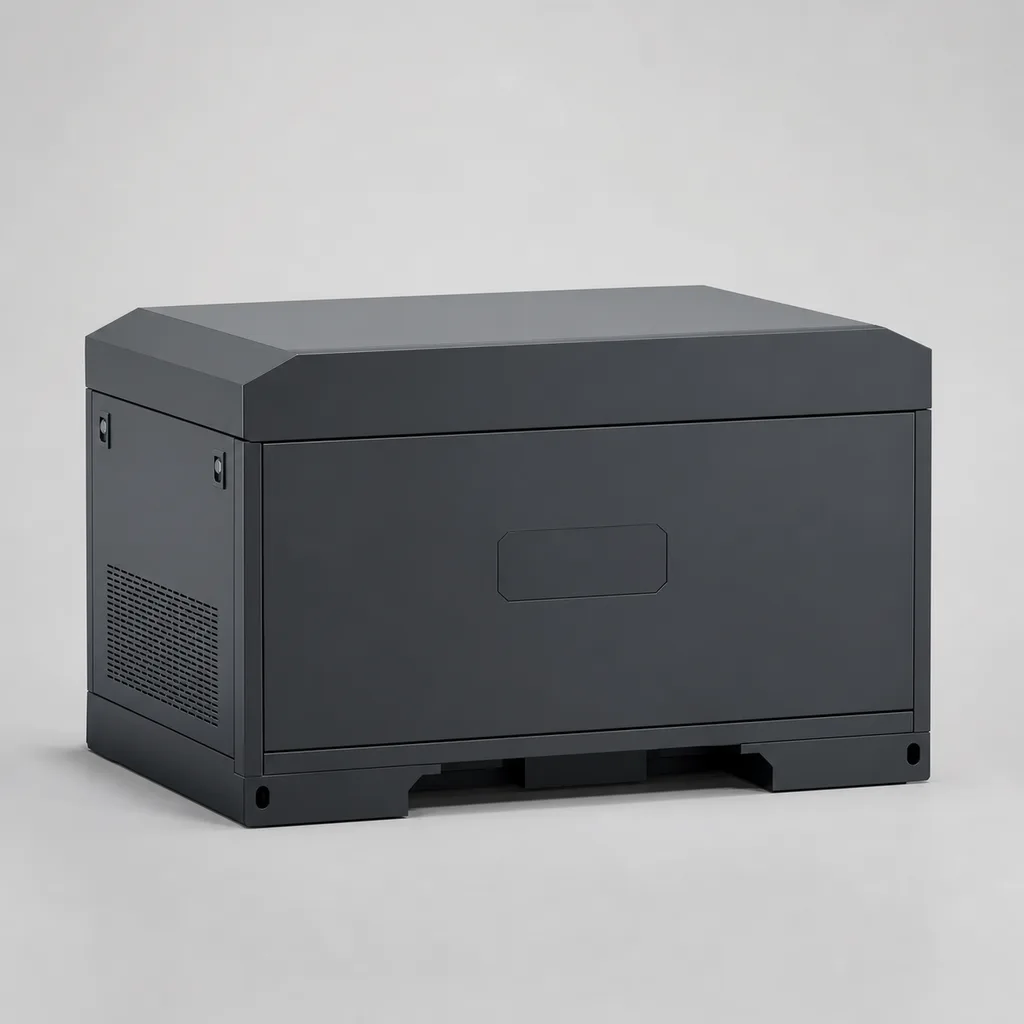
Overview
The REDCOAST.LTD RC-DIB-900 is a grid-powered, fully autonomous drone-in-a-box (DIB) docking station built for continuous, pilot-free aerial monitoring of urban districts, industrial campuses, ports, electrical substations, solar and wind farms, quarries, pipelines and other critical infrastructure. It pairs a weatherproof, climate-controlled ground station with an integrated industrial UAV, an RTK precision-landing base, an edge-AI gateway and a web + mobile management platform. A single operator can schedule, launch, watch, and archive missions across many remote sites from one dashboard. The RC-DIB-900 closes the gap between fixed pole cameras — which see only a fixed field of view — and manual drone crews, which are costly, slow to mobilise and weather-limited. It keeps a charged, ready-to-fly aircraft permanently on site, turning aerial patrol into a scheduled, on-demand utility.
Because its typical deployments are rooftops, campus grounds, substation yards and port terminals where mains power is available, the RC-DIB-900 is a grid-powered product by default (AC 100–240 V) with a LiFePO4 UPS for ride-through during outages. Off-grid solar or wind-solar hybrid power is offered only as a configuration for genuinely remote sites without a grid connection.
Key Features
- Fully autonomous mission cycle — the roof opens, the UAV launches, flies a pre-planned or on-demand route, returns, lands within centimetres and recharges without any human on site.
- RTK precision landing — multi-constellation RTK base plus visual fiducial markers deliver repeatable landing accuracy of roughly ±10 cm, even in wind and low light.
- Climate-controlled hangar — integrated heating, forced-air cooling and dehumidification keep the aircraft and electronics healthy from −30 °C to +55 °C and prevent condensation and battery cold-shock.
- Fast turnaround charging — contact-based fast charging brings a depleted flight battery back to ~90% in about 25–40 minutes; an optional automated battery-swap magazine enables near-continuous coverage.
- Edge-AI on the ground — an onboard AI gateway runs perimeter-intrusion, human/vehicle detection, ANPR and thermal-anomaly analytics at the edge, so only events and clips — not raw 24/7 video — travel over the network.
- Dual EO + thermal payload — the integrated UAV carries a stabilised zoom electro-optical camera and a radiometric thermal imager for day/night patrol, hot-spot detection and gas/heat leak survey.
- Weather-aware safety logic — onboard wind, rain, temperature and cabin sensors auto-abort or defer launches in unsafe conditions and command a safe return-to-dock on gusts or precipitation.
- Open integration — RTSP/ONVIF video and REST/MQTT event push let the station feed an existing VMS, SOC or smart-city command centre; the REDCOAST platform and app are optional, not mandatory.
- Mains-powered with UPS ride-through — LiFePO4 backup keeps the station and comms alive for hours during a grid outage and lets an in-progress flight land safely.
- BVLOS-ready architecture — remote ID broadcast, geofencing, redundant links and detailed flight logging support Beyond-Visual-Line-of-Sight operation where local aviation authorities permit it.
Technical Architecture
The RC-DIB-900 is organised around four subsystems that REDCOAST.LTD designs and integrates at board level. First, the mechatronic station: a powder-coated aluminium/steel enclosure with a motorised weather cover, a self-centring landing platform and an actuated docking mechanism. A REDCOAST-designed actuator/roof-control PCB drives the cover and centring arms, with limit sensing and anti-pinch protection. Second, the power and thermal core: a custom power-management and charging PCB accepts AC mains, manages the LiFePO4 UPS, runs the contact charger with per-cell telemetry, and controls the heater, fan and dehumidifier through a thermal MCU that holds cabin temperature and humidity in a safe band. Third, the navigation and comms core: a multi-GNSS RTK base module, a Gigabit Ethernet/4G/5G/fiber router, and an edge-AI carrier board that ingests the UAV video link, runs analytics and pushes events. Fourth, the integrated UAV: a supported industrial airframe (REDCOAST-integrated or customer-supplied) carrying the EO/IR payload and obstacle-avoidance sensors.
In operation, the management platform (or a third-party command system) issues a mission. The station verifies weather and system health, opens the cover, powers and releases the UAV, and hands off to the flight plan. The UAV streams telemetry and video back through the station's link; the edge gateway detects events and forwards clips and metadata to the cloud/VMS. On completion the UAV returns, uses RTK plus visual markers to land within centimetres, the cover closes, and charging resumes automatically — readying the aircraft for the next scheduled or ad-hoc flight.
Connectivity & Power
Connectivity is layered so the station suits both fibre-served campuses and cellular-only sites: a 10/100/1000 Mbps Ethernet port and SFP fibre option for fixed sites, plus embedded 4G/5G (dual-SIM) and private-LTE support for sites without wired backhaul. All links carry telemetry, control and event video; heavy raw footage is stored locally and retrieved on demand to conserve bandwidth. Power is grid-based by default — AC 100–240 V, 50/60 Hz, with a LiFePO4 UPS sized to ride through outages, keep comms online and land any airborne UAV safely. For remote, off-grid deployments (no mains within reach), REDCOAST offers a solar array + larger LiFePO4 bank, or a wind-solar hybrid, sized to the mission cadence; this is a deliberate configuration choice, never a default.
Protection & Reliability
The station enclosure is rated IP55 (electronics compartment IP66), with a fully sealed cabin when the cover is closed. Active thermal management extends the operating envelope to −30 °C to +55 °C and manages condensation in humid and coastal air; optional C5-M anti-corrosion coating and stainless hardware suit salt-fog environments. The closed station survives storm winds up to ~45 m/s in stow, while flight is auto-restricted to safe launch/land wind (≤12 m/s) and gust limits. The enclosure and mast/mounts use REDCOAST's standard finishing process — hot-dip galvanized base protection plus a smooth matte powder-coat or fluorocarbon topcoat — for a durable, corrosion-resistant service life. Redundant sensing, watchdog logic, surge/lightning protection and detailed flight logs support high availability and safe fail-over.
Application Scenarios
- Industrial campus & perimeter security — scheduled night patrols and alarm-triggered launches over factories, logistics parks and data centres; the edge AI verifies intrusions and cuts false alarms before dispatching guards.
- Electrical substation & power-line inspection — routine thermal scans of transformers, busbars and insulators detect hot spots early; the dock lets crews inspect energised yards without entry.
- Solar & wind farm O&M — automated flights map PV hot cells and inspect turbine blades and nacelles across large sites, cutting truck rolls and downtime.
- Ports, terminals & yards — persistent overwatch of container stacks, quays and fuel areas, with ANPR and vehicle tracking feeding the terminal operating picture.
- Public safety & smart-city response — a pre-positioned drone reaches an incident, accident or crowd scene in seconds, streaming live aerial video to the command centre while responders are still en route.
- Pipeline, rail & mine monitoring — recurring corridor patrols detect leaks, encroachment, subsidence or unauthorised activity along linear assets and haul roads.
Case-style Examples
Industrial campus night patrol. A logistics park replaced roving guard vehicles with three rooftop RC-DIB-900 stations on mains power. Nightly automated sweeps plus alarm-triggered launches gave full perimeter coverage; edge-AI intrusion filtering reduced false dispatches, and the LiFePO4 UPS kept patrols running through a grid brownout.
Substation thermal inspection. A utility deployed a ground-pad station inside a high-voltage substation yard. Twice-daily autonomous thermal flights flagged an overheating clamp weeks before failure. Because the yard has grid power, the standard AC configuration was used — no solar — with fibre backhaul to the control room.
Remote pipeline corridor. For an off-grid pump station with no mains, the same platform was ordered in the solar wind-solar hybrid configuration: an oversized PV array and LiFePO4 bank powered a reduced flight cadence for corridor patrol, showing how supply is matched to the site rather than defaulted.
Customization & Selection Guide
Start with the site power reality: grid-served urban/industrial sites take the standard AC version with UPS; only genuinely off-grid sites take solar or wind-solar hybrid, sized to mission frequency. Choose mounting — rooftop, ground pad, pole-top or vehicle-mounted (mobile) — to match sightlines and access. Pick the UAV/payload class: standard EO+IR for security and general inspection, high-zoom EO for long-range overwatch, radiometric thermal for utilities, or LiDAR/multispectral for mapping and vegetation. Select backhaul (fibre, Gigabit Ethernet, 4G/5G, private LTE) by connectivity available on site, and the edge-AI package (perimeter, ANPR/vehicle, thermal-anomaly, asset-defect) by use case. Higher mission cadence favours the battery-swap magazine over single-battery fast charge.
Deployment & After-sales
Stations ship pre-integrated and calibrated; on-site work is limited to mounting, mains/backhaul connection and RTK base commissioning, typically completed in a day per unit. REDCOAST.LTD provides route/geofence setup, operator training, and platform onboarding. Lead time is project-dependent and confirmed per order. Support covers remote diagnostics, firmware updates, spare-part supply and a warranty-backed reliability program, with SLA options for mission-critical fleets.
Standards & Compliance
Designed toward CE (RED, EMC, LVD), RoHS and REACH; enclosure IP55 (electronics IP66) per IEC 60529; environmental testing aligned with IEC 60068; surge/EMC per IEC 61000; and UAV/BVLOS operation configurable to local civil-aviation rules (e.g., EASA U-space, FAA Part 107/BVLOS waivers, national CAA frameworks) including Remote ID, geofencing and flight logging. Exact certifications are aligned to the destination market per project.
Why REDCOAST.LTD
REDCOAST.LTD delivers the complete solution — station hardware, management platform (web) and mobile app — integrated by one team, not assembled from off-the-shelf parts. Our differentiator is genuine hardware self-development: we open custom PCBs (power management, charging, thermal/actuator control, RTK integration and the edge-AI carrier board) and tailor the enclosure, mounting and analytics to each project. That control lets us match power to the real site, integrate the UAV and payload you need, and connect to the command system you already run.
Contact REDCOAST.LTD to specify an RC-DIB-900 drone-in-a-box station for your site — tell us your location, power availability, mounting and inspection goals, and we will engineer the configuration to fit.
Specifications
Docking Station (Enclosure)
- Dimensions (cover closed)
- ≈ 900 × 900 × 850 mm
- Dimensions (cover open)
- ≈ 1800 × 900 × 550 mm
- Station Weight (without UAV)
- 55-90 kg
- Enclosure Material
- Aluminium alloy / steel, powder-coated
- Weather Cover
- Motorised, self-sealing
- Cover Open/Close Time
- 30-60 s
- Landing Platform
- Auto-centring, RTK + visual markers
Power & Backup (grid default)
- Input Voltage
- AC 100-240 V
- Mains Frequency
- 50/60 Hz
- Max Input Power
- ≤ 1200 W
- Standby Power (idle)
- 30-80 W
- Backup UPS
- LiFePO4, 24 V
- UPS Capacity
- 1.0-1.5 kWh
- Outage Ride-through (standby)
- 6-12 h
Charging & Turnaround
- Charging Method
- Contact fast charge (swap optional)
- Charge to ~90%
- 25-40 min
- Charge Output
- 35-58 V DC
- Ready-to-Fly Turnaround
- ≈ 30-45 min
- Battery-Swap Magazine (option)
- 2-4 spare packs
Integrated UAV (typical)
- Max Flight Time
- 40-55 min
- Max Operating Radius
- up to 10 km
- EO Payload
- Stabilised zoom, up to 48 MP
- Thermal Payload
- Radiometric 640 × 512 px
- Obstacle Avoidance
- Omnidirectional
- In-flight Wind Tolerance
- ≤ 12 (gust ≤ 15) m/s
Positioning & Navigation
- RTK Constellations
- GPS / BeiDou / GLONASS / Galileo / QZSS
- Precision Landing Accuracy
- ≈ ±10 cm
- Positioning Method
- RTK + visual fiducial markers
- Remote ID
- Broadcast supported
- Geofencing
- Configurable no-fly zones
Connectivity & Edge AI
- Ethernet
- 10/100/1000 Mbps
- Fiber
- SFP optical (option)
- Cellular
- 4G / 5G dual-SIM
- Edge AI Compute
- 100-275 TOPS
- Analytics
- Intrusion / ANPR / thermal anomaly
- Video Interface
- RTSP / ONVIF, MQTT/REST events
Environmental & Protection
- Station IP Rating
- IP55 (electronics IP66)
- Operating Temperature
- -30 to +55 °C
- Operating Humidity
- 0-95 (managed) %RH
- Thermal Management
- Heater + fan + dehumidifier
- Stow Wind Survival
- ≤ 45 m/s
- Max Operating Altitude
- ≤ 4500 m
- Surge Protection
- IEC 61000-4-5 compliant
Capabilities — configurable per project
Specifications are tailored to each project — the options below show what we can support.
Power Supply
- Grid / mains (default)
- Off-grid solar
- Wind-solar hybrid
Mounting
- Rooftop
- Ground pad
- Pole-top
- Vehicle-mounted (mobile)
UAV & Payload Class
- EO + thermal (security/inspection)
- Long-range zoom EO
- Radiometric thermal (utilities)
- LiDAR / multispectral mapping
Backhaul
- Gigabit Ethernet + Fiber
- 4G/5G dual-SIM
- Private LTE
- Redundant hybrid
Edge AI Package
- Perimeter intrusion
- ANPR & vehicle
- Thermal anomaly & gas
- Asset / defect detection
Related solution guidance

Environmental Monitoring
Deploy environmental monitoring stations with sensors, solar power, gateways, dashboards, alarms and data integration for city and industrial sites.
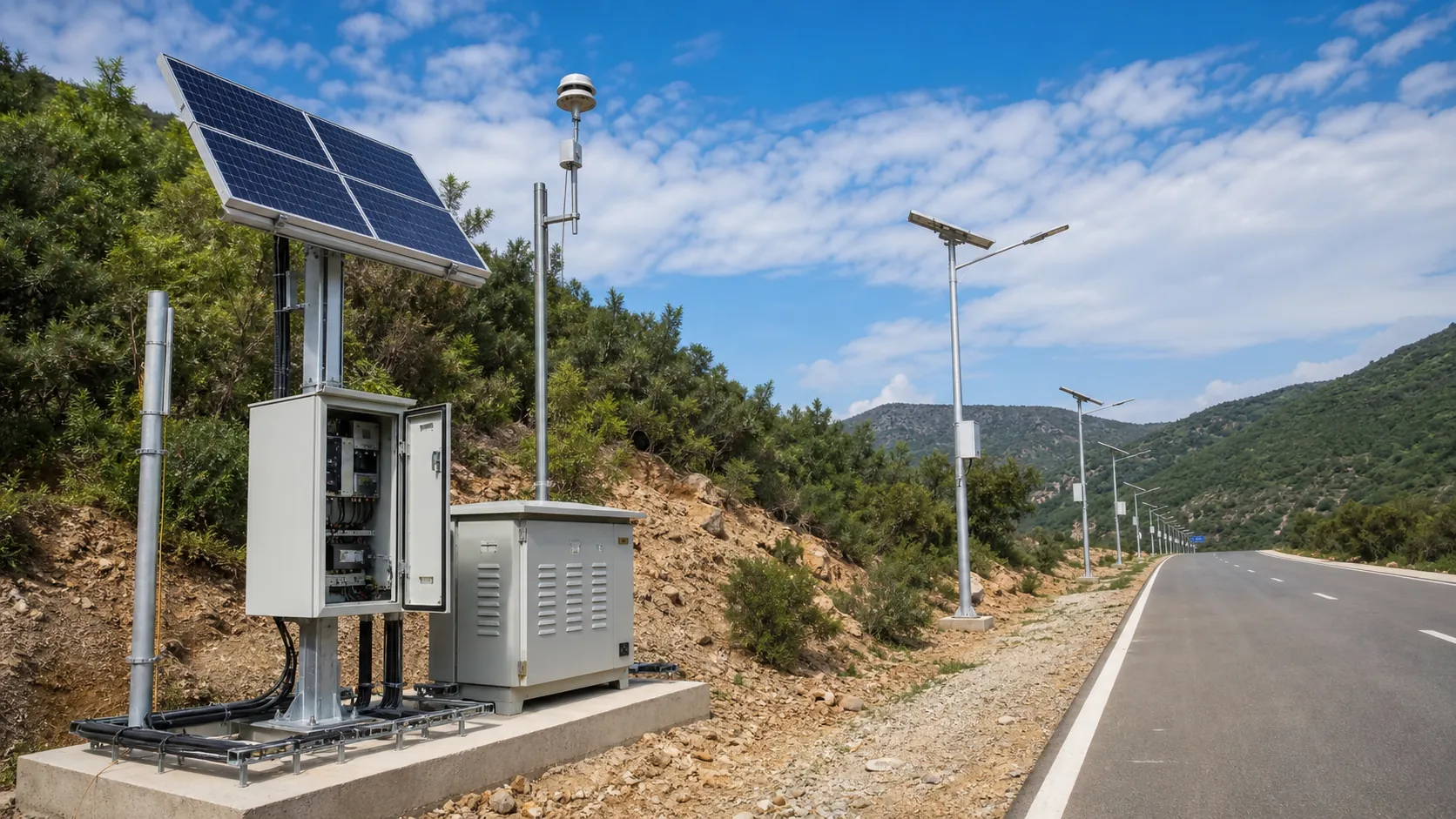
Power and Connectivity
How to choose power, battery, solar, NB-IoT, LTE, LoRaWAN, gateways and monitoring strategy for outdoor IoT infrastructure.
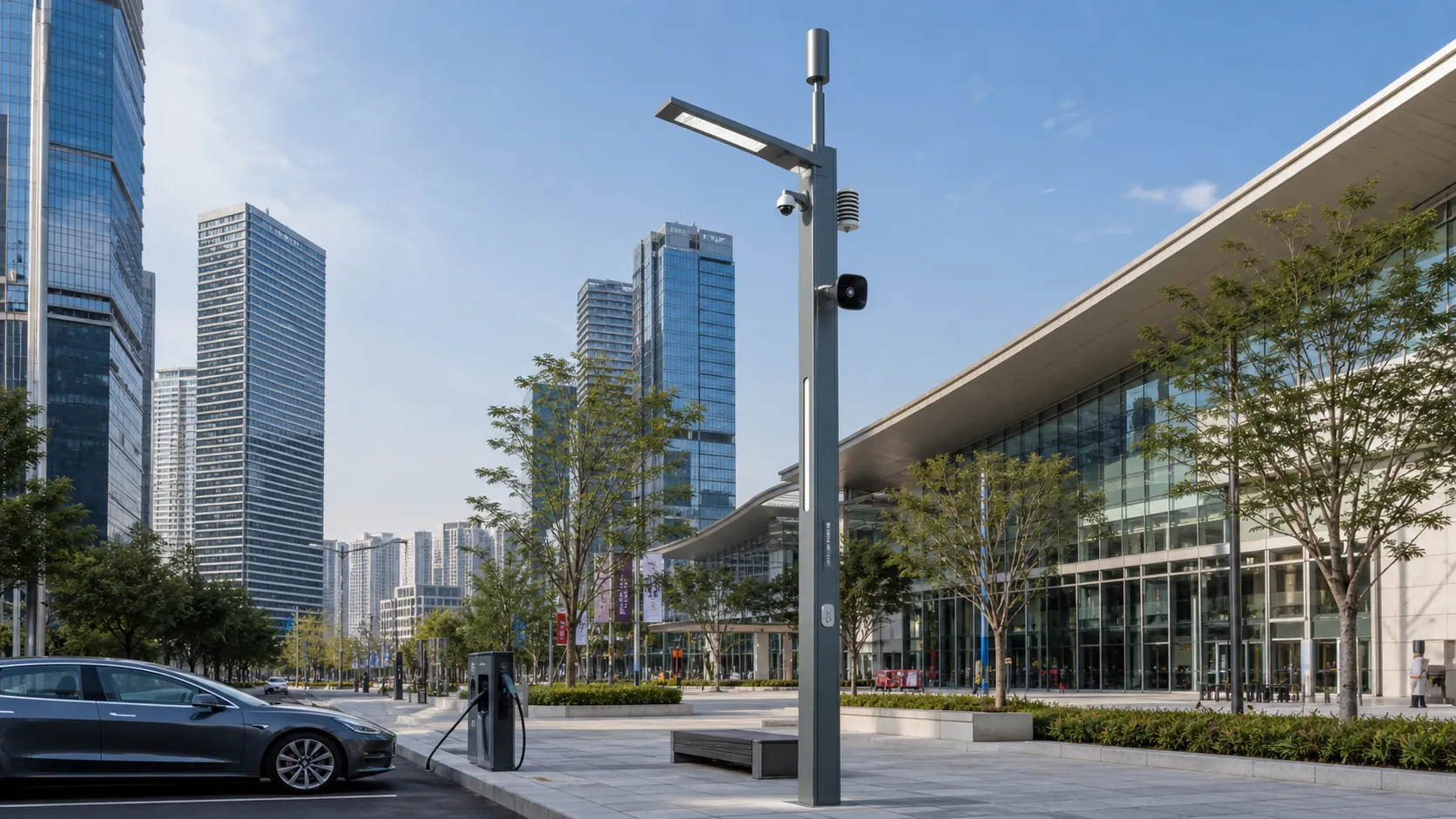
Campuses
Campus IoT for lighting, parking, safety, smart poles, environmental data and facility maintenance workflows.
Frequently Asked Questions
What is a drone-in-a-box docking station and how does it work?
It is a weatherproof ground station that houses a charged industrial drone permanently on site. On a schedule or on-demand, the RC-DIB-900 opens its cover, launches the UAV to fly a mission, then lands it with centimetre RTK precision and recharges automatically — no pilot on site. Video and AI-detected events stream to your platform throughout.
Is the RC-DIB-900 grid-powered or does it need solar?
It is grid-powered by default, running on AC 100–240 V with a LiFePO4 UPS for outage ride-through, because most sites (campuses, rooftops, substations, ports) have mains power. Off-grid solar or wind-solar hybrid is offered only as a configuration for remote sites with no grid connection — power is matched to the site, never defaulted to solar.
What is the operating radius and flight time of the integrated drone?
The typical integrated industrial UAV offers 40–55 minutes of flight time and an operating radius of up to 10 km from the dock, depending on airframe, payload, wind and local regulations. Higher-cadence coverage can use an automated battery-swap magazine for near-continuous operation.
Can it fly autonomously without a pilot, and does it support BVLOS?
Yes. Missions run automatically from the management platform or a connected command system, with the full launch-fly-land-charge cycle unattended. The architecture is BVLOS-ready with Remote ID, geofencing, redundant links and flight logging; actual BVLOS operation depends on approvals from your local civil-aviation authority.
How does the station cope with rain, wind, heat and cold?
The station is rated IP55 (electronics IP66) and sealed when closed, with heating, cooling and dehumidification giving a −30 °C to +55 °C envelope. Onboard weather sensors auto-defer launches and command safe return-to-dock in unsafe wind or precipitation; the closed station survives storm winds up to about 45 m/s in stow.
Does REDCOAST.LTD build the drone or the docking station?
REDCOAST.LTD engineers the complete ground solution — the climate-controlled docking station, the custom power/charging/thermal/actuator and edge-AI PCBs, the management platform and mobile app — and integrates a supported industrial UAV, either sourced and integrated by REDCOAST.LTD or supplied by the customer. We deliver and support it as one turnkey system.
How long does the station keep running during a power outage?
The onboard LiFePO4 UPS keeps the station and communications alive for roughly 6–12 hours in standby and can safely land a UAV that is already airborne when mains power fails, so no aircraft is lost to an outage.
Can it integrate with our existing VMS or command centre?
Yes. The station exposes RTSP/ONVIF video plus REST/MQTT event push, so it can feed an existing VMS, SOC or smart-city command platform. The REDCOAST.LTD web platform and app are available but optional, letting you keep your current operations software.