Overview
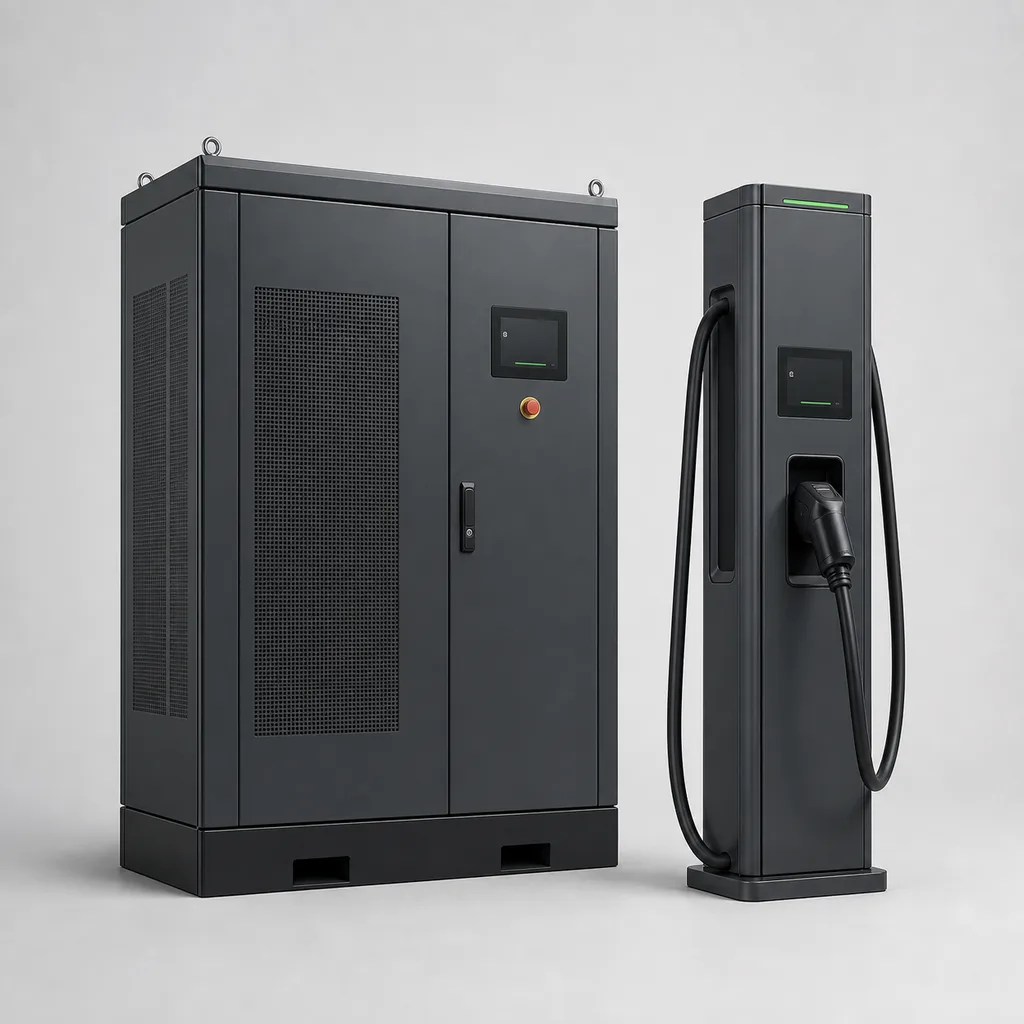
The REDCOAST.LTD RC-EBC-600 is a complete grid-connected charging and energy-management solution for electric bus depots, BRT terminals, and commercial fleet yards. Electrifying a fleet is not about installing a single charger — it is about charging dozens of vehicles overnight within a fixed grid connection, guaranteeing every bus leaves on schedule with the required state of charge, and doing all of this without tripping the depot's main breaker or paying punishing demand charges. The RC-EBC-600 addresses that whole problem end-to-end: modular power cabinets, plug-in CCS2 dispensers and OppCharge pantograph masts on the hardware side, and a self-developed OCPP 2.0.1 charge-management platform with dynamic load balancing, sequential charging, and departure-time-aware scheduling on the software side. It is delivered by one team as an integrated system — hardware, web platform and mobile app — and the power-control, CCS communication and group-controller PCBs are engineered in-house by REDCOAST.LTD so the system can be tuned to each depot's grid capacity, fleet mix and duty cycle.
Key Features
- Modular power architecture: centralized power cabinets (feeding many low-cost dispensers) or all-in-one units, scalable from a single vehicle to 100+ charging points per depot.
- Dual charging modes: plug-in CCS2 (Combined Charging System) cable dispensers for overnight depot charging, plus OppCharge-compliant inverted pantograph masts for fast en-route and layover opportunity charging.
- Wide power range: 40–180 kW per plug-in dispenser and 150–450 kW per pantograph output, with dynamic power sharing across outputs from a common DC bus.
- Smart, departure-aware charging: the platform charges each bus to its required SoC by its scheduled departure time, spreading load across the night to flatten the demand curve.
- Dynamic load management & peak shaving: real-time balancing keeps total draw within the grid connection limit; optional integration with on-site PV and battery storage further reduces demand charges.
- Fleet & depot integration: open interfaces to Depot/Fleet Management Systems and ITCS (per VDV 463 concepts), so charging follows the operational timetable, not a fixed clock.
- ISO 15118 Plug & Charge and bidirectional-ready (V2G/V2X capable hardware) for future grid-services revenue.
- Rugged outdoor build: IP54/IP55 cabinets, powder-coated steel, -30 to +55 °C operation, corrosion- and dust-resistant for coastal, desert and high-humidity depots.
- Full remote O&M: web SCADA dashboard, mobile app, live fault alerts, energy metering per vehicle, and OTA firmware updates.
Technical Architecture
At the core of the RC-EBC-600 is a REDCOAST.LTD-designed power-control and group-controller PCB set. Incoming medium- or low-voltage grid power feeds a bank of active-front-end (AFE) rectifier modules that create a common regulated DC bus; from that bus, power-routing switches deliver energy to plug-in dispensers or pantograph masts as demand dictates. Because power is pooled and dynamically allocated rather than hard-wired one-cabinet-per-vehicle, a depot can install more charging points than its peak power would otherwise allow and let the software schedule around the constraint.
Each charging output runs a self-developed CCS communication controller implementing DIN 70121 and ISO 15118-2/-20 (PLC HomePlug Green PHY over the Control Pilot), handling contactor sequencing, insulation monitoring (IMD), pre-charge, and CP/PP logic with full protective interlocks. The OppCharge pantograph masts use an inverted (mast-down) pantograph that lowers onto roof rails on the bus, with local WLAN (IEC 61851-23-1 / OppCharge) association and automated contact — the driver simply parks under the mast.
The group controller aggregates every output over a depot LAN and speaks OCPP 2.0.1 northbound to the RC-EBC management platform. The platform holds the fleet's departure schedule, per-vehicle energy targets and battery limits, computes an optimal charging plan every few seconds, and pushes smart-charging setpoints (OCPP ChargingProfiles) down to each output. A local edge controller keeps the depot safe and balanced even if the cloud link drops. Data — session energy, SoC, faults, meter values — flows to both the on-premise SCADA and the cloud dashboard/app for operators and maintenance crews.
Connectivity & Power
Power (grid): The RC-EBC-600 is a mains-connected depot system. It is fed from the site's LV switchboard (400 VAC 3-phase) or via an integrated/adjacent MV transformer skid (up to 10/20/35 kV distribution) for large depots. It is not a solar product — bus depots sit inside cities and yards with full grid coverage; on-site PV and battery storage are supported only as optional demand-charge-reduction and resilience add-ons, never as the primary supply. Power factor correction and low-harmonic AFE rectification (THDi < 5%) keep the depot compliant with utility interconnection requirements.
Connectivity: Depot backbone is wired Gigabit Ethernet / fiber between cabinets, dispensers and the edge controller for deterministic control. Northbound cloud connectivity uses the depot's fixed internet with 4G/5G cellular failover. OppCharge pantograph association uses local WLAN per standard. All external comms are TLS-encrypted, and OCPP security profiles are supported.
Protection & Reliability
Power cabinets and dispensers are rated IP54–IP55 with IK10 impact resistance and a smooth matte powder-coated steel enclosure over a corrosion-protected substrate for coastal and industrial air. Operating range is -30 to +55 °C with forced-air or liquid cooling on high-power modules; heated variants extend cold-climate operation. Protections include insulation monitoring, residual-current detection (Type B RCM / 6 mA DC), over-voltage/over-current, over-temperature, surge protection (Type 2 SPD), emergency stop, and cable/connector temperature monitoring on high-current cables (liquid-cooled cables optional above 250 kW). Modular hot-swappable power blocks and N+1 redundancy targets keep fleet availability high; the design targets a 10-year+ service life with a serviceable, field-replaceable module strategy.
Application Scenarios
- Urban bus depots (overnight charging): Dozens of buses plug in at end-of-service; the platform charges each to target SoC by its morning departure, spreading load overnight to avoid peak demand charges and grid upgrades.
- BRT terminals & route end-points (opportunity charging): OppCharge pantograph masts top up buses during scheduled layovers in 3–8 minutes, enabling smaller on-board batteries and all-day operation.
- Mixed commercial fleet yards: Delivery vans, refuse trucks and shuttle fleets share a pooled-power depot with prioritized, schedule-aware charging.
- Airport & campus shuttle fleets: Predictable duty cycles paired with plug-in charging and demand management inside a fixed grid connection.
- Logistics & e-truck hubs: High-power CCS2 dispensers for heavy vehicles with load balancing across the site's transformer capacity.
- Depot expansion / phased electrification: Operators start with a few outputs and grow power cabinets and dispensers year over year without re-engineering the control system.
Case-style Examples
Overnight depot electrification (mid-size city bus fleet): A transit operator needed to charge 40 electric buses on a grid connection sized for far less than 40 × full power. The RC-EBC-600 was deployed as centralized power cabinets feeding 40 plug-in dispensers; departure-aware smart charging kept total draw under the connection cap all night, and every bus met its morning SoC target. Result: fleet electrified without a costly grid-capacity upgrade, and demand charges cut by shifting load off the evening peak.
BRT opportunity charging (high-frequency corridor): A bus rapid transit line running long daily distances could not carry enough battery for a full day. Two OppCharge pantograph masts at the route terminals delivered 300 kW top-ups during driver layovers; buses ran the full timetable on smaller, lighter batteries. Result: continuous service with reduced battery cost and weight per vehicle.
Phased logistics-hub rollout: A parcel operator electrifying a van and light-truck yard began with eight CCS2 outputs and one power cabinet, integrated to their fleet management system. As the fleet grew, additional power blocks and dispensers were added to the same platform. Result: pay-as-you-grow electrification with no re-commissioning of the management software.
Customization & Selection Guide
- Choose plug-in vs. pantograph: Overnight depots with long dwell times favor low-cost plug-in CCS2 dispensers; short-dwell route/terminal charging favors OppCharge pantograph masts. Many operators mix both.
- Size the power: Match total installed power to your grid connection and duty cycle, not to peak-per-vehicle. Because power is pooled, most depots need far less connection capacity than a naive sum. REDCOAST.LTD runs a depot load study to right-size cabinets and connection.
- Per-output power: 40–120 kW for overnight fleets, 150–450 kW for opportunity and heavy-vehicle charging.
- Cooling & climate: Air-cooled for standard climates; liquid-cooled cables and modules for high-power/high-ambient sites; heated enclosures for extreme cold.
- Energy add-ons: Add PV + battery storage for demand-charge reduction and outage resilience; specify bidirectional (V2G) hardware if grid-services revenue is a goal.
- Standards market fit: CCS2 (Europe/most markets) or CCS1/other connectors on request; MV skid voltage set to the local distribution standard.
Deployment & After-sales
Deployment follows a structured path: depot load and layout study → single-line and civil design → factory build and FAT of power cabinets and control PCBs → on-site installation, MV/LV connection and commissioning → integration testing with the fleet/depot management system → operator training and handover. REDCOAST.LTD provides the management platform (on-premise or cloud), commissioning support, remote monitoring, spare-parts kits, and a modular field-replaceable design that minimizes downtime. Lead time is project-dependent and confirmed per depot size; SLA-based remote diagnostics and firmware OTA are included with the platform.
Standards & Compliance
Designed toward IEC 61851-1 / -23 / -23-1 (DC charging and automated connection), IEC 62196 (CCS2 connectors), DIN 70121 & ISO 15118-2/-20 (vehicle communication, Plug & Charge, bidirectional-ready), OppCharge / IEC 61851-23-1 pantograph interface, OCPP 2.0.1 (charge-management protocol), VDV 463 concepts for depot/ITCS integration, plus CE, RoHS, EMC (IEC 61000), and electrical safety and grid-interconnection requirements per the destination market. Enclosures rated to IP54–IP55 / IK10.
Why REDCOAST.LTD
REDCOAST.LTD delivers the depot as one integrated system rather than a bag of parts. The power-control, CCS communication and group-controller boards are designed and built in-house — so the smart-charging logic, safety interlocks, protocol stack and load-management algorithms are ours to tune to your grid capacity, fleet mix and timetable. Hardware, web platform and mobile app come from a single team, with custom PCBs opened per project when a depot needs something off-the-shelf systems cannot do. The result adapts to any climate, grid standard and compliance regime worldwide.
Contact REDCOAST.LTD for a depot load study and a tailored electric-fleet charging proposal.
Specifications
Charging Output (Plug-in CCS2 Depot)
- Output Power per Dispenser
- 40-180 kW
- Output Voltage Range
- 150-1000 VDC
- Max Output Current (air-cooled)
- up to 250 A
- Max Output Current (liquid-cooled cable)
- up to 500 A
- Connector
- CCS2 (CCS1 / GB/T optional)
- Outputs per Cabinet
- 1-8 (power-shared)
Opportunity Charging (OppCharge Pantograph)
- Output Power per Mast
- 150 / 300 / 450 kW
- Pantograph Type
- Inverted (mast-down)
- Contact Interface
- 4-pole roof rails (OppCharge)
- Association
- Local WLAN (IEC 61851-23-1)
- Typical Top-up Time
- 3-8 min
Power Input & Distribution (Grid)
- LV Input
- AC 400 (3P+N+PE), 50/60 V / Hz
- MV Input (skid option)
- 10 / 20 / 35 kV distribution
- Rectification
- Active Front End (AFE)
- Power Factor
- >0.99
- Input Current THD
- <5 %
- Peak Efficiency
- >95 %
Smart Charge Management
- Management Protocol
- OCPP 2.0.1 (1.6J compatible)
- Vehicle Comms
- DIN 70121, ISO 15118-2/-20
- Load Management
- Dynamic, site-wide
- Charging Points per Site
- 1 to 100+
- Scheduling
- Departure-time / SoC aware
- Fleet Integration
- DMS / ITCS (VDV 463)
- Bidirectional (V2G)
- Hardware-ready (optional)
Connectivity & Control
- Depot Backbone
- Gigabit Ethernet / Fiber
- Cloud Uplink
- Fixed line + 4G/5G failover
- Metering
- MID-class per output
- Security
- TLS 1.2/1.3, OCPP security profiles
- Firmware Update
- OTA
Protection & Enclosure
- Ingress Protection
- IP54-IP55
- Impact Resistance
- IK10
- Operating Temperature
- -30 to +55 °C
- Cooling
- Forced-air / liquid (high power)
- Safety
- IMD, Type B RCM (6mA DC), SPD Type 2, E-Stop
- Enclosure Finish
- Powder-coated corrosion-protected steel
- Design Service Life
- 10+ years
Capabilities — configurable per project
Specifications are tailored to each project — the options below show what we can support.
Charging Interface
- Plug-in CCS2 dispenser
- OppCharge pantograph mast
- Mixed depot + terminal
Per-output Power
- 40-60 kW overnight
- 80-120 kW depot fast
- 150-450 kW opportunity/heavy
Grid Interface
- LV 400 VAC connection
- MV transformer skid (10/20/35 kV)
- PV + battery storage add-on
Energy Services
- Smart scheduled charging
- Demand peak shaving
- Bidirectional V2G-ready
Cooling / Climate
- Air-cooled standard
- Liquid-cooled cable/module
- Heated cold-climate enclosure
Related solution guidance
Solar Off-Grid IoT
Design solar-powered outdoor IoT systems with panels, batteries, controllers, low-power devices, gateways and remote power monitoring.
Power and Connectivity
How to choose power, battery, solar, NB-IoT, LTE, LoRaWAN, gateways and monitoring strategy for outdoor IoT infrastructure.

Street Lighting Guide
A practical guide to choosing smart street lighting controllers, connectivity, platform features, dimming logic and acceptance tests.
Frequently Asked Questions
What is the difference between depot charging and opportunity (pantograph) charging for electric buses?
Depot charging uses plug-in CCS2 cables to charge buses slowly overnight while they are parked, which is cheaper per point and easy to scale. Opportunity charging uses an OppCharge pantograph mast to deliver 150-450 kW top-ups during short layovers at route terminals, letting buses run all day on smaller batteries. The RC-EBC-600 supports both, and many operators combine them.
How does smart charge management avoid overloading the depot's grid connection?
The RC-EBC-600 pools power on a common DC bus and runs dynamic, site-wide load management over OCPP 2.0.1. It knows each bus's required state of charge and scheduled departure, then spreads charging across the night so total draw never exceeds the grid connection limit. This lets a depot install more charging points than its peak power alone would allow and cuts demand charges.
Which standards and protocols does the system comply with?
It is designed toward IEC 61851-1/-23/-23-1, IEC 62196 (CCS2), DIN 70121 and ISO 15118-2/-20 for vehicle communication and Plug & Charge, the OppCharge pantograph interface, and OCPP 2.0.1 (1.6J compatible) for charge management. Depot/fleet integration follows VDV 463 concepts, with CE, RoHS and EMC compliance per the destination market.
Is this a solar-powered charging system?
No. Bus depots and BRT terminals sit in cities and yards with full grid coverage, so the RC-EBC-600 is a mains-connected system fed from the site's LV switchboard or an MV transformer skid. On-site solar PV and battery storage are supported only as optional add-ons for demand-charge reduction and outage resilience, never as the primary supply.
How many buses can one depot system charge, and can it grow over time?
The modular power-cabinet architecture scales from a single charging point to 100+ per depot. Operators typically start with a few outputs and add power blocks and dispensers as the fleet grows, all managed by the same platform with no software re-commissioning.
Can REDCOAST.LTD customize the system for our grid voltage, connectors and climate?
Yes. REDCOAST.LTD designs the power-control, CCS communication and group-controller PCBs in-house and delivers hardware, web platform and app as one integrated system. Connector type (CCS2/CCS1/GB-T), MV skid voltage (10/20/35 kV), cooling (air or liquid), and cold- or hot-climate enclosures are all configured per project, and custom PCBs are opened when a depot needs something standard products cannot do.
Does the system support bidirectional charging (V2G) and Plug & Charge?
The hardware is bidirectional-ready for future V2G/V2X grid-services revenue, and ISO 15118 Plug & Charge is supported for automatic, secure authentication and billing without driver interaction. These can be enabled per project as market rules and fleet needs evolve.