Overview
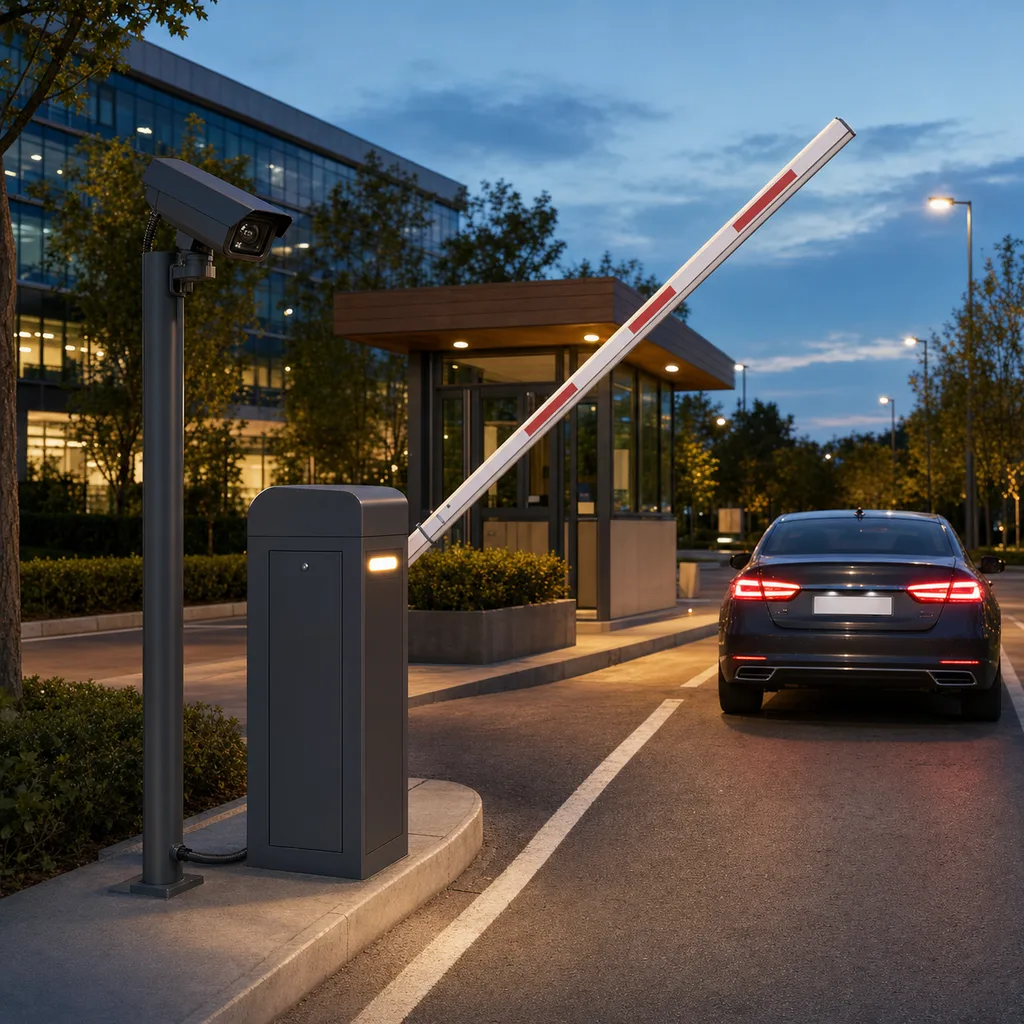
The REDCOAST.LTD RC-LPR-300 is a grid-powered, integrated vehicle access control and barrier gate system built for the entry and exit lanes of parking lots, gated residential and corporate campuses, government and military compounds, hospitals, hotels, logistics yards and industrial sites. It fuses an edge-AI license-plate-recognition (LPR/ANPR) camera, a high-MCBF brushless servo barrier operator, a multi-protocol access controller and a battery-backed power management unit into one coordinated package — so an authorized vehicle is identified and admitted in well under two seconds without the driver touching a card, ticket or intercom. Because REDCOAST.LTD designs its own boards, the barrier servo controller, the LPR edge-AI carrier and the access controller are developed in-house and tuned per project, giving operators a single, deeply customizable, software-plus-hardware solution rather than a box of mismatched third-party parts.
Key Features
- Edge-AI LPR with no cloud dependency — on-board NPU recognizes plates locally at ≥99.5% accuracy under good conditions, day and night, with results in 100–300 ms.
- Worldwide plate libraries — recognizes plates from 180+ countries and regions, including multi-line, stacked and non-Latin scripts, so the same hardware deploys on any continent.
- Brushless servo barrier — 24 V DC BLDC servo with absolute encoder, soft start/stop and 100% duty cycle; adjustable opening time from 0.6 s (fast lane) to 6 s (6 m arm).
- Anti-crash protection — inductive ground loop plus 24 GHz radar prevents the arm dropping on a vehicle and enforces tailgating control (one car, one open).
- Multi-credential access — LPR as primary, with UHF RFID, QR code, Bluetooth (BLE) phone, and Mifare/EM card as fallbacks for visitors and unplated vehicles.
- Open integration — Wiegand 26/34, RS-485 (Modbus), TCP/IP, MQTT and REST API connect to existing parking, payment, PMS and building-management platforms.
- Battery-backed continuity — integrated LiFePO4 UPS keeps the lane live through grid outages so entries are never blocked.
- SaaS + mobile app — cloud dashboard for whitelist/blacklist, time rules, multi-site management, and a driver/operator app for remote open and visitor pre-registration.
- Built for the outdoors — IP66 camera and IP55 powder-coated barrier cabinet, –30 to +60 °C, with surge and salt-fog protection.
Technical Architecture
The system is organized around four REDCOAST.LTD-developed boards. The LPR edge-AI carrier drives a 2/4/9 MP global-shutter sensor with a motorized 2.8–12 mm lens and IR fill light; an on-board NPU (up to 4 TOPS) runs detection, plate localization and OCR locally and outputs the plate string, confidence, vehicle color/type and a forensic snapshot. The brushless servo barrier controller closes a torque/position loop on the BLDC motor using the absolute encoder, manages soft start/stop ramps, monitors current for obstruction sensing, and exposes safety inputs for the loop detector, radar and safety edge. The multi-protocol access controller holds the offline whitelist (up to 100,000 plates) and event log (up to 1,000,000 records), evaluates time-zone and anti-passback rules, and switches the barrier relay even if the network is down. The power management board rectifies mains, charges and supervises the LiFePO4 pack, and reports cabinet temperature and door status. A typical flow: the loop/radar wakes the camera, the LPR board returns a plate, the access controller checks it against local rules in milliseconds, raises the barrier, and asynchronously syncs the event and snapshot to the cloud over Ethernet or 4G. Edge-first logic means the lane keeps working during a WAN outage; the cloud handles reporting, multi-site policy and the mobile app.
Connectivity & Power
Northbound connectivity is selectable per site: wired Gigabit Ethernet for campuses with structured cabling, Wi-Fi for retrofit lanes, and 4G/5G for standalone gatehouses without a drop. Southbound, the controller speaks Wiegand to legacy panels, RS-485/Modbus to LED fee displays and bollards, and MQTT/REST to modern platforms. As an entry-lane fixture sited where mains is always available, the RC-LPR-300 is grid-powered (AC 100–240 V, 50/60 Hz) with an integrated LiFePO4 UPS for ride-through and graceful shutdown — solar is offered only as a special-order option for genuinely off-grid remote gates (e.g. quarry haul-road or desert site entries), never as a default.
Protection & Reliability
The barrier cabinet is hot-dip-galvanized steel finished with a smooth matte powder coat (not raw galvanized) for corrosion life in coastal and industrial air; rated IP55, the camera housing IP66. Operating range is –30 to +60 °C with optional cabinet heater for arctic sites. Surge protection (up to 6 kV) guards the mains and signal lines. The servo operator is rated for ≥5,000,000 MCBF cycles, and a folding/articulated arm option protects against low-clearance ceilings and high-cycle commercial lanes. Self-diagnostics report motor current trends, encoder health, door-open and over-temperature events for predictive maintenance.
Application Scenarios
- Commercial parking lots & garages — touchless entry/exit, plate-based ticketless billing and 30–40 vehicles/minute throughput at peaks.
- Gated residential & corporate campuses — resident/staff plates auto-admit; visitors use pre-registered QR or BLE; tailgating is blocked by single-pass radar.
- Government, military and correctional compounds — whitelist-only entry, blacklist alerts, full forensic snapshots and anti-passback for restricted areas.
- Hospitals & hotels — VIP/ambulance fast-lane recognition, valet integration, and PMS-linked guest access.
- Logistics yards, ports and industrial sites — truck plate logging, weighbridge and dock-door integration, 24/7 unattended operation.
- Toll-style community feeder roads — pre-authorized vehicles flow without stopping while unknown plates are routed to an intercom.
Case-style Examples
Multi-lane commercial parking retrofit: an operator replaced ticket dispensers on four lanes with RC-LPR-300 units, choosing 4 MP cameras and 3 m straight arms; ticketless LPR billing cut average entry time by roughly 40% and removed paper-ticket cost, with the existing payment platform integrated over REST.
Gated campus entry deployment: a corporate park specified folding arms (low canopy), UHF RFID for fleet vehicles plus LPR for staff cars, and BLE visitor passes issued through the app; anti-passback and single-pass radar eliminated tailgating into staff parking.
Remote industrial site entry: a quarry gatehouse with no mains drop used the special-order grid+solar hybrid power option and 4G backhaul, logging every truck plate to the cloud for unattended 24/7 access while keeping the lane live off-grid.
Customization & Selection Guide
Choose the arm type by clearance and cycle rate: straight 3–6 m for open lanes, folding/articulated for low ceilings, and fence-boom for pedestrian-blocking. Choose the camera by lane geometry and speed: 2 MP for short single lanes, 4 MP as the balanced default, 9 MP for wide or fast approaches and oblique angles. Pick identification mix per user base — LPR-only for fully plated fleets, add UHF RFID for high-speed long-range tags, QR/BLE for visitors. Select vehicle detection — inductive loop for simplicity, radar where cutting a loop is impractical, or both for the strongest anti-crash and anti-tailgating. For integration, specify Wiegand for legacy panels or MQTT/REST for modern cloud platforms. REDCOAST.LTD tunes board firmware, housing color (RAL on request) and mounting to the project.
Deployment & After-sales
The barrier and LPR pole are foundation- or surface-mounted on the lane island; commissioning covers loop/radar calibration, plate-region tuning, whitelist import and platform integration. Delivery is lead-time-driven by quantity and customization, and REDCOAST.LTD provides remote diagnostics, firmware updates, spare-arm/servo stocking and engineering support across the product life. On-site or remote training is available for operators.
Standards & Compliance
Designed toward CE, RoHS and FCC; gate-operator safety aligned to EN 13241-1 / EN 12453 (Europe) and UL 325 (North America) entrapment-protection practice; enclosure ingress protection to IEC 60529 (IP55/IP66) and surge immunity to IEC 61000-4-5. Data handling supports on-premise/edge storage for privacy-sensitive jurisdictions.
Why REDCOAST.LTD
REDCOAST.LTD delivers end-to-end smart-IoT solutions — hardware, web management platform and mobile app, integrated by one team. Our differentiator is in-house board design: we develop the servo barrier controller, LPR edge-AI carrier, access controller and power management PCB ourselves and open custom PCBs per project, so behavior, protocols, housings and firmware are tuned to your site rather than constrained by off-the-shelf parts. The result is a controllable, deeply customizable access-control solution that adapts to any climate, grid and compliance environment.
Contact REDCOAST.LTD to scope a custom LPR access-control deployment for your lanes.
Specifications
Barrier Operator
- Motor Type
- 24 V DC brushless servo with absolute encoder
- Drive Power
- 100-200 W
- Arm Type
- Straight / Folding / Fence
- Arm Length
- 1-6 m
- Opening Time (adjustable)
- 0.6-6 s
- Duty Cycle
- 100 %
- MCBF
- ≥5,000,000 cycles
- Safety
- Soft start/stop, current-based obstruction, safety edge input
LPR / Edge-AI Camera
- Sensor
- 2 / 4 / 9 MP
- Lens
- Motorized 2.8-12 mm
- Recognition Accuracy
- ≥99.5 (ideal conditions) %
- Recognition Distance
- 3-30 m
- Plate Libraries
- 180+ countries/regions
- Edge AI Compute
- up to 4 TOPS
- Recognition Latency
- 100-300 ms
- IR Fill Light Range
- up to 20 m
Access Control & Detection
- Credentials
- LPR, UHF RFID, QR, BLE, Mifare/EM card
- Offline Plate Capacity
- up to 100,000 records
- Offline Event Log
- up to 1,000,000 records
- Vehicle Detection
- Inductive loop + 24 GHz radar
- Throughput (peak)
- 30-40 veh/min
- Anti-tailgating
- Single-pass radar (one car, one open)
Connectivity & Integration
- Northbound
- Gigabit Ethernet / Wi-Fi / 4G / 5G
- Southbound
- Wiegand 26/34, RS-485 (Modbus)
- Cloud / API
- TCP/IP, MQTT, REST API
- Platform
- Web SaaS + mobile app (iOS/Android)
Power (grid)
- Input Voltage
- AC 100-240, 50/60 Hz V
- Power Consumption (idle)
- 8-15 W
- Power Consumption (peak)
- 150-250 W
- UPS Backup
- LiFePO4, ride-through + graceful shutdown
- Surge Protection
- up to 6 kV
Protection & Environment
- Barrier Cabinet IP Rating
- IP55
- Camera IP Rating
- IP66
- Operating Temperature
- -30 to +60 ℃
- Housing
- Hot-dip galvanized + matte powder coat (RAL on request)
- Corrosion / Salt-fog
- Coastal & industrial rated
Capabilities — configurable per project
Specifications are tailored to each project — the options below show what we can support.
Barrier Type
- Straight arm 3-6 m
- Folding arm (low clearance)
- Fence boom
- Fast lane 0.6-1.2 s
Identification
- LPR (primary)
- UHF RFID
- QR code
- Bluetooth (BLE)
- Mifare/EM card
Vehicle Detection
- Inductive loop
- 24 GHz radar
- Loop + radar
Connectivity
- Gigabit Ethernet
- Wi-Fi
- 4G/5G
Power
- Grid
- Grid + LiFePO4 UPS
- Grid + solar hybrid (remote, special order)
Related solution guidance
Industrial Parks
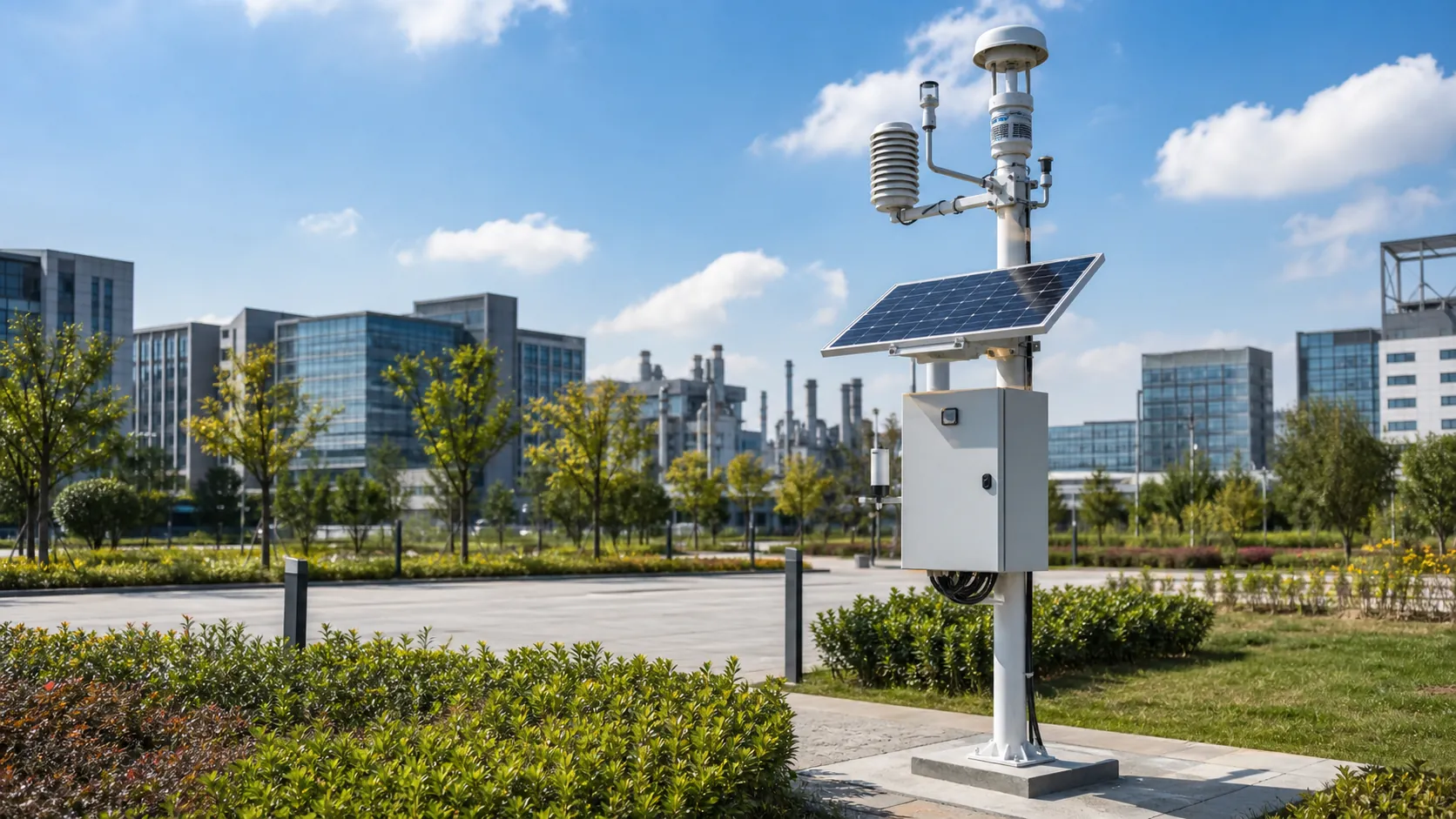
Industrial park IoT for lighting, access areas, environmental monitoring, energy visibility, parking and maintenance operations.
Campuses
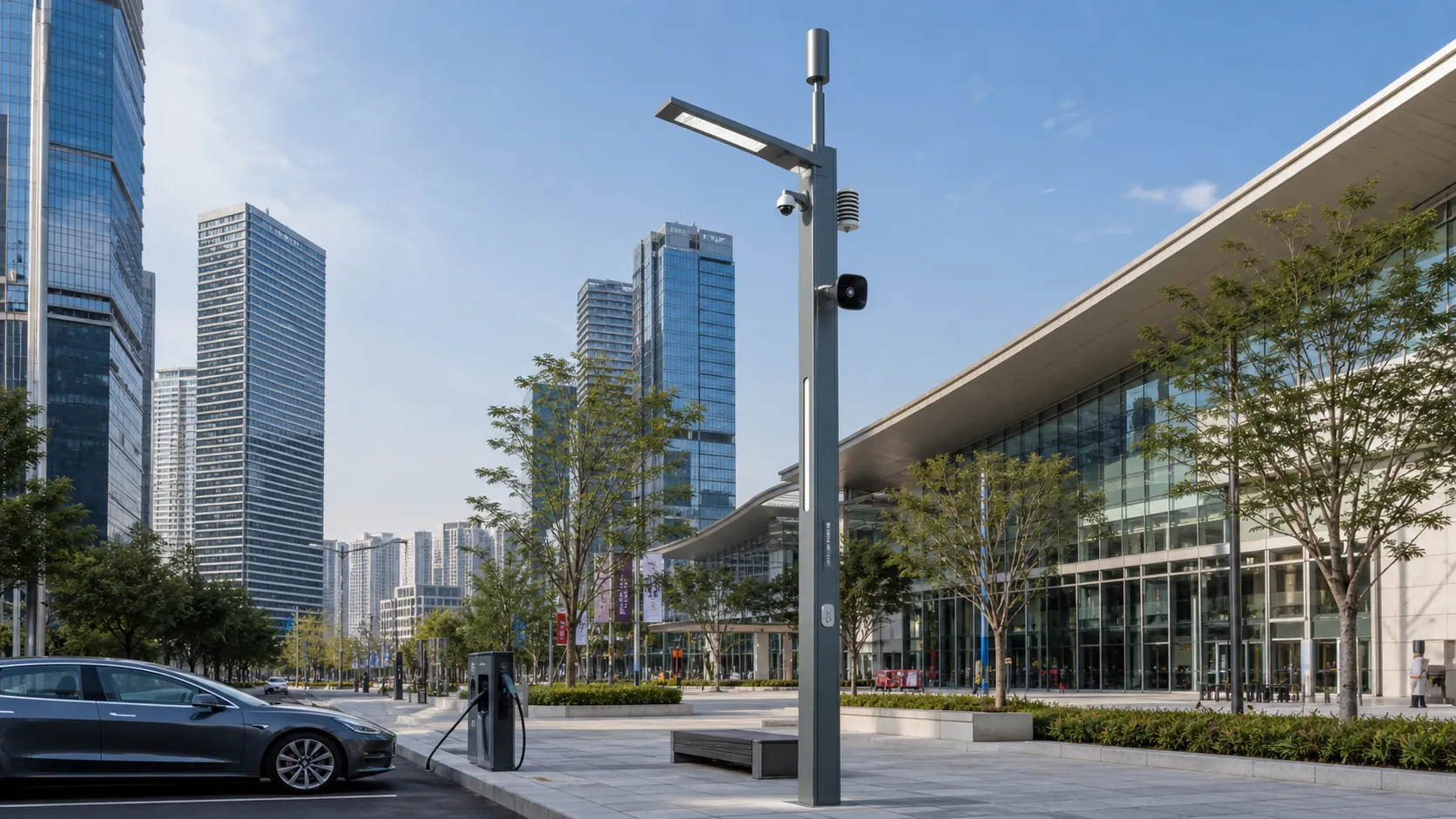
Campus IoT for lighting, parking, safety, smart poles, environmental data and facility maintenance workflows.
Parking Guidance
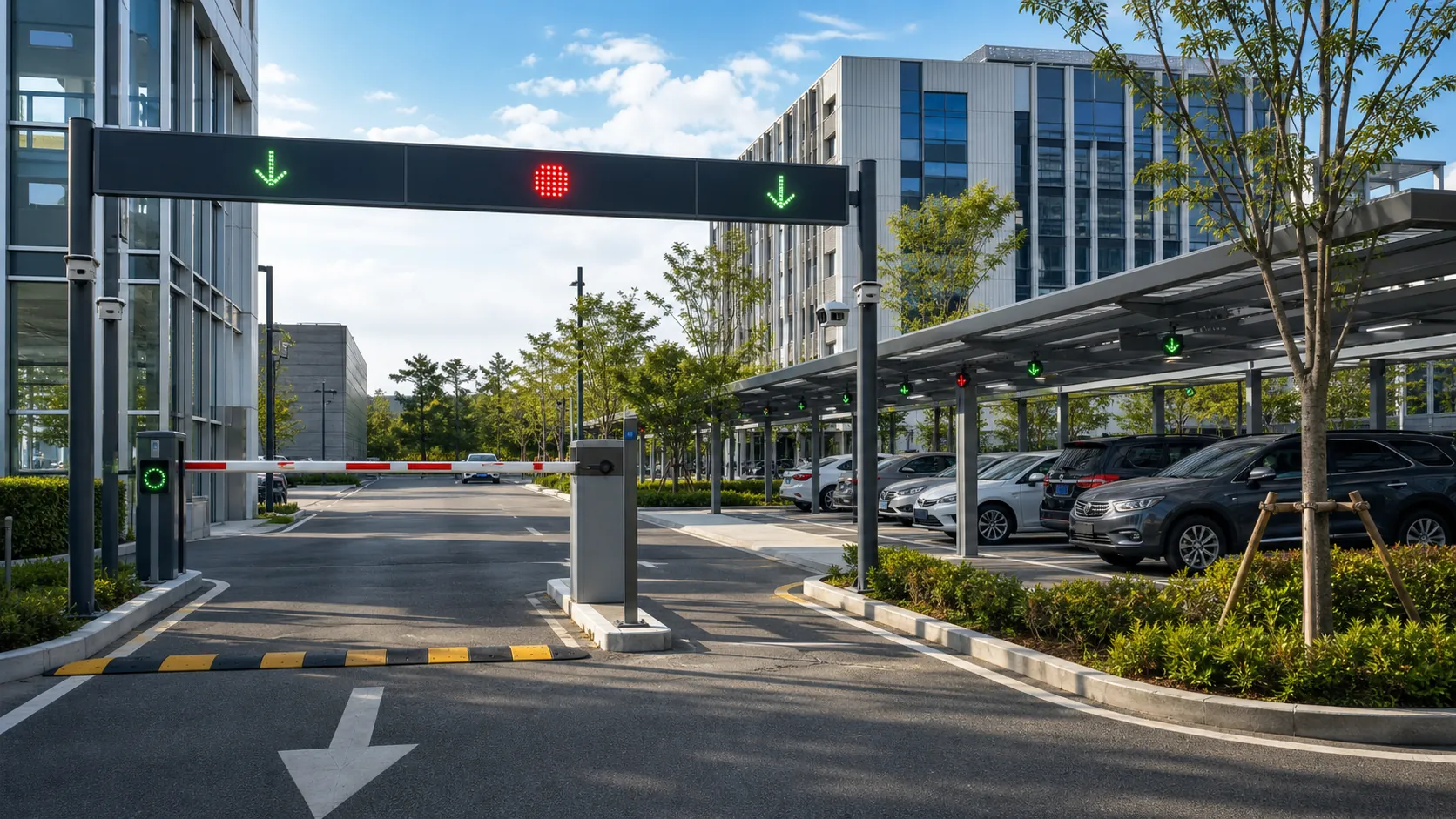
Design outdoor and indoor parking guidance with occupancy detection, entrance displays, bay indicators, operator dashboards and integration-ready APIs.
Frequently Asked Questions
How accurate is the license plate recognition and which countries are supported?
The RC-LPR-300 recognizes plates at ≥99.5% accuracy under good conditions, day or night, using an on-board edge-AI NPU. Its plate libraries cover 180+ countries and regions, including multi-line, stacked and non-Latin-script plates, so the same hardware works anywhere.
Does the gate still work if the internet or cloud goes down?
Yes. Recognition and access decisions run locally on the edge controller, which stores up to 100,000 plates and 1,000,000 events offline. The lane keeps operating during a WAN outage and syncs records to the cloud once connectivity returns.
How fast does the barrier open and how many vehicles can it handle?
Opening time is adjustable from 0.6 s on a fast lane to about 6 s for a 6 m arm. With ticketless LPR entry the system handles roughly 30-40 vehicles per minute at peak, cutting average entry time by up to 40% versus ticket dispensers.
How does it prevent the arm from hitting a car or stop tailgating?
An inductive ground loop and 24 GHz radar detect vehicles under and approaching the arm, so the boom never drops on a car. Single-pass radar logic enforces one-car-one-open to block tailgating into restricted areas.
What if a vehicle has no plate or a visitor arrives?
LPR is the primary credential, with UHF RFID, QR code, Bluetooth (BLE) phone and Mifare/EM card as fallbacks. Visitors can be pre-registered through the mobile app to receive a one-time QR or BLE pass.
Is it grid-powered or does it use solar?
It is a grid-powered entry-lane product (AC 100-240 V) with an integrated LiFePO4 UPS for outage ride-through. Solar is offered only as a special-order option for genuinely off-grid remote gates, not as a default.
Can it integrate with our existing parking or building-management platform?
Yes. It exposes Wiegand 26/34 and RS-485/Modbus for legacy panels and LED displays, plus TCP/IP, MQTT and a REST API for modern parking, payment, PMS and BMS platforms. REDCOAST.LTD tunes the integration per project.
What standards and environmental ratings does it meet?
It is designed toward CE, RoHS and FCC, with gate-operator safety aligned to EN 13241-1 / EN 12453 and UL 325 entrapment practice. The barrier cabinet is IP55 and the camera IP66, rated -30 to +60 °C with surge protection up to 6 kV.