Overview
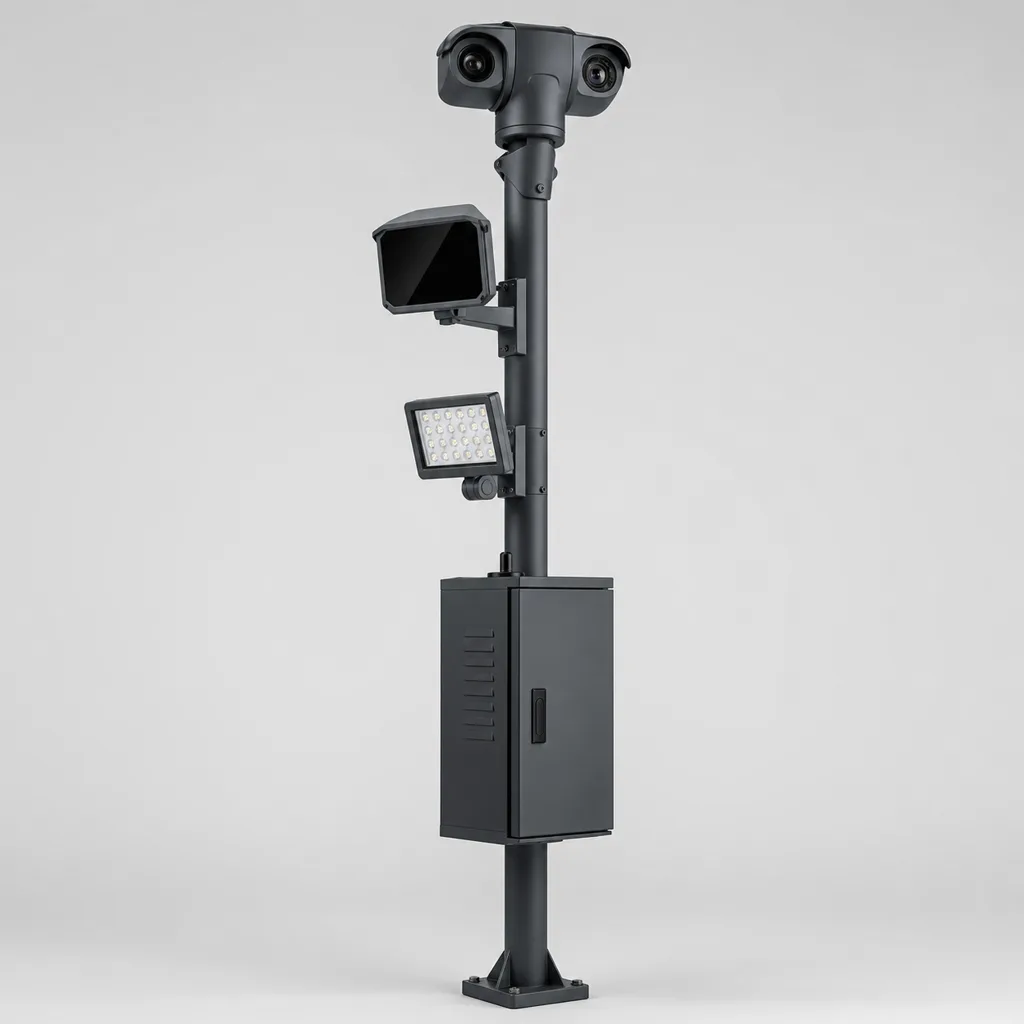
The REDCOAST.LTD RC-PIDS-500 is a grid-powered, multi-layer Perimeter Intrusion Detection System (PIDS) engineered to protect the boundaries of high-value critical infrastructure—electrical substations, airports, water and wastewater plants, oil & gas terminals, data centers, ports, prisons and government compounds. It replaces single-technology fence alarms that drown operators in false alerts with a fused architecture: distributed fiber-optic fence sensing detects the touch on the fence, ground-surveillance radar tracks the approach across the clear zone, and dual-spectrum thermal/visible PTZ cameras with on-board AI visually confirm and classify the target before a single alarm reaches the control room. The result is reliable detection with a low nuisance alarm rate, so guards respond to real threats instead of wind, foliage and small animals. Because most critical sites sit on the grid, the RC-PIDS-500 runs on mains power with an integrated LiFePO4 UPS for ride-through during outages—no solar array is required.
Key Features
- Three-layer fused detection — distributed fiber-optic fence disturbance sensing + frequency-modulated ground-surveillance radar + dual-spectrum (thermal + visible) PTZ assessment, correlated by edge AI for high confidence.
- >95% probability of detection (POD) for climb, cut and lift attempts on chain-link, welded-mesh and palisade fences, with intrusion location accuracy down to ±5 m.
- Low nuisance alarm rate — multi-AI contextual filtering rejects weather, foliage and animal signatures, targeting performance well within the industry benchmark of roughly five nuisance alarms per day per kilometer in good weather.
- Distributed fiber sensing — passive sensing cable on the fence with no electronics or power in the field; a single processor covers up to 2 × 250 m zones, scalable to 5 km, 10 km and beyond per controller for sites from a single yard to 100 km borders.
- Slew-to-cue automation — any fiber or radar event automatically steers the nearest PTZ camera to the breach point, overlays the track and triggers white-light or IR deterrent illumination.
- Edge AI on-pole — REDCOAST self-developed edge AI gateway runs human/vehicle classification and intrusion analytics locally, so detection survives network loss and only verified events consume bandwidth.
- Open integration — ONVIF Profile S/T, RTSP and standard alarm contacts/Modbus/MQTT for seamless connection to existing VMS, PSIM, SCADA and access-control platforms.
- Grid power with UPS ride-through — AC mains input with self-developed power-management PCB and LiFePO4 backup keeps detection and assessment alive through outages.
Technical Architecture
The RC-PIDS-500 is organized as field sensing, edge processing and command layers. At the fence line, a passive distributed fiber-optic sensing cable is fastened to the fabric; an interferometric/phase-sensitive optical front-end—built on a REDCOAST self-developed optical signal-conditioning PCB—launches light pulses and measures the disturbance signature created by cutting, climbing or lifting, resolving its position along the cable. In the clear zone, compact ground-surveillance radar modules (whose IF signal conditioning and synchronous acquisition are handled by REDCOAST custom PCBs) provide volumetric tracking that is immune to fence-fabric variation and rejects low-signature movement such as small animals. Dual-spectrum PTZ cameras supply thermal detection in total darkness and visible-light identification for evidentiary assessment.
A pole-mounted edge AI gateway fuses these streams. Rather than alarming on any single sensor, the fusion engine correlates a fence event, a radar track and a visual classification within a time-and-space window; a target that satisfies multiple layers is escalated, while uncorrelated noise is suppressed. Confirmed alarms, snapshots, video clips and GPS-mapped coordinates are pushed north over ONVIF/RTSP and MQTT to the VMS/PSIM, where operators see the breach on a site map with slew-to-cue video already framed. Configuration, calibration, health monitoring and over-the-air firmware update are handled from the central management software and a companion mobile app.
Connectivity & Power
Backhaul is flexible by deployment: fiber or industrial Gigabit Ethernet between perimeter nodes for large fixed sites, with 4G/5G as primary or failover link for remote yards, and LoRa/NB-IoT available for low-bandwidth status and tamper telemetry. The system is mains-powered: AC 100–240 V feeds a REDCOAST self-developed power-management and UPS PCB that conditions the supply, charges an internal LiFePO4 pack and provides clean rails to the optical front-end, radar, cameras, deterrent lighting and gateway. UPS autonomy is sized per node (typically 4–8 hours of detection-and-assessment ride-through) so perimeters stay protected through grid disturbances; for genuinely off-grid stretches the same electronics accept a solar/hybrid DC input as an engineered option rather than a default.
Protection & Reliability
Enclosures and pole hardware are rated to IP66 and the optics to IP67, with a -40 to +70 °C operating window, salt-fog-resistant hardware and UV-stable finishes for coastal, desert and high-altitude sites. Surge protection (IEC 61643) guards power, signal and camera lines against lightning-induced transients common on long perimeters. Sensing cable, radar and cameras are continuously self-supervised; cable cut, tamper, communication loss and power events raise distinct supervisory alarms. Metal poles, brackets and cabinets are hot-dip galvanized for corrosion protection and finished with a smooth matte powder-coated or fluorocarbon top coat for a durable, professional appearance and long service life.
Application Scenarios
- Electrical substations & power plants — detect copper-theft and sabotage attempts at the fence line and trigger deterrent lighting and operator alert before assets are reached.
- Airports & airside perimeters — long-run fiber plus radar covers kilometers of boundary fence and runway-protection clear zones, with thermal assessment in fog and darkness.
- Water, wastewater and oil & gas sites — protect remote pump stations, reservoirs, tank farms and pipelines where a single processor must cover long, unmanned fences.
- Data centers & logistics hubs — layered detection over a two-fence perimeter gives security teams time to verify and intercept before the inner fence is breached.
- Correctional facilities — high-POD climb/cut detection with precise location and continuous video assessment supports both intrusion and escape scenarios.
- Ports, borders and government compounds — scalable architecture covers long boundaries while feeding a unified PSIM/command center.
Case-style Examples
- Substation perimeter upgrade: A utility plagued by repeated copper theft and persistent false alarms from an aging microwave system specified RC-PIDS-500 fiber sensing on its existing chain-link fence plus two radar/PTZ nodes. Fused detection cut nuisance alarms dramatically while raising confirmed-intrusion response, and automated deterrent lighting turned approaches away before reaching the transformers.
- Remote pumping station, long unmanned fence: A water authority needed to monitor a 3 km boundary around an isolated reservoir on grid power. One PIDS controller covered the full run with ±5 m location accuracy, 4G failover backhaul and a LiFePO4 UPS to ride through frequent local outages, integrating into the authority's existing VMS.
- Airport boundary, low-visibility climate: An airfield in a foggy coastal climate combined distributed fiber on the boundary fence with thermal PTZ slew-to-cue, giving the operations center reliable nighttime and low-visibility detection and assessment across the runway-protection zone.
Customization & Selection Guide
Start from perimeter length and threat level. For long, low-traffic fences where cost-per-meter matters, lead with distributed fiber sensing and add radar/PTZ nodes only at high-risk segments. For sterile clear zones and two-fence layouts, weight toward radar plus thermal cameras for volumetric early warning. High-security sites (prisons, airports, nuclear) should fuse all three layers with redundant backhaul. Choose camera optics by required detection range (wide-FOV for short segments, long-range thermal for kilometer-class clear zones), select backhaul by site connectivity (fiber/Ethernet fixed, 4G/5G remote), and size UPS autonomy to local grid reliability. REDCOAST tailors zone lengths, pole spacing, enclosure ratings and PSIM/SCADA integration per project.
Deployment & After-sales
PIDS nodes mount on dedicated poles or existing fence posts; fiber is clamped to the fence fabric and spliced into zones, then each zone is software-calibrated on site to the specific fence to maximize POD and minimize nuisance alarms. REDCOAST delivers site survey support, factory-configured controllers, commissioning guidance, central-software and app setup, operator training, and remote diagnostics with firmware updates over the air. Spare-parts kits and tiered technical-support and warranty options keep long perimeters serviceable.
Standards & Compliance
Designed to align with recognized perimeter-security and electronic-security practice including IEC 62676 (video surveillance systems), EN 50132, IEC 61643 (surge protection), IEC 60529 (IP ratings) and EMC/EN directives, with CE and RoHS as target conformity. Camera and event interfaces conform to ONVIF Profile S/T for multi-vendor VMS/PSIM integration. Final certifications are scoped per project and destination market.
Why REDCOAST.LTD
REDCOAST.LTD delivers the complete solution—hardware, management platform and mobile app—integrated by one team. Our differentiator is in-house engineering: we develop the optical sensing front-end, radar signal-conditioning, edge AI gateway, deterrent-lighting driver and power-management/UPS boards as custom PCBs, so zone lengths, sensor mix, enclosure ratings and integration protocols are tuned to your perimeter rather than forced onto fixed catalog parts. The platform is supplied as software-and-hardware whole, future-proofed for added sensors and analytics.
Contact REDCOAST.LTD to scope a fused, grid-powered PIDS for your perimeter—share your fence length, site type and integration platform and we will propose a tailored zone-by-zone design and quotation.
Specifications
Detection Performance
- Probability of Detection (climb/cut/lift)
- >95 %
- Intrusion Location Accuracy
- ±5 m
- Nuisance Alarm Rate (good weather)
- <=5 per km/day
- Detection Layers
- Fiber + Radar + Thermal/Visible AI
- Event Classification
- Human / Vehicle / Animal / Weather
- Alarm-to-Display Latency
- <2 s
Fiber-Optic Fence Sensing
- Sensing Principle
- Distributed phase-sensitive fiber (passive cable)
- Zones per Controller
- 2 x 250 m
- Max Sensing Length per Controller
- 5 / 10 km
- Total Scalable Perimeter
- up to 100 km
- Fence Types
- Chain-link / Welded-mesh / Palisade / Wall-top
- Field Power Requirement
- None (passive sensing cable)
Radar & Camera Assessment
- Ground-Surveillance Radar Range (person)
- up to 400 m
- Thermal Person Detection Range
- up to 600 m
- PTZ Optical Zoom
- up to 36x
- Camera Type
- Dual-spectrum thermal + visible PTZ
- Slew-to-Cue Automation
- Auto point-to-event + track overlay
- Deterrent Lighting
- White-light / IR LED, event-triggered
Edge Controller & Software
- Edge AI
- On-pole human/vehicle classification + sensor fusion
- Integration Protocols
- ONVIF S/T, RTSP, Modbus, MQTT, dry contacts
- Management
- Web platform + mobile app
- Cybersecurity
- TLS, role-based access, signed OTA updates
- Supervision
- Cable-cut / tamper / comms-loss / power alarms
Connectivity
- Fixed Backhaul
- Fiber / Gigabit Ethernet
- Wireless Backhaul
- 4G / 5G (primary or failover)
- Low-bandwidth Telemetry
- NB-IoT / LoRa
Power (Grid)
- Input Voltage
- AC 100-240 V
- Node Power Consumption
- 40-150 W
- UPS Backup
- LiFePO4, integrated
- UPS Autonomy (detection + assessment)
- 4-8 h
- Surge Protection
- IEC 61643, multi-stage
Protection & Enclosure
- Enclosure IP Rating
- IP66
- Optics IP Rating
- IP67
- Operating Temperature
- -40 to +70 °C
- Pole/Cabinet Finish
- Hot-dip galvanized + matte powder-coat / fluorocarbon
- Environmental Resistance
- Salt-fog / sand-dust / UV / high-wind
Capabilities — configurable per project
Specifications are tailored to each project — the options below show what we can support.
Detection Mix
- Fiber-only
- Fiber + Radar
- Fiber + Radar + Thermal PTZ (full fusion)
Perimeter Scale
- Single yard (<500 m)
- 5 km controller
- 10 km controller
- Multi-controller up to 100 km
Backhaul
- Fiber/Ethernet
- 4G/5G
- NB-IoT/LoRa telemetry
Power
- Grid + LiFePO4 UPS
- Solar/hybrid DC (off-grid engineered option)
Integration
- Standalone VMS
- PSIM/command center
- SCADA/access-control linkage
Related solution guidance
Environmental Monitoring
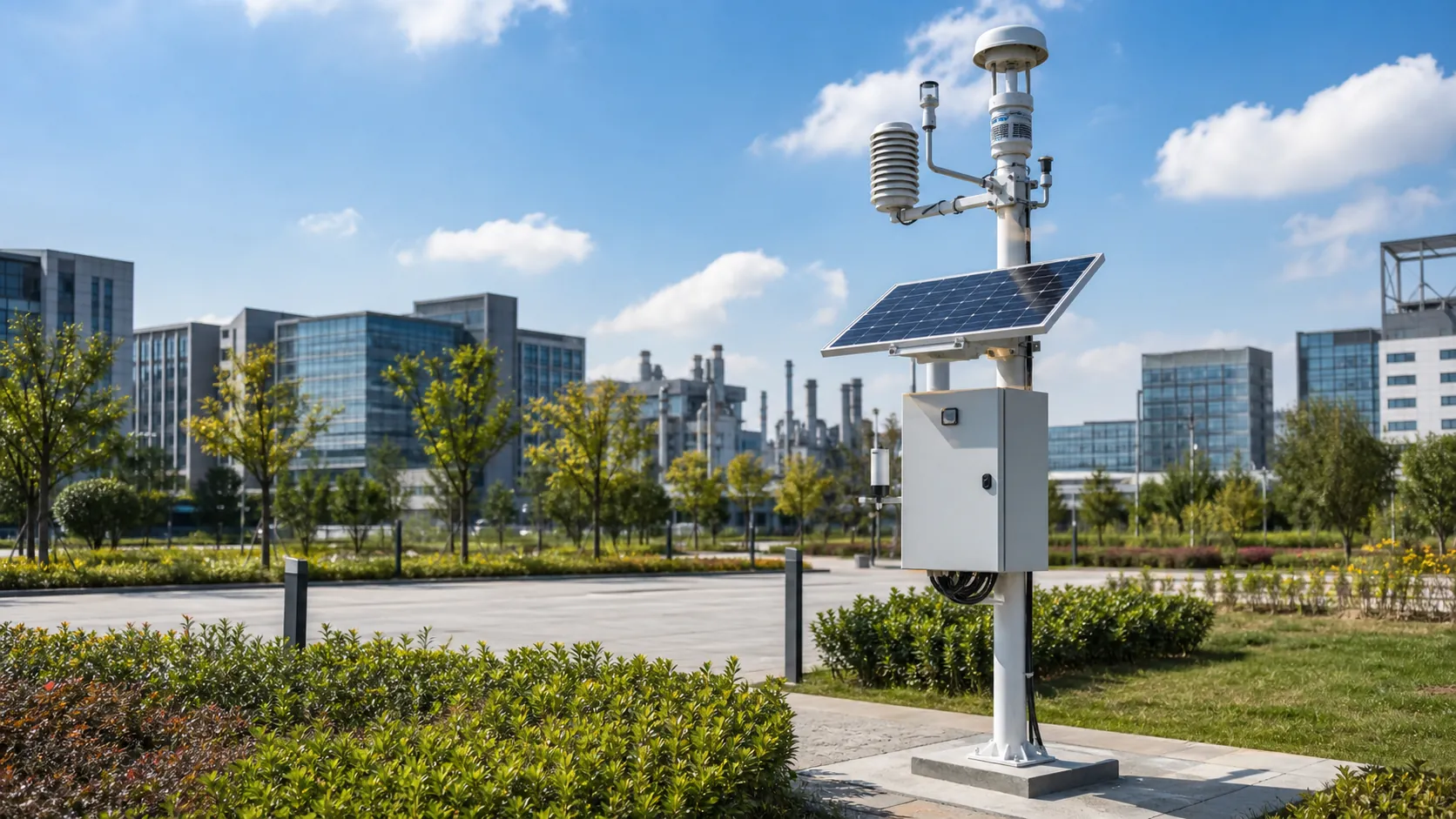
Deploy environmental monitoring stations with sensors, solar power, gateways, dashboards, alarms and data integration for city and industrial sites.
Smart Pole Checklist
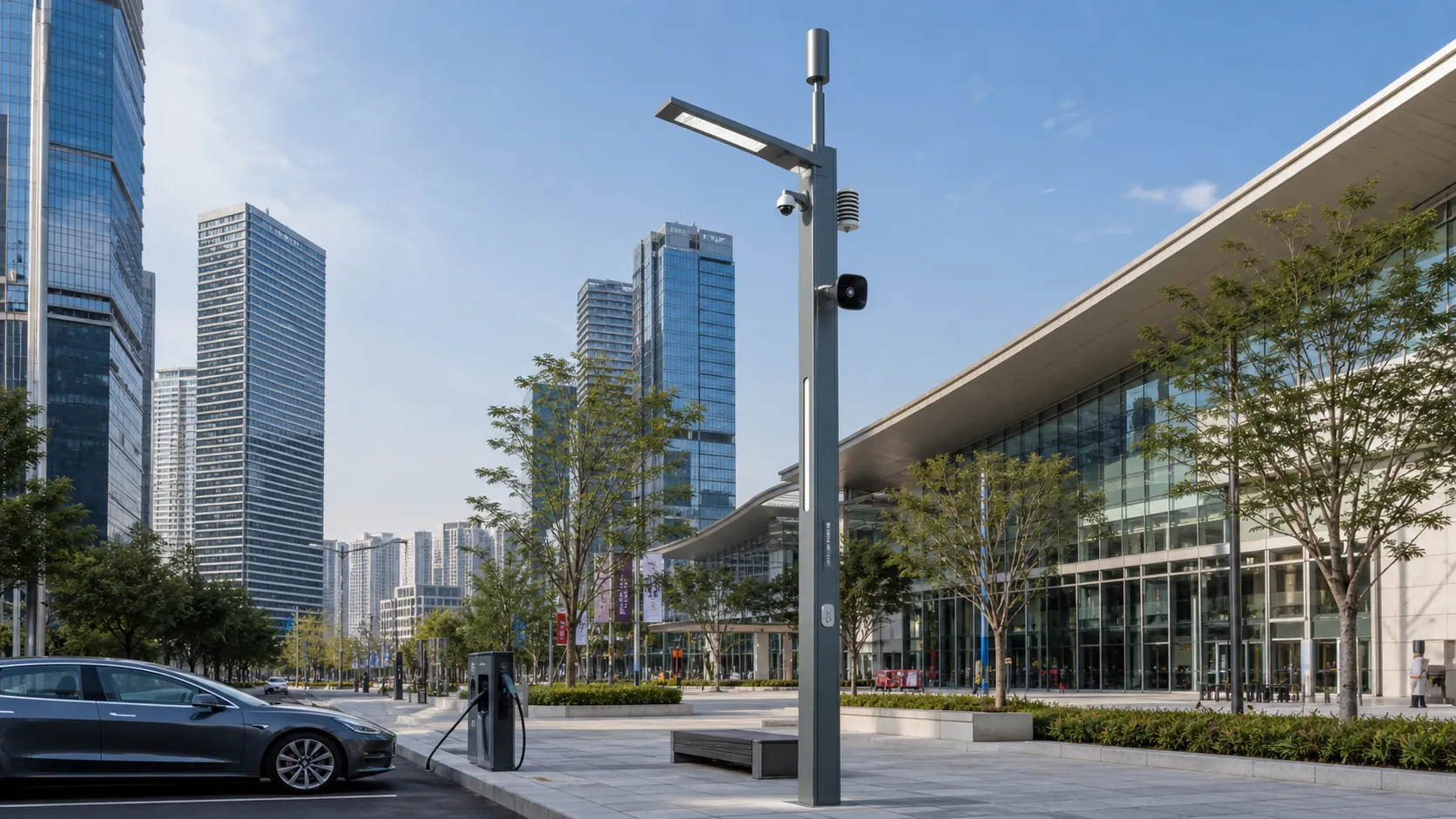
A buyer checklist for smart pole modules, structure, power, communication, cabinet layout, platform integration and maintenance access.
Solar IoT Guide
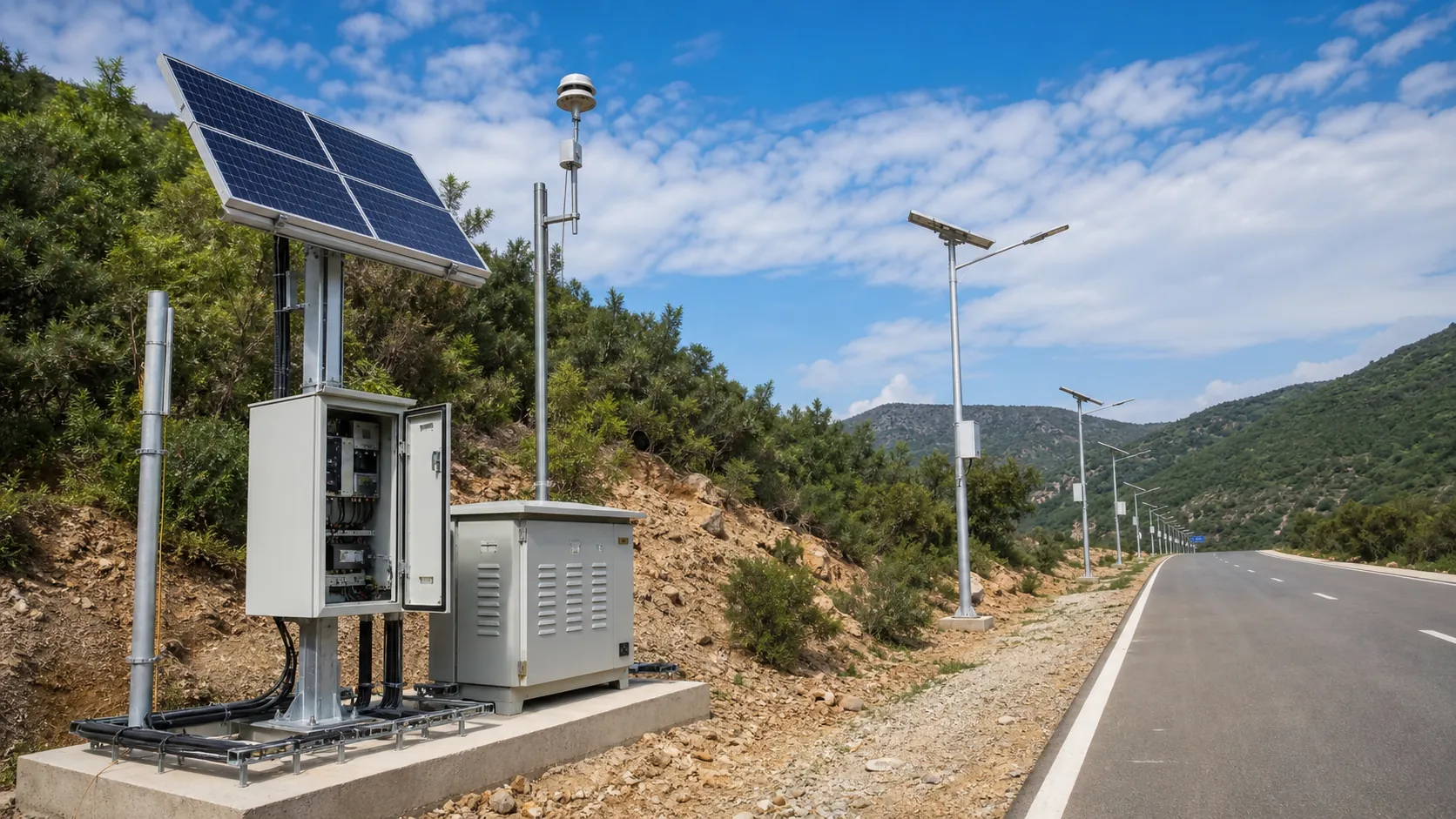
A design guide for solar-powered outdoor IoT: load calculation, battery autonomy, low-power firmware, telemetry and maintenance planning.
Frequently Asked Questions
What detection technologies does the RC-PIDS-500 use?
It fuses three layers: a distributed fiber-optic cable on the fence that senses cut, climb and lift attempts; ground-surveillance radar that tracks targets across the clear zone; and dual-spectrum thermal/visible PTZ cameras that visually confirm and classify the target. An on-pole edge AI engine correlates these layers so an alarm is raised only when a real intrusion is verified.
How accurate is it and how many false alarms will operators get?
Probability of detection for climb, cut and lift attempts exceeds 95%, with intrusion location accuracy down to about ±5 m. Multi-AI contextual filtering rejects wind, foliage and animal signatures, targeting performance well within the industry benchmark of roughly five nuisance alarms per kilometer per day in good weather—far lower than single-technology fence sensors.
How long a perimeter can one system protect?
A single controller covers two 250 m zones and scales to 5 km or 10 km of sensing cable, and multiple controllers extend coverage to 100 km or more. This makes it suitable for everything from a single substation yard to airport and border-scale perimeters.
Is it solar or grid powered?
It is designed for grid power because critical infrastructure perimeters almost always have mains available. Each node runs on AC 100–240 V with an integrated LiFePO4 UPS for 4–8 hours of detection-and-assessment ride-through during outages. For genuinely off-grid stretches, the same electronics accept a solar or hybrid DC input as an engineered option rather than a default.
Does it integrate with our existing VMS or PSIM?
Yes. The system exposes ONVIF Profile S/T, RTSP, Modbus, MQTT and dry-contact alarm outputs, so it integrates with mainstream video management systems, PSIM command centers, SCADA and access-control platforms. Confirmed alarms arrive with snapshots, video clips and mapped coordinates.
What environments can it withstand?
Enclosures are rated IP66 and optics IP67, with a -40 to +70 °C operating range, salt-fog, sand-dust and UV resistance, and multi-stage IEC 61643 surge protection on long perimeter lines. Poles and cabinets are hot-dip galvanized and finished with a matte powder-coat or fluorocarbon top coat for coastal, desert and high-altitude sites.
What standards and certifications apply?
The design aligns with IEC 62676 and EN 50132 for video surveillance, IEC 61643 for surge protection, IEC 60529 for IP ratings and relevant EMC directives, with CE and RoHS as target conformity. Camera and event interfaces follow ONVIF for multi-vendor integration. Final certification is scoped per project and destination market.
Can REDCOAST.LTD customize the system for our site?
Yes. REDCOAST.LTD develops the optical sensing front-end, radar signal-conditioning, edge AI gateway, deterrent-lighting driver and power/UPS boards in-house as custom PCBs, so zone lengths, sensor mix, camera optics, enclosure ratings, backhaul and integration protocols are tailored to your fence length, threat level and platform.