Smart pole procurement can become confusing because many modules compete for limited space. This checklist keeps structure, power, serviceability and platform integration in view.
Smart pole procurement matrix
| Decision factor | Recommended approach | Buyer risk to avoid |
|---|---|---|
| Pole family strategy | Create several pole types by location instead of one overconfigured universal pole. | One universal design raises cost and may not fit structural or visual requirements everywhere. |
| Module lifecycle | Separate permanent modules, replaceable modules and reserved future modules. | Future upgrades become expensive when cable paths, power and mounting are not reserved. |
| Software ownership | Define whether the pole platform is the main system or feeds existing lighting, security and environment systems. | Unclear software ownership creates duplicate alarms and unresolved maintenance tasks. |
Define modules by location
Not every pole needs every module. A useful specification groups poles by site function.
- Separate road, plaza, campus, park, entrance and parking-zone pole requirements.
- List mandatory modules and reserved future modules for each site type.
- Confirm which department owns each device and data stream.
Check structure and service access
Smart poles fail as projects when they are hard to maintain or visually cluttered.
- Confirm foundation, pole height, wind load, door location and cabinet space.
- Separate high-voltage and low-voltage areas with safe access.
- Keep module mounting, wiring and replacement steps documented.
Specify the platform model
A smart pole platform should make many device types understandable as one infrastructure asset.
- Asset map, device list, alarm history and maintenance records should be linked.
- Permissions should follow department responsibilities.
- Integration needs should be written before supplier selection.
Checklist
Planning checkpoints
Avoid one universal pole design for every location.
Reserve power, mounting and cabinet capacity for future modules.
Require maintenance access drawings and wiring documentation.
Make multi-department permissions part of the software requirement.
Standards
Standards and interface notes
- Require structural drawings, cabinet layout, wiring plan and service access details before production.
- Review local rules for cameras, audio, communication equipment and public-space installation.
- Specify high-voltage and low-voltage separation and grounding approach.
- Ask for an asset model that links pole body, modules, alarms and maintenance records.
Procurement
Commercial questions to settle
- Which module failures are critical and which are routine maintenance?
- Will future modules require extra power, data or mounting space?
- Who owns privacy approval for cameras or audio modules?
- Is visual design part of procurement scoring?
Acceptance
Evidence buyers should request
| Acceptance test | Pass criteria | Evidence |
|---|---|---|
| Factory configuration review | Module positions, wiring and cabinet layout match the approved design before shipment. | Factory photos and configuration sheet. |
| On-site module commissioning | Each module appears in the platform with correct pole ID and location. | Commissioning log and dashboard screenshot. |
| Maintenance simulation | Staff can safely access and replace a selected module following the documented process. | Maintenance test record. |
Related Products
Product capabilities for this page
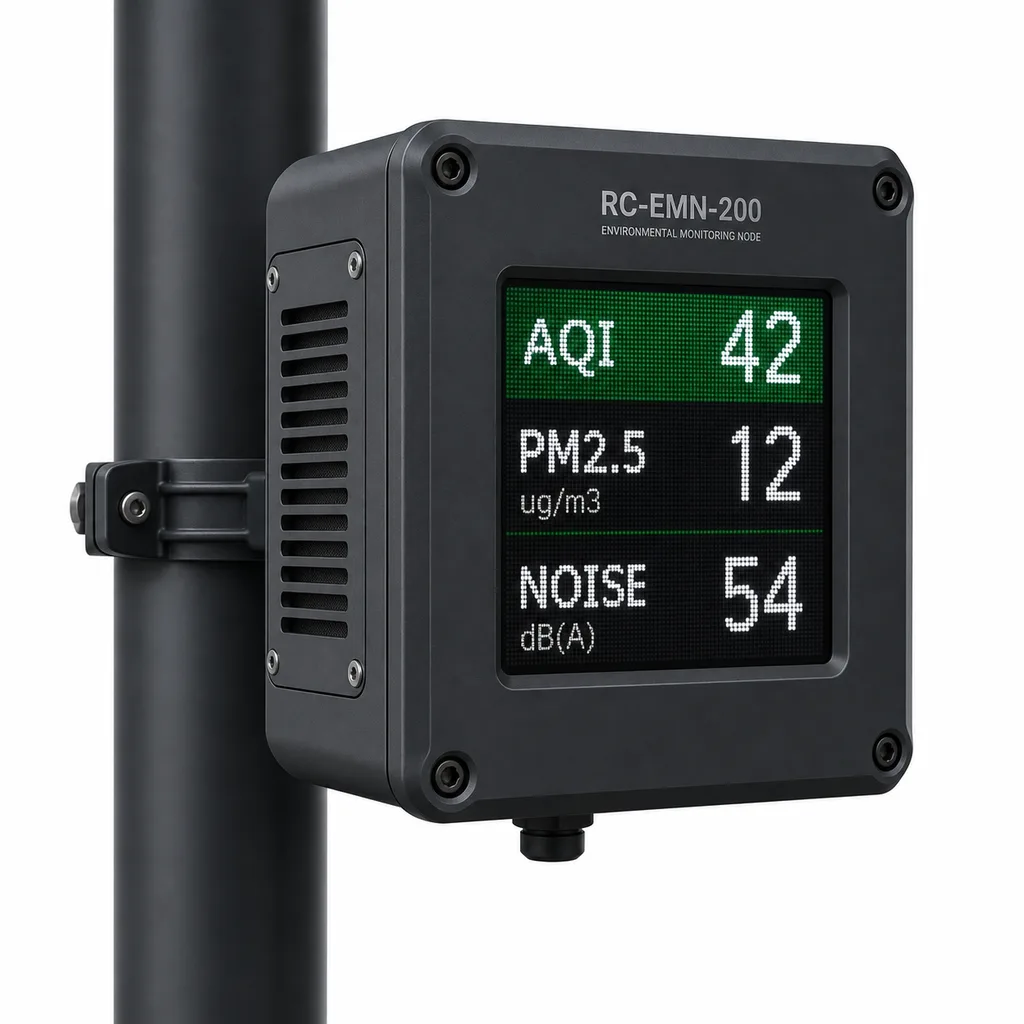
Grid-Powered Urban Multi-Parameter Environmental Monitoring & Public Display Node
Mains-powered pole-mounted sensor node measuring PM2.5/PM10, NO2/O3/CO, noise dB(A) and microclimate in real time—with a built-in outdoor LED display panel for public AQI transparency and FIWARE NGSI-LD push to city platforms.
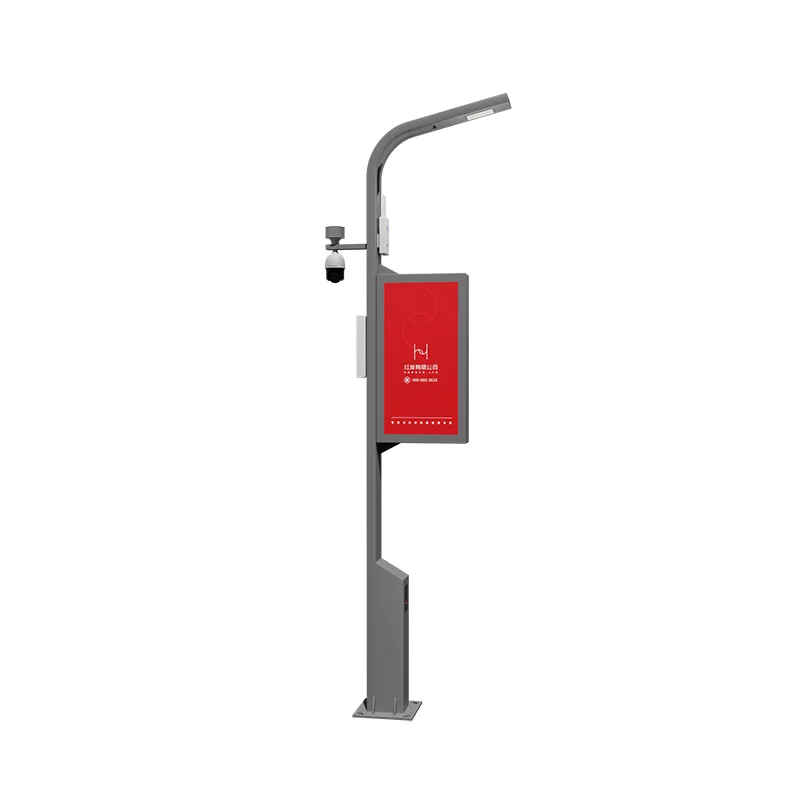
Multifunctional Smart Pole Platform with Edge Gateway Controller
Modular 4-12 m multifunctional smart pole integrating smart lighting, CCTV, 5G/small-cell mounting, environmental sensing, public WiFi, EV charging and digital signage, unified by REDCOAST.LTD's self-developed pole-top edge gateway controller.
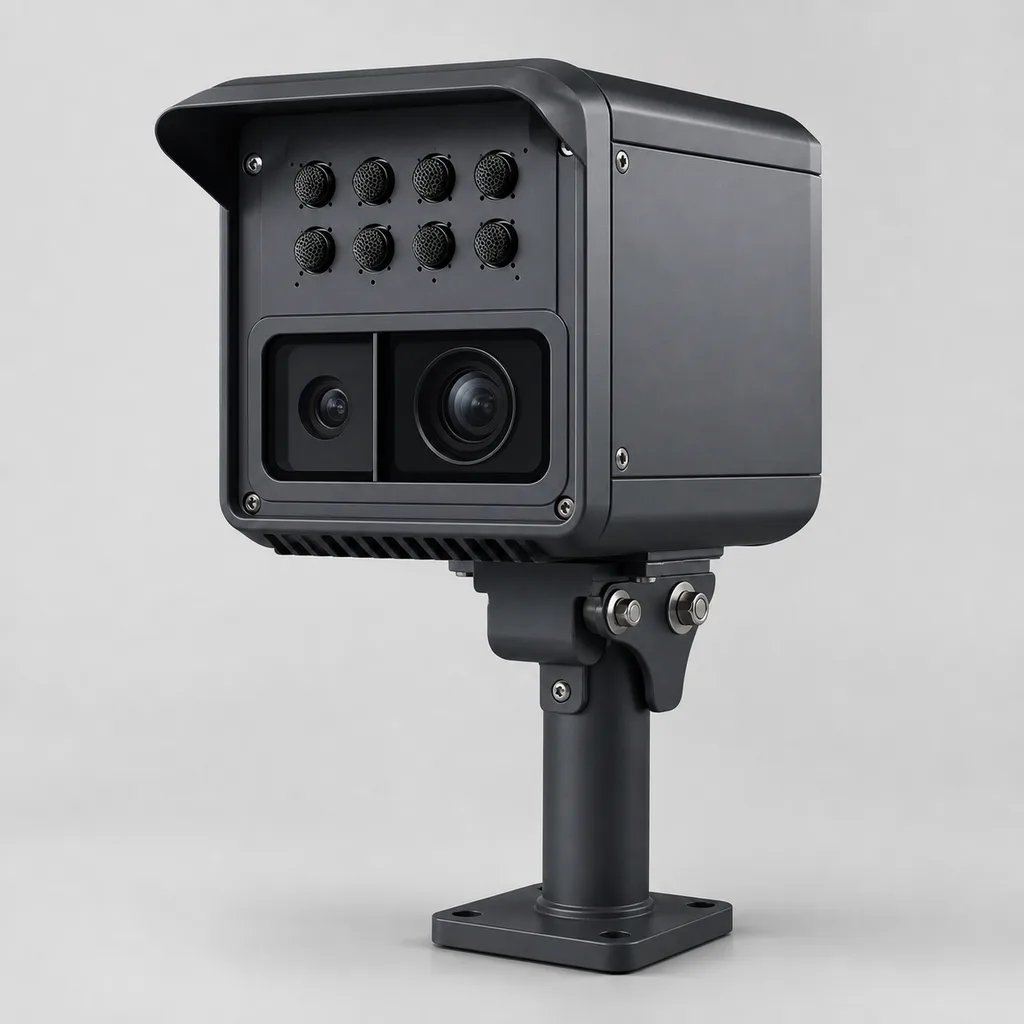
AI Vehicle Noise Enforcement Camera System
Pole-mounted AI noise camera pairing a Class 1 microphone array with ANPR edge AI to automatically detect, localize, and evidence-capture illegally loud vehicles for automated city noise enforcement.
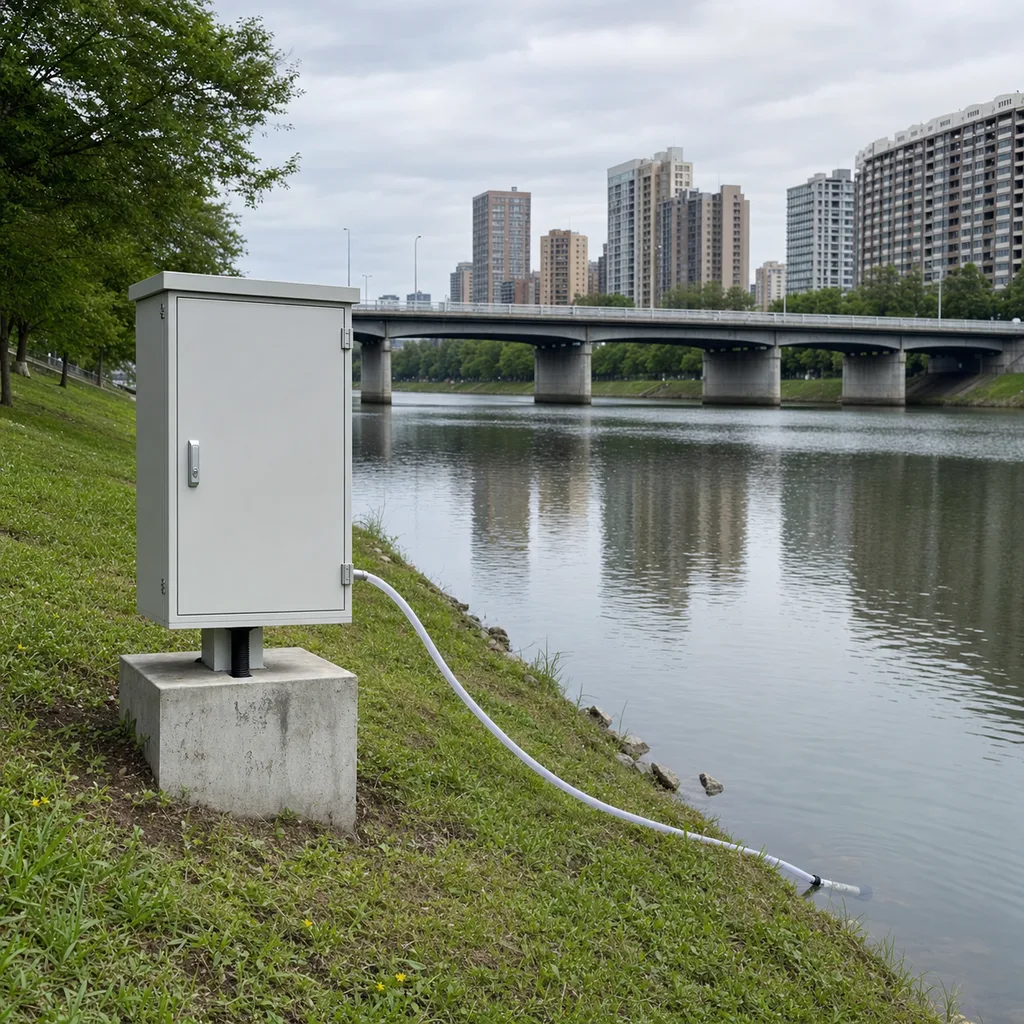
Grid-Powered Online Water Quality Monitoring Micro-Station for Rivers, Reservoirs & Outfalls
Cabinet-type multi-parameter water quality monitoring micro-station (pH, DO, conductivity, turbidity, ammonia, COD) with self-cleaning flow cell, edge IoT gateway and cloud platform, mains-powered for urban riverside deployment.
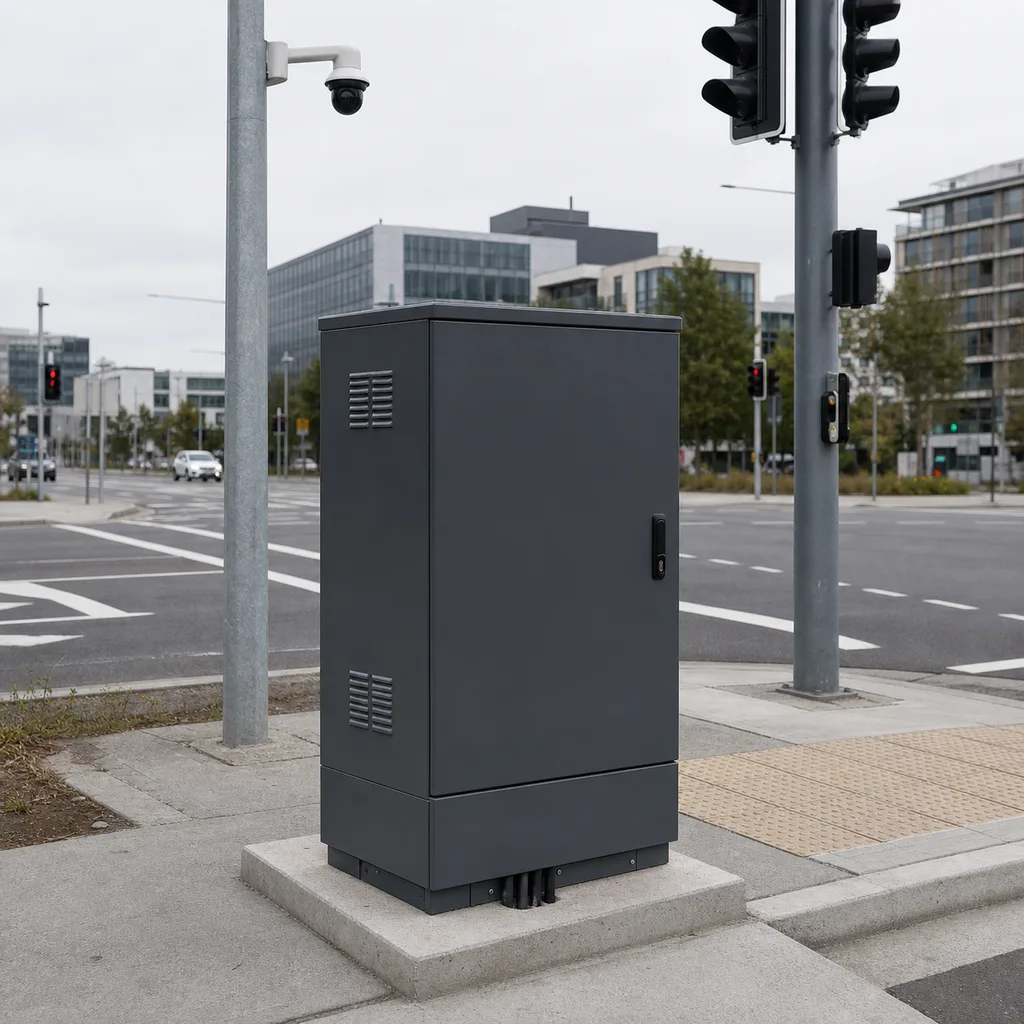
Grid-Powered Outdoor Smart Edge Cabinet with Active Thermal Management, Integrated UPS and Remote Monitoring
Grid-powered IP55 outdoor field cabinet that houses smart-city edge computing, networking, traffic and surveillance equipment, with active thermal management, integrated LiFePO4 UPS and a self-developed remote-monitoring PCB.
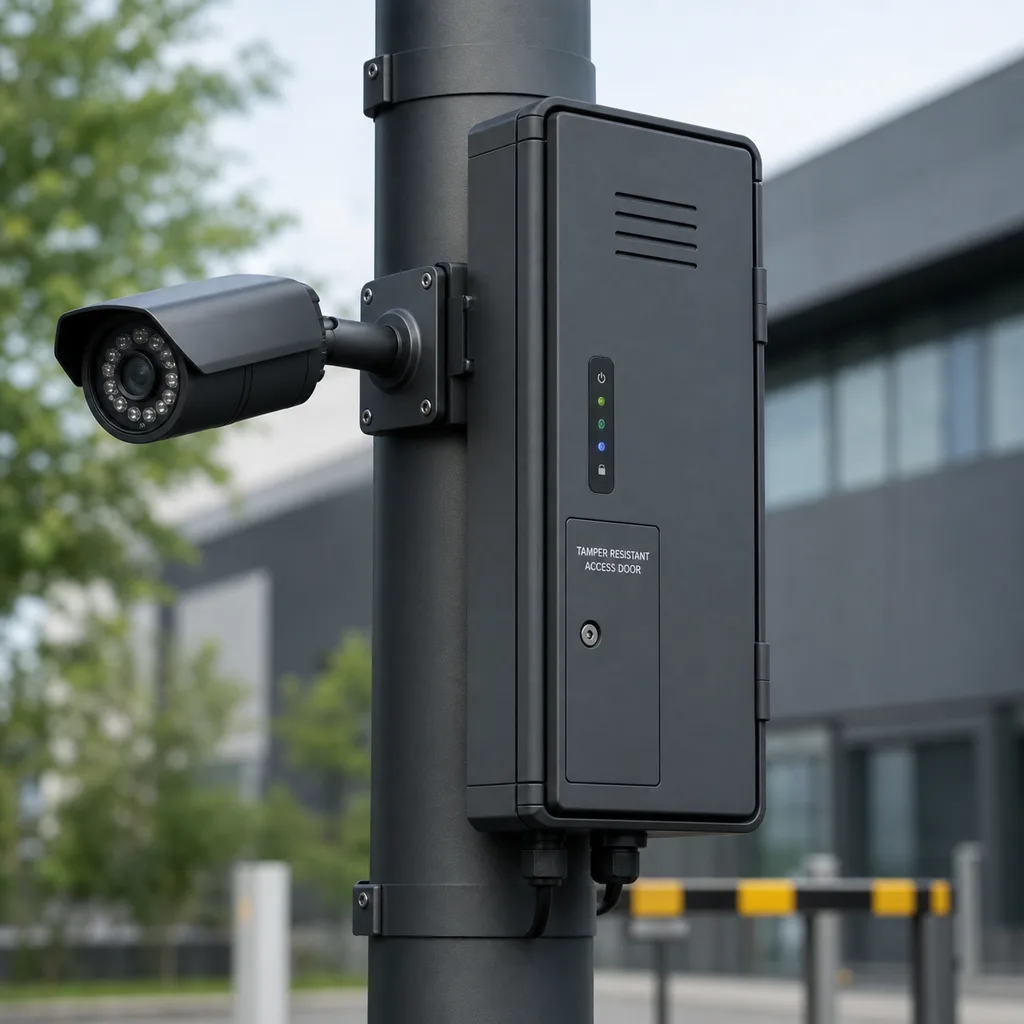
Grid-Powered Smart City Safe-City Surveillance & ANPR Pole
Mains-powered urban smart pole integrating PTZ surveillance, ANPR license-plate recognition, edge AI analytics, optional public Wi-Fi and SOS, built for Safe-City and traffic-enforcement deployments.
Next
Related guidance
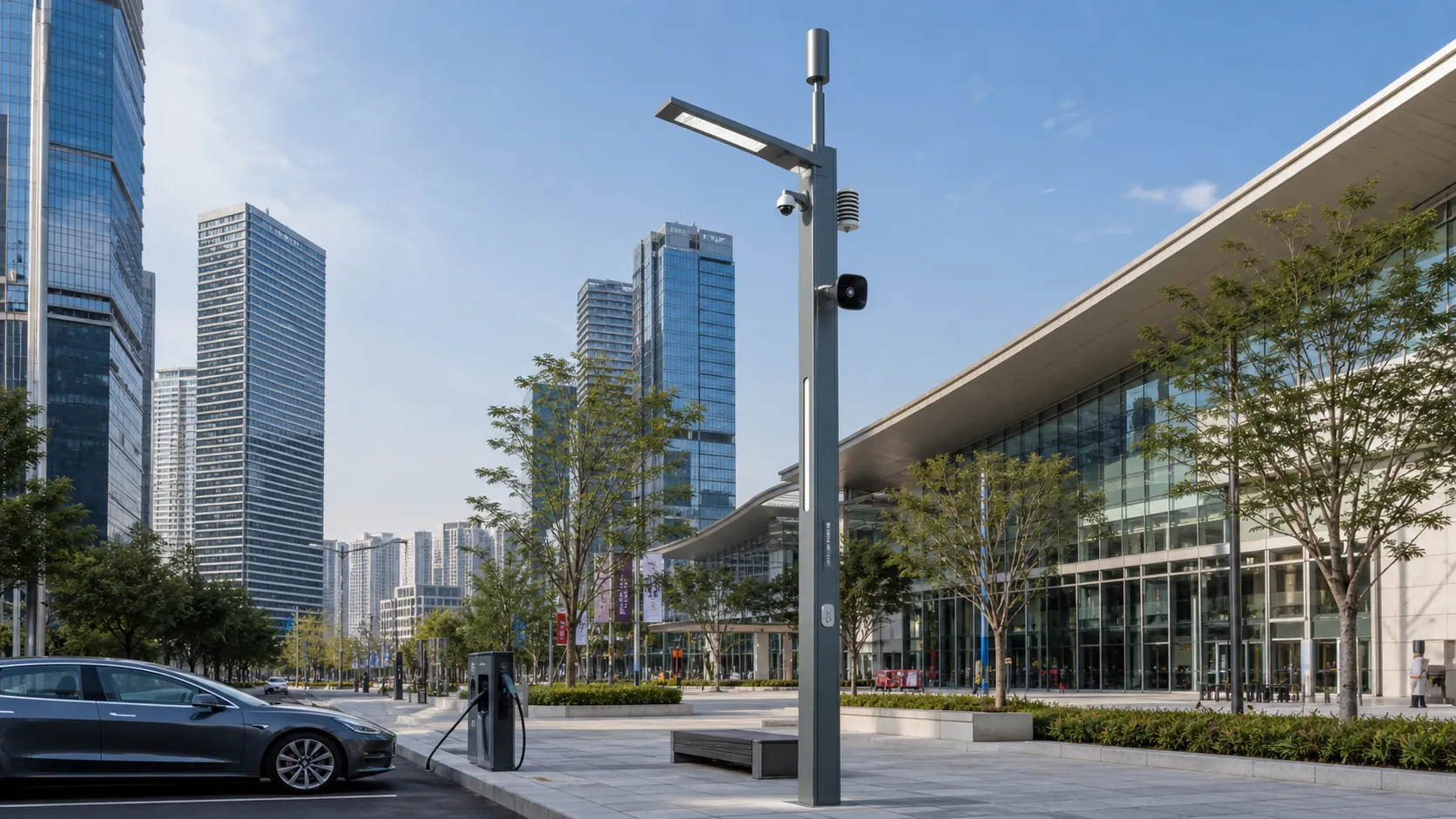
Smart Pole
Build smart pole infrastructure with lighting, cameras, environmental sensors, communication modules, public safety devices and a unified management platform.

Municipalities
Municipal smart city programs for lighting, traffic safety, parking, smart poles and environmental monitoring with one hardware and software partner.
Campuses
Campus IoT for lighting, parking, safety, smart poles, environmental data and facility maintenance workflows.
Frequently asked questions
What is the biggest risk in smart pole procurement?
The biggest risk is treating the pole as a module display stand instead of engineered infrastructure with power, structure, cable, maintenance and platform requirements.
Should every smart pole include cameras?
No. Camera use depends on site policy, privacy rules, safety needs and integration with existing security systems.
How can a smart pole remain upgradeable?
Reserve internal space, power capacity, mounting points, cable paths and platform fields for future modules.
What should a smart pole bill of materials separate?
Separate pole body, foundation, cabinet, lighting, communication, sensors, security modules, display modules, power protection, software and integration services.
How can smart pole maintenance be simplified?
Use standard module positions, clear cable labels, serviceable cabinets, documented spare parts and platform alarms tied to each module.
Need this engineered for your project?
Tell us the site type, required devices, power and connectivity conditions. REDCOAST.LTD will respond with a tailored approach.