Solar off-grid IoT design is a system problem. A larger panel cannot fix weak load assumptions, missing telemetry or poor service access.
Solar IoT design matrix
| Decision factor | Recommended approach | Buyer risk to avoid |
|---|---|---|
| Duty cycle | Model sleep, sensing, processing, communication and actuation separately. | A single average load number hides peaks and retry behavior. |
| Climate margin | Size panel and battery with margin for seasonal sunlight, shading, dirt and battery aging. | A design that works at installation can fail after weather changes or battery aging. |
| Maintenance model | Plan battery replacement, panel cleaning and alarm response before rollout. | Remote power systems become expensive when every issue requires unplanned field visits. |
Calculate the real load
Start with how the device behaves in the field, not the lowest possible datasheet number.
- Include sensors, communication, lighting, standby current and peak activity.
- Model duty cycle, upload frequency and seasonal operating schedules.
- Reserve margin for aging, weather and future firmware changes.
Design for autonomy and maintenance
Battery capacity should match local weather, site importance and service interval.
- Set autonomy days based on climate risk and acceptable outage probability.
- Choose battery chemistry and enclosure for temperature and service conditions.
- Plan replacement access and safe handling before deployment.
Monitor the power system
A remote power system without telemetry fails silently.
- Show voltage, charge status, low battery alarms and last report time in the platform.
- Use alerts before the device goes offline, not only after communication stops.
- Review recurring low-power sites and adjust schedule, panel, battery or maintenance.
Checklist
Planning checkpoints
Use measured or realistic load data before sizing panels and batteries.
Keep low-power modes under platform control where practical.
Include power telemetry in the same dashboard as device status.
Write service access and replacement steps into the deployment plan.
Standards
Standards and interface notes
- Document all assumptions: load, reporting interval, autonomy days, sunlight, battery capacity and derating.
- Use enclosures, connectors and cable routes suitable for outdoor exposure and service access.
- Confirm battery transport, storage and replacement constraints for the project region.
- Keep power alarms and device status in one platform so operators do not miss early warnings.
Procurement
Commercial questions to settle
- What outage risk is acceptable for this device?
- How often can the maintenance team visit the site?
- Can panel orientation avoid shading and vandalism risk?
- Which alarms should trigger field service rather than remote observation?
Acceptance
Evidence buyers should request
| Acceptance test | Pass criteria | Evidence |
|---|---|---|
| Sizing worksheet review | The buyer can inspect load, panel, battery and autonomy assumptions. | Worksheet and component data. |
| Telemetry validation | Voltage, charge status and last report time appear in the platform. | Telemetry export and dashboard screenshot. |
| Service access check | Battery and controller can be accessed safely by the maintenance team. | Site photo and service checklist. |
Related Products
Product capabilities for this page
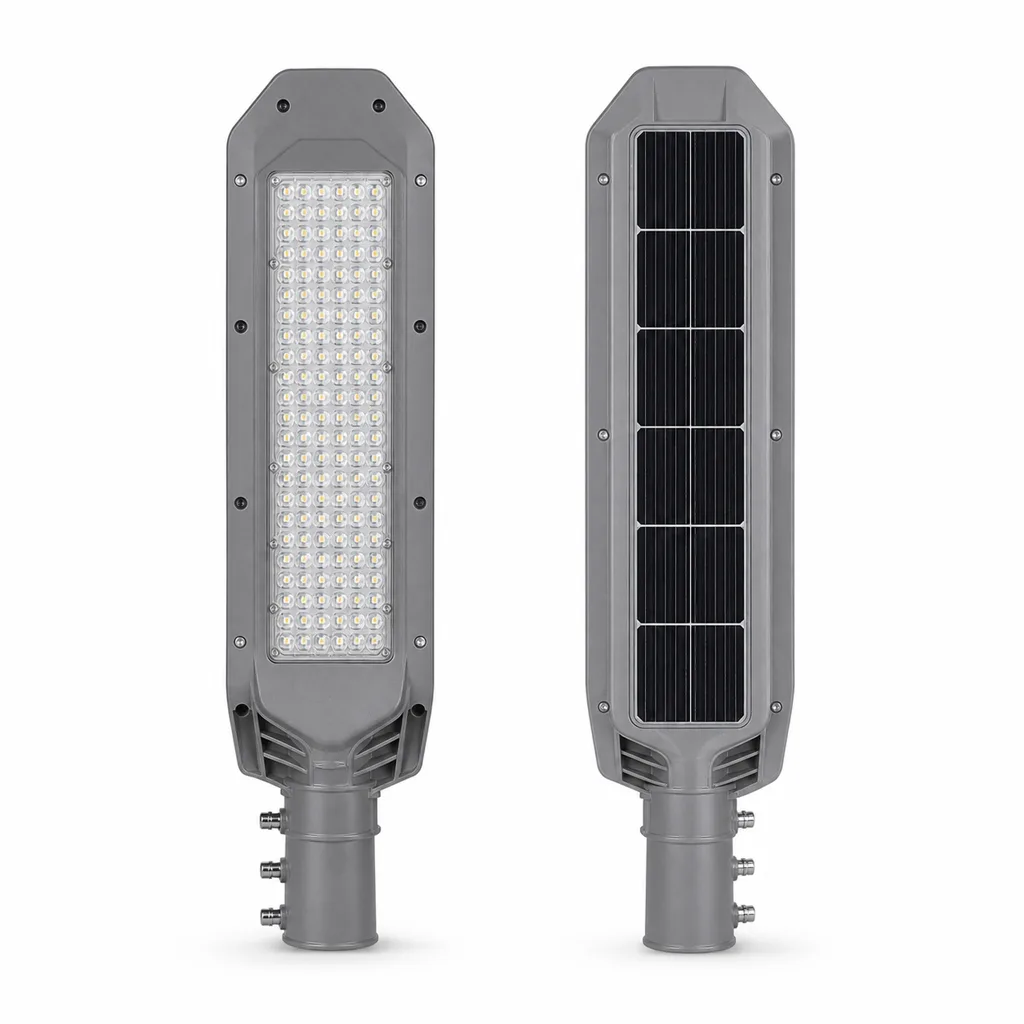
All-in-One Integrated Smart Solar LED Street Light
Self-contained solar LED street light integrating monocrystalline panel, LiFePO4 battery, MPPT controller and motion-sensing luminaire in one IP66 housing, with optional 4G/NB-IoT/LoRa remote management.
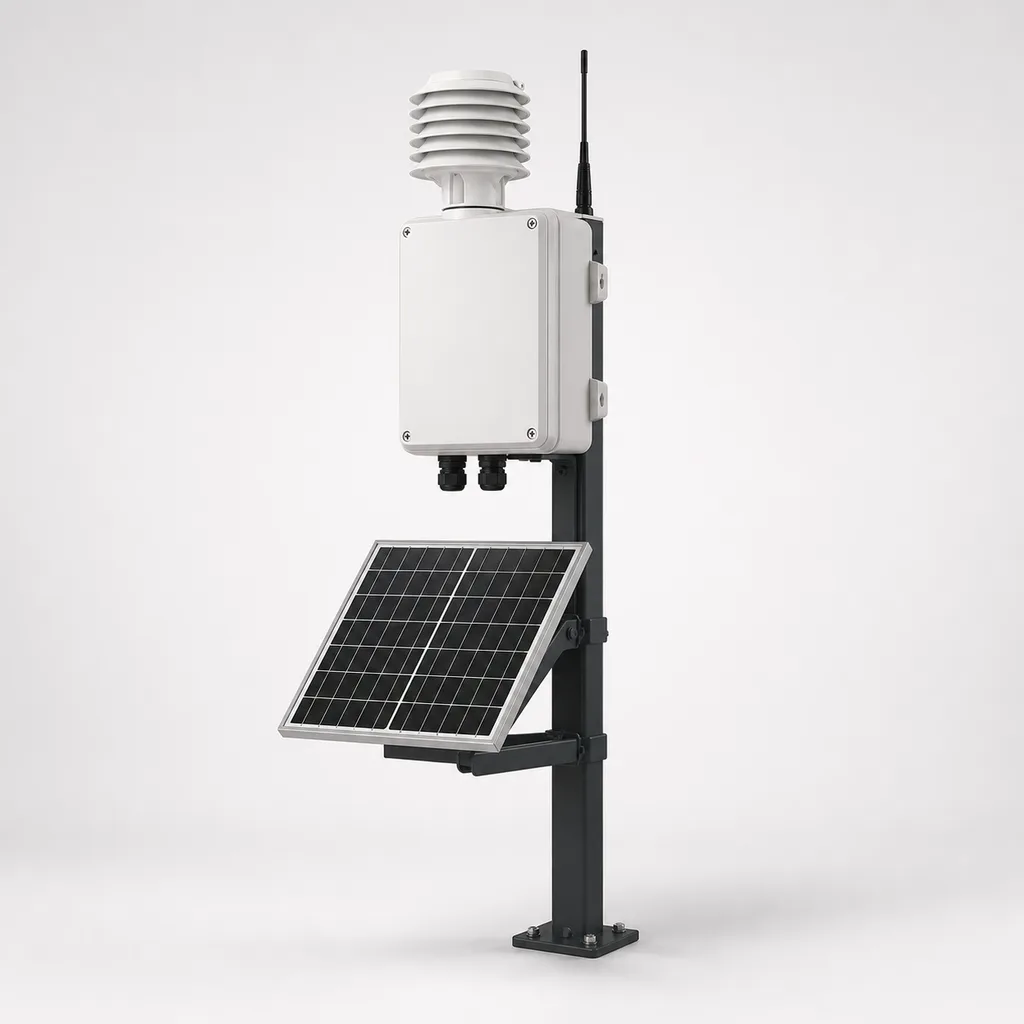
Off-Grid Solar Air Quality Monitoring Station
Off-grid solar air quality monitoring station for PM1/PM2.5/PM10, NO2, O3, CO, SO2 and VOC, with 4G, NB-IoT or LoRaWAN links, a Web dashboard, REST API and mobile app, and REDCOAST.LTD in-house hardware for project-specific sensor sets.
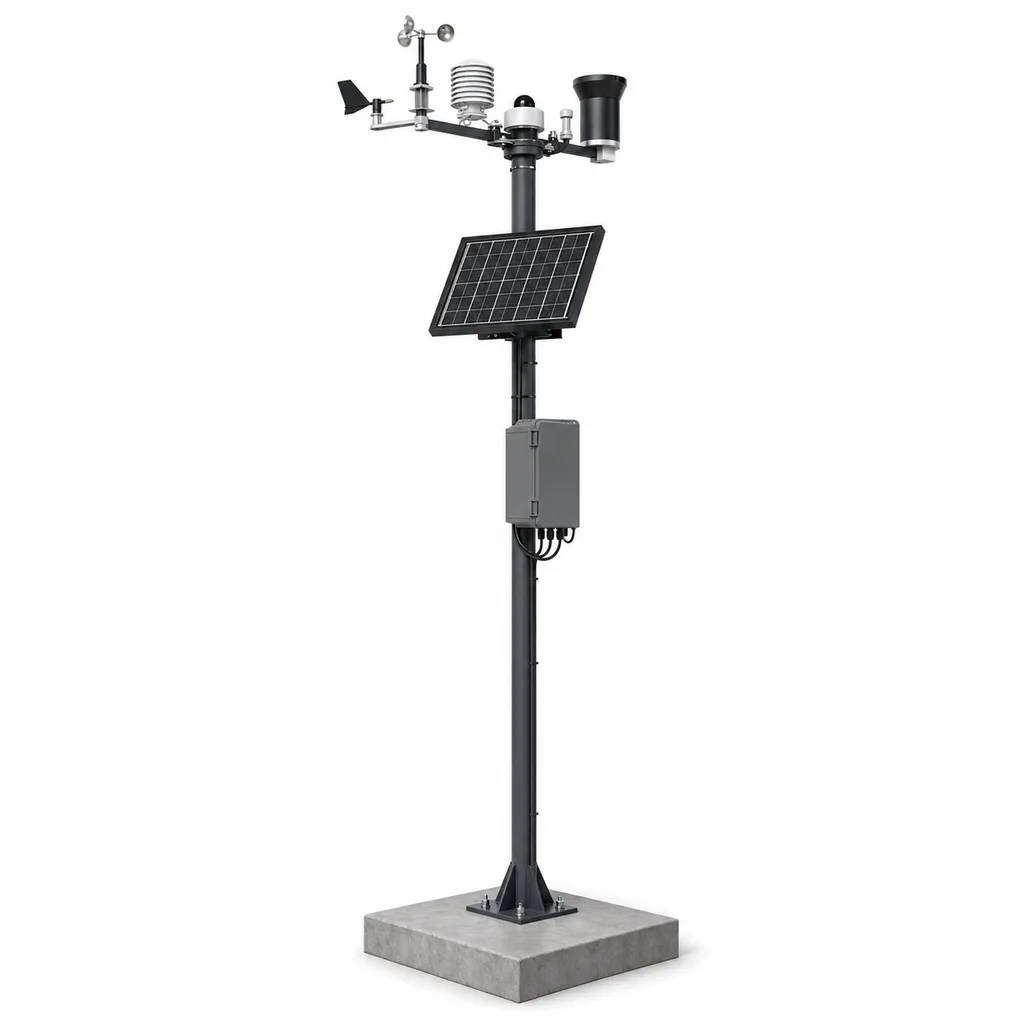
Off-Grid Solar Automatic Weather Station (AWS) — WMO-Class Multi-Parameter Meteorological Monitoring Mast
Off-grid solar Automatic Weather Station with a WMO-class 6-10 parameter sensor suite, REDCOAST.LTD-designed signal-conditioning PCB, MPPT power management and 4G/NB-IoT/LoRa/satellite edge gateway.
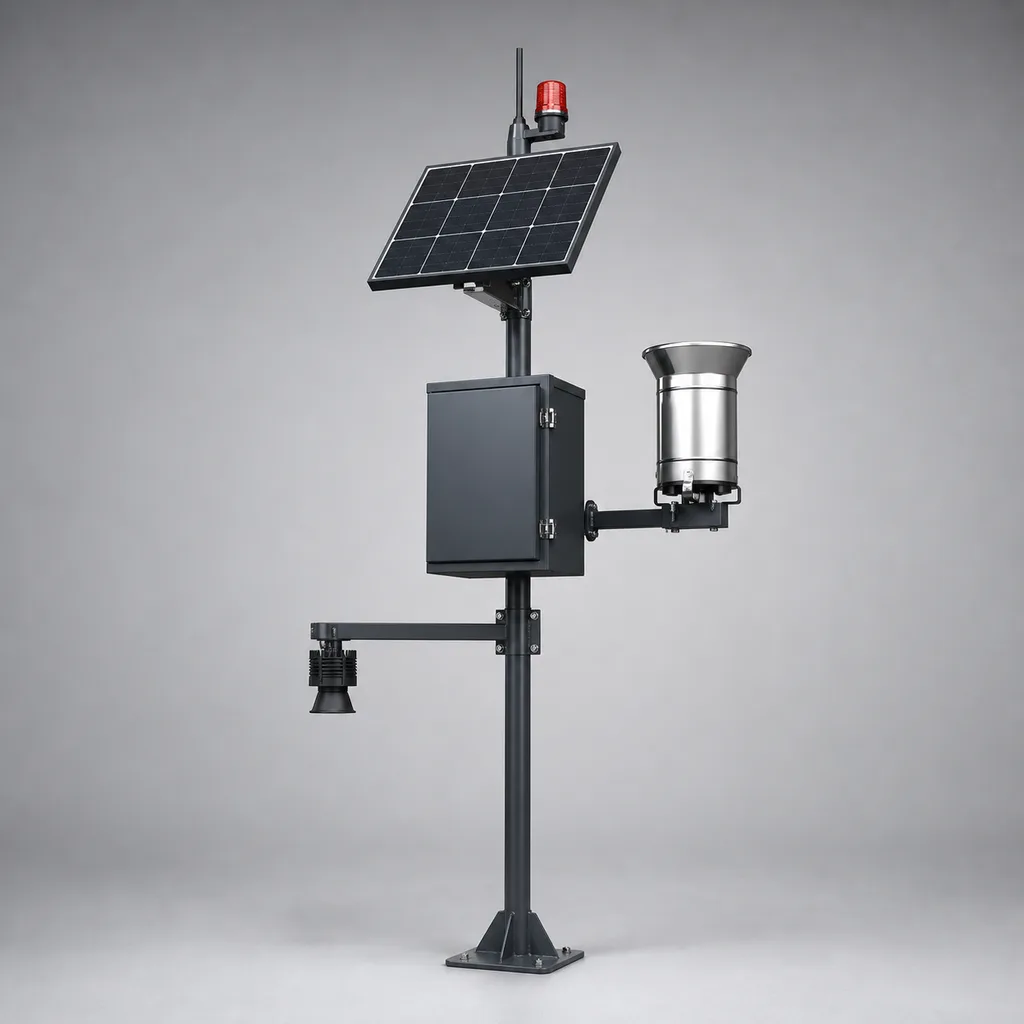
Off-Grid Solar Flood Early Warning & Hydrological Monitoring Station
Self-powered IoT field station combining 80 GHz radar water level, WMO-compatible rain gauge, REDCOAST.LTD-designed MPPT and edge-alerting gateway for unattended flood early warning at rivers, culverts, wadis and dams.
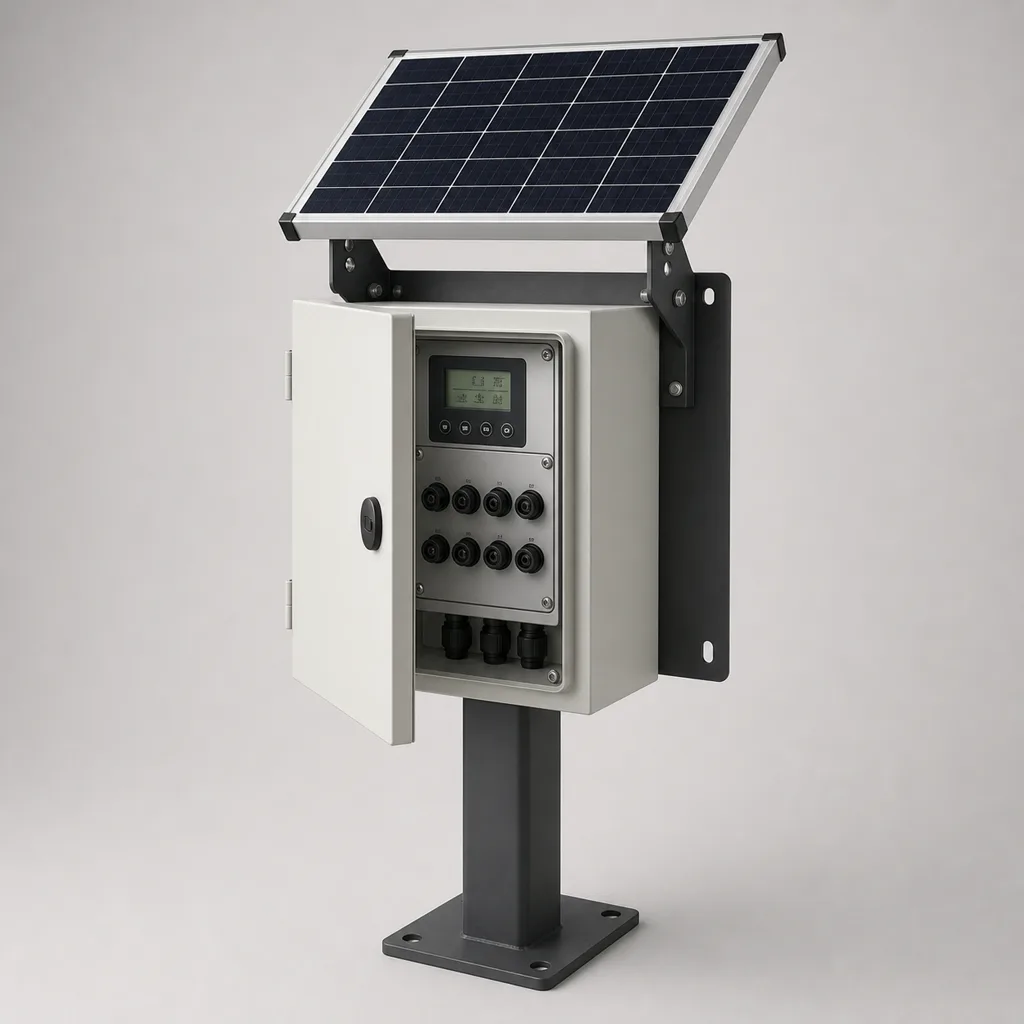
Solar-Powered Smart Irrigation & Soil Moisture Monitoring Controller
Off-grid solar irrigation controller with soil moisture/EC sensing, 4-16 LoRaWAN-linked valve zones, flow/pressure leak alerts, cloud dashboard and mobile app; REDCOAST.LTD designs the control PCB and firmware in-house for crop-specific configuration.
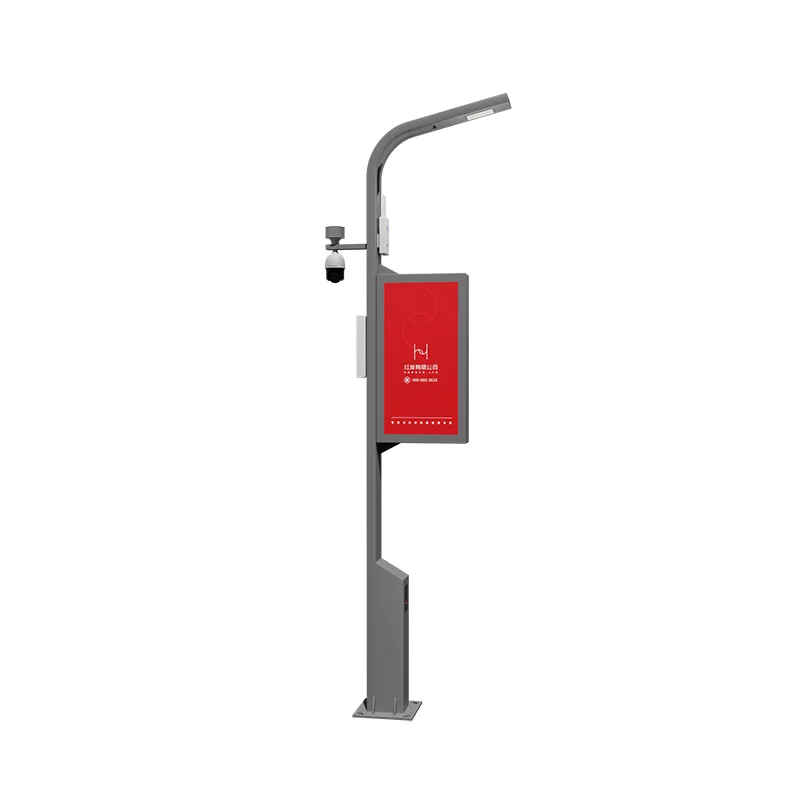
Multifunctional Smart Pole Platform with Edge Gateway Controller
Modular 4-12 m multifunctional smart pole integrating smart lighting, CCTV, 5G/small-cell mounting, environmental sensing, public WiFi, EV charging and digital signage, unified by REDCOAST.LTD's self-developed pole-top edge gateway controller.
Next
Related guidance
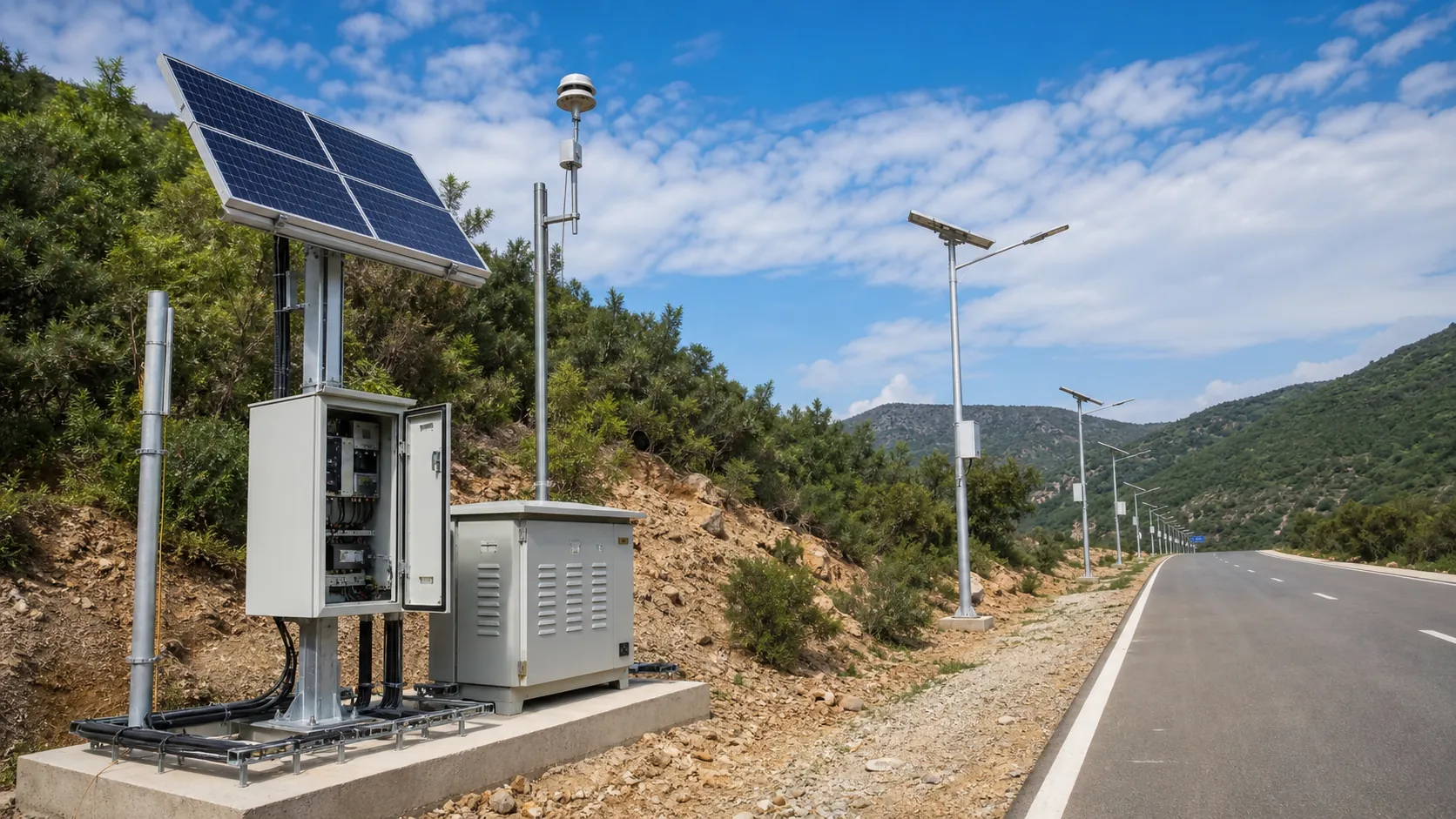
Solar Off-Grid IoT
Design solar-powered outdoor IoT systems with panels, batteries, controllers, low-power devices, gateways and remote power monitoring.

Street Lighting Guide
A practical guide to choosing smart street lighting controllers, connectivity, platform features, dimming logic and acceptance tests.
Ports and Logistics
Outdoor IoT infrastructure for ports, yards and logistics areas: lighting, guidance, safety, solar power, monitoring and maintenance visibility.
Frequently asked questions
Why do solar IoT projects fail?
Common causes include underestimated load, poor sunlight assumptions, weak battery sizing, missing telemetry, difficult maintenance access and communication loss.
How many autonomy days should be designed?
The number depends on climate, site criticality, service interval and acceptable outage risk. It should be calculated for the specific project.
Can firmware reduce solar power requirements?
Yes. Low-power modes, reporting intervals and event-based wakeups can reduce consumption when they are designed into the device and platform behavior.
What is battery autonomy in solar IoT?
Battery autonomy is how long the device can keep operating without useful solar charging, based on load, battery capacity and allowed depth of discharge.
Why should solar IoT designs include telemetry?
Telemetry gives early warning for low battery, weak charging or communication problems before the device becomes unreachable.
Need this engineered for your project?
Tell us the site type, required devices, power and connectivity conditions. REDCOAST.LTD will respond with a tailored approach.