Overview
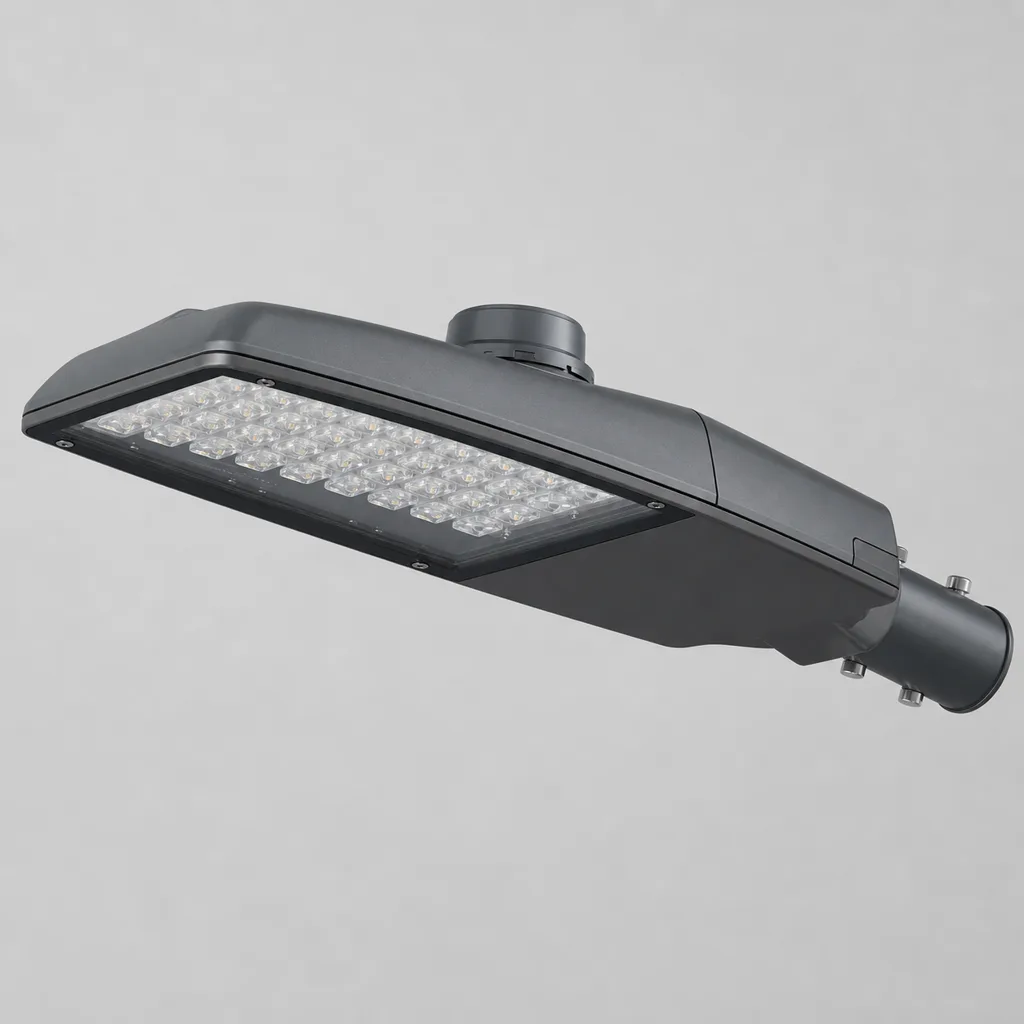
The RC-SL-240 is a grid-powered smart LED street light luminaire engineered by REDCOAST.LTD for urban arterial roads, secondary roads, residential streets and campus road networks where mains power is available. It is built for municipalities, utilities, road authorities and lighting contractors who need to replace aging HPS or first-generation LED fixtures with a future-proof, controls-ready luminaire. The luminaire ships with either a Zhaga Book 18 (D4i) receptacle or a NEMA 7-pin (ANSI C136.41) socket, so any certified photocell or smart lighting controller — including the REDCOAST.LTD CMS node — plugs in without rewiring the fixture. At its core is a REDCOAST.LTD-designed modular LED light engine PCB and a D4i-compliant programmable constant-current driver, giving cities granular dimming, per-luminaire energy metering and predictive diagnostics from day one, while the rugged IP66/IK09 die-cast housing keeps maintenance visits to a minimum over a 100,000-hour service life.
Key Features
- 30–240 W power range in one platform covering residential streets (30–60 W), collector roads (60–120 W) and major arterials or intersections (150–240 W), with luminous flux from 4,200 to 38,400 lm.
- High efficacy up to 160 lm/W using current-generation mid-power LED arrays on a REDCOAST.LTD-designed metal-core PCB with optimized thermal paths.
- Zhaga D4i or NEMA 7-pin smart interface — choose Zhaga Book 18 receptacles (top, or top + bottom for sensors) certified to D4i data standards, or the classic ANSI C136.41 7-pin twist-lock socket; both make the luminaire plug-and-play with third-party CMS nodes.
- DALI-2 / D4i programmable driver with constant light output (CLO), adjustable dimming curves, AUX 24 V supply for nodes and standardized energy/diagnostics data (DiiA Parts 251/252/253).
- Tool-less maintenance: the hinged housing opens without tools, the driver sits on a quick-release gear tray, and the surge protector is a field-replaceable module.
- Precision roadway optics — Type II/III/IV/V distributions and ME/CE-class lens packages so designers can meet EN 13201 or IES RP-8 luminance/illuminance targets with wider pole spacing.
- 10 kV/10 kA surge protection standard (20 kV/10 kA optional) protecting against grid transients and induced lightning surges on overhead lines.
- Low windage, low weight (SCx from 0.045 m²; 5.5–13.5 kg) for safe retrofit onto existing poles and brackets without structural rework.
- Smooth powder-coated die-cast aluminum housing in RAL 7016 anthracite, dark grey, black or custom RAL colors to match streetscape furniture.
Technical Architecture
The luminaire is organized into four serviceable modules. The light engine is a REDCOAST.LTD-designed metal-core PCB carrying high-efficacy LED arrays grouped into strings; the PCB layout, string topology and thermal vias are engineered in-house, which lets REDCOAST.LTD tailor flux packages, CCT mixes or special spectra (e.g. amber for ecologically sensitive zones) per project without waiting for a third-party module roadmap. The engine couples to PMMA precision lens arrays that shape Type II–V and ME/CE roadway distributions.
The driver stage is a DALI-2/D4i-certified programmable constant-current driver with ≥0.95 power factor, <15% THD and configurable output current, enabling one luminaire SKU to be factory- or field-programmed across its wattage window. The driver implements CLO to compensate lumen depreciation, stores asset data (DiiA Part 251) and reports live energy and diagnostics data (Parts 252/253) through the D4i bus.
The control interface layer is the Zhaga or NEMA socket wired to the DALI bus and AUX supply. Any certified controller — the REDCOAST.LTD NEMA/Zhaga CMS node or a third-party node — handles scheduling, adaptive dimming, metering upload and OTA configuration. Data flows from driver to node over DALI-2, then from node to the central management software over the city's chosen backhaul. Because intelligence is layered this way, cities can deploy luminaires first with simple photocells and add networked controls later without touching the fixture.
Connectivity & Power
The RC-SL-240 is a mains-powered (grid) product for electrified urban and campus environments; it deliberately carries no solar panel or battery. The standard driver accepts AC 100–277 V, 50/60 Hz, covering virtually all urban LV networks worldwide; a 277–480 V variant is available for North American utility feeds and series-to-parallel conversions. Inrush is managed for typical 16 A miniature circuit breakers, and standby consumption with the node idle is under 0.5 W.
Connectivity is delegated to the socket-mounted controller, so each project picks the backhaul that fits its scale: cellular LTE Cat-M1/NB-IoT or 4G nodes for city-wide deployments riding public networks, LoRaWAN for utilities running private networks, or RF mesh/Zigbee for dense district grids. For standalone streets, a simple photocell or the driver's built-in astronomical dimming schedule operates the luminaire with no network at all.
Protection & Reliability
The one-piece die-cast aluminum housing is finished with chromate-free pretreatment and a smooth polyester powder coat, achieving IP66 ingress protection for the full luminaire and IK09 impact resistance (IK10 with tempered-glass option). Operating range is -40 °C to +55 °C, validated with thermal derating profiles so LED junction temperatures stay within L90 limits even in hot climates. Coastal and industrial deployments are covered by a C4/C5 marine-grade coating option tested to 1,000 h neutral salt spray (ISO 9227). Vibration durability is tested to ANSI C136.31 (3G, bridge/overpass level). Lumen maintenance is projected at L90 ≥ 100,000 h (IES TM-21 from LM-80 data), and the field-replaceable SPD fails safely with a visual indicator. REDCOAST.LTD supports a 5-year standard warranty, extendable to 10 years for framework contracts.
Application Scenarios
- Urban arterial and collector roads: 150–240 W units on 10–12 m poles deliver EN 13201 ME-class luminance with adaptive midnight dimming, typically cutting energy 60–70% versus HPS.
- Residential streets and old-town districts: 30–60 W units with Type II optics and 2700–3000 K warm CCT reduce light trespass into homes while keeping P-class uniformity for pedestrians.
- Campus, business park and factory road networks: facility owners run the luminaires on a private LoRaWAN CMS, gaining per-fixture energy billing across tenants and fault tickets pushed straight to the maintenance team.
- Highway interchanges and ring roads: high-flux 240 W packages with Type V or asymmetric optics light conflict areas, with 20 kV surge option for exposed overhead feeds.
- HPS retrofit programs: the luminaire's spigot fits existing Ø48–76 mm brackets and its low weight/windage avoids pole replacement, making one-to-one swaps fast and financeable through energy savings.
- Tunnel approach and underpass thresholds: paired with the REDCOAST.LTD tunnel lighting controllers, the same D4i platform handles approach-road luminance grading.
Case-style Examples
Arterial road HPS-to-LED retrofit. A road authority replacing 250 W HPS fixtures on a 14 km arterial selected 150 W RC-SL-240 units with ME3c optics and NEMA 7-pin sockets. Existing poles and spacing were kept; photometric layouts confirmed EN 13201 compliance before installation. With 50% midnight dimming via CMS nodes, measured energy savings exceeded 68%, and per-luminaire metering let the authority verify savings against the ESCO contract monthly.
Business-park private smart lighting network. An industrial park operator deployed 60 W and 100 W variants with Zhaga D4i receptacles and LoRaWAN nodes on a private gateway. Luminaires near warehouse gates hold 100% output during shift changes and dim to 30% otherwise, driven by schedules in the CMS. Fault alarms replaced night patrols, cutting lighting O&M labor roughly in half.
Coastal boulevard upgrade. A seafront municipality specified the C5 marine coating option, tempered-glass IK10 covers and 316 stainless external fasteners. After two storm seasons the powder-coated housings showed no corrosion creep, and the field-replaceable SPDs absorbed multiple surge events with only indicator-flagged module swaps — no luminaire failures.
Customization & Selection Guide
Start from the road class: P-class residential streets typically need 30–60 W with Type II optics; M/ME collector roads 60–120 W with Type III; arterials and interchanges 150–240 W with Type III/IV/V. Choose CCT next — 3000 K where light-pollution ordinances or resident comfort dominate, 4000 K for maximum efficacy on traffic routes. Pick the smart interface by ecosystem: Zhaga D4i for European-style tenders demanding certified interoperability and bottom sensor sockets; NEMA 7-pin where ANSI C136.41 infrastructure is incumbent. Select surge level (10 kV standard, 20 kV for overhead or lightning-prone feeds), coating class (standard vs C4/C5 coastal), and voltage window (100–277 V vs 277–480 V). REDCOAST.LTD engineers can also adjust the light engine PCB itself — custom flux packages, amber/PC-amber spectra, or dual-channel white tuning — because the board is designed in-house.
Deployment & After-sales
Installation is a one-person job per fixture: slide the luminaire onto the Ø48–76 mm spigot, set tilt (±15° in 5° steps), torque the clamp, connect mains via the external quick connector, and twist in the photocell or CMS node. No tools are needed to open the housing for driver or SPD service. REDCOAST.LTD supplies photometric files (IES/LDT), EN 13201/RP-8 layout support and factory driver pre-programming so fixtures arrive site-ready. Typical production lead time is communicated per order volume at quotation, with batch pre-shipment reports covering photometric and electrical test data. After-sales includes remote CMS diagnostics support, spare-parts kits (driver, SPD, lens module) and engineering response under the 5–10 year warranty framework.
Standards & Compliance
Designed and tested in line with: IEC/EN 60598-1 and -2-3 (luminaire safety), IEC 61547/EN 55015 (EMC), IEC 61000-4-5 (surge), EN 13201 / IES RP-8 (roadway lighting design support), ANSI C136.41 / Zhaga Book 18 + DiiA D4i (control interfaces), ANSI C136.31 (vibration), IEC 60068 / ISO 9227 (environmental and salt spray), EN 62471 (photobiological safety, RG0/RG1), CE (LVD + EMC), RoHS and REACH. ENEC or other regional certification programs can be arranged per project requirement.
Why REDCOAST.LTD
REDCOAST.LTD delivers end-to-end smart lighting solutions — luminaire, NEMA/Zhaga CMS controller, central management software and mobile app — engineered and integrated by one team. What makes that credible is in-house hardware development: the LED engine PCB and control-interface electronics in the RC-SL-240 are REDCOAST.LTD designs, and new board variants can be spun for project-specific spectra, flux packages or interface needs rather than waiting on third-party catalogs. One vendor, one warranty, one data model from the LED board to the dashboard — and every element adjustable to your tender.
Ready to upgrade your streets? Contact REDCOAST.LTD with your road classes, pole data and control requirements for a tailored photometric layout, sample program and project quotation.
Specifications
Lighting & Optics
- LED Power
- 30-240 W
- Luminous Flux
- 4,200-38,400 lm
- Luminous Efficacy
- up to 160 lm/W
- CCT Options
- 2700 / 3000 / 4000 / 5000 K
- CRI
- ≥70 (≥80 optional) Ra
- Optical Distributions
- Type II / III / IV / V; ME/CE lens packages
- Lumen Maintenance
- L90 ≥ 100,000 (TM-21) h
- Photobiological Safety
- RG0 / RG1 (EN 62471)
Power (Grid)
- Input Voltage
- AC 100-277 (277-480 optional) V
- Frequency
- 50 / 60 Hz
- Power Factor
- ≥0.95
- THD
- <15 %
- Driver
- DALI-2 / D4i certified, programmable output current, CLO
- Standby Power
- <0.5 W
- Surge Protection
- 10 kV/10 kA standard, 20 kV/10 kA optional, field-replaceable SPD
Smart Control Interface
- Socket Type
- Zhaga Book 18 (D4i) or NEMA 7-pin (ANSI C136.41)
- Zhaga Receptacles
- Top only / top + bottom (sensor-ready)
- Control Protocol
- DALI-2 / D4i (DiiA Parts 250-253)
- AUX Supply for Node
- 24 V DC, per D4i Part 250
- Dimming
- DALI-2; 0-10 V variant; stand-alone astronomical schedule
- Reported Data
- Energy metering, runtime, temperature, diagnostics, asset data
Mechanical
- Housing
- One-piece die-cast aluminum, tool-less entry
- Finish
- Smooth polyester powder coat, RAL 7016 / black / custom RAL
- Weight
- 5.5-13.5 kg
- Windage (SCx)
- 0.045-0.075 m²
- Mounting
- Ø48-76 mm spigot, post-top or side-entry
- Tilt Adjustment
- ±15 in 5° steps °
Protection & Environment
- IP Rating
- IP66
- Impact Rating
- IK09 (IK10 with glass option)
- Operating Temperature
- -40 to +55 °C
- Salt Spray
- 1,000 h (ISO 9227), C4/C5 coating option
- Vibration
- 3G (ANSI C136.31)
- Insulation Class
- Class I (Class II optional)
Compliance
- Safety
- IEC/EN 60598-1, -2-3
- EMC
- EN 55015, IEC 61547
- Surge Immunity
- IEC 61000-4-5
- Interface Standards
- ANSI C136.41; Zhaga Book 18 + DiiA D4i
- Design Standards Support
- EN 13201, IES RP-8
- Markings
- CE, RoHS, REACH; ENEC per project
Capabilities — configurable per project
Specifications are tailored to each project — the options below show what we can support.
Smart interface
- Zhaga Book 18 (D4i), top receptacle
- Zhaga top + bottom (sensor-ready)
- NEMA 7-pin (ANSI C136.41)
- Photocell-only / standalone
Connectivity (via node)
- 4G LTE / Cat-M1 / NB-IoT
- LoRaWAN (private network)
- RF mesh / Zigbee
Optics & spectrum
- Type II / III / IV / V
- ME/CE roadway packages
- PC-amber / wildlife-friendly spectrum
- Tunable dual-channel white
Environment package
- Standard urban
- C4/C5 coastal marine coating
- 20 kV surge / lightning-prone feeds
Electrical
- AC 100-277 V
- AC 277-480 V
- Class II insulation
Related solution guidance
Municipalities
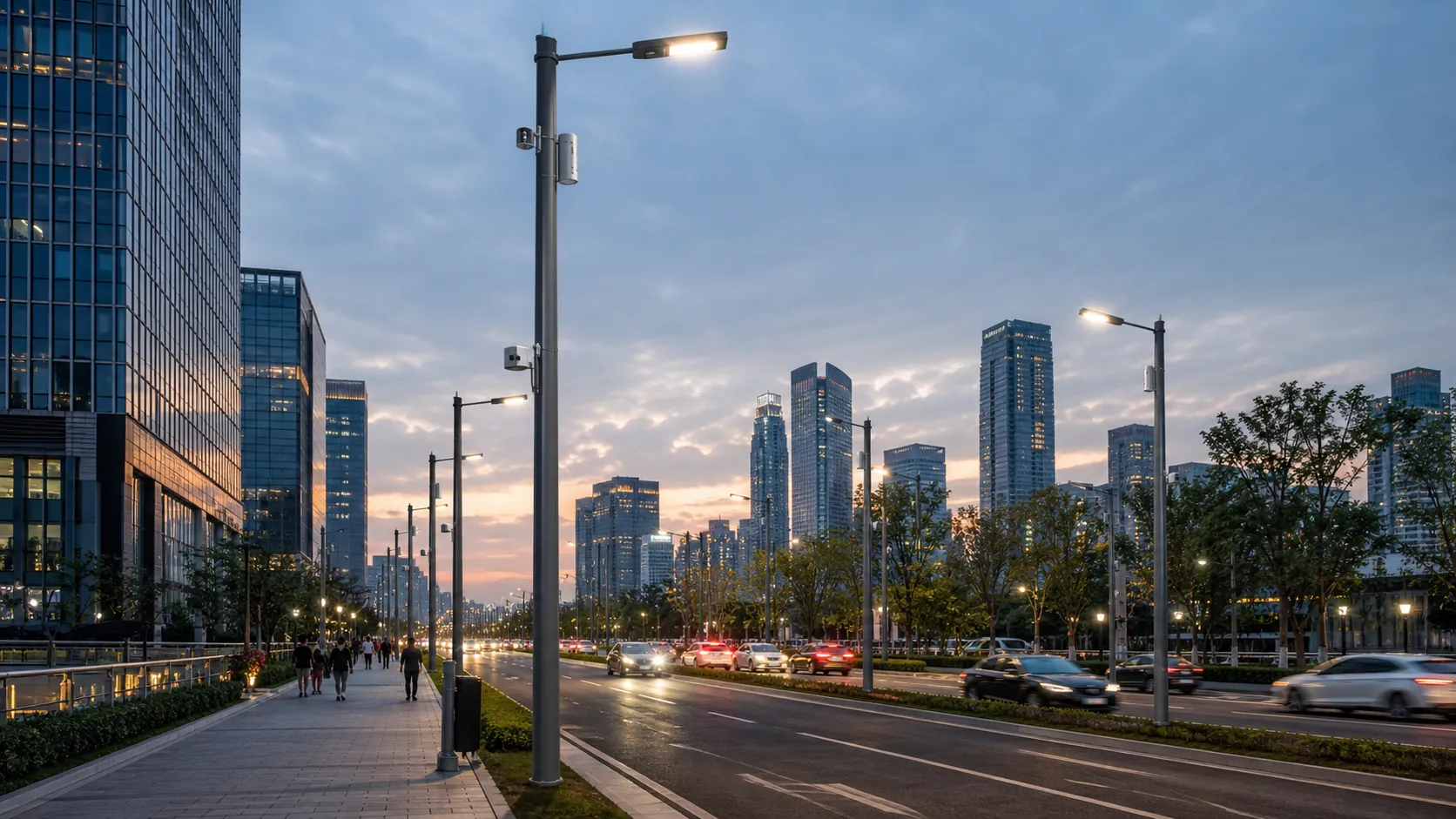
Municipal smart city programs for lighting, traffic safety, parking, smart poles and environmental monitoring with one hardware and software partner.
Smart Street Lighting
Plan an IoT street lighting system with LED luminaires, pole controllers, adaptive dimming, fault alarms, asset management and platform integration.
Street Lighting Guide
A practical guide to choosing smart street lighting controllers, connectivity, platform features, dimming logic and acceptance tests.
Frequently Asked Questions
What is the difference between Zhaga D4i and NEMA 7-pin sockets on a street light?
Both are standardized sockets for plugging a photocell or smart controller into the luminaire. NEMA 7-pin (ANSI C136.41) is the larger twist-lock socket common in ANSI-market infrastructure, while Zhaga Book 18 (D4i) is a compact receptacle paired with DALI-2/D4i data standards that guarantees certified interoperability and supports an additional bottom socket for sensors. The RC-SL-240 is available with either interface, so it fits both ecosystems.
Can I install the RC-SL-240 now and add smart controls later?
Yes. The luminaire works standalone with a simple photocell or the driver's internal astronomical dimming schedule. Because the Zhaga/NEMA socket is wired to the DALI-2 bus from the factory, you can twist in a CMS node at any later date and immediately get remote dimming, energy metering and fault alarms without modifying the fixture.
How much energy does it save compared with HPS street lights?
A typical one-to-one retrofit (e.g. 150 W LED replacing 250 W HPS) saves around 50-60% from the efficacy gain alone. Adding CMS-driven midnight dimming usually brings total savings to 60-70%, which is consistent with documented large-scale retrofit programs. Per-luminaire D4i energy metering lets you verify the savings monthly.
Does it support EN 13201 or IES RP-8 compliant lighting designs?
Yes. REDCOAST.LTD provides IES/LDT photometric files for every optic and wattage, and its engineers prepare DIALux/AGi32 layouts to demonstrate M/C/P-class compliance under EN 13201 or RP-8 criteria for your specific pole spacing, mounting height and road geometry before you order.
What surge protection does the luminaire have for lightning-prone areas?
A 10 kV/10 kA surge protective device is standard, mounted as a field-replaceable module with a visual end-of-life indicator. For overhead feeds or high-lightning regions a 20 kV/10 kA option is available. The SPD fails safely so a surge event never leaves the luminaire stuck off without indication.
Is the luminaire suitable for coastal or high-temperature climates?
Yes. The standard unit operates from -40 °C to +55 °C with thermal management validated for hot climates. For coastal sites, a C4/C5 marine-grade coating tested to 1,000 hours of neutral salt spray plus stainless external fasteners and a tempered-glass IK10 cover are available as an environment package.
Can REDCOAST.LTD customize the light engine, for example with amber LEDs?
Yes. Unlike integrators that rely on catalog modules, REDCOAST.LTD designs the LED engine PCB in-house, so project-specific variants — PC-amber spectra for wildlife-sensitive zones, custom flux packages, dual-channel tunable white or non-standard CCTs — can be engineered and manufactured for your tender.
What warranty and after-sales support is provided?
The standard warranty is 5 years, extendable to 10 years for framework or ESCO contracts. Support includes factory driver pre-programming, photometric layout service, spare-parts kits (driver, SPD, lens modules) and remote diagnostics through the CMS when REDCOAST.LTD nodes and software are deployed.