Overview
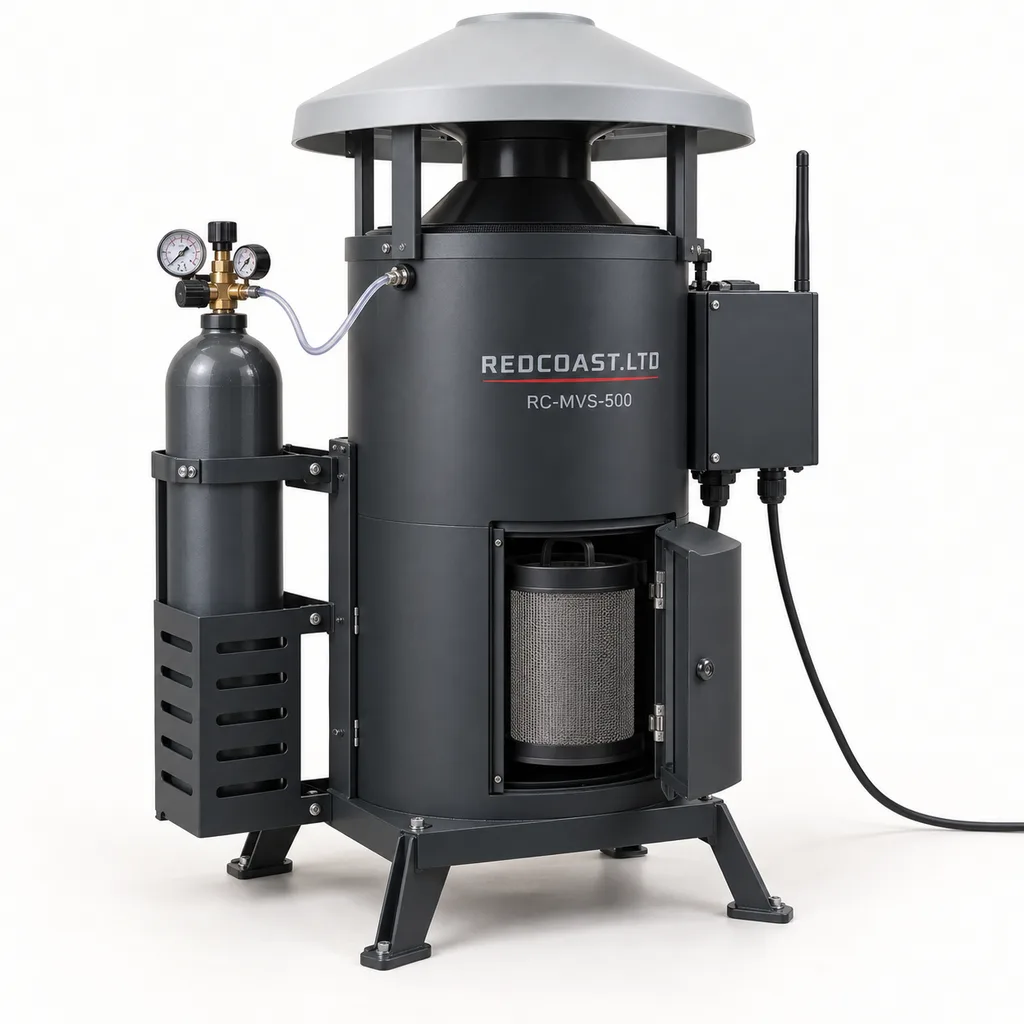
The RC-MVS-500 Smart Mosquito Surveillance Station is a configurable, mains-powered monitoring solution for mosquito control agencies, public health teams, campus operators, and facilities contractors. It combines an adult mosquito suction trap, optical event counting, equipment diagnostics, a Web management platform, and a mobile service app to make fixed surveillance sites visible between collection visits. The operational benefit is earlier access to activity trends and fault information, helping teams prioritize inspections while retaining physical specimens for expert identification. REDCOAST.LTD develops the complete solution, including project-specific PCBs and board-level electronics; the specifications below are an engineering design baseline for customization and pilot validation, not a claim of completed certification or demonstrated counting accuracy.
Key Features
- Time-resolved activity records: One-minute local count bins and a default 15-minute upload interval reveal activity changes that a single collection total cannot show.
- Transparent classification: Separate mosquito-like, other-object, and uncertain events preserve the distinction between an automated estimate and laboratory-confirmed identification.
- Useful sampling-time records: Fan, optical-path, and gas-flow status accompany every interval so equipment failure does not silently appear as a zero catch.
- Specimen retrieval: A removable mesh collection cassette with a closable neck and barcode identity connects field observations to laboratory records.
- Measured attractant delivery: A normally closed CO2 valve, downstream flow sensor, and optional cylinder weighing base help identify interrupted bait delivery.
- Remote equipment checks: Fan tachometer feedback, electrical current monitoring, optical baseline checks, and enclosure access sensing support service decisions.
- Integrated field workflow: The mobile app records cassette changes, lure replacement, cylinder exchange, photographs, and technician observations against the station ID.
- Project-specific hardware: REDCOAST.LTD can redesign the optical analog front end, fan and valve driver board, power distribution, interfaces, and enclosure layout for the agreed deployment.
- Accessible operational data: CSV exports, HTTPS interfaces, GIS coordinates, and timestamped configuration histories support integration with existing surveillance systems.
Technical Architecture
The station uses a shaded, rain-sheltered intake above a removable collection cassette. A brushless suction fan downstream of the cassette draws insects through two optical sensing planes; the collection mesh separates specimens from the fan blades. An 850 nm infrared emitter and photodiode front end acquire passage signals, while an embedded controller evaluates event duration, amplitude, and movement between the planes. Direction checks help reject repeated crossings, and ambiguous or overlapping passages enter an uncertain-event category. The proposed event-processing envelope is up to one isolated passage per second; simultaneous insects and unusually dense catches require explicit quality flags rather than assumed exact counts.
REDCOAST.LTD designs the optical signal-conditioning PCB, embedded controller board, fan and solenoid drivers, and protected DC power distribution around the selected trap geometry. The baseline includes fan speed feedback, supply current measurement, a CO2 flow input, enclosure temperature, ambient temperature and humidity, and a door switch. Environmental sensors sit in a ventilated radiation shield away from electronics exhaust. A local scheduler controls capture periods and bait release, and the controller continues recording when communications fail. Restart logic records a new operating session after power restoration, while missing intervals remain visibly missing.
At the platform layer, records retain station location, firmware and classifier version, lure configuration, actual operating time, collection ID, and diagnostic flags. The dashboard presents estimated mosquito-like events per valid sampling hour, trends, maintenance status, and configurable activity notifications. A quality rule can exclude an interval when airflow fails or required CO2 delivery stops. Automated counts describe activity at a particular trap under a particular protocol; they do not directly measure the number of mosquitoes throughout a neighborhood. Species-specific dashboards require laboratory-confirmed records, and the baseline classifier does not identify mosquito sex, species, or pathogens.
Connectivity & Power
The standard supply is AC 100–240 V, 50/60 Hz, feeding an isolated 24 V DC power unit. This configuration suits established parks, landscaped campuses, residential estates, and municipal service compounds with continuous grid access. Typical station consumption is a design budget of 12–20 W, including the fan, controller, optical sensor, communications, and gas valve; the maximum operating budget is 30 W. At an illustrative 15 W average, continuous operation consumes approximately 0.36 kWh per day. Connections to lighting infrastructure require an unswitched supply if daytime trapping is part of the protocol.
Ethernet provides a practical connection where a managed network is nearby. An optional LTE Cat 1 bis modem serves dispersed sites, with radio bands and SIM arrangements selected for the destination network. Counts and health records upload every 15 minutes by default, while connected fault notifications can be sent immediately. Local storage is sized for at least 90 days of aggregate records, excluding continuous raw optical waveforms. Device certificates, TLS-protected transport, role-based access, signed firmware updates, and configurable data retention are requirements of the proposed platform architecture.
CO2 is an attractant consumable and has its own operating budget. The baseline regulated flow range is 0.10–0.50 L/min, referenced to 20°C and 101.3 kPa. At 0.20 L/min continuously, consumption is approximately 0.53 kg per day, making a 10 kg usable fill about 19 theoretical days before reserve and real-world losses. A planning allowance of 80% usable gas reduces that example to about 15 days. Local cylinder fittings, regulator selection, operating schedule, and measured flow must be confirmed. Cylinder pressure is not used as a reliable remaining-mass estimate while liquid CO2 remains; the optional weighing base measures mass after cylinder tare is entered.
Protection & Reliability
The sealed electronics compartment has an IP65 design target, with gasketed access, downward-facing cable entries, and a pressure-equalizing membrane. The insect intake and collection airflow path remain open by function and are not assigned that enclosure rating. A removable rain hood, drainage routes, washable collection hardware, and accessible optical windows support outdoor servicing. Collection chambers must not retain rainwater that could create breeding habitat.
The baseline electronics operating range is -10 to +50°C, with active biological sampling specified for +5 to +45°C. These limits do not guarantee useful catches across every temperature: weather, target species, lure condition, and site placement affect results. Steel supports receive hot-dip galvanizing beneath a smooth matte powder-coated finish; UV-stabilized polymer parts provide the trap body and hood. Coastal coating options require a defined corrosion test, and dusty installations require more frequent optical cleaning. Anchoring is selected from the actual support geometry and site wind loads, without assigning a universal wind rating. Replaceable fan, sensor, and power modules support repair planning; warranty duration and spares commitments belong in the project quotation.
Application Scenarios
Municipal park surveillance. Place stations in shaded planting margins near continuously powered service buildings, with technician access separated from busy visitor routes. Teams can inspect activity and trap health before dispatching a vehicle and combine cassette collection with scheduled grounds visits.
Campus and institutional landscapes. Distribute fixed stations across selected courtyards, drainage-adjacent vegetation, and landscaped boundaries. A shared dashboard lets facilities staff handle equipment service while entomology or public health personnel retain responsibility for sampling design and interpretation.
Residential estate maintenance. Establish repeatable observation points around common gardens and drainage features under a consistent lure and operating schedule. Contractors can document activity changes alongside habitat inspections and maintenance actions without promising a mosquito-free development.
Logistics and transport premises. Install stations at vegetated perimeters and suitable service areas where utility power and controlled access already exist. Physical specimen collection allows suspected invasive mosquitoes to be referred for expert identification; automated alerts only indicate an activity change requiring investigation.
Treatment evaluation sites. Operate matched monitoring locations before and after a control intervention, preserving configuration and service histories. Include suitable reference locations and weather information because a falling count alone does not establish treatment effectiveness.
Case-style Examples
The following examples are illustrative deployment designs, not completed projects or measured customer results.
Fixed urban surveillance network. A public health team needs earlier information from 20 established park sites that already have power. The proposed configuration uses LTE communications, CO2 flow monitoring, barcode collection cassettes, and a single dashboard with daily service priorities. A four-week pilot compares station records with manual specimen counts and separates valid sampling intervals from equipment downtime. The intended outcome is a clearer basis for dispatch and collection planning; labor savings are evaluated from actual travel, refill, and laboratory workloads before wider rollout.
Campus contractor service program. A campus operator wants to relate mosquito complaints to repeatable observations across six landscaped zones. Ethernet-connected stations use a common sampling schedule, while the mobile app logs lure changes, maintenance, and specimen handover. Facilities staff receive equipment notifications, and the supervising specialist reviews activity trends and laboratory results. The proposed service report shows valid trap-hours and unresolved faults alongside count trends, providing a more accountable record than a chart without sampling context.
Customization & Selection Guide
Start with the surveillance objective and the organisms of interest. Adult suction trapping, gravid trapping, and egg surveillance sample different biological groups; the RC-MVS-500 baseline is an adult suction station. A qualified entomologist should select the lure, operating hours, intake height, collection interval, and comparison method. This approach follows the distinctions explained in the CDC mosquito surveillance trap guide.
For procurement, distinguish passage detection, mosquito-versus-other classification, and reconciliation with retained specimens. Commercial products such as the Biogents BG-Counter demonstrate automatic counting, remote reporting, and coordinated fan and CO2 control, but their published performance does not validate a different station. Specify a paired field trial across representative sites and catch densities, reporting false positives, missed detections, uncertain events, and differences between event totals and manual catches. Set acceptance thresholds before testing and document classifier changes.
Choose Ethernet where network access is straightforward; choose LTE when bringing data cable to each site would increase installation work. Add cylinder weighing when refill logistics are a major cost, and retain downstream flow monitoring whenever bait delivery is essential to the sampling protocol. Total ownership cost should include gas, lure replacements, collections, cleaning, connectivity, software hosting, and laboratory work. Station spacing follows the surveillance question and local habitat rather than a claimed universal attraction radius.
Deployment & After-sales
A practical deployment begins with a site survey covering shade, flooding, irrigation spray, public access, continuously available electricity, communications, and safe cylinder placement. Cylinders stand upright in a separately ventilated, lockable restraint assembly; gas plumbing remains separate from sealed electronics. Installers establish a clean optical baseline, verify airflow with the collection cassette fitted, measure CO2 delivery, and complete an end-to-end data and alert check.
Begin with daily physical checks during pilot commissioning, then set the service interval from observed catch loading, specimen condition, weather, and the monitoring objective. The cassette is not refrigerated. Where specimens are intended for pathogen testing, the receiving laboratory must define collection timing and transport conditions; CDC surveillance guidance explains the importance of specimen handling and cold-chain procedures.
The delivery plan separates requirements definition, PCB and enclosure development, prototype evaluation, field validation, and production acceptance. Firm lead times follow design freeze and component availability rather than a universal stock-delivery promise. Project support can include installation drawings, operator training, replacement module instructions, remote diagnostics, firmware maintenance, and agreed spare-part packages.
Standards & Compliance
Enclosure testing should use IEC 60529, with the IP65 claim limited to the assembled electronics compartment tested with its production connectors and seals. Coastal projects can specify cyclic salt-mist evaluation under IEC 60068-2-52, with the test method and acceptance criteria recorded. Neither reference implies that this proposed model has already passed testing.
The final configuration requires destination-specific electrical safety, electromagnetic compatibility, radio, and material compliance assessment. For applicable radio-equipped deliveries, the European Commission's Radio Equipment Directive guidance identifies safety, EMC, spectrum, and relevant connected-device requirements. A modem's approval does not by itself certify the complete station. Required declarations, reports, labeling, and current cybersecurity obligations are determined for the supplied configuration before shipment; no CE or other certification is claimed here.
Why REDCOAST.LTD
REDCOAST.LTD delivers the station, Web platform, mobile app, and integration work as one customizable outdoor IoT solution. Its in-house PCB and board-level design capability allows the sensing electronics, power protection, actuator interfaces, service diagnostics, and mechanical integration to be adapted together. That matters when a surveillance program needs a particular trap geometry, an existing data interface, unusual environmental protection, or a service workflow that standard hardware does not address. The development scope connects those requirements to a defined prototype and field acceptance process, keeping engineering capability distinct from unverified biological performance.
Contact REDCOAST.LTD with your surveillance objective, site count, target mosquito groups, available utilities, and specimen workflow to request a customized RC-MVS-500 configuration and pilot proposal.
Specifications
Capture & Optical Counting — Design Baseline
- Sampling Method
- Adult suction trapping with removable specimen cassette
- Optical Architecture
- 2 sensing planes with infrared emitters and photodiode receivers
- Infrared Wavelength
- 850 nm
- Isolated Passage Processing Target
- Up to 1; overlapping passages flagged as uncertain event/s
- Classification Outputs
- Mosquito-like / other object / uncertain; no species or sex identification
- Installed Airflow Target
- 8–15 with clean collection mesh; verified during commissioning m³/h
- Collection Cassette
- 1 L nominal chamber; removable mesh insert with closable neck
- Local Count Interval
- 1 min
Attractant Delivery — Design Baseline
- Attractant Configuration
- Regulated cylinder CO2; replaceable scent-lure holder
- CO2 Flow Setting Range
- 0.10–0.50, referenced to 20°C and 101.3 kPa L/min
- Downstream Flow Sensor Range
- 0–1.0, referenced to 20°C and 101.3 kPa L/min
- Gas Valve
- 24 V DC, normally closed; closes on loss of power
- Gas Consumption Example
- Approximately 0.53 at 0.20 L/min continuously kg/day
- External Cylinder Options
- 5 or 10 kg CO2 fill; locally sourced, with matching regulator and restraint
- Optional Cylinder Weighing Base
- 0–50 kg gross load; 0.05 kg display resolution; user-entered cylinder tare
Grid Power — Design Baseline
- AC Input Voltage
- 100–240 V AC
- Input Frequency
- 50/60 Hz
- Internal Distribution Voltage
- 24 V DC
- Power Supply Rating
- 60 W
- Typical Total Consumption Budget
- 12–20, including fan, electronics, modem, and gas valve W
- Maximum Operating Consumption Budget
- 30 W
- Daily Energy Example
- 0.36 at 15 W average over 24 hours kWh/day
Connectivity & Data — Design Baseline
- Wired Network
- 1 × 10/100 Ethernet Mbps
- Cellular Option
- LTE Cat 1 bis; destination-specific radio bands and SIM
- Upload Interval Options
- 5 / 15 / 60; default 15 min
- Local Aggregate Record Retention
- At least 90; excludes continuous raw optical waveforms days
- Telemetry & Integration
- MQTT over TLS / HTTPS API / CSV export
- Timestamp & Location Fields
- UTC timestamps; configurable display time zone; WGS84 latitude and longitude
- User Access Roles
- Administrator / surveillance analyst / field technician / read-only viewer
Environmental Sensing & Diagnostics — Design Targets
- Ambient Temperature Measurement Range
- -10 to +50 °C
- Temperature Sensor Accuracy Target
- ±0.3 at +20 to +30°C; excludes siting and radiation errors °C
- Relative Humidity Measurement Range
- 0–100 % RH
- Humidity Sensor Accuracy Target
- ±3 at 20–80% RH and 25°C, non-condensing % RH
- Equipment Status Sampling Interval
- 1 for fan tachometer, supply status, and door state s
- Diagnostic Event Types
- Fan fault / optical obstruction / CO2 flow fault / door opening / supply interruption / network loss
Mechanical & Environmental — Design Targets
- Electronics Compartment Protection
- IP65 target under IEC 60529; excludes open trap intake and airflow path
- Electronics Operating Temperature
- -10 to +50 °C
- Active Sampling Temperature Envelope
- +5 to +45; biological catch performance remains species- and weather-dependent °C
- Storage Temperature
- -20 to +60; excludes gas cylinder and lure consumables °C
- Nominal Station Dimensions
- 450 × 450 × 780, excluding external cylinder and site anchoring mm
- Baseline Intake Height Adjustment
- 0.3–0.8 above finished ground; final setting follows sampling protocol m
- Materials & Finish
- UV-stabilized ASA trap body; galvanized steel support with smooth matte RAL 7016 powder coating
Sampling Workflow & Service — Design Baseline
- Daily Capture Schedule
- 1–24 h/day
- Schedule Resolution
- 1 min
- Collection Identification
- Station ID + cassette barcode + collection start and end timestamps
- Primary Activity Metric
- Estimated mosquito-like events per valid sampling hour
- Physical Inspection Interval During Commissioning
- 24 maximum initially; shorten for specimen condition or heavy catches h
- Collection Preservation
- Ambient-temperature mesh cassette; laboratory-defined retrieval and transport procedure
Capabilities — configurable per project
Specifications are tailored to each project — the options below show what we can support.
Network Configuration
- Ethernet primary connection
- LTE Cat 1 bis primary connection
- Ethernet with LTE failover
Attractant & Refill Management
- CO2 flow monitoring with scheduled release
- CO2 flow monitoring plus cylinder weighing
- Protocol-specific scent-lure cartridge holder
Mechanical Installation
- Anchored freestanding station
- Low-level wall bracket with adjustable intake height
- Ventilated security surround with separate cylinder restraint
Platform Delivery
- Managed Web platform and mobile app
- Customer-hosted platform and mobile app
- API integration with an existing surveillance or GIS platform
Hardware Engineering Scope
- Project-specific optical front-end PCB and intake geometry
- Additional isolated RS-485 sensor interface
- Coastal fluorocarbon coating package with specified corrosion testing
- Alternative cassette geometry for an agreed specimen workflow
Related solution guidance
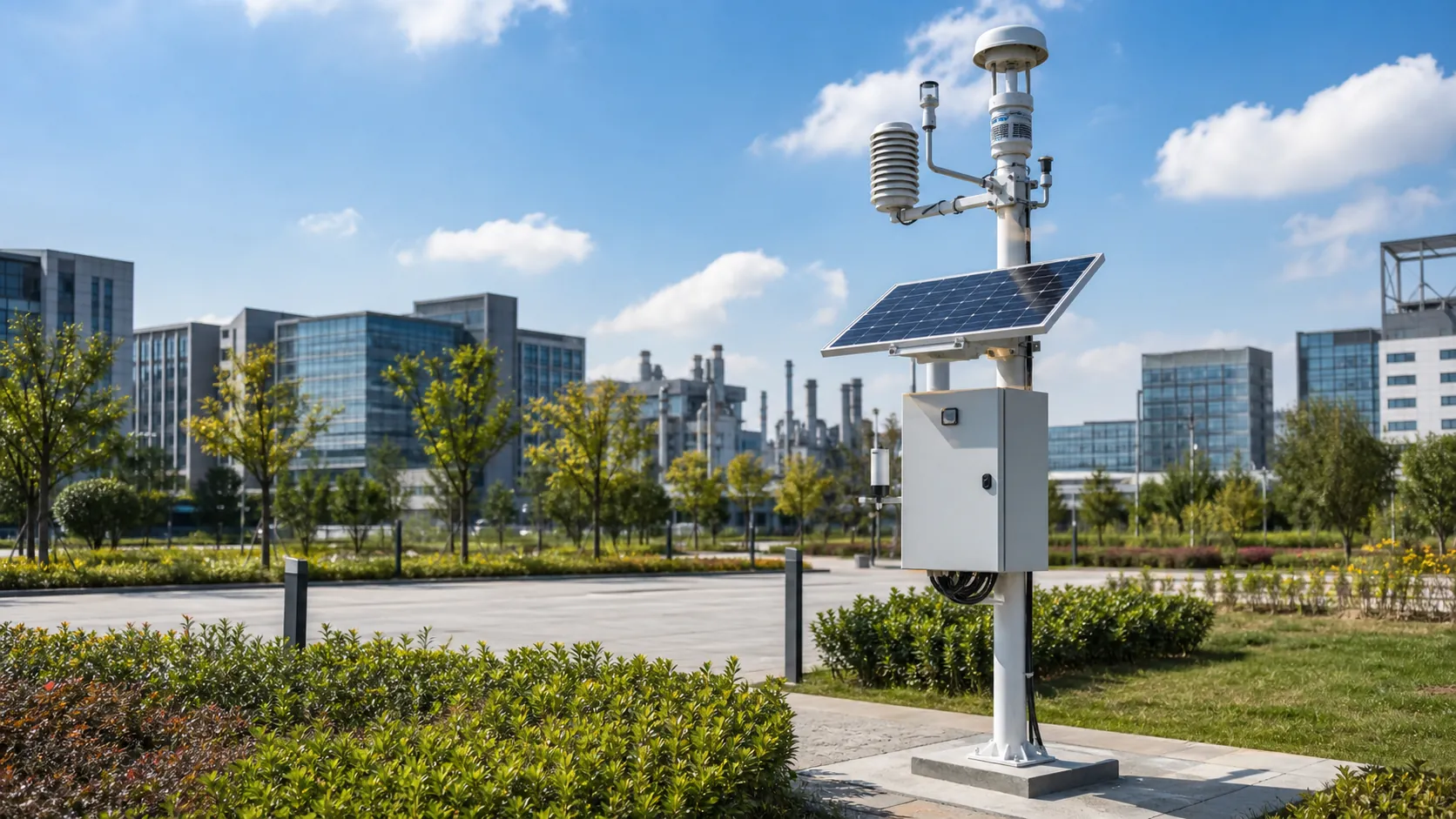
Environmental Monitoring
Deploy environmental monitoring stations with sensors, solar power, gateways, dashboards, alarms and data integration for city and industrial sites.
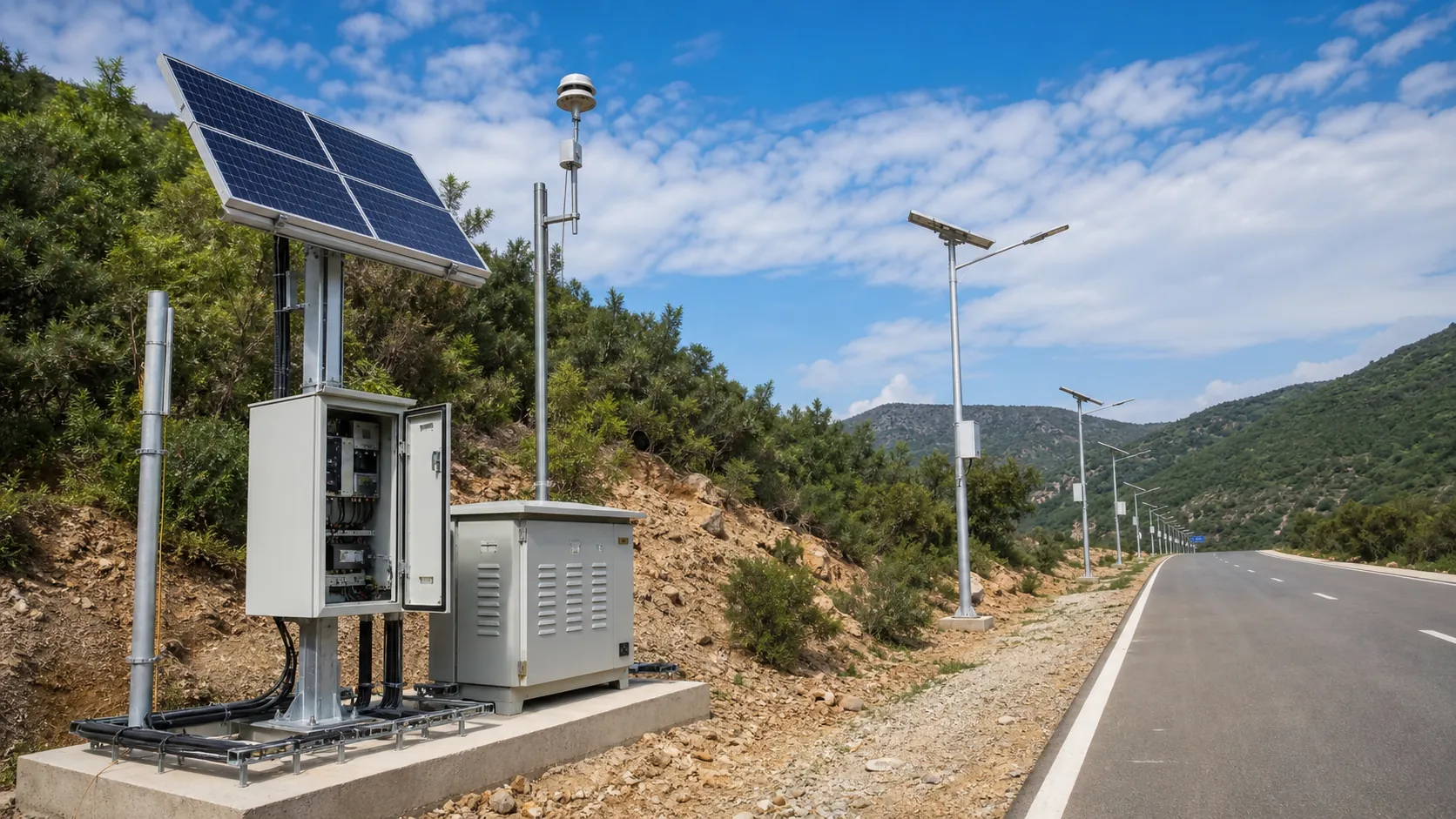
Power and Connectivity
How to choose power, battery, solar, NB-IoT, LTE, LoRaWAN, gateways and monitoring strategy for outdoor IoT infrastructure.
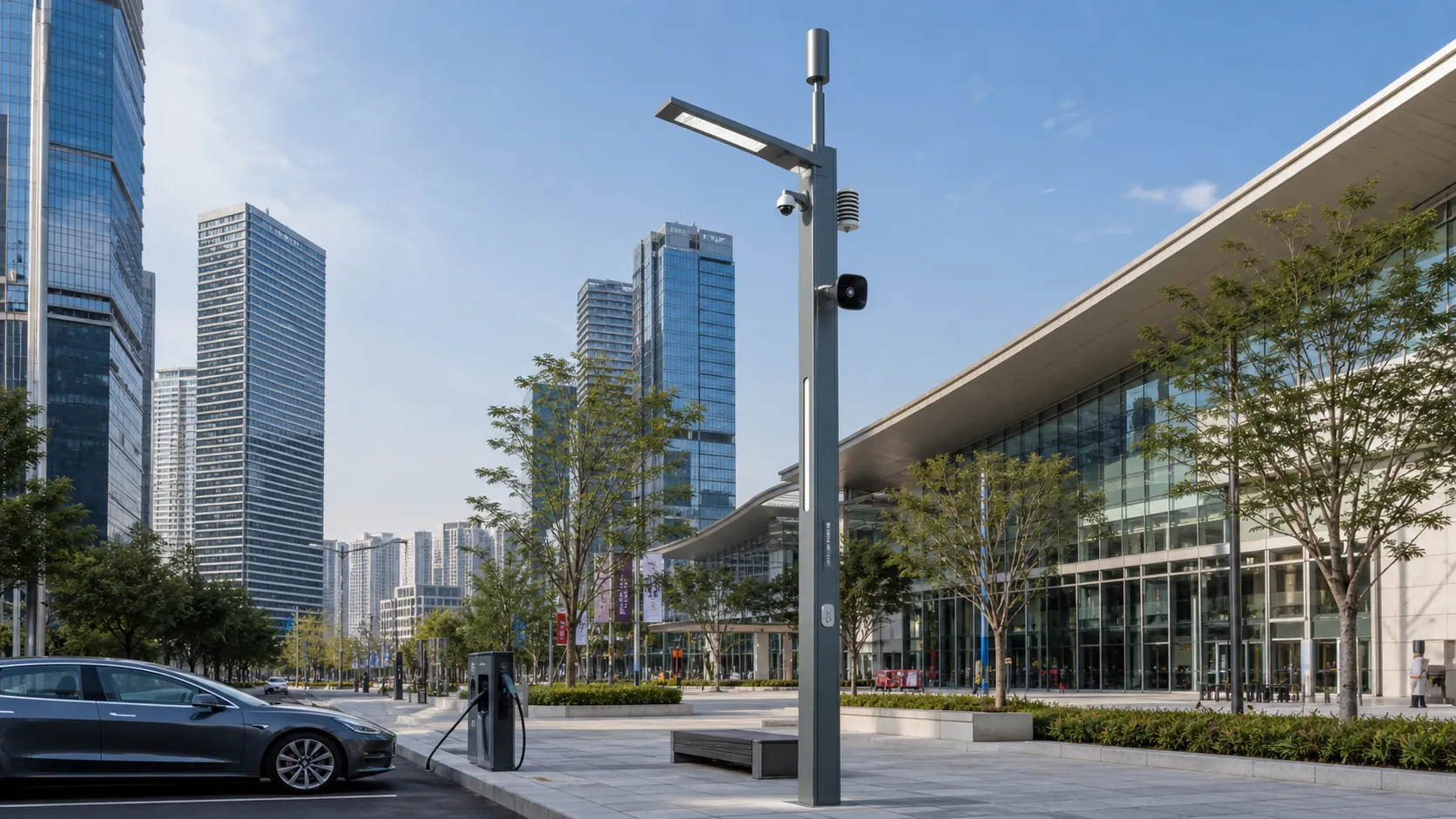
Campuses
Campus IoT for lighting, parking, safety, smart poles, environmental data and facility maintenance workflows.
Frequently Asked Questions
What does an automated mosquito surveillance station actually measure?
The RC-MVS-500 design records optical passage events and classifies them as mosquito-like, other objects, or uncertain. Counts are reported with valid sampling time and equipment status, so users can distinguish activity changes from interrupted trapping. These observations represent the selected trap and protocol, not a direct census of mosquitoes across the surrounding area.
Can the station identify Aedes species or detect dengue and other mosquito-borne viruses?
The baseline does not identify species, sex, infection status, or disease transmission risk. Its collection cassette retains specimens for expert identification and any laboratory testing required by the surveillance program. Laboratory-confirmed results can be associated with the station and collection record in the platform.
Does remote counting eliminate daily trap collection and technician visits?
Remote counts and diagnostics can reduce trips made only to check whether equipment is operating, but they do not remove gas refills, lure replacement, cleaning, or specimen collection. Begin with daily checks during commissioning and set later intervals from catch loading, specimen requirements, and environmental conditions. Programs requiring pathogen testing must follow the receiving laboratory's collection and transport protocol.
How much electricity and CO2 does the station require?
The proposed mains configuration uses AC 100–240 V and budgets 12–20 W during typical operation; a 15 W average corresponds to 0.36 kWh per day. At 0.20 L/min referenced to 20°C and 101.3 kPa, continuous CO2 release consumes approximately 0.53 kg per day. A 10 kg fill therefore provides about 19 theoretical days, or roughly 15 days using an 80% usable-gas planning allowance.
What counting accuracy should a buyer specify in a tender?
Specify separate acceptance criteria for event detection, mosquito-versus-other classification, and agreement with manually counted specimens. Evaluate representative insect mixtures, catch densities, weather conditions, and collection intervals, including false positives, missed events, and uncertain classifications. REDCOAST.LTD does not assign this proposed model a universal accuracy percentage before paired field validation.
Where should stations be installed, and how many are needed?
Choose shaded, accessible monitoring locations with continuous power, appropriate habitat, and protection from flooding and direct irrigation spray. An entomologist should determine station numbers, locations, intake heights, and schedules from the surveillance objective and target mosquitoes. There is no universal coverage radius, and different trap or lure configurations should not be treated as directly interchangeable.
Can REDCOAST.LTD customize the hardware and connect it to our existing platform?
Yes. The proposed delivery scope combines custom PCB and board-level engineering with enclosure development, embedded software, a Web platform, and a mobile app. Ethernet or LTE connectivity, HTTPS interfaces, CSV exports, and collection identifiers can be mapped to an existing GIS or surveillance database, with the integration scope defined before development.
What happens when the Internet connection or mains power fails?
During a network outage, the powered station continues its local schedule and stores aggregate records for later upload. A mains outage stops capture and closes the normally closed CO2 valve; this baseline has no backup-power runtime claim. After power returns, the controller starts a new operating session and preserves the outage as missing sampling time rather than reporting zero mosquito activity.