Overview
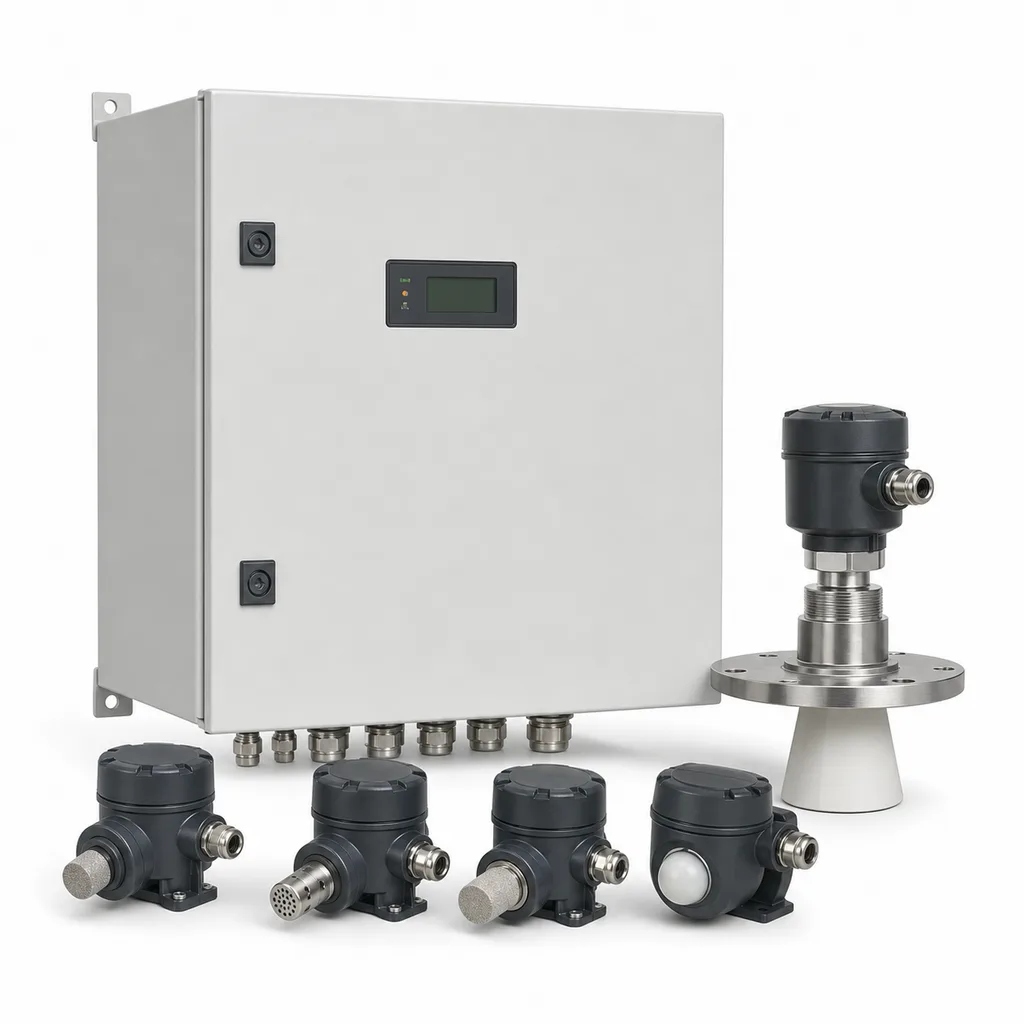
The RC-UTM-900 is a complete monitoring and automatic control system for underground utility tunnels — also known as utility corridors, common utility ducts, cable tunnels and multi-utility galleries — that carry power cables, water mains, heating pipes, gas pipelines and telecom fiber beneath cities, campuses and industrial parks. It is built for municipal utility authorities, tunnel operators, EPC contractors and system integrators who must keep long, confined, unmanned underground spaces safe and compliant without stationing staff inside them. The system continuously measures atmospheric composition, temperature, humidity and sump water level along the tunnel, detects intrusion and unauthorized access, and automatically drives ventilation fans, drainage pumps, lighting circuits and access doors according to configurable safety logic. Delivered by REDCOAST.LTD as an end-to-end solution — field sensors, zone controllers, fiber backbone, SCADA web platform and mobile app from one engineering team — it turns kilometers of dark, hazardous corridor into a remotely supervised, self-protecting asset.
Key Features
- Multi-gas environmental monitoring per protection zone: O2, CH4 (%LEL), H2S and CO sensor heads on an in-house designed multi-channel signal-conditioning PCB with per-channel calibration, self-diagnostics and configurable two-stage alarm thresholds.
- Automatic safety linkage at the edge: each Area Control Unit (ACU) executes local logic — gas alarm starts ventilation fans, high sump level starts drainage pumps, door opening switches on lighting — with sub-second response even if the backbone or control center is offline.
- Flood protection built in: radar or submersible level sensing in sumps and low points, duty/standby pump rotation, dry-run and overload protection, and escalation alarms to the platform before water reaches cable trays.
- Access control and intrusion detection at entrances, ventilation shafts and manholes: RFID/keypad or face-reader entry, door-contact and manhole-cover tamper sensing, and optional camera snapshots pushed to duty staff on every entry event.
- Gigabit fiber ring backbone with self-healing redundancy along the tunnel, plus RS-485 field buses to sensors and 4G/5G fallback uplink at portal stations.
- Personnel safety functions: SOS call points inside the tunnel, optional UWB/RFID personnel positioning, and entry permits with time-limited work-zone authorization managed on the platform.
- Unified SCADA platform and mobile app: longitudinal tunnel profile view, zone-by-zone live readings, alarm workflow with acknowledgement and audit trail, trend curves, and open APIs (Modbus TCP, OPC UA, MQTT) to city platforms.
- Custom board-level hardware: signal-conditioning boards, I/O relay boards and the ACU main controller are REDCOAST.LTD's own PCB designs, so channel counts, sensor mixes and interlock logic can be tailored per project instead of forced into a fixed catalog.
Technical Architecture
The system is organized in three tiers. At the field tier, each protection zone (typically one 200 m fire compartment) carries gas sensor heads, temperature/humidity probes, sump level sensors, door contacts, SOS call points, luminaires and jet or axial fans. Analog 4–20 mA and RS-485 sensors terminate on REDCOAST.LTD's multi-channel signal-conditioning PCB, which linearizes, filters and range-checks every channel and flags sensor drift or wiring faults as distinct diagnostic events rather than false alarms.
At the zone tier, the ACU — built around an industrial ARM controller board designed in-house — runs the local control logic: ventilation start/stop by gas concentration and temperature, pump control by level thresholds with duty rotation, lighting by occupancy and schedule, and hard-wired interlocks to fire-damper and fire-alarm systems. Relay output boards (10 A contacts, expandable in 8-channel blocks) drive fan starters, pump contactors and lighting circuits directly or via existing MCC panels. Because logic executes at the edge, a backbone failure never disables life-safety linkage.
At the supervision tier, ACUs join a self-healing Gigabit fiber ring that runs the length of the tunnel to the control room. The SCADA platform (on-premises server or cloud) aggregates all zones, renders the tunnel as a longitudinal profile with live color-coded status, manages alarm escalation to SMS/app push, stores years of trend data for compliance reporting, and exposes OPC UA/MQTT interfaces so the tunnel becomes one subsystem inside a wider smart-city or utility SCADA estate.
Connectivity & Power
The backbone is single-mode fiber in a redundant ring topology (1000 Mbps, ERPS ring recovery < 50 ms), which is the correct medium for multi-kilometer underground runs where copper Ethernet and wireless coverage are impractical. Within each zone, sensors connect over RS-485 (Modbus RTU) or 4–20 mA; portal stations can add a 4G/5G router as a fallback uplink to the cloud platform. Utility tunnels are grid-served infrastructure by definition, so the RC-UTM-900 is a mains-powered system: ACU cabinets accept AC 220/380 V (or AC 110 V variants) from the tunnel's power distribution, and each cabinet integrates a LiFePO4-based UPS module — managed by REDCOAST.LTD's own power-management and monitoring PCB — that keeps sensing, alarms and communications alive for 2–4 hours during a mains outage. No solar equipment is used or needed in this product.
Protection & Reliability
Field devices are rated IP65 against the permanently damp, occasionally flooded tunnel environment; sump-mounted level sensors are IP68. ACU cabinets are IP54 powder-coated steel with condensation heaters as an option for cold climates. Electronics operate from -20 °C to +60 °C at up to 95 % RH, and conformal-coated PCBs resist condensation and corrosive traces of H2S. Gas sensor heads use long-life electrochemical and catalytic/infrared cells with on-platform calibration-due tracking. Surge protection on power and signal lines, watchdog-supervised controllers, and dual-homed ring communications give the system the availability profile expected of life-safety-adjacent infrastructure; design MTBF for the ACU exceeds 100,000 hours.
Application Scenarios
- Municipal multi-utility corridors: new-build urban corridors carrying power, water, heating and telecom benefit from zone-by-zone gas, flood and intrusion supervision from day one, avoiding the cost of retrofitting safety systems after handover.
- High-voltage cable tunnels: utilities monitor ambient temperature, water ingress and unauthorized access along transmission cable routes, protecting assets whose failure would black out districts.
- Campus and industrial-park utility galleries: factories, airports, hospitals and universities with underground service galleries gain remote visibility and automatic drainage/ventilation without dedicating staff to routine patrols.
- Metro and rail service tunnels: ancillary corridors alongside transit lines are monitored for gas accumulation and flooding, with alarms bridged into the operator's existing OCC systems via OPC UA.
- Retrofit of legacy common ducts: older ducts with no instrumentation are upgraded zone by zone; the fiber ring and modular ACUs allow phased commissioning without shutting down the corridor.
- District heating and water-main tunnels: humidity and temperature trending detects pipe leaks early, and sump automation prevents small leaks from becoming cable-damaging floods.
Case-style Examples
New urban utility corridor, 6 km, four compartments per section. An EPC contractor needed turnkey instrumentation for a new corridor carrying 110 kV cables, water mains and telecom. REDCOAST.LTD supplied 30 ACU zones with O2/CH4/H2S/CO sensing, sump automation, access control at 12 entrances and a redundant fiber ring to the operations center. The operator now runs the corridor with a two-person duty shift instead of daily walk-through patrols, and ventilation runs on demand rather than on timers, cutting fan energy use by roughly a third.
High-voltage cable tunnel retrofit. A utility operating an older 3 km cable tunnel suffered a flooding incident that damaged joints. The retrofit configuration prioritized radar level sensors at every low point, duty/standby pump control with dry-run protection, and water-ingress trending on the platform. Since commissioning, rising-level events are pumped down automatically and escalated to the duty engineer's mobile app before any water reaches tray level.
Industrial-park service gallery with contractor access management. A large manufacturing campus needed to control third-party contractors entering its service gallery. The deployment combined RFID entry with time-limited work permits issued on the platform, camera snapshots on every entry, and SOS call points every 100 m. Security now holds a complete audit trail of who was in which zone and when, and lone-worker entries automatically arm gas-alarm escalation for that zone.
Customization & Selection Guide
Start from tunnel length and compartmentation: one ACU per fire compartment (typically 200 m) is the baseline; short galleries under 500 m can run on a single ACU with extended I/O. Choose the sensing package by contents — corridors with gas pipelines need CH4 (infrared) plus H2S; pure cable tunnels often need only O2, CO, temperature and level. Size relay I/O by the fans, pumps and lighting circuits each zone must drive; REDCOAST.LTD adjusts board population per project rather than selling fixed I/O tiers. Select access hardware (RFID, keypad, face reader) per site security policy, and add UWB personnel positioning where lone-worker regulations apply. Finally, choose platform deployment: on-premises for utilities with strict data policies, cloud-hosted for campuses wanting minimal IT footprint, or hybrid.
Deployment & After-sales
Field devices mount on tunnel walls and cable-tray supports with no structural work; ACU cabinets install in existing equipment niches or portal rooms. REDCOAST.LTD delivers pre-configured zone kits — sensors, conditioned cabling, ACU cabinet and commissioning profile — so on-site work is largely mechanical mounting and fiber splicing, and phased commissioning keeps live corridors operational during retrofit. Typical lead time is weeks-scale for standard zone kits, with project-specific PCB variants scheduled at contract stage. Remote diagnostics, firmware updates over the backbone, spare-parts kits and multi-year extended warranty options are available, with engineering support direct from the design team rather than a reseller.
Standards & Compliance
The system is engineered toward CE (EMC Directive 2014/30/EU, LVD 2014/35/EU) and RoHS compliance; gas detection performance aligns with EN 45544/EN 50271 practice for electrochemical and catalytic/IR toxic and flammable gas apparatus, with ATEX/IECEx-certified sensor heads available for zones classified as explosive atmospheres. Field enclosures follow IEC 60529 (IP65/IP68); communications follow Modbus, OPC UA and MQTT open standards; platform security follows IEC 62443 design guidance. Compliance documentation is prepared per project to match the destination market's certification regime.
Why REDCOAST.LTD
REDCOAST.LTD delivers complete smart-infrastructure solutions — field hardware, controllers, management platform and mobile app — engineered and integrated by one team. What makes that credible is in-house board-level development: the signal-conditioning boards, relay I/O boards, ACU controller and UPS management electronics in the RC-UTM-900 are our own PCB designs, so sensor mixes, channel counts, interlock logic and enclosure formats are tailored to your corridor rather than approximated with catalog parts. One partner owns the whole chain from schematic to SCADA screen, which shortens integration, removes finger-pointing between vendors, and keeps the system supportable for its full service life.
Planning a new utility corridor or retrofitting an existing tunnel? Contact REDCOAST.LTD with your tunnel length, contents and compartment layout for a tailored RC-UTM-900 configuration and quotation.
Specifications
System Architecture
- Zone Coverage per ACU
- up to 200 (one fire compartment) m
- Zones per System
- up to 128 ACUs per platform
- Sensor Channels per ACU
- 16-64 (analog + RS-485 mixed) ch
- Local Linkage Response Time
- <1 s
- Edge Autonomy
- full local safety logic during backbone/center outage
- Platform Interfaces
- Modbus TCP, OPC UA, MQTT, REST API
Environmental & Gas Sensing
- Oxygen (O2)
- 0-25 %VOL
- Methane (CH4)
- 0-100 (catalytic or NDIR) %LEL
- Hydrogen Sulfide (H2S)
- 0-100 ppm
- Carbon Monoxide (CO)
- 0-500 ppm
- Temperature / Humidity
- -20 to +70 / 0-100 °C / %RH
- Sump Water Level
- 0-5 (radar) or 0-10 (submersible) m
- Alarm Stages
- 2-stage per channel, user-configurable
Control & I/O
- Relay Outputs
- 8-32 (expandable in 8-ch blocks) ch
- Relay Rating
- 10 A @ AC 250 V
- Digital Inputs
- 16-64 (dry contact, opto-isolated) ch
- Analog Inputs
- 8-32 × 4-20 mA / 0-10 V ch
- Controlled Loads
- jet/axial fans, drainage pumps, lighting circuits, dampers, door locks
- Pump Control
- duty/standby rotation, dry-run & overload protection
Connectivity
- Backbone
- single-mode fiber ring, 1000 Mbps
- Ring Recovery (ERPS)
- <50 ms
- Field Bus
- RS-485 Modbus RTU, 4-20 mA
- Fallback Uplink
- 4G LTE / 5G router at portal stations
- Time Sync
- NTP across all ACUs
Power (Grid)
- ACU Input Voltage
- AC 220/380 (AC 110 variant available) V
- ACU Power Consumption
- 30-80 (excluding controlled loads) W
- UPS Backup
- integrated LiFePO4 module, 2-4 h
- Surge Protection
- Type 2 SPD on power; gas-discharge + TVS on signal lines
- Battery Supervision
- voltage/temperature/SoC reported to platform
Protection & Environment
- Field Device Ingress Rating
- IP65 (IP68 for sump sensors)
- ACU Cabinet Rating
- IP54, powder-coated steel
- Operating Temperature
- -20 to +60 °C
- Operating Humidity
- up to 95 (conformal-coated PCBs) %RH
- ACU Design MTBF
- >100,000 h
- Gas Sensor Cell Life
- 2-3 (electrochemical) / 5+ (NDIR) years
Capabilities — configurable per project
Specifications are tailored to each project — the options below show what we can support.
Sensing Package
- Cable-tunnel basic (O2/CO/temp/level)
- Full gas suite (O2/CH4/H2S/CO)
- ATEX/IECEx-certified heads for classified zones
- Pipe-leak trending (humidity/temperature differential)
Access & Personnel Safety
- RFID/keypad entry
- Face-recognition entry
- UWB personnel positioning
- SOS call points with intercom
Linkage & Control
- Ventilation fan control
- Drainage pump automation
- Lighting occupancy control
- Fire-system hard-wired interlock
Platform Deployment
- On-premises server
- Cloud-hosted
- Hybrid with city-platform API integration
Network Topology
- Redundant fiber ring
- Fiber star (short galleries)
- 4G/5G portal fallback
Related solution guidance
Campuses
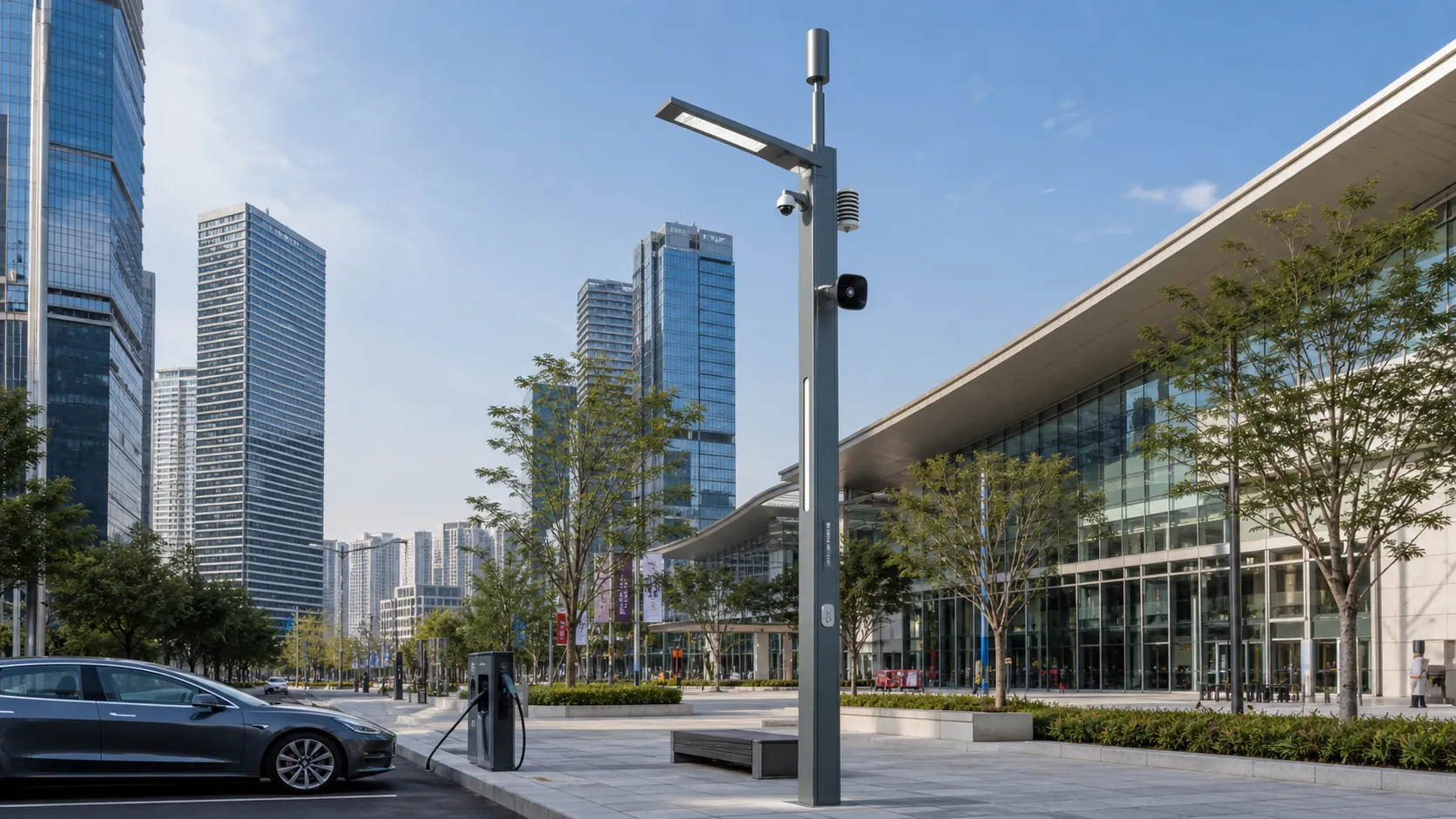
Campus IoT for lighting, parking, safety, smart poles, environmental data and facility maintenance workflows.
Industrial Parks
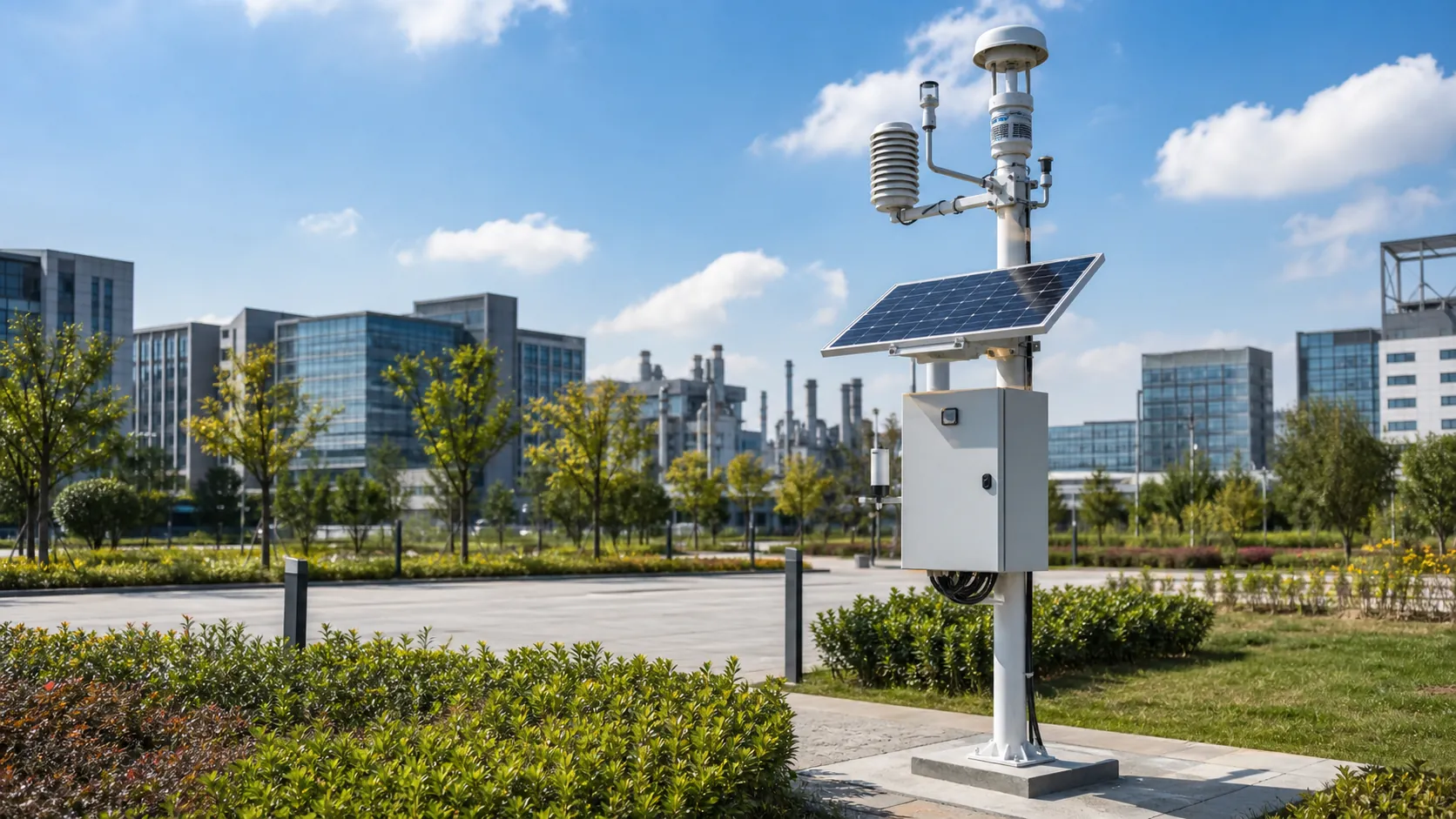
Industrial park IoT for lighting, access areas, environmental monitoring, energy visibility, parking and maintenance operations.
Municipalities
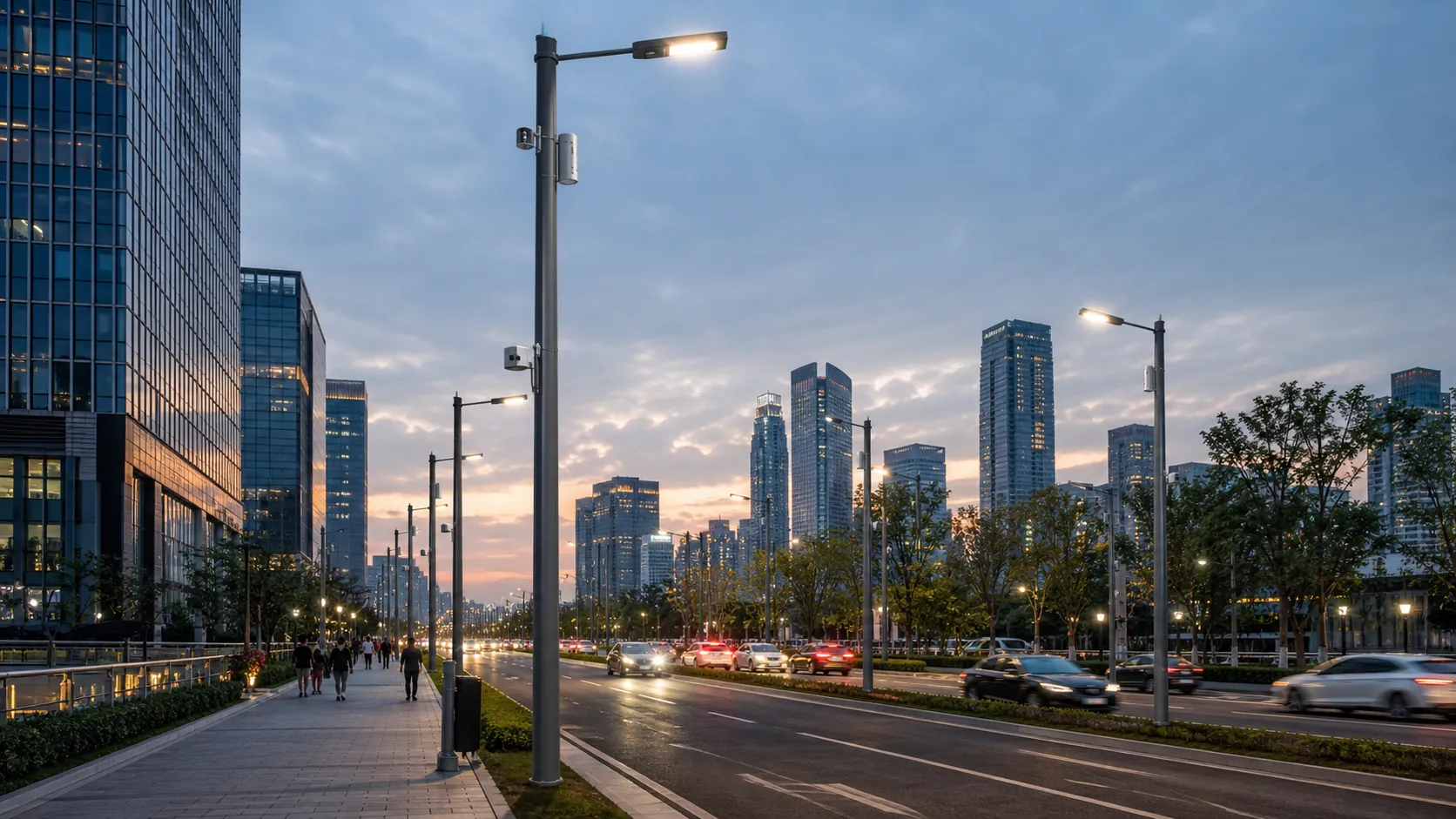
Municipal smart city programs for lighting, traffic safety, parking, smart poles and environmental monitoring with one hardware and software partner.
Frequently Asked Questions
What does a utility tunnel monitoring system actually monitor?
The RC-UTM-900 monitors the tunnel atmosphere (oxygen, methane, hydrogen sulfide, carbon monoxide, temperature and humidity), sump water levels at low points, and physical security events such as door openings and manhole-cover tampering. All readings stream zone by zone to a SCADA platform, and each zone controller also executes automatic responses locally — starting fans, pumps or lighting the moment a threshold is crossed.
Does the system still protect the tunnel if the network or control center goes down?
Yes. Safety logic runs at the edge inside each Area Control Unit, so gas-triggered ventilation, high-level pump starts and lighting control continue with sub-second response even if the fiber backbone or the control center is offline. Each ACU cabinet also carries a LiFePO4 UPS providing 2–4 hours of backup for sensing, alarms and communications during a mains outage.
Can it be retrofitted into an existing tunnel that has no instrumentation?
Yes. Field devices mount on walls and cable-tray supports without structural work, ACU cabinets fit existing equipment niches, and the fiber ring plus modular zone controllers allow the corridor to be commissioned in phases while it stays in service. Retrofit projects typically start with flood-critical low points and entrances, then extend gas sensing zone by zone.
Which gases need monitoring in a cable-only tunnel versus a corridor with gas pipelines?
A pure cable tunnel usually needs oxygen, carbon monoxide, temperature/humidity and water level — the main risks are oxygen deficiency, cable-fault combustion products and flooding. A corridor that carries gas pipelines or sewage adjacency additionally needs methane (%LEL, catalytic or NDIR) and hydrogen sulfide sensing, and classified zones can be fitted with ATEX/IECEx-certified sensor heads.
How does the system integrate with our existing city platform or fire alarm system?
The platform exposes Modbus TCP, OPC UA, MQTT and REST interfaces for supervisory integration with city IOC platforms or utility SCADA, while fire-alarm and damper interlocks are made as hard-wired dry-contact connections at the ACU so life-safety linkage never depends on software integration. REDCOAST.LTD configures both layers during commissioning.
Is solar power used for utility tunnel monitoring?
No. Utility tunnels are grid-served infrastructure, so the RC-UTM-900 runs on the tunnel's AC power distribution (AC 220/380 V, with an AC 110 V variant) and uses integrated LiFePO4 UPS modules for outage ride-through. Solar equipment is neither used nor appropriate underground; REDCOAST.LTD applies solar power only to its off-grid outdoor product lines.
Can the hardware be customized — for example different sensor counts or I/O per zone?
Yes. The signal-conditioning boards, relay I/O boards and ACU controller are REDCOAST.LTD's own PCB designs, so channel counts, sensor mixes, interlock logic and cabinet formats are populated per project rather than sold as fixed tiers. This also covers project-specific requirements such as extra pump channels, additional fieldbus ports or non-standard supply voltages.