Overview
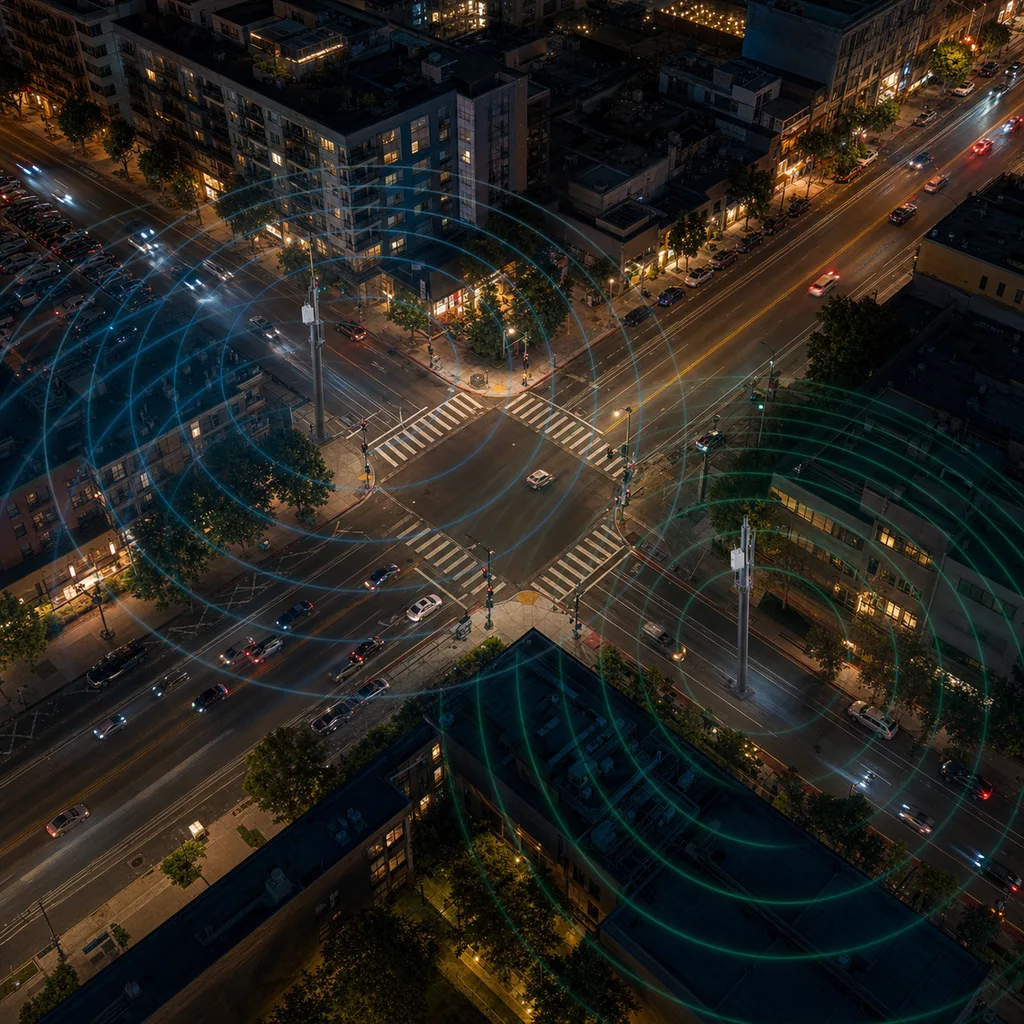
The RC-RSU-V2X-310 is a grid-powered, dual-mode C-V2X and DSRC/WAVE Roadside Unit (RSU) engineered for permanent deployment at signalized intersections, highway merge zones, school zones, and work zone boundaries. As connected and autonomous vehicle (CAV) adoption accelerates globally, transportation authorities need field-hardened infrastructure that simultaneously serves legacy DSRC-equipped fleets and next-generation C-V2X vehicles—without funding two parallel deployments. The RC-RSU-V2X-310 solves this with independent dual RF chains, an edge-compute engine running up to eight V2X safety applications concurrently, and a factory-provisioned Hardware Security Module (HSM) ready for both USDOT SCMS and ETSI ITS-G5 PKI trust chains. REDCOAST.LTD delivers the unit as an end-to-end system: custom-designed PCB stack, V2X application firmware, field management dashboard, and native integration with our existing adaptive traffic signal controllers and EVP/TSP platforms—giving agencies a single, accountable supplier from hardware through operations.
Key Features
- True Simultaneous Dual-Mode Radio: Independent C-V2X PC5 (3GPP Release 14/16, 5.9 GHz) and DSRC/WAVE (IEEE 802.11p, 5.9 GHz) chains operate in parallel on separate antenna ports—no time-division switching, no service gap for either vehicle population.
- ETSI ITS-G5 + SAE J2735 Dual-Stack: CAM/DENM (European) and BSM/SPaT/MAP/TIM (North American) message stacks pre-loaded; switch between regulatory profiles via dashboard without hardware swap, enabling international deployments.
- Multi-Application Edge Engine: Quad-core ARM processor runs Intersection Movement Assist (IMA), Signal Phase & Timing broadcast (SPaT/MAP), Pedestrian Protection (PSM relay), Emergency Vehicle Alerting (EVA), Work Zone Warning (TIM/WZA), and Speed Advisory (SA) as isolated containers—OTA-updatable independently.
- Sub-10 ms Air-Interface Latency: Dedicated real-time Linux kernel and hardware message queue achieve < 10 ms from vehicle BSM/CAM reception to SPaT/DENM re-broadcast, meeting ETSI EN 302 663 and IEEE 1609.4 timing requirements for safety-critical applications.
- GNSS-Disciplined IEEE 1588 Timing: 72-channel multi-constellation GNSS receiver (GPS/GLONASS/BeiDou/Galileo) with < 50 ns RMS time accuracy; IEEE 1588v2 PTP grandmaster mode synchronizes SPaT phase timestamps across an intersection cluster without dedicated GPS at each controller.
- Factory-Provisioned SCMS/PKI HSM: ECDSA P-256/P-384 Hardware Security Module rated at 3,000 signing operations per second; ships with USDOT SCMS enrollment or ETSI TS 102 941 CPOC enrollment per order specification—field technicians never handle private key material.
- Custom REDCOAST.LTD PCB Stack: Three-board proprietary design—RF Signal Conditioning Board, Edge Compute Board, and Power Management Board—co-designed so the V2X modem RF front-end is electrically isolated from switching supplies and backhaul radios, ensuring EVM compliance under adjacent-channel interference from traffic cabinet electronics and LTE small cells.
- Hardened Power Architecture: Accepts AC 85–264 V from standard pole PDU or 48 V PoE++ (IEEE 802.3bt Class 8); onboard supercapacitor provides 500 ms holdup for graceful log flushing during brownouts; optional 12 V DC UPS port for extended outage survival with external LiFePO4 pack.
- IP67 / IK10 Die-Cast Enclosure: Sealed aluminum alloy housing with three-pass conformal-coated PCBs; rated −40 to +70 °C; salt-fog resistant for coastal arterials and port approaches.
- NTCIP 1218 Native + REST/MQTT APIs: Plug-and-play with existing traffic management systems; REST endpoints and MQTT broker enable integration with third-party TMC software and cloud platforms without middleware.
Technical Architecture
The RC-RSU-V2X-310 is built on a three-board custom PCB architecture developed entirely by REDCOAST.LTD. The RF Signal Conditioning Board hosts two independent 5.9 GHz RF front-end chains—one per radio technology—each with its own band-pass filter, low-noise amplifier, and power-amplifier matching network. Separate antenna chains prevent inter-modulation distortion that would degrade reception range when both radios transmit simultaneously. This board also integrates the 72-channel GNSS front-end, 1PPS output for timing distribution to signal controllers, and filtered DC rails for the sensitive RF ICs.
The Edge Compute Board (ARM Cortex-A72, 4-core 1.8 GHz; 4 GB LPDDR4; 32 GB eMMC; SD card slot) runs a real-time Linux OS with a containerized V2X application suite. Each application (IMA, SPaT, WZA, EVA, PED, SA) operates as an independent Docker container, allowing OTA updates of individual services without a full system reboot. The embedded HSM co-processor handles ECDSA message signing at up to 3,000 ops/s—sufficient for dense vehicle environments at 10 Hz BSM broadcast per vehicle. An LTE Cat.16 modem (dual-SIM) provides cloud backhaul for SPaT source data, remote monitoring, and certificate lifecycle management; an optional 5G NR Sub-6 upgrade module drops into the same M.2 slot.
The Power Management Board converts AC 85–264 V or 48 V PoE++ input to isolated 3.3 V / 5 V / 12 V rails for each subsystem. A supervisory microcontroller monitors all supply voltages, manages supercapacitor holdup, and enforces staged watchdog resets with event logging to non-volatile storage. A UART/CAN bus links the three boards to ensure cross-board health visibility from the cloud dashboard.
Data flow: Vehicles broadcast BSM/CAM at 10 Hz → RC-RSU-V2X-310 receives on both radio chains simultaneously → Edge engine applies fusion and application logic → Safety messages (SPaT, MAP, TIM, DENM, PSM relay) are re-broadcast within < 10 ms → Cloud platform receives anonymized trajectory KPIs and intersection performance metrics over LTE → Operations center views real-time conflict rates, V2X penetration counts, HSM certificate status, and backhaul uptime from a browser dashboard.
Connectivity & Power
The RC-RSU-V2X-310 is designed exclusively for grid-powered permanent installations where mains supply is available at the signal pole or roadside cabinet—the standard condition for any signalized intersection, highway gantry, or toll facility. Power input: AC 85–264 V, 47–63 Hz via terminal block (pole PDU), or 48 V PoE++ (IEEE 802.3bt, Class 8, ≤90 W). Nominal draw is 15 W at steady-state (dual radio + LTE active + edge compute), rising to 22 W under peak message processing load. An optional 12 V DC UPS output port connects an external LiFePO4 battery for sustained operation through extended grid outages.
Backhaul: Dual-SIM 4G LTE Cat.16 standard; 5G NR Sub-6 GHz upgrade module available. Wired uplink: 2× GbE RJ-45 (one V2X cloud / one NTCIP local controller). Wi-Fi 5 (802.11ac) management port for on-site commissioning; Bluetooth 5.0 for NFC-provisioning field tools. Serial: 1× RS-232/RS-485 for NTCIP 1202 v3 signal controller link.
Protection & Reliability
The die-cast aluminum alloy enclosure achieves IP67 (dust-tight; immersion to 1 m / 30 min per IEC 60529) and IK10 (20 J impact resistance per IEC 62262). All three PCBs receive three-pass conformal coating for salt-fog and condensation resistance rated to ISO 4628—critical for coastal expressways, port approaches, and tropical humid climates. Operating range is −40 to +70 °C ambient; storage to −40 to +85 °C. The wide-input switching supply meets EN 61000-4 EMC immunity levels for the traffic environment. MTBF target exceeds 100,000 hours at 40 °C. A 3-year hardware warranty is standard; 5-year extended coverage is available. Field-replaceable SD card slot allows log extraction without opening the RF-sealed enclosure.
Application Scenarios
Signalized Urban Intersection — SPaT/MAP Broadcast: The RSU reads live phase-and-timing data from the signal controller via NTCIP 1202 and re-broadcasts SPaT + intersection geometry (MAP) at 10 Hz up to 300–500 m in advance. Connected vehicles receive this data and display a speed advisory to catch the next green, reducing hard-braking events and fuel consumption at high-throughput urban junctions.
School Zone Pedestrian Protection: Paired with a roadside radar or LiDAR pedestrian detector, the RSU publishes real-time Pedestrian Safety Messages (PSM) when a pedestrian is detected in or approaching the crosswalk. Approaching vehicles with V2X OBUs receive an in-vehicle alert and speed advisory even when the zone is visually obscured by parked vehicles, darkness, or rain.
Highway Work Zone Warning: RSU units mounted at the approach to a lane closure broadcast Work Zone Alert (TIM/WZA) messages up to 500 m upstream. In-vehicle alerts supplement static signs regardless of fog, night, or horizontal curve—reducing rear-end incidents in merge queues that are a leading cause of work-zone fatalities.
Emergency Vehicle Preemption via V2X (EVP): When an emergency vehicle equipped with a C-V2X OBU approaches, the RSU detects the Emergency Vehicle Approaching (EVA) message and relays a priority request to the connected REDCOAST.LTD EVP/TSP signal controller—enabling green corridor creation faster and more reliably than optical infrared-only systems, and without the need for separate radio infrastructure at the intersection.
Freight Corridor Speed Harmonization: Deployed every 500–1,000 m along a motorway freight route, RC-RSU-V2X-310 units receive Variable Speed Limit commands from the traffic management center and re-broadcast them as V2X Speed Advisory messages—enabling truck platooning systems and logistics operators to receive consistent speed targets beyond what overhead VMS signs alone can deliver.
Toll Plaza Queue Warning: RSU units at toll approach zones broadcast Road Side Alert (RSA) messages identifying queue tail positions derived from local loop or radar data, warning connected vehicles of sudden stop conditions and reducing rear-end collisions in stop-and-go approach queues.
Case-style Examples
Urban Arterial Intersection Safety Corridor: A metropolitan transport authority managing a 48-intersection arterial sought to reduce angle and rear-end crashes without rebuilding signal infrastructure. RC-RSU-V2X-310 units were deployed at each intersection and integrated with existing signal controllers via NTCIP 1202. SPaT/MAP broadcast commenced within weeks. After six months, the agency recorded a measurable reduction in hard-braking events at equipped intersections as connected vehicle penetration in the local bus fleet exceeded 20%, and the V2X operations dashboard flagged three recurring IMA conflict patterns that led to minor timing plan adjustments.
Highway On-Ramp Merge Zone — Connected Truck Trial: A national highway agency identified a high-crash-rate merge zone where vehicles entering a 100 km/h carriageway caused frequent sideswipe incidents. Two RC-RSU-V2X-310 units—one at the ramp gore, one 400 m upstream on the main carriageway—broadcast real-time gap and speed advisories derived from roadside radar. Logistics operators trialing V2X OBUs in their heavy freight fleet reported advisory compliance above 80% among participating drivers; the trial established a business case for corridor-wide RSU rollout.
Smart City Dual-Mode V2X Pilot: A city agency rolling out a 12 km V2X demonstration corridor needed an RSU compatible with both an existing DSRC-equipped municipal bus fleet and new C-V2X OBUs in pilot private vehicles. The RC-RSU-V2X-310's simultaneous dual-radio architecture eliminated the need for parallel RSU hardware at each site, cutting capital cost per intersection by approximately 35% versus two single-mode units. The integrated field dashboard allowed the agency's ITS team to monitor V2X message delivery rates, backhaul uptime, and HSM certificate status from a single browser interface throughout the trial.
Customization & Selection Guide
For agencies starting with an existing DSRC fleet: select DSRC-primary / C-V2X-secondary mode. For greenfield smart city deployments with only C-V2X OBUs planned: select C-V2X-only mode to reduce licensing overhead. Dual-mode (default) is recommended for any jurisdiction where both vehicle populations will coexist during the OBU transition period—typically 5–10 years. For backhaul, use LTE Cat.16 dual-SIM where cellular coverage is reliable; request the fiber GbE bypass module where TMC fiber already reaches the signal pole. For dense urban cores with high-speed pedestrian detection requirements, specify the High-Performance Edge variant (8-core ARM + GPU, 8 GB RAM) to run camera-based pedestrian fusion alongside V2X applications. Gantry overhead mount is available for highway deployments requiring wider sector coverage; standard pole canister mount suits signal pole retrofit in under two hours.
Deployment & After-sales
The RC-RSU-V2X-310 is designed for single-technician installation in under two hours. The unit ships with a pre-configured V2X application image; on-site provisioning is completed via Bluetooth-connected mobile commissioning tool that guides the technician through RSU ID assignment, GNSS fix verification, backhaul SIM activation, NTCIP 1202 controller pairing, and HSM certificate enrollment check. No specialized RF test equipment is required in the field. Standard lead time is 6–8 weeks from purchase order; custom configurations (non-standard frequency plan, additional application modules, regional HSM provisioning, custom enclosure finish) require 10–14 weeks. Year 1 SaaS subscription to the V2X Operations Dashboard (OTA firmware, certificate lifecycle, KPI reporting) is included. 24/7 remote technical support is provided; on-site field service is coordinated through regional partners.
Standards & Compliance
- V2X Radio: IEEE 802.11p (DSRC/WAVE); 3GPP Release 14/16 C-V2X PC5; ETSI EN 302 663 (ITS-G5)
- V2X Message Standards: SAE J2735 (BSM, SPaT, MAP, TIM, RSA, PSM, EVA); IEEE 1609.2 / 1609.3 / 1609.4; ETSI TS 102 637-2 (CAM) / TS 102 637-3 (DENM)
- RSU Interface Standard: NTCIP 1218 v1; NTCIP 1202 v3 (ASC interface for SPaT source)
- Security: USDOT SCMS Certificate Policy; ETSI TS 102 941 PKI; HSM meets FIPS 140-2 Level 2
- Environmental / EMC: IP67 (IEC 60529); IK10 (IEC 62262); EN 61000-4 series EMC immunity; conformal coating per ISO 4628
- Regional Type Approval: CE + RED (EU); FCC Part 95Q DSRC authorization (US); SRRC (China); regional type approval coordinated per project jurisdiction
- Management: SNMP v3; RESTCONF (RFC 8040); MQTT 3.1.1
Why REDCOAST.LTD
Most RSU suppliers integrate third-party V2X chipsets into generic industrial enclosures. REDCOAST.LTD designs the RF signal conditioning, power management, and edge compute boards in-house—meaning the RF front-end matching network, supply isolation, and EMC shielding are co-designed for the traffic pole environment rather than adapted from a generic IoT gateway. Customers can request project-specific customizations—frequency plan adjustments for national spectrum allocations, additional application logic (e.g., road-works vehicle detection, bus signal priority integration), alternative PKI chains, or custom enclosure colors per city specification—without waiting on a third-party vendor's product roadmap. The same engineering team that designed the PCB handles field anomaly escalation within hours. Our adaptive signal controllers (RC-ATSC series), EVP/TSP systems, and smart pole platforms are all pre-integrated with the RC-RSU-V2X-310 over NTCIP, enabling cities to build a coherent, single-vendor V2X corridor from the signal controller through the RSU to the cloud dashboard.
Contact REDCOAST.LTD to discuss your V2X pilot scope, NTCIP integration requirements, or volume deployment program—we support single-intersection proof-of-concept through city-wide corridor rollouts.
Specifications
V2X Radio
- DSRC/WAVE Standard
- IEEE 802.11p
- C-V2X Standard
- 3GPP Release 14/16 PC5 Sidelink
- Operating Frequency
- 5.850–5.925 GHz (5.9 GHz ITS band)
- Max TX Power (EIRP)
- up to 23 dBm (per chain)
- Simultaneous Dual-Mode
- Yes – independent RF chains, no switching
- Communication Range (LOS)
- 300–800 m (typical)
- Antenna Ports
- 2× DSRC + 2× C-V2X + 1× GNSS SMA female
- Supported Message Types
- BSM, SPaT, MAP, TIM, RSA, PSM, EVA (SAE J2735); CAM, DENM (ETSI ITS-G5)
GNSS & Timing
- Constellations
- GPS / GLONASS / BeiDou / Galileo
- Tracking Channels
- 72
- Position Accuracy
- < 1.5 m CEP (open sky)
- Timing Accuracy
- < 50 ns RMS (GNSS-disciplined)
- 1PPS Output
- Yes – for external controller sync
- PTP Mode
- IEEE 1588v2 Grandmaster (optional)
Edge Compute & Security
- Processor
- ARM Cortex-A72, 4-core, 1.8 GHz
- RAM
- 4 GB LPDDR4
- Storage
- 32 GB eMMC + SD card slot
- HSM (Hardware Security Module)
- ECDSA P-256/P-384, 3,000 ops/s
- Security Standard
- FIPS 140-2 Level 2 / USDOT SCMS / ETSI TS 102 941
- Application Latency (air interface)
- < 10 ms
- Container Runtime
- Docker (OTA-updatable per-application)
Backhaul & Wired Connectivity
- Cellular Backhaul
- 4G LTE Cat.16 (DL 1 Gbps / UL 150 Mbps), dual-SIM
- Optional Cellular Upgrade
- 5G NR Sub-6 GHz (M.2 module)
- Wired Ethernet
- 2× GbE RJ-45
- Serial
- 1× RS-232 / RS-485 (NTCIP 1202 controller link)
- Management
- Wi-Fi 5 (802.11ac) + Bluetooth 5.0
- Protocols
- NTCIP 1218 v1, REST, MQTT 3.1.1, SNMP v3
Power (Grid)
- AC Input Voltage
- 85–264 V AC, 47–63 Hz
- PoE Input
- 48 V PoE++ (IEEE 802.3bt Class 8, ≤90 W)
- Power Consumption
- 15 nominal / 22 peak W
- Holdup (supercapacitor)
- 500 ms (graceful shutdown)
- Optional UPS Output Port
- 12 V DC, 30 W (for external LiFePO4 pack)
Environmental & Physical
- Operating Temperature
- -40 to +70 °C
- Storage Temperature
- -40 to +85 °C
- Humidity
- 5–95% RH non-condensing
- IP Rating
- IP67 (IEC 60529)
- Impact Rating
- IK10 (IEC 62262, 20 J)
- Enclosure Material
- Die-cast aluminum alloy, powder-coated
- Dimensions (W × H × D)
- 280 × 190 × 95 mm
- Weight
- approx. 2.8 kg
Standards & Certifications
- V2X Radio
- IEEE 802.11p; 3GPP Rel.14/16 PC5; ETSI EN 302 663
- Message Stack
- SAE J2735; IEEE 1609.2/3/4; ETSI TS 102 637
- RSU Interface
- NTCIP 1218 v1; NTCIP 1202 v3
- EMC / Environmental
- EN 61000-4 immunity; CE RED; FCC Part 95Q (DSRC)
- Security
- USDOT SCMS; ETSI TS 102 941 CPOC; FIPS 140-2 L2
Capabilities — configurable per project
Specifications are tailored to each project — the options below show what we can support.
Radio Mode
- Dual C-V2X + DSRC (simultaneous, default)
- C-V2X PC5 only
- DSRC/WAVE only
Cellular Backhaul
- 4G LTE Cat.16 dual-SIM (standard)
- 5G NR Sub-6 GHz upgrade module
- Fiber GbE bypass (no cellular)
- PoE-only / wired-only (no SIM)
Edge Compute Tier
- Standard: 4-core ARM, 4 GB RAM (up to 6 concurrent V2X apps)
- High-performance: 8-core ARM + NPU, 8 GB RAM (AI pedestrian/cyclist fusion)
Mounting
- Pole-top canister mount (new smart pole installation)
- Pole-side bracket mount (retrofit existing signal poles)
- Gantry overhead arm mount (highway overhead structure)
PKI / Security Chain
- USDOT SCMS (North America)
- ETSI TS 102 941 CPOC (Europe / Middle East)
- Dual-chain enrollment (international pilot / cross-border corridor)
Related solution guidance
Traffic Safety Checklist
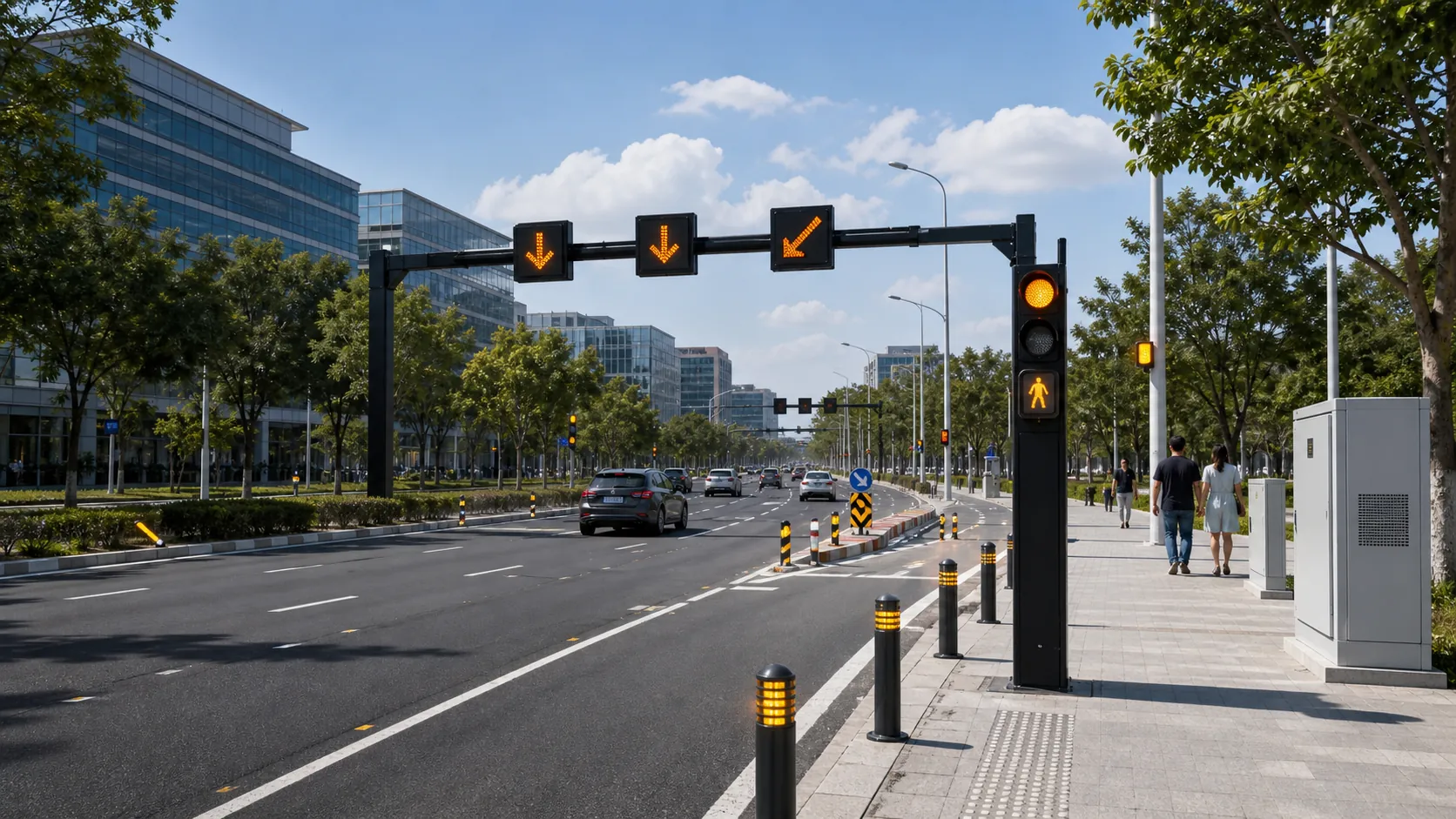
Deployment checklist for connected traffic warning signs, beacons, road guidance devices, power, visibility, monitoring and acceptance tests.
Traffic Safety
Plan connected traffic safety systems with warning beacons, LED signs, road guidance devices, sensing, control cabinets and monitoring software.

Municipalities
Municipal smart city programs for lighting, traffic safety, parking, smart poles and environmental monitoring with one hardware and software partner.
Frequently Asked Questions
What is the difference between C-V2X and DSRC, and does this RSU support both?
DSRC (IEEE 802.11p / WAVE) is the first-generation V2X radio standard, already deployed in bus fleets and government connected-vehicle pilots worldwide. C-V2X (3GPP PC5 sidelink) is the newer cellular-based standard with wider range, better non-line-of-sight performance, and a clearer upgrade path to 5G-NR sidelink. The RC-RSU-V2X-310 runs both radios simultaneously on independent antenna chains, so it communicates with legacy DSRC vehicles and new C-V2X vehicles at the same intersection without any switching or priority compromise—protecting the agency's investment through the OBU transition period.
How does the RSU integrate with our existing traffic signal controllers?
The RC-RSU-V2X-310 connects to any NTCIP 1202 v3-compliant Actuated Signal Controller (ASC) via RS-232/RS-485 serial link and reads live phase-and-timing data to generate SPaT messages in real time. No modifications to the signal controller are required. REDCOAST.LTD adaptive signal controllers (RC-ATSC series) offer an additional direct API integration for enhanced SPaT accuracy and signal priority feedback.
What V2X safety applications run on the RC-RSU-V2X-310 out of the box?
The standard firmware image includes: Signal Phase & Timing (SPaT) and Intersection MAP broadcast; Intersection Movement Assist (IMA) conflict detection; Pedestrian Safety Message (PSM) relay for connected crosswalk sensors; Emergency Vehicle Alerting (EVA); Work Zone Alerting (TIM/WZA); Road Side Alert (RSA) for queue warnings; and Speed Advisory (SA) for variable speed corridors. Each application runs as an independent container and can be updated or extended over-the-air without a service window.
What is the communication range of the RSU, and what affects it?
Typical DSRC and C-V2X communication range is 300–800 m in urban line-of-sight conditions. Range is influenced by antenna height (pole-mounted at 4–6 m is standard), surrounding building density, vehicle speed, and antenna gain. For highway deployments where 800 m+ look-ahead is required, REDCOAST.LTD can configure higher-gain directional antennas and adjust TX power within regulatory limits for the jurisdiction.
How is V2X message security (signing and verification) handled?
Every V2X message broadcast by the RC-RSU-V2X-310 is digitally signed by the onboard Hardware Security Module (HSM) using ECDSA P-256 — the private signing key is generated and stored inside the HSM and never exposed to software. The unit ships pre-enrolled in either USDOT Security Credential Management System (SCMS) or ETSI TS 102 941 PKI per order specification. Certificate lifetime and revocation are managed automatically through the V2X Operations Dashboard, with no manual key rotation required in the field.
Does this RSU comply with both North American (SAE/IEEE) and European (ETSI ITS-G5) standards?
Yes. The RC-RSU-V2X-310 supports both the SAE J2735 / IEEE 1609.x protocol stack (North America) and the ETSI TS 102 637 CAM/DENM stack with GeoNetworking (Europe and markets adopting European C-ITS standards, including the Middle East and parts of Southeast Asia). The active protocol profile is selected at provisioning time via the dashboard; dual-stack deployment is also supported for cross-border corridor pilots.
What backhaul options are available, and what bandwidth does V2X cloud management require?
The standard backhaul is 4G LTE Cat.16 with dual SIM for carrier redundancy; a 5G NR Sub-6 module is available for future-proofing. Wired GbE is supported where fiber reaches the signal pole. V2X cloud management traffic (SPaT source telemetry, OTA updates, certificate renewals, KPI reporting) typically requires less than 5 Mbps sustained uplink per RSU — well within LTE Cat.4 capacity, let alone Cat.16.
Can the RSU operate during a grid power outage?
The RC-RSU-V2X-310 includes a supercapacitor holdup that provides 500 ms of clean power for graceful log flushing when grid power is lost — preventing data corruption. For sustained operation through extended outages, the optional 12 V DC UPS output port connects to an external LiFePO4 battery pack (sized per project requirement); this is the recommended configuration for locations where UPS is mandated, such as school zone RSUs or emergency-services-corridor deployments. Standard signalized intersections in grid-powered urban environments typically do not require battery backup.