Overview
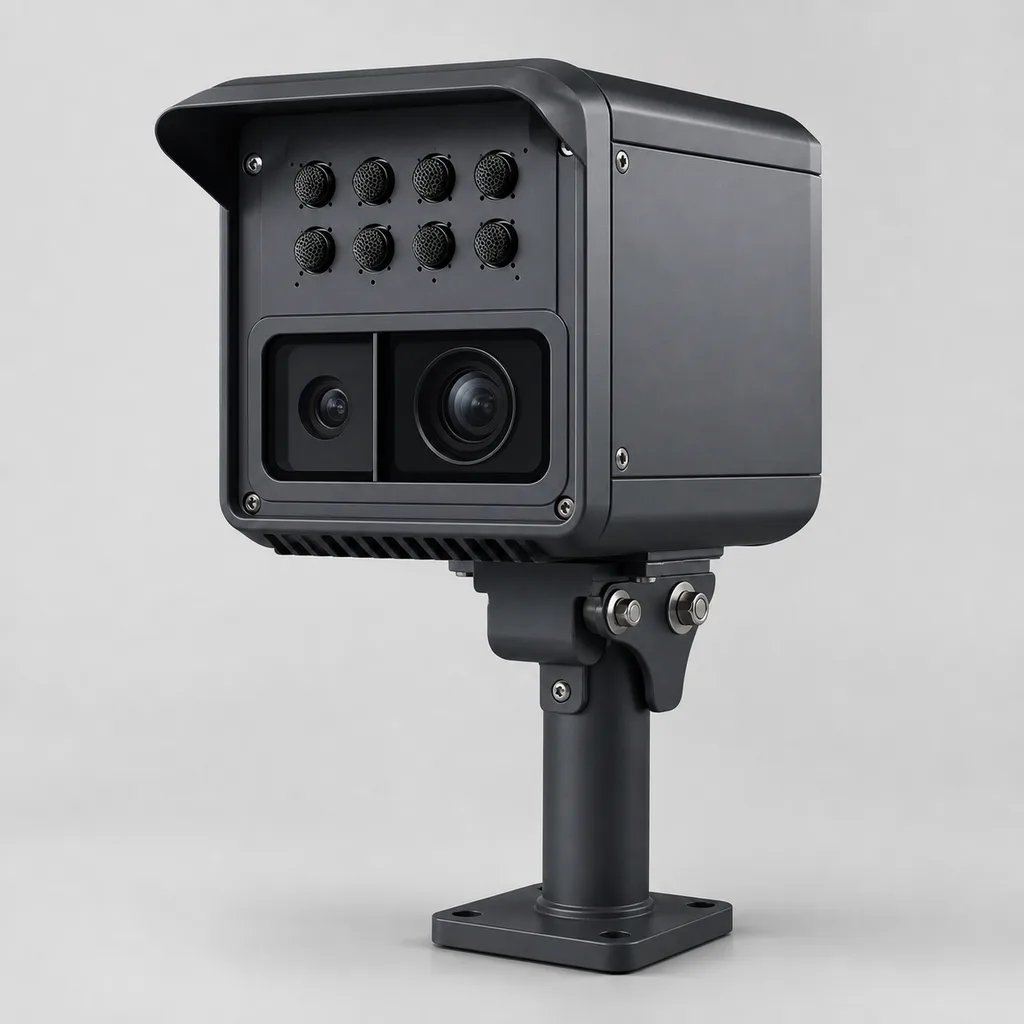
Illegal exhaust modification, oversized aftermarket mufflers, and excessive engine or horn noise are a rising urban quality-of-life and public-health complaint in cities worldwide, driving new "noise camera" enforcement mandates across the UK, multiple US states and cities, and municipalities elsewhere. Traditional enforcement relies on officers using handheld sound level meters to flag vehicles in person, which is labor-intensive, inconsistent, and impossible to scale across a road network. The RC-NEC-600 AI Vehicle Noise Enforcement Camera System automates this workflow: a Class 1 accuracy microphone array continuously monitors ambient and vehicle pass-by sound levels, an edge AI engine classifies and localizes the noise source among passing traffic, and an integrated ANPR camera captures an evidentiary-grade photo and video package the moment a vehicle exceeds the configured decibel threshold, all without an officer present. Designed and PCB-engineered in-house by REDCOAST.LTD, the system is delivered as a complete pole-mounted hardware plus management platform plus mobile app solution, ready for traffic police, municipal environment departments, and city road authorities to deploy as a standalone spot-check unit or as part of a citywide smart-pole network.
Key Features
- 4-8 channel beamforming microphone array pinpoints the noisiest vehicle in a multi-lane traffic stream, not just the loudest ambient sound
- IEC 61672-1 Class 1 accuracy acoustic front-end (±1 dB) for legally defensible sound level measurement
- Edge AI sound classification separates vehicle exhaust and engine noise from horns, sirens, construction, and pedestrian sound to cut false positives
- Integrated ANPR camera automatically captures and reads the offending vehicle's plate within milliseconds of a threshold breach
- Full evidentiary package per event: pre/post-trigger video clip, dB(A) waveform, plate image, GNSS-synced timestamp, GPS location
- Tamper-evident, AES-256 encrypted evidence chain designed for citation and court admissibility workflows
- Self-developed multi-channel microphone signal conditioning PCB, ANPR edge AI inference board, IR illuminator driver, and UPS power management board, not off-the-shelf modules
- Configurable per-jurisdiction threshold, vehicle class profile (car, motorcycle, heavy vehicle), and operating hours, such as stricter night-time limits
- Retrofits onto existing lighting or traffic poles, or integrates natively into REDCOAST's multifunctional smart pole
- Cloud dashboard and mobile app for live event review, statistics, hotspot heat-mapping, and citation export
Technical Architecture
The RC-NEC-600 is built around three tightly integrated hardware layers, all designed by REDCOAST's in-house PCB team rather than assembled from generic modules. The acoustic front-end is a purpose-built multi-channel microphone signal conditioning board: 4 to 8 outdoor-rated electret/MEMS microphone capsules feed low-noise preamplifiers and 24-bit/48 kHz synchronized ADCs, calibrated to IEC 61672-1 Class 1 tolerance. A DSP beamforming stage cross-correlates the phase-delayed signals across the array to compute the bearing and estimated distance of the dominant sound source in real time, so the system can attribute a noise event to a specific lane and specific vehicle rather than an entire intersection.
When the computed A-weighted sound pressure level exceeds the configured threshold for the minimum qualifying duration, the edge AI board, running an 8-20 TOPS-class NPU, triggers the capture chain: a wide-angle context camera freezes the scene with a source-localization marker overlay, while a varifocal ANPR camera zooms in and reads the plate, assisted by a constant-current-driven 850/940 nm IR illuminator for 24-hour operation. An on-device acoustic classifier simultaneously scores the captured sound against trained signatures for engine and exhaust noise versus horns, sirens, music, and ambient street sound, suppressing events that do not match a genuine vehicle-noise pattern before they ever reach an officer's review queue.
Every confirmed event is packaged locally, including pre/post-trigger video, waveform, plate image, GNSS-disciplined UTC timestamp, and GPS coordinates, then hashed and AES-256 encrypted and queued in a local ring buffer for upload. The cloud platform aggregates events across a fleet of units into per-corridor noise-pollution heat maps, supports human-in-the-loop citation review, and exposes a REST API for integration with existing traffic enforcement or municipal environmental-compliance back-office systems. A companion mobile app lets field engineers or inspectors pull live readings, recalibrate thresholds, and review recent events from a specific pole without opening a laptop.
Connectivity & Power
The RC-NEC-600 is a grid-powered, permanently or semi-permanently installed roadside device. It is intended for city streets, residential noise-control zones, and highway sections that already have mains power available via the host pole or a nearby cabinet, so it ships without solar panels or field batteries. Input is universal AC 100-240 V, 50/60 Hz, drawing 15-25 W in standby monitoring mode and 40-60 W during active capture bursts covering camera, IR illuminator, and processing load. An integrated LiFePO4 UPS module, sized on REDCOAST's own power management PCB, rides through brief grid interruptions with a configurable 2-4 hour backup window, so an event mid-capture is never lost. For data, the unit supports 4G LTE or 5G cellular as the default backhaul for fast retrofit deployment on existing poles, or Gigabit Ethernet and fiber where the host pole or cabinet already carries a wired network, with both paths running over TLS/VPN to the cloud platform.
Protection & Reliability
The enclosure is rated IP66, with IP65 for the camera dome, to handle rain, dust, and road spray, with an operating range of -30 to +60 degrees Celsius to cover everything from northern winters to desert summers. The die-cast aluminum housing carries REDCOAST's standard smooth, matte powder-coated finish rather than raw galvanized steel, for long-term corrosion resistance in urban and coastal air, and the pole bracket is engineered for wind gusts up to 150 km/h. Class II surge protection rated 10 kA at 8/20 microseconds guards the electronics against lightning-induced transients on the mains feed, and an integrated anemometer flags wind conditions that would compromise acoustic accuracy, automatically pausing enforcement-grade capture above the wind-speed limit defined by acoustic measurement standards rather than silently recording invalid readings.
Application Scenarios
- Residential noise-control streets: enforce night-time or 24-hour decibel limits on roads near hospitals, schools, and housing to cut modified-exhaust and revving complaints.
- Entertainment and nightlife districts: automated monitoring of late-night vehicle noise around bars, clubs, and pedestrian streets without dedicating officer time.
- Highway and arterial corridors: spot-check or continuous monitoring of heavy-vehicle and modified-exhaust noise on truck routes and ring roads.
- School zones and hospital perimeters: stricter low-threshold enforcement windows tied to class hours or quiet-zone regulations.
- Environmental compliance corridors: feed noise-pollution data into municipal environmental monitoring alongside REDCOAST's air and water quality stations for a combined compliance dashboard.
- Smart pole network rollouts: add noise enforcement as one more module on a citywide multifunctional smart pole deployment, sharing power, connectivity, and the management platform with lighting, CCTV, and other pole-mounted sensors.
Case-style Examples
Main arterial road noise-complaint hotspot: a city traffic department fielding repeated resident complaints about late-night modified-exhaust revving on a four-lane arterial deployed a single RC-NEC-600 on the existing streetlight pole at the hotspot, configured with an 85 dB(A) night threshold and a 70 dB(A) daytime advisory threshold. Within the first reporting period, the unit logged and evidence-captured a clear pattern of repeat offenders concentrated in a two-hour late-night window, giving enforcement teams the data to justify targeted patrols and, later, automated citation issuance once local rules permitted it.
Residential quiet-zone rollout across multiple streets: a municipal environment department covering a residential district with a blanket night-time noise ordinance deployed a small network of RC-NEC-600 units across the district's main entry roads, all reporting into the same cloud dashboard. Aggregated heat-map data let planners identify which specific streets needed additional traffic-calming measures versus which were adequately served by enforcement alone, and the shared platform meant a single control-room screen covered the whole district instead of siloed single-site reports.
Smart pole retrofit for a mixed-use corridor: a city already running REDCOAST's multifunctional smart pole platform for lighting and CCTV added the RC-NEC-600 as an incremental module on existing poles along a mixed residential-commercial corridor, reusing the poles' existing mains power and cellular backhaul. Because the acoustic and ANPR boards share REDCOAST's common pole-node power management design, the retrofit required no new trenching or cabinet work, just a bracket-mounted unit and a configuration push from the existing management platform.
Customization & Selection Guide
Choose the microphone array size, 4-channel for single-lane spot enforcement or 6-8 channel for multi-lane or wide-carriageway coverage, based on road width and the number of lanes needing independent attribution. Select the enforcement mode: advisory data-logging only for cities still building the legal basis for automated citation, versus full evidentiary citation-ready capture for jurisdictions with an established noise-ordinance enforcement process. Decide on mounting: a new REDCOAST smart pole for greenfield sites, a retrofit bracket for existing lighting or traffic poles, or an overhead gantry mount for highway-width coverage. Set the decibel threshold profile to match local regulation; REDCOAST can pre-configure thresholds and vehicle-class rules for cars, motorcycles, and heavy vehicles to match UNECE R51-style, US state or municipal, or custom ordinances before shipment. For budget-constrained rollouts, start with cellular backhaul and single-unit spot deployments at known hotspots; for citywide programs, wired backhaul and smart-pole integration reduce long-term per-unit connectivity cost.
Deployment & After-sales
Installation is a pole-side job: mount the bracket at the recommended 4-6 meter height, connect mains power or tap the host pole's existing supply, and pair cellular or Ethernet backhaul. Most single-unit deployments are commissioned within a day, with acoustic calibration performed on-site against a reference sound source. REDCOAST provides an installation and commissioning guide, remote OTA firmware updates, and health telemetry so operations teams can monitor uptime and microphone calibration drift from the cloud dashboard without a truck roll. Delivery lead time is quoted per order volume and configuration at the time of RFQ, and our engineering team supports pilot deployments of a single unit before a full network rollout. Technical support covers acoustic recalibration, firmware updates, and integration assistance with third-party citation or back-office systems for the life of the deployment.
Standards & Compliance
The acoustic front-end is designed to IEC 61672-1 Class 1 sound level meter tolerances, with vehicle noise-limit profiles configurable to align with UNECE Regulation No. 51 style vehicle noise limits, US state and municipal noise ordinances, or a client's own custom regulation. Enclosures meet IP66/IP65 ingress protection, electronics follow CE and RoHS-oriented design practices, and the mains-power path includes Class II surge protection. Evidence handling, including AES-256 encryption, tamper-evident hashing, and GNSS-synced timestamping, is built to support jurisdictions that require a defensible chain of custody for automated citations, and data retention and access policies can be configured to match local privacy and ANPR data-handling rules.
Why REDCOAST.LTD
REDCOAST.LTD delivers this as a complete solution: hardware, management platform, and mobile app engineered together as one system, not a bundle of third-party components. Our in-house capability to design the microphone signal-conditioning PCB, the ANPR edge AI board, the IR illuminator driver, and the power management board from scratch means the acoustic threshold logic, camera trigger timing, and evidence formatting can all be tuned to a specific city's regulation and enforcement workflow rather than forced into a fixed off-the-shelf template. Whether you need a single pilot unit at one noise hotspot or a citywide smart-pole noise-enforcement network, our team can adapt the array size, threshold profile, mounting hardware, and platform integration to your project.
Contact REDCOAST.LTD to discuss a pilot deployment or a full noise-enforcement rollout tailored to your city's regulations and road network.
Specifications
Acoustic Detection Array
- Microphone Array
- 4-8 channel MEMS/electret, beamforming
- Frequency Response
- 20-12,500 Hz
- Sound Level Accuracy
- ±1 (IEC 61672-1 Class 1) dB
- Measurement Range
- 30-130 dB(A)
- Configurable Trigger Threshold
- 70-100, step 0.5 dB(A)
- Sound Source Localization
- ±2° bearing, up to 20 m
- Sampling
- 48 kHz / 24-bit ADC per channel
Camera & ANPR
- Overview Camera
- 4K (8MP) wide-angle with source overlay
- ANPR Camera
- 2-5MP varifocal, capture up to 40 m
- Plate Recognition Accuracy
- up to 99 (day) / up to 97 (IR night) %
- IR Illuminator
- 850/940nm constant-current, range up to 50 m
- Lane Coverage
- 1-4 lanes/unit
- Capture Trigger Latency
- <150 ms
Edge AI & Evidence Processing
- Edge AI Compute
- 8-20 TOPS
- Sound Classification
- exhaust/engine vs horn/siren/music/ambient (ML)
- Evidence Clip
- 5s pre + 10s post-trigger, H.265 + dB(A) overlay
- Data Encryption
- AES-256 with tamper-evident hash/watermark
- Local Buffer Storage
- 256-1000 (ring buffer, cloud sync retry) GB
- Time Sync
- GNSS-disciplined, UTC accuracy ≤10 ms
Connectivity & Data
- Cellular
- 4G LTE Cat4/Cat6, 5G optional
- Wired Backhaul
- Gigabit Ethernet / fiber SFP optional
- Data Security
- TLS 1.2+ / IPSec VPN, role-based access
- Integration
- REST API / ONVIF, CSV + image/video export
- Remote Management
- OTA firmware update, remote diagnostics
Power (Grid)
- Input Voltage
- AC 100-240 V
- Power Consumption
- 15-25 idle / 40-60 peak W
- Backup Power
- Integrated LiFePO4 UPS, 2-4 configurable h
- Surge Protection
- Class II SPD, 10kA (8/20µs)
Mechanical & Environmental
- IP Rating
- IP66 enclosure / IP65 camera dome
- Operating Temperature
- -30 to +60 °C
- Wind Load Rating
- gusts up to 150 km/h
- Mounting Height
- 4-6, adjustable bracket m
- Housing & Finish
- Die-cast aluminum, powder-coated (RAL 7016 or custom)
- Weight
- 8-15 kg
Capabilities — configurable per project
Specifications are tailored to each project — the options below show what we can support.
Coverage & Lanes
- Single-lane spot enforcement
- Multi-lane array (up to 4 lanes)
- Full-carriageway gantry array
Deployment Mounting
- New REDCOAST smart pole
- Retrofit bracket on existing lighting/traffic pole
- Overhead gantry/portal frame mount
Enforcement Mode
- Data-collection/advisory logging only
- Automated citation-ready evidentiary capture
- Real-time driver feedback (paired with LED message sign)
Connectivity
- 4G/5G cellular
- Gigabit Ethernet/fiber backhaul
- Hybrid cellular + wired failover
Regulatory Threshold Profile
- EU/UNECE R51-aligned profile
- US state/municipal ordinance profile
- Custom threshold & reporting profile
Related solution guidance
Environmental Monitoring
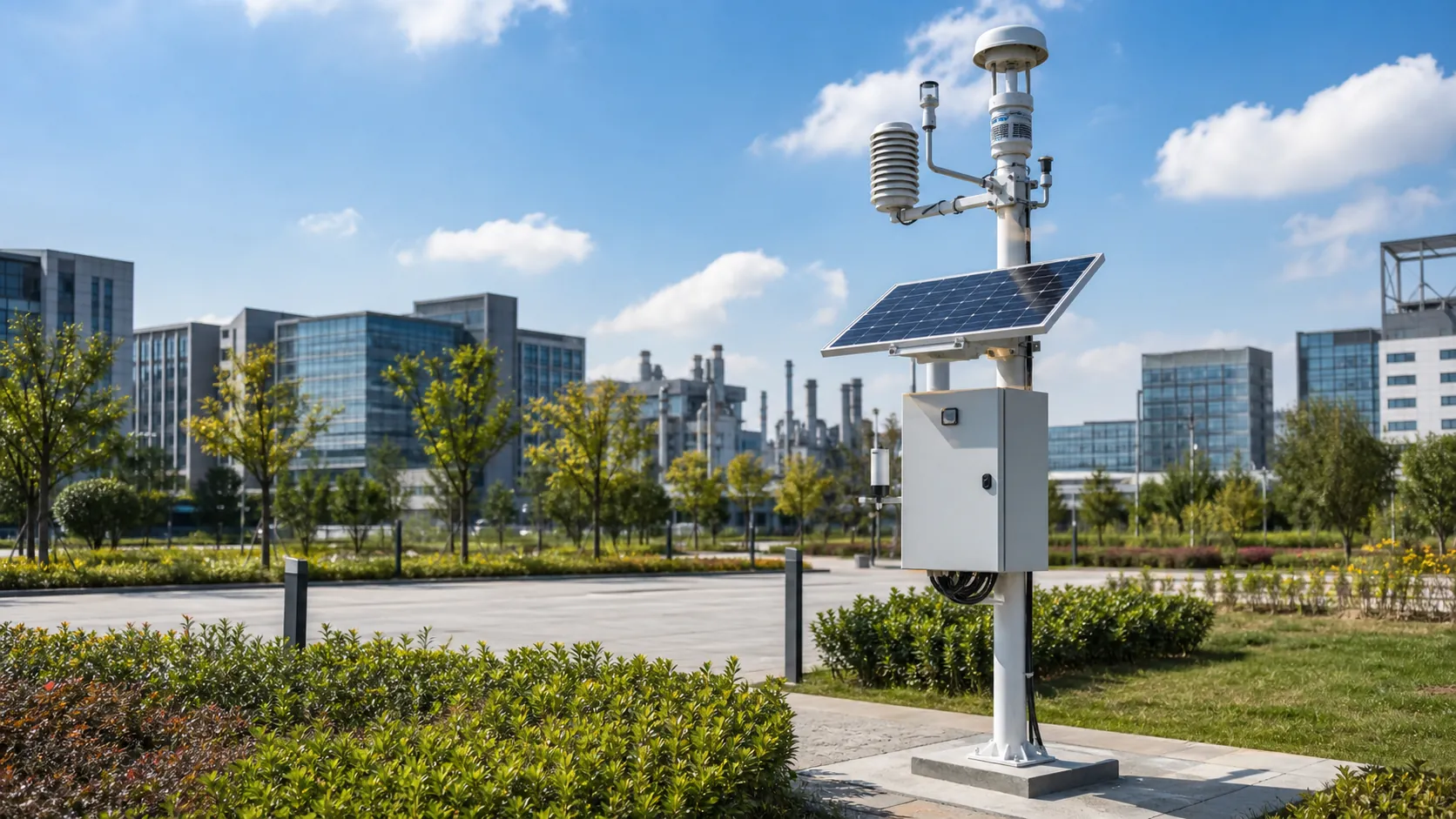
Deploy environmental monitoring stations with sensors, solar power, gateways, dashboards, alarms and data integration for city and industrial sites.
Municipalities
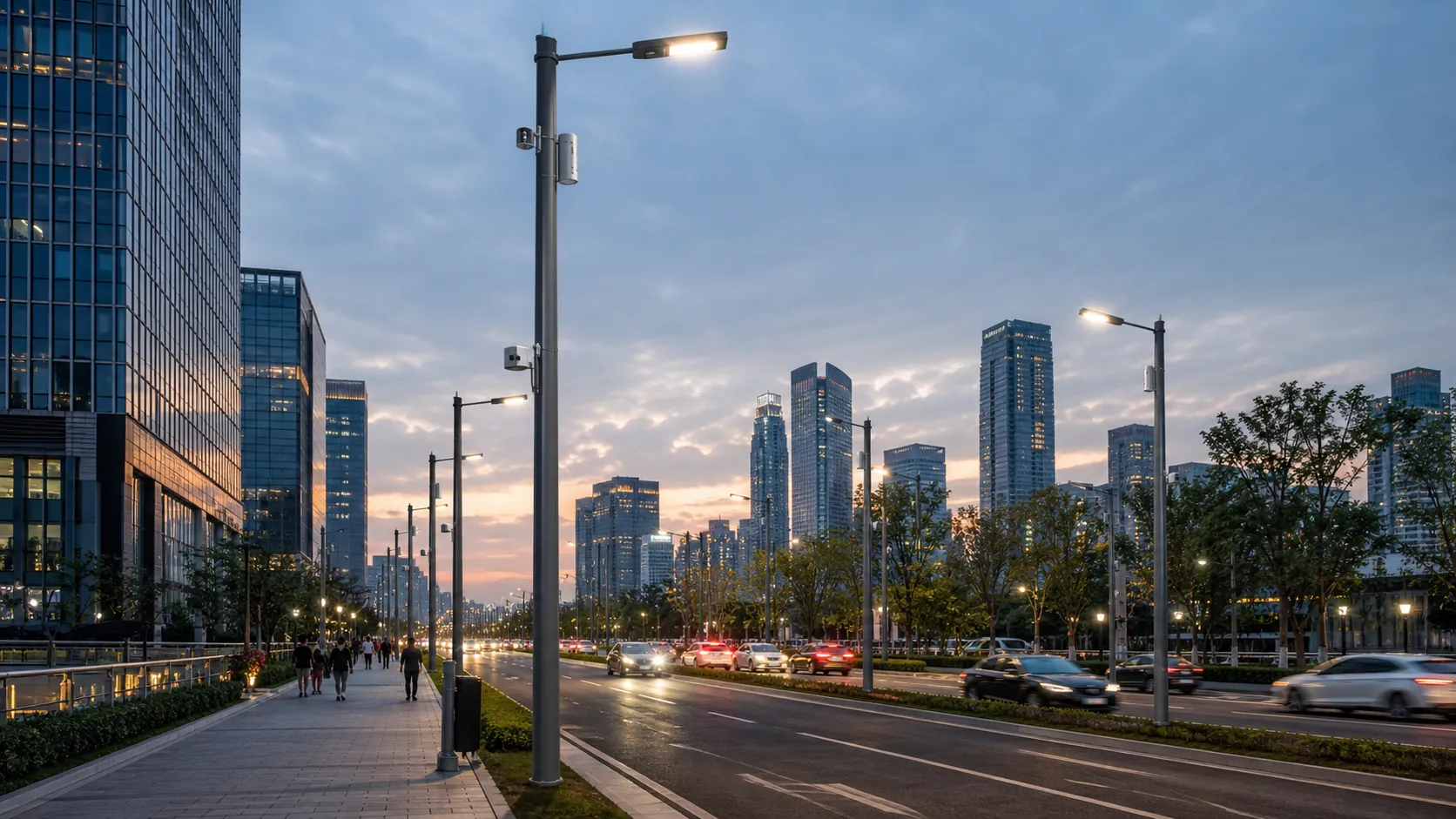
Municipal smart city programs for lighting, traffic safety, parking, smart poles and environmental monitoring with one hardware and software partner.
Smart Pole
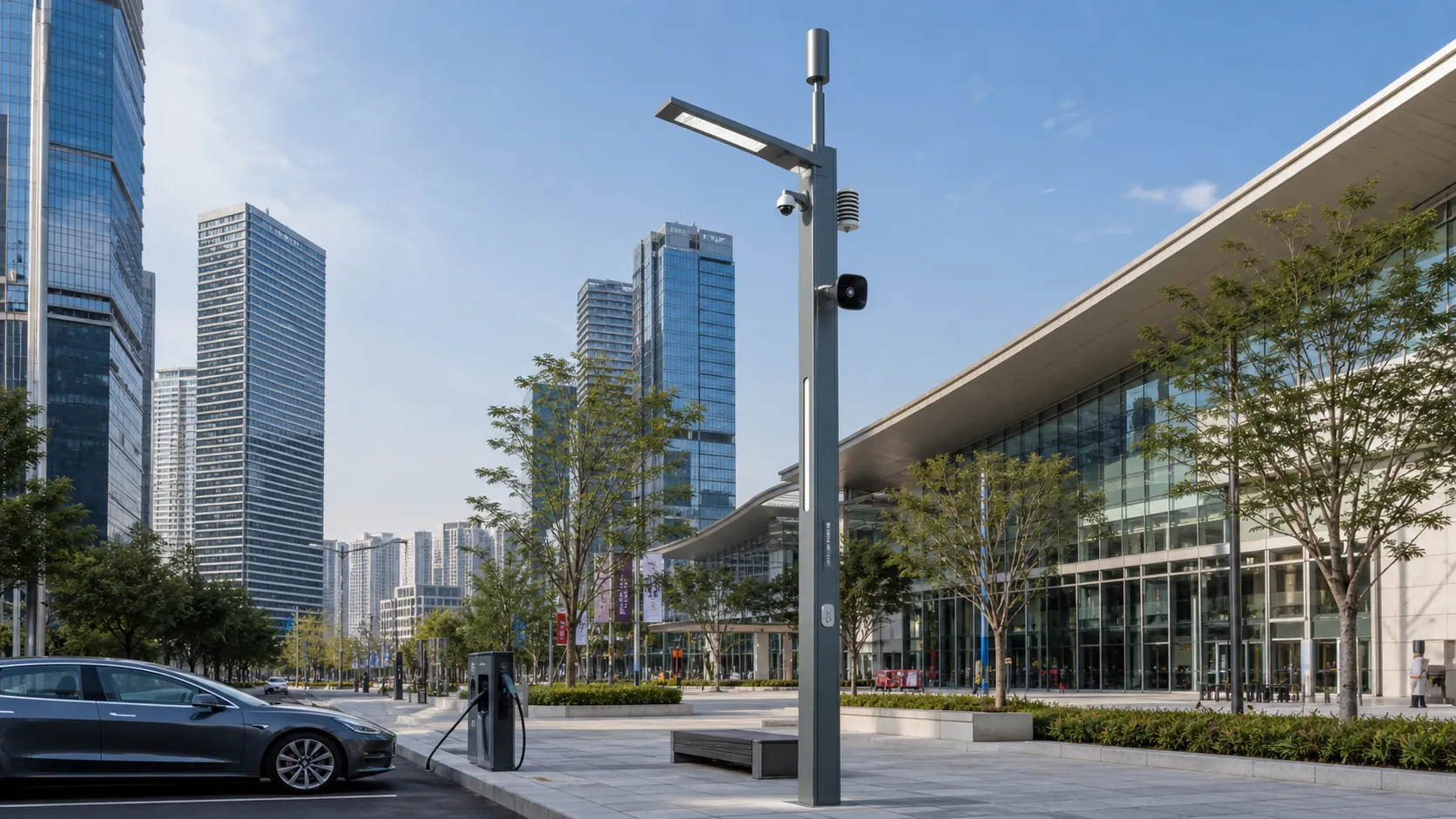
Build smart pole infrastructure with lighting, cameras, environmental sensors, communication modules, public safety devices and a unified management platform.
Frequently Asked Questions
How does a vehicle noise camera identify which vehicle is too loud?
The REDCOAST.LTD RC-NEC-600 combines a 4-8 channel beamforming microphone array (IEC 61672-1 Class 1 tolerance, ±1 dB) with ANPR edge AI. The array measures the sound level and localizes the source to about ±2° bearing within 20 m, and the edge AI matches that sound to the passing vehicle and reads its plate.
What noise level triggers an enforcement event, and can it ignore horns or sirens?
The trigger threshold is configurable from 70 to 100 dB(A) in 0.5 dB steps to match the local noise ordinance, within a 30-130 dB(A) measurement range. On-device machine-learning classification separates exhaust and engine noise from horns, sirens, music and ambient sound.
How accurate is license plate capture by day and at night?
The 2-5 MP varifocal ANPR camera captures plates up to 40 m away, with recognition accuracy of up to 99% in daylight and up to 97% at night using the 850/940 nm IR illuminator (range up to 50 m). Real-world results depend on lane geometry, vehicle speed and site lighting.
How many lanes can one noise camera cover, and how is it mounted?
One unit covers 1-4 lanes depending on site geometry. It mounts at 4-6 m on an adjustable bracket, either on its own pole or as a module on the REDCOAST.LTD multifunctional smart pole.
What does each evidence package contain?
Each event links the measured dB(A) level, the acoustic localization and the ANPR plate read, with a 5 s pre-trigger and 10 s post-trigger H.265 clip carrying a dB(A) overlay, supported by a 4K wide-angle overview camera with source overlay. Files are AES-256 encrypted with a tamper-evident hash/watermark and GNSS-disciplined timestamps (≤10 ms to UTC).
Can it send violations to our existing back office or citation system?
Yes. Events and evidence packages can be pushed to municipal back-office and citation systems through a REST API and ONVIF, with CSV plus image/video export. Data travels over TLS 1.2+ or IPSec VPN with role-based access, and firmware is updated over the air.
Is the RC-NEC-600 grid-powered, and what happens during a power or network outage?
It is a grid-powered unit (AC 100-240 V, about 15-25 W idle and 40-60 W peak) for permanent city deployment. An integrated LiFePO4 UPS provides 2-4 configurable hours of backup, and a 256-1000 GB local ring buffer stores evidence and retries cloud sync when the 4G/5G or fiber link returns.
How does the system handle wind and harsh weather?
An integrated anemometer flags windy conditions instead of silently recording invalid readings. The enclosure is rated IP66 with an IP65 camera dome, operates from -30 to +60 °C and is rated for gusts up to 150 km/h.