A smart pole is not just a pole with many devices attached. It is a compact infrastructure node that must handle power, network, structure, operations and future expansion cleanly.
Smart pole decision matrix
| Decision factor | Recommended approach | Buyer risk to avoid |
|---|---|---|
| Module scope | Group poles by location and purpose, then choose only the modules each group needs. | Putting every module on every pole raises cost, weight, heat and maintenance complexity without improving operations. |
| Structure and cabinet design | Confirm height, foundation, wind load, access door, internal cable paths and high-voltage separation before supplier selection. | A visually impressive pole can fail procurement if service access, safety isolation or structural limits are unclear. |
| Department ownership | Map lighting, security, environment, communication and facility teams to platform permissions and alarm ownership. | Multiple departments can turn one pole into several disconnected systems unless ownership is defined early. |
Module planning
The right smart pole begins with the services it must host and the maintenance responsibilities behind those services.
- Lighting, camera, environment, display, emergency call, speaker, Wi-Fi or gateway modules selected per site.
- Electrical isolation, cabinet layout, heat management and cable paths designed before installation.
- Reserved mounting and internal space for future modules without creating external clutter.
Platform integration
Smart poles often combine many subsystems. A useful platform must make those subsystems understandable to operators.
- Asset map, device health, alarm routing and maintenance records in one interface.
- Different permissions for public lighting, security, environment and property teams.
- Integration interfaces for command centers, third-party video platforms and municipal dashboards.
Site-level engineering
Pole height, foundation, wind load, door position, power feed and network coverage all affect reliability.
- Confirm structural and environmental requirements before finalizing pole body design.
- Separate high-voltage and low-voltage wiring with maintainable service access.
- Document every module position so replacement and expansion stay predictable.
Checklist
Planning checkpoints
List required modules by site type instead of copying one pole design everywhere.
Check foundation, wind load, cabinet access and power isolation early.
Require a unified asset and alarm model for all pole-mounted devices.
Reserve expansion capacity for future sensors or communication modules.
Standards
Standards and interface notes
- Structural requirements, wind load and foundation design must follow local engineering rules for the final installation site.
- Electrical design should separate high-voltage and low-voltage modules with maintainable access.
- Camera, audio, Wi-Fi or public safety modules may require privacy, cybersecurity or local permitting review.
- Reserve internal space, mounting points and power capacity for future modules where expansion is expected.
Procurement
Commercial questions to settle
- Which modules are mandatory on day one and which are only reserved for future expansion?
- Who owns each data stream and who responds to each alarm?
- Will cameras, audio or Wi-Fi require local approval or privacy review?
- Does the project need a custom pole body or a modular retrofit approach?
Acceptance
Evidence buyers should request
| Acceptance test | Pass criteria | Evidence |
|---|---|---|
| Module health visibility | Each installed module reports online status, location and alarm state in the platform where telemetry is supported. | Device list, alarm screen and asset map screenshot. |
| Service access inspection | Maintenance staff can safely access cabinet, wiring and replaceable modules without dismantling unrelated equipment. | Inspection checklist and installation photos. |
| Permission model | Different teams see and operate only the modules assigned to them. | Role test records and user screenshots. |
Related Products
Product capabilities for this page
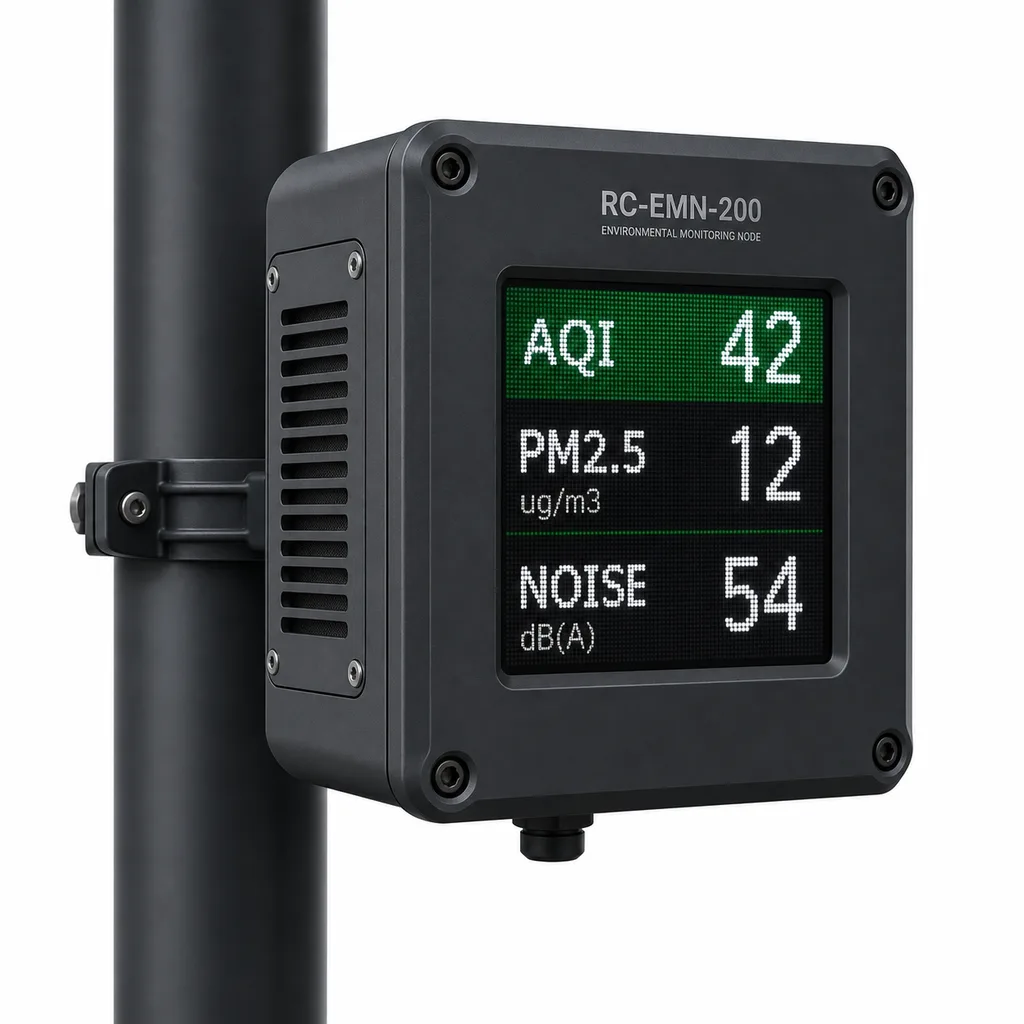
Grid-Powered Urban Multi-Parameter Environmental Monitoring & Public Display Node
Mains-powered pole-mounted sensor node measuring PM2.5/PM10, NO2/O3/CO, noise dB(A) and microclimate in real time—with a built-in outdoor LED display panel for public AQI transparency and FIWARE NGSI-LD push to city platforms.
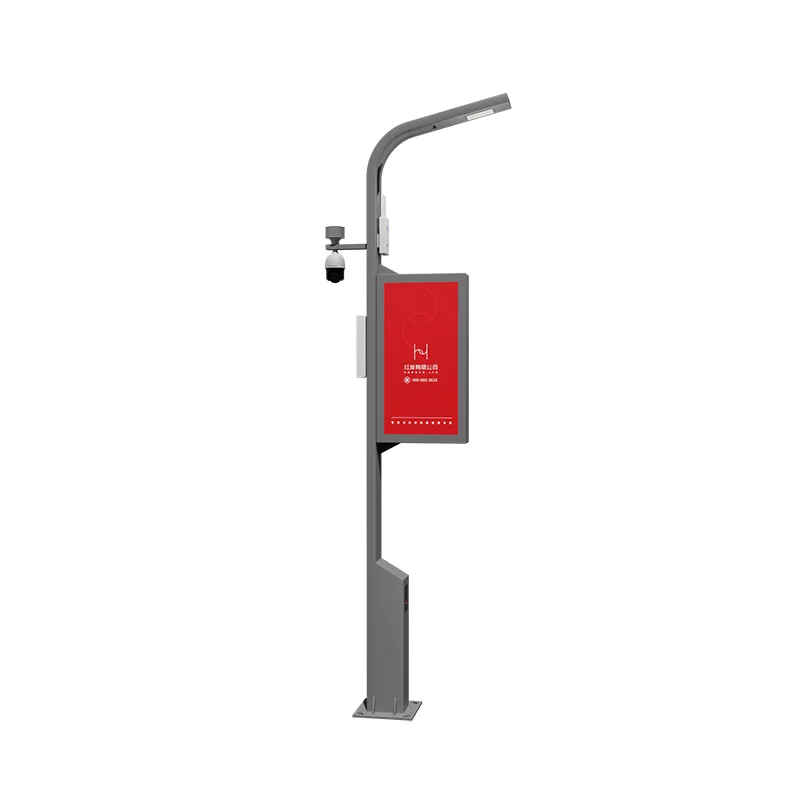
Multifunctional Smart Pole Platform with Edge Gateway Controller
Modular 4-12 m multifunctional smart pole integrating smart lighting, CCTV, 5G/small-cell mounting, environmental sensing, public WiFi, EV charging and digital signage, unified by REDCOAST.LTD's self-developed pole-top edge gateway controller.
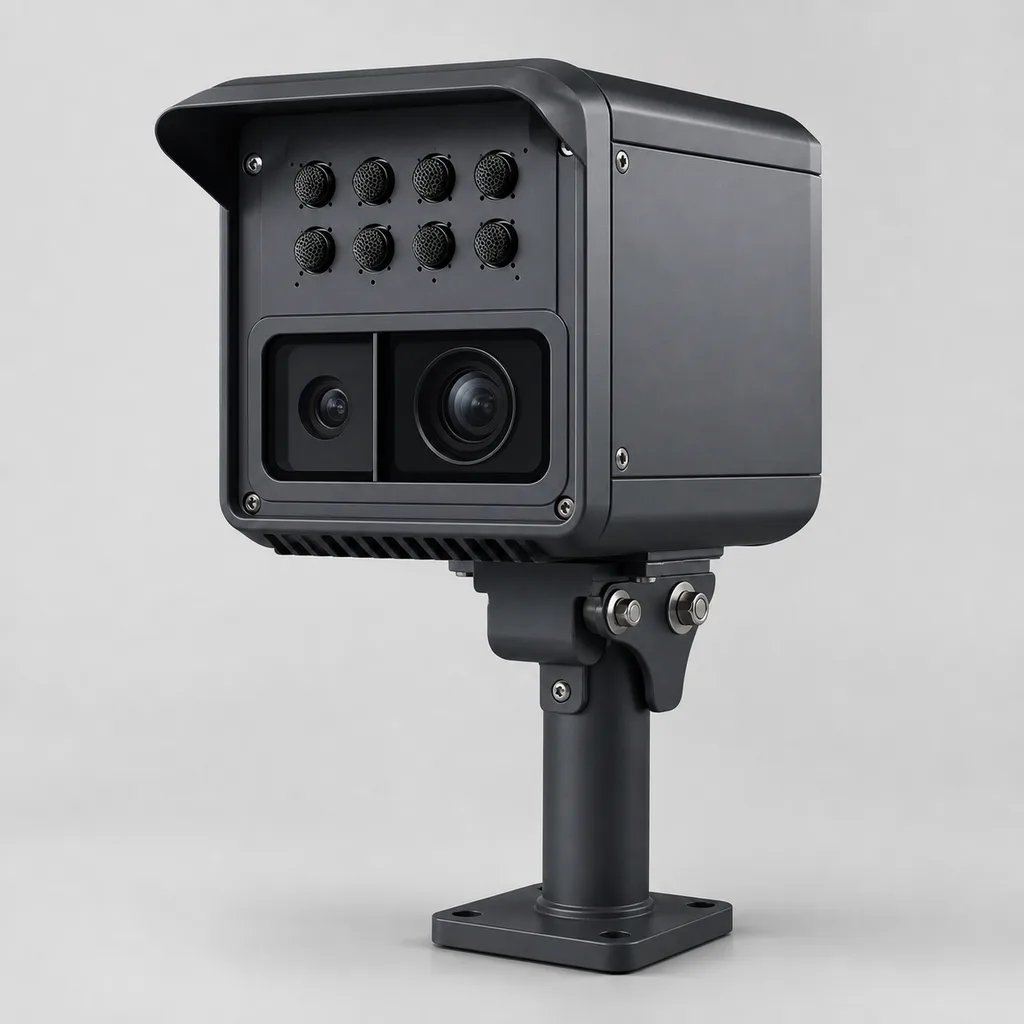
AI Vehicle Noise Enforcement Camera System
Pole-mounted AI noise camera pairing a Class 1 microphone array with ANPR edge AI to automatically detect, localize, and evidence-capture illegally loud vehicles for automated city noise enforcement.
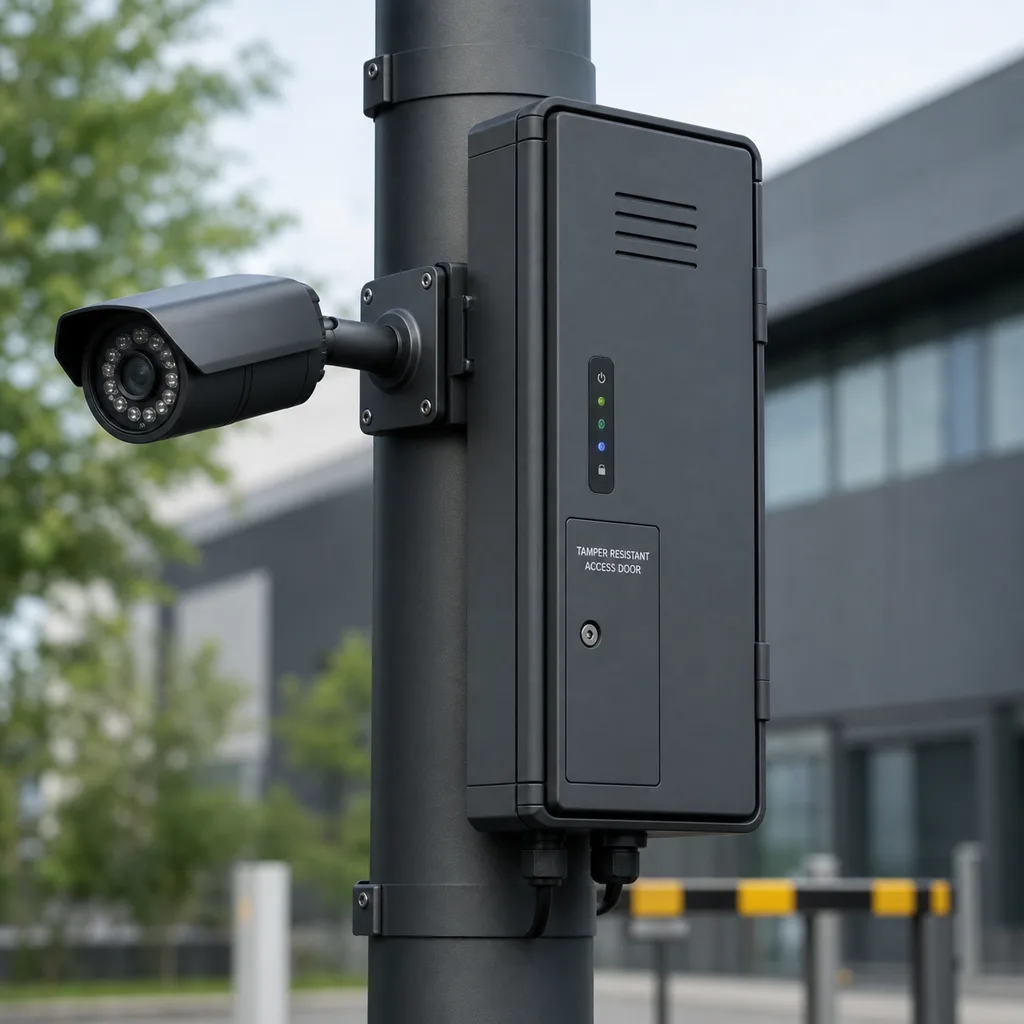
Grid-Powered Smart City Safe-City Surveillance & ANPR Pole
Mains-powered urban smart pole integrating PTZ surveillance, ANPR license-plate recognition, edge AI analytics, optional public Wi-Fi and SOS, built for Safe-City and traffic-enforcement deployments.
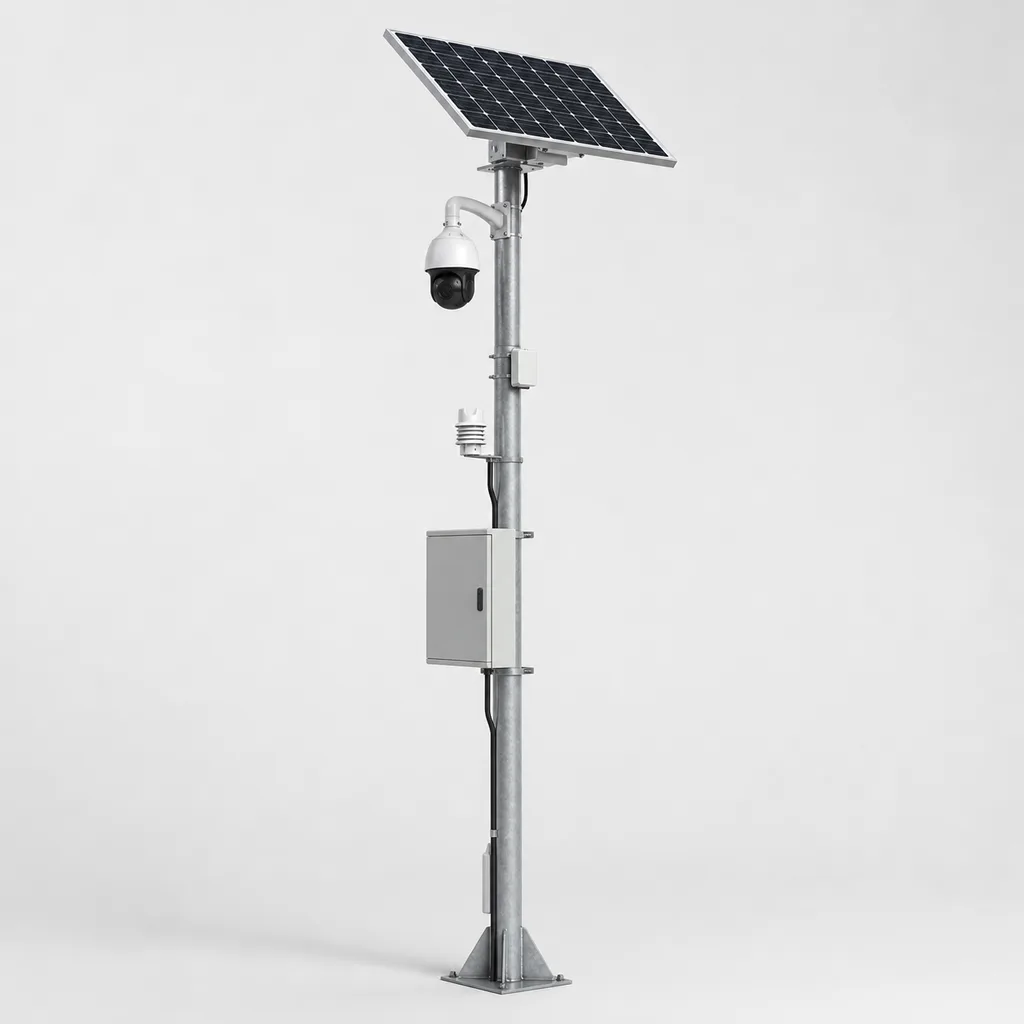
Off-Grid Solar Surveillance & Telemetry Station
Off-grid solar station pairing an AI PTZ or fixed camera with optional weather, water-level, tilt and energy telemetry, LiFePO4 storage, 4G/5G or satellite backhaul, and a Web platform and mobile app for remote pipelines, mines and yards.
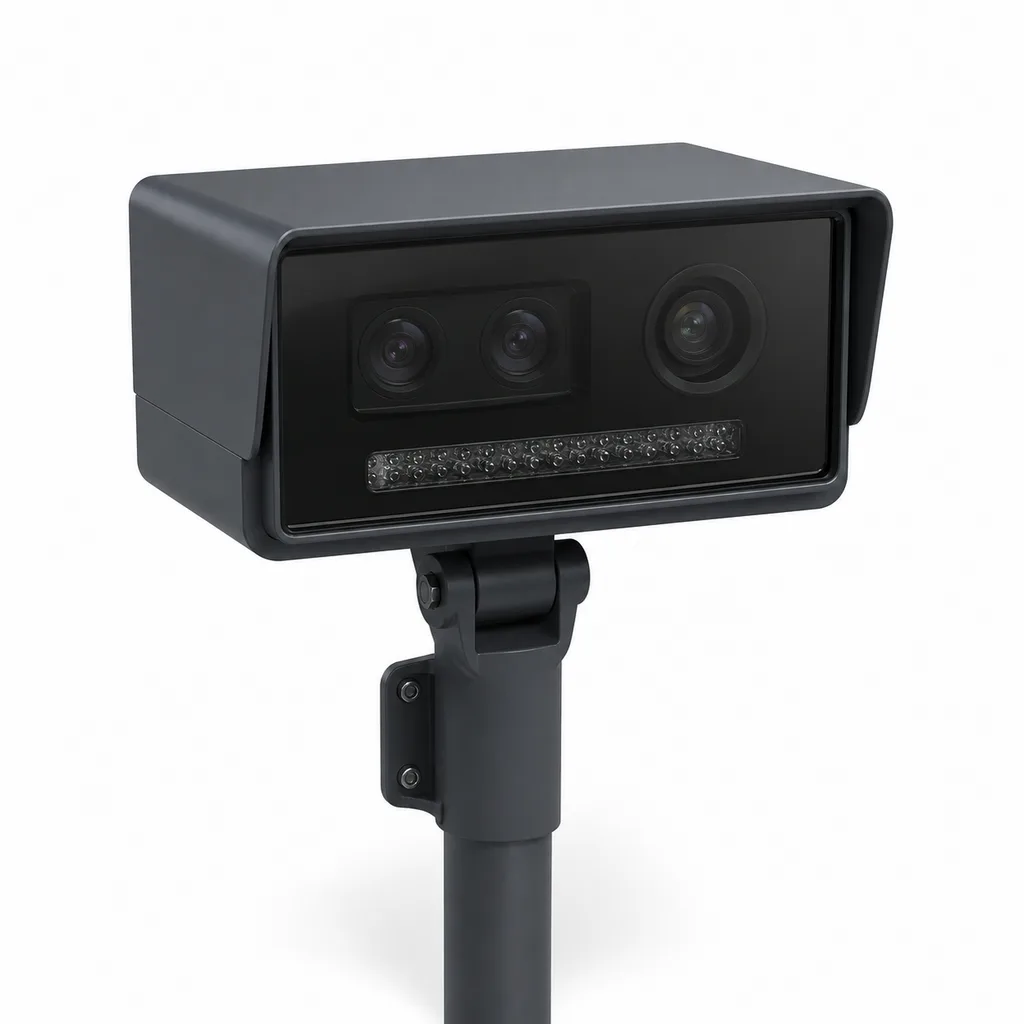
AI Bus Lane & Illegal Parking Enforcement System
Grid-powered, pole-mounted edge-AI enforcement unit that detects bus-lane, no-stopping, illegal-parking and restricted-zone violations, reads plates with ANPR and builds signed, time-synced evidence packages for automated back-office adjudication.
Next
Related guidance

Smart Street Lighting
Plan an IoT street lighting system with LED luminaires, pole controllers, adaptive dimming, fault alarms, asset management and platform integration.

Environmental Monitoring
Deploy environmental monitoring stations with sensors, solar power, gateways, dashboards, alarms and data integration for city and industrial sites.
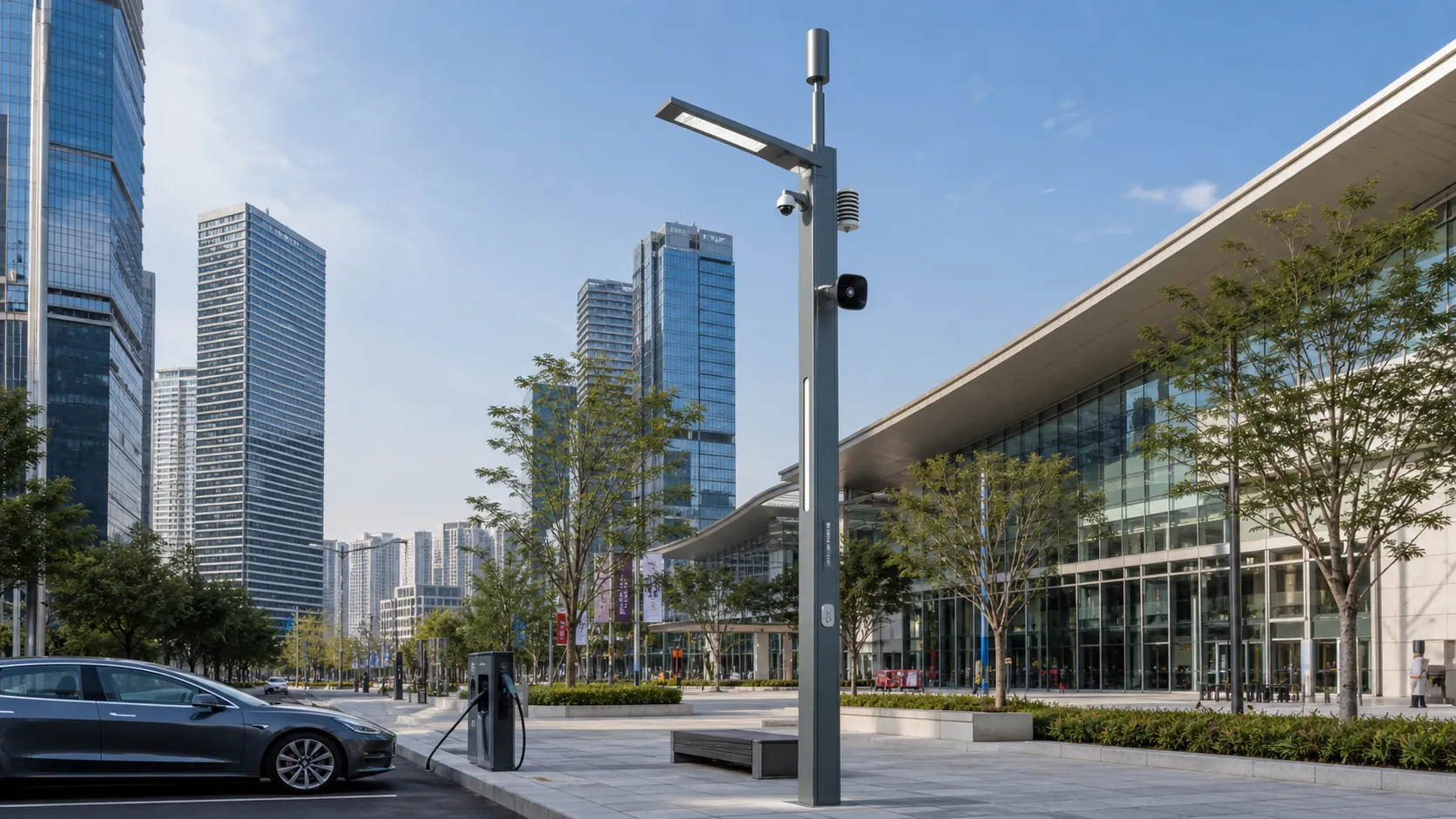
Campuses
Campus IoT for lighting, parking, safety, smart poles, environmental data and facility maintenance workflows.
Frequently asked questions
What devices can be integrated into a smart pole?
Common modules include LED lighting, cameras, environmental sensors, communication antennas, public address speakers, displays, emergency call devices and IoT gateways.
Is a smart pole suitable for both city streets and private campuses?
Yes. The module set, height, finish, access control and platform permissions should be configured for the site owner and operating model.
How can future upgrades be planned?
Reserve power capacity, internal cable paths, mounting space and platform data fields so later modules do not require a full pole redesign.
How should smart pole modules be prioritized?
Prioritize modules by operating value, site risk, maintenance capacity and integration need, not by how many functions can physically fit on the pole.
What should be included in a smart pole handover package?
A useful handover package includes module list, wiring diagram, cabinet layout, asset IDs, platform roles, alarm rules, maintenance steps and spare part references.
Need this engineered for your project?
Tell us the site type, required devices, power and connectivity conditions. REDCOAST.LTD will respond with a tailored approach.