Overview
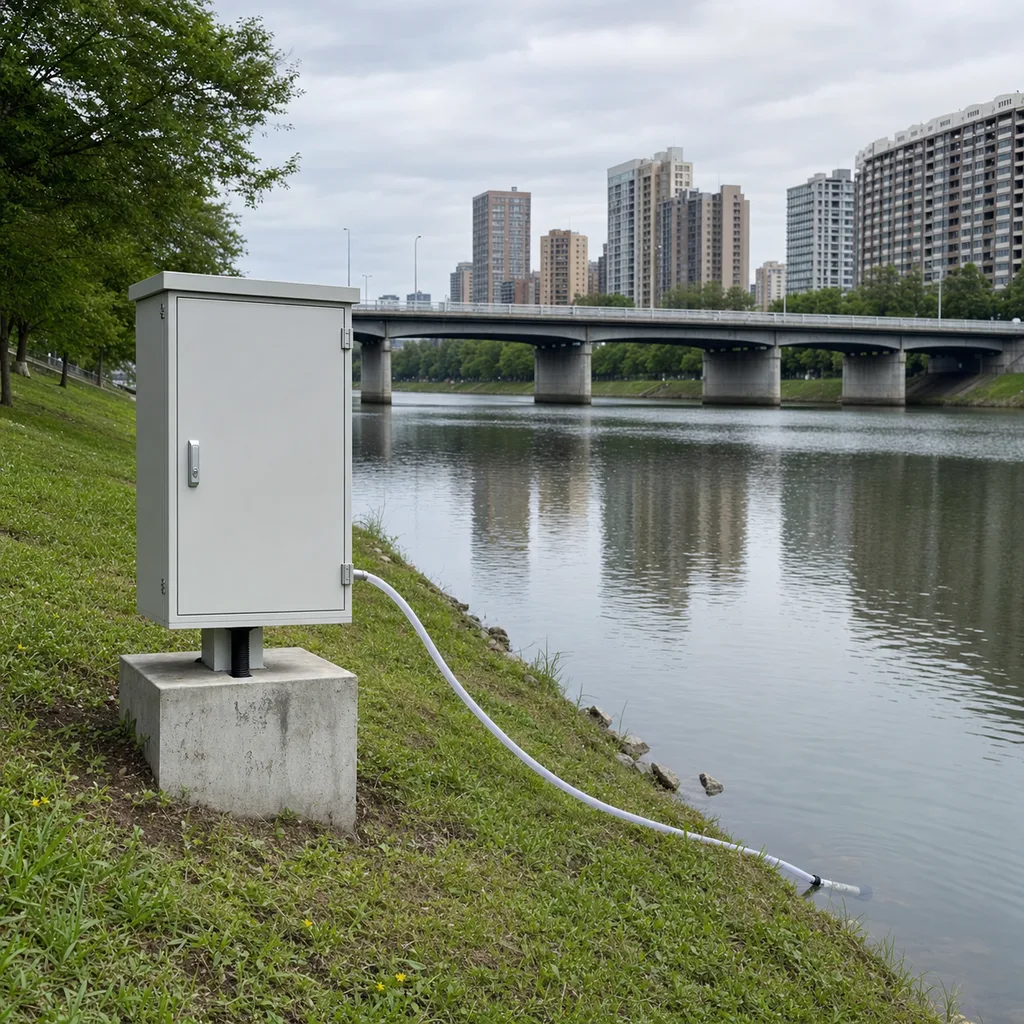
The RC-WQM-600 is a grid-powered, cabinet-type online water quality monitoring micro-station that continuously measures the physical and chemical quality of surface water directly at the riverbank, reservoir shore or discharge outfall. It is built for environmental protection agencies, municipal water utilities, industrial park operators and system integrators who today rely on manual grab sampling and laboratory analysis — a process that produces one data point per week at best and always detects pollution events after the fact. The RC-WQM-600 replaces that blind spot with automatic measurement cycles as short as every 5 minutes, real-time alarms, and a complete data trail delivered through a web platform and mobile app. As with all REDCOAST.LTD products, it is an end-to-end solution: the sensor front-end, signal conditioning electronics, edge controller, cabinet integration, cloud software and app are engineered and delivered by one team, and the in-house board-level design (including project-specific PCBs) means the station can be adapted to unusual parameter sets, intake conditions or integration requirements instead of forcing the project to fit a fixed catalog item.
Key Features
- Standard five-parameter core — pH, dissolved oxygen (optical), conductivity, turbidity and temperature measured in a single flow cell, extendable with ORP as a sixth channel at no extra footprint.
- Nutrient and organics expansion — optional ammonia nitrogen (ion-selective or colorimetric), CODcr/UV254 organics, nitrate, chlorophyll-a and blue-green algae modules for eutrophication and pollution-source monitoring.
- Self-cleaning flow-through fluidics — a self-priming intake pump feeds a transparent measurement chamber; automatic backflush and compressed-air purge after each cycle keep sensors free of silt and biofilm, extending field maintenance intervals to 4–8 weeks.
- In-house 24-bit signal conditioning PCB — all electrode and optical sensor channels are digitized on a REDCOAST.LTD-designed acquisition board with per-channel isolation, lightning-safe front ends and on-board temperature compensation.
- Edge intelligence — the station controller validates every reading (range, drift, rate-of-change QA/QC flags), triggers local alarm outputs, and buffers up to 2 years of data through network outages.
- Grid-powered with LiFePO4 UPS ride-through — designed for urban riverside and outfall locations with mains access; an internal battery keeps measurement and communication alive for 12–24 hours during outages.
- Open integration — MQTT, HTTPS/JSON and Modbus TCP northbound; the station drops into an existing SCADA, national environmental reporting platform or the REDCOAST.LTD cloud with per-station user roles and public-display widgets.
- Compact civil footprint — a single powder-coated outdoor cabinet on a concrete plinth; no shelter building, air conditioning room or dedicated operator required.
Technical Architecture
The station is organized in three layers. The fluidics layer draws water through a strainer-protected floating or fixed intake using a self-priming pump with up to 6 m of suction lift. Water passes through a sedimentation-tolerant flow cell where the multi-parameter sensor set measures each cycle; a motorized valve then routes backflush water and air purge through the same path to clean the lines, and the sample is returned downstream of the intake so the station never alters the water body. Measurement cycle timing (5–60 minutes), cleaning frequency and pump run-time are all remotely configurable.
The acquisition and control layer is built around two REDCOAST.LTD-designed boards: a multi-channel sensor signal conditioning PCB that handles the microvolt-level electrode signals, optical sensor interfaces (RS-485/SDI-12) and 4–20 mA analyzer inputs with galvanic isolation per channel, and a controller board that schedules the fluidics, applies calibration curves and QA/QC validation at the edge, drives local alarm relays (for example a sampler trigger or gate interlock at an outfall), and manages the cellular link. Because both boards are in-house designs, channel counts, analyzer interfaces and I/O can be tailored per project rather than patched together from third-party dataloggers.
The software layer consists of the station firmware, the REDCOAST.LTD web platform and a mobile app. The platform maps all stations, plots parameter trends against configurable water-quality class thresholds, computes daily/weekly compliance statistics, dispatches SMS/app/email alarms with escalation, and exports data via API to government reporting systems. Field technicians use the app for guided calibration, maintenance logging and QR-coded sensor replacement.
Connectivity & Power
The primary uplink is industrial 4G LTE (Cat 4 or Cat 1 by region) with dual-SIM failover; wired Ethernet is standard for stations at treatment plants or industrial parks with network access, and NB-IoT is available for low-rate compliance logging. All links support MQTT with TLS and VPN tunneling for government networks. Power is mains AC 100–240 V, 50/60 Hz — the correct choice for the station's typical homes: urban river embankments, park waterfronts, plant outfalls and reservoir dams where a grid feed is present or inexpensive to extend. Average draw is only 15–40 W, peaking around 150 W during pump and cabinet-heater operation, and the internal LiFePO4 UPS bridges outages of 12–24 hours. For genuinely off-grid tributary or catchment sites, the same measurement core is available in a solar variant with an MPPT charge stage — specified per project rather than bundled by default.
Protection & Reliability
The cabinet is hot-dip galvanized steel with a smooth matte powder-coated finish (stainless steel 316L optional for coastal or corrosive outfall environments), sealed to IP55 with filtered ventilation; sensors and fluidics are rated for continuous wet service. Thermostat-controlled heating and ventilation keep the analytical compartment within its working range from -20 °C to +55 °C ambient, covering cold-winter, tropical and desert-adjacent climates alike. Surge protection (Type 2 SPD on the AC input, gas-discharge protection on sensor and antenna lines) addresses the lightning exposure typical of open waterfront sites. Wetted parts are UPVC, PTFE and 316 stainless steel; the intake pump and valves are rated over 1 million cycles, and the electronics are designed for a 10-year service life with a standard warranty and long-term spare-parts availability.
Application Scenarios
- Urban river and canal monitoring networks — chains of micro-stations along restored waterways give city environmental departments continuous water-quality classification, catch illegal discharges within minutes, and feed public transparency dashboards.
- Drinking-water source protection — a station upstream of an intake provides early warning of ammonia, organics or turbidity spikes, buying the treatment plant hours to adjust dosing or close the intake.
- Wastewater and industrial outfall compliance — continuous pH, COD and ammonia measurement at a plant or shared industrial-park outfall documents compliance and can interlock with samplers or shutoff valves on exceedance.
- Reservoir and lake eutrophication management — chlorophyll-a and blue-green algae channels track bloom development so operators can time aeration or algaecide interventions.
- Aquaculture parks — dissolved oxygen and ammonia alarms protect high-value stock, with app push notifications to farm staff at night.
- Construction and dredging supervision — temporary stations verify that turbidity plumes from marine or riverine works stay within permitted limits.
Case-style Examples
Urban river restoration network. A city restoring a 14 km urban river deployed twelve RC-WQM-600 stations at bridge abutments, all mains-fed from streetlight circuits. The five-parameter-plus-ammonia configuration reports every 15 minutes; within the first quarter the platform's rate-of-change alarms localized two unpermitted discharges to within a few hundred meters, and quarterly water-quality class statistics now publish automatically to a public dashboard.
Drinking-water intake early warning. A water utility placed a station 2 km upstream of its river intake with the organics package (UV254 COD, ammonia, turbidity). When storm runoff pushed turbidity and organics past thresholds, the platform alerted the plant control room 90 minutes before the plume reached the intake, allowing pre-emptive coagulant adjustment instead of an emergency shutdown.
Industrial park shared outfall. An industrial park operator installed a compliance station at its common outfall with pH, COD and ammonia channels and a relay interlock to an automatic sampler. Exceedance events now trigger sealed evidence samples and immediate operator notification, and monthly compliance reports export directly from the platform to the regulator's system.
Customization & Selection Guide
Start from the water body and the question being asked. For general surface-water classification, the five-parameter core (optionally with ORP) is sufficient and keeps cost and maintenance lowest. Add ammonia and COD/UV254 for pollution-source surveillance, outfalls and intakes; add chlorophyll-a and blue-green algae for lakes and reservoirs. Choose the intake style next: fixed submerged intake for stable banks, floating intake for variable water levels, or direct in-situ sonde mounting where pumping is impractical. Cabinet material is powder-coated galvanized steel for inland sites and 316L stainless for coastal or aggressive chemistry. Mains power is the default for urban and plant sites; specify the solar variant only for off-grid catchment locations. REDCOAST.LTD engineers review each site's water chemistry, level range and power situation and issue a configured bill of materials before production.
Deployment & After-sales
A station ships as a factory-integrated, pre-calibrated cabinet; site works are limited to a small concrete plinth, the intake line and an AC feed, so a two-person crew typically commissions a station in one day. Typical lead time is weeks rather than months, scaling with the analyzer options selected. REDCOAST.LTD provides commissioning support, operator and calibration training, remote diagnostics through the platform, firmware updates over the air, and multi-year maintenance packages including reagent and electrode replacement schedules. Technical support covers integration assistance for third-party SCADA and national reporting interfaces.
Standards & Compliance
The station is designed toward CE conformity (EMC 2014/30/EU, LVD 2014/35/EU) and RoHS; enclosure ingress protection IP55 per IEC 60529; electrical safety per IEC 61010-1. Measurement methods follow recognized references — nephelometric turbidity per ISO 7027, optical (luminescent) dissolved oxygen consistent with ASTM/ISO practice — and data outputs support the reporting granularity expected under frameworks such as the EU Water Framework Directive and comparable national surface-water regulations worldwide. Communication uses standard Modbus, MQTT and HTTPS so certification-relevant data paths remain auditable.
Why REDCOAST.LTD
REDCOAST.LTD delivers complete smart-water and smart-city solutions — hardware, web platform and mobile app — engineered by one team and customized per project. What makes that credible is in-house hardware development: the signal conditioning and controller boards inside the RC-WQM-600 are REDCOAST.LTD designs, and new PCBs are spun for projects that need extra channels, unusual analyzers or special interlocks. That depth means integrators and agencies get a station that fits their monitoring program, their reporting platform and their climate — not a rigid catalog product with adapters bolted on.
Planning a river, reservoir or outfall monitoring project? Contact REDCOAST.LTD with your parameter list and site conditions for a tailored RC-WQM-600 configuration and quotation.
Specifications
Standard Measurement Parameters
- pH
- 0-14 (accuracy ±0.1) pH
- Dissolved Oxygen (optical)
- 0-20 (accuracy ±0.3) mg/L
- Conductivity
- 0-5,000 (accuracy ±1.5%) µS/cm
- Turbidity (ISO 7027 nephelometric)
- 0-1,000 NTU
- Water Temperature
- 0-50 (accuracy ±0.2) °C
- ORP (optional 6th channel)
- -1,500 to +1,500 mV
Extended Parameters (Optional Modules)
- Ammonia Nitrogen (NH3-N)
- 0-100 mg/L
- COD (UV254 method)
- 0-500 mg/L
- Nitrate (NO3-N)
- 0-50 mg/L
- Chlorophyll-a
- 0-400 µg/L
- Blue-Green Algae
- 0-300,000 cells/mL
- Total Suspended Solids
- 0-1,500 mg/L
Sampling & Fluidics
- Intake Pump
- Self-priming, suction lift up to 6 m
- Measurement Cycle
- 5-60 (configurable) min
- Automatic Cleaning
- Water backflush + air purge after each cycle
- Intake Options
- Fixed submerged / floating / in-situ sonde
- Wetted Materials
- UPVC / PTFE / SS316
- Field Maintenance Interval
- 4-8 weeks
Acquisition & Edge Controller
- ADC Resolution
- 24 (per-channel isolation) bit
- Sensor Interfaces
- RS-485 Modbus RTU, SDI-12, 4-20 mA (8 ch)
- Alarm Relay Outputs
- 4 (sampler / valve / beacon interlock)
- Local Data Buffer
- up to 2 years
- Edge Functions
- QA/QC validation, threshold & rate-of-change alarms, OTA updates
- Northbound Protocols
- MQTT (TLS), HTTPS/JSON, Modbus TCP, FTP
Connectivity
- Cellular
- 4G LTE Cat 4 / Cat 1, dual-SIM failover
- Wired
- Ethernet 10/100 (RJ45)
- Low-Power Option
- NB-IoT
- Security
- TLS 1.2+, VPN tunnel support
- Antenna Protection
- Gas-discharge surge arrestor
Power (Grid)
- Input Voltage
- AC 100-240, 50/60 Hz V
- Average Consumption
- 15-40 W
- Peak Consumption (pump + heater)
- 150 W
- UPS Backup (LiFePO4)
- 12-24 h
- Surge Protection
- Type 2 SPD on AC input
Enclosure & Environment
- Ingress Protection
- IP55 (IEC 60529)
- Cabinet Material
- Hot-dip galvanized steel, powder-coated; SS316L optional
- Cabinet Dimensions (H×W×D)
- 1,200 × 800 × 450 mm
- Operating Temperature (ambient)
- -20 to +55 (with heater/ventilation) °C
- Humidity
- 5-95, non-condensing %RH
- Mounting
- Concrete plinth / wall bracket
Capabilities — configurable per project
Specifications are tailored to each project — the options below show what we can support.
Parameter Package
- 5-parameter core (pH/DO/EC/turbidity/temp)
- + Nutrients (NH3-N, nitrate)
- + Organics (COD/UV254)
- + Algae (chlorophyll-a, blue-green algae)
Water Intake
- Fixed submerged intake
- Floating intake (variable level)
- In-situ sonde mounting
Connectivity
- 4G LTE dual-SIM
- Ethernet
- NB-IoT
Power
- Grid AC 100-240 V (standard)
- Solar off-grid variant for remote catchment sites
Cabinet Material
- Powder-coated galvanized steel
- Stainless steel 316L (coastal/corrosive)
Related solution guidance

Environmental Monitoring
Deploy environmental monitoring stations with sensors, solar power, gateways, dashboards, alarms and data integration for city and industrial sites.
Smart Pole Checklist
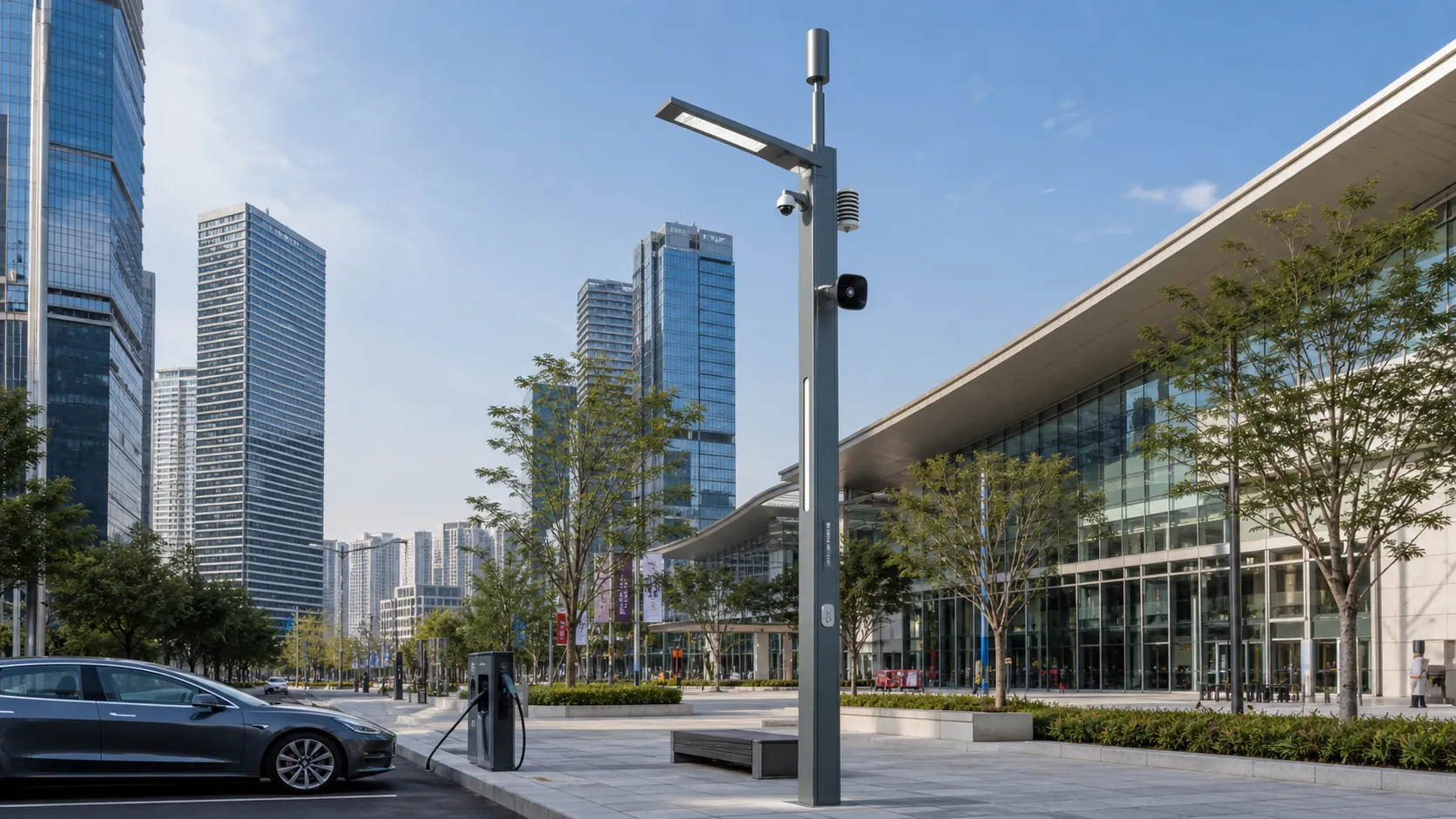
A buyer checklist for smart pole modules, structure, power, communication, cabinet layout, platform integration and maintenance access.
Solar IoT Guide
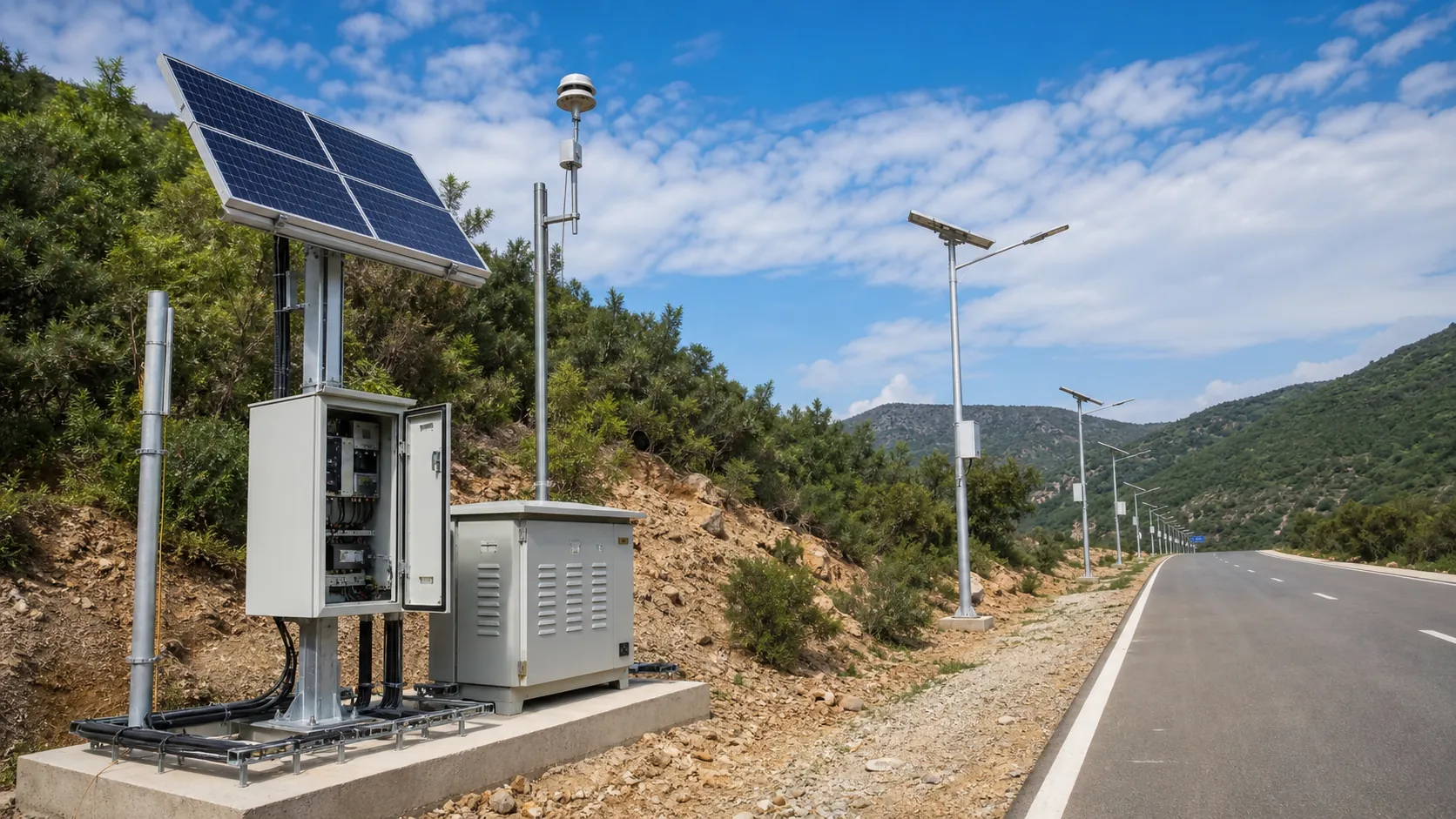
A design guide for solar-powered outdoor IoT: load calculation, battery autonomy, low-power firmware, telemetry and maintenance planning.
Frequently Asked Questions
What parameters can the RC-WQM-600 water quality monitoring station measure?
The standard configuration measures pH (0–14), optical dissolved oxygen (0–20 mg/L), conductivity (0–5,000 µS/cm), turbidity (0–1,000 NTU) and water temperature, with ORP as an optional sixth channel. Optional analyzer modules add ammonia nitrogen, COD (UV254), nitrate, chlorophyll-a, blue-green algae and total suspended solids, so one cabinet can cover general classification, pollution surveillance or eutrophication monitoring.
How does an online water quality station prevent sensor fouling, and how often does it need maintenance?
The RC-WQM-600 uses a flow-through measurement chamber with automatic water backflush and air purge after every measurement cycle, which removes silt and slows biofilm growth. Under typical river conditions this extends on-site maintenance (cleaning and calibration checks) to a 4–8 week interval, and the mobile app provides guided calibration workflows so a technician can service a station in under an hour.
The station is mains-powered — what happens to monitoring during a power outage?
An internal LiFePO4 UPS keeps the sensors, controller and cellular link running for 12–24 hours during a grid outage, and the edge controller buffers up to 2 years of readings locally if the network also drops. When power and connectivity return, the buffered data uploads automatically, so the record has no gaps.
Can the RC-WQM-600 be used at remote sites without grid power?
Yes. The standard station is grid-powered because its typical locations — urban embankments, treatment plant outfalls, reservoir dams — have mains access. For off-grid tributary or catchment sites, REDCOAST.LTD supplies a solar variant of the same measurement core with an MPPT charging stage and enlarged battery, specified per project based on site solar resource and duty cycle.
How does the station integrate with our existing SCADA or national environmental reporting platform?
The station publishes data over MQTT with TLS, HTTPS/JSON and Modbus TCP, so it can feed an existing SCADA or data platform directly. Alternatively, the REDCOAST.LTD cloud platform can act as the head end and forward validated data to government reporting systems via API. Custom protocol adaptations are possible because both the firmware and the controller hardware are developed in-house.
What site works are required to install a water quality monitoring micro-station?
Site works are minimal: a small concrete plinth (or wall bracket), an intake line to the water body with up to 6 m suction lift, and an AC power feed. The cabinet ships factory-integrated and pre-calibrated, so a two-person crew typically completes installation and commissioning in one day.
Is the station suitable for coastal or chemically aggressive outfall environments?
Yes, with the correct material configuration. For coastal sites or outfalls with aggressive chemistry, the cabinet is available in stainless steel 316L, wetted parts are UPVC, PTFE and SS316, and the electronics carry conformal coating. The standard powder-coated galvanized cabinet is intended for inland urban and freshwater sites.