Overview
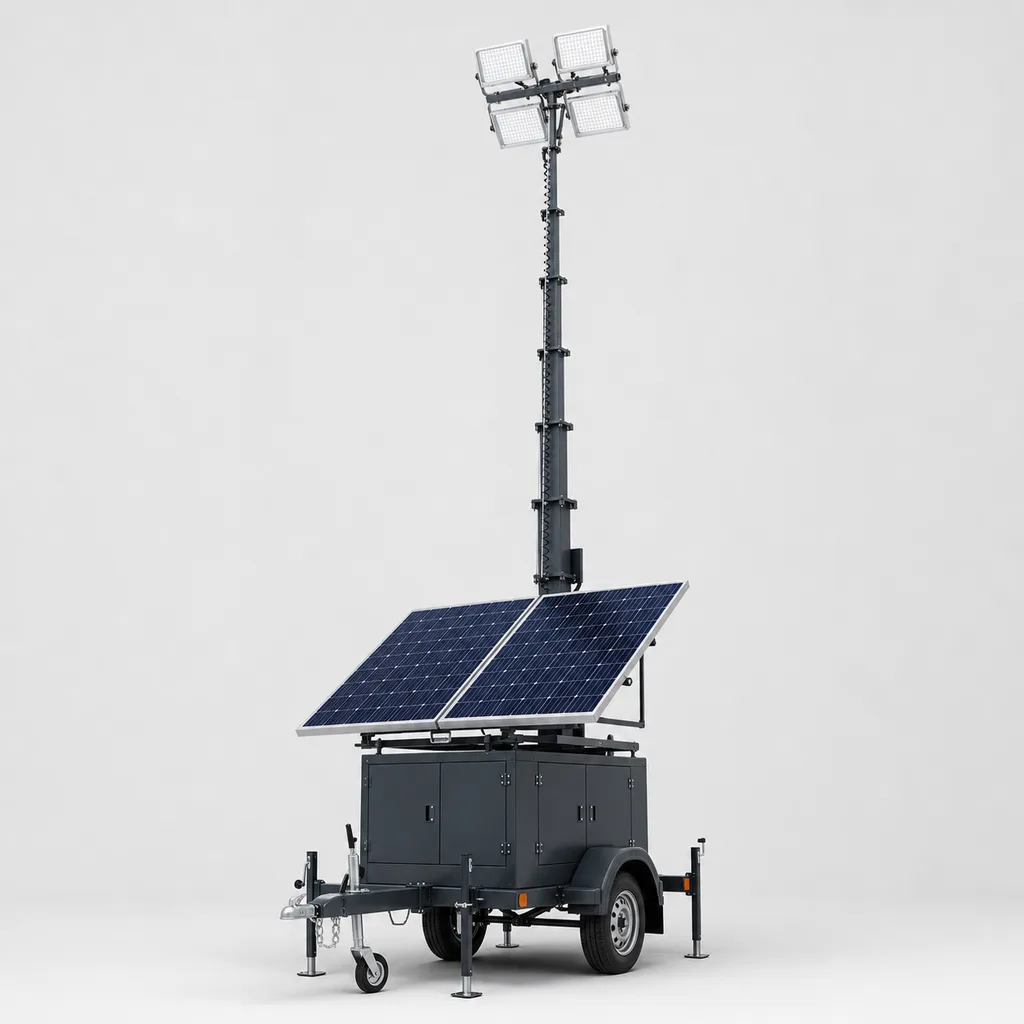
The Redcoast RC-SLT-800 Mobile Solar Light Tower is a self-contained, trailer-mounted lighting plant that delivers powerful, glare-controlled illumination anywhere — with zero fuel, zero emissions and near-silent operation. It is built for organisations that need temporary or relocatable high-output lighting: civil construction, road works, mining and quarrying, oil & gas, ports and logistics yards, large events, and emergency/disaster-relief operations. Unlike diesel light plants, the RC-SLT-800 has no running fuel cost, no refuelling logistics and no engine noise, while still providing several nights of autonomous operation from a single day of solar charging. Every electronic subsystem — the hybrid MPPT power-management board, the intelligent LED dimming driver and the IoT telematics gateway — is designed and manufactured in-house by Redcoast, so the platform can be tuned to each project's autonomy target, climate and compliance environment.
Key Features
- Telescopic mast 6–9 m with manual winch or electric/pneumatic lift options, 360° rotation and individually aimable lamp heads for precise light placement.
- 4 × high-efficacy LED floodlights (total 200–800 W) delivering up to ~100,000 lm at up to 150 lm/W, with asymmetric optics to flood large work zones while limiting glare.
- Self-developed hybrid MPPT power board that harvests from the solar array and (optionally) shore power or a backup generator, with priority logic that always favours solar.
- LiFePO4 energy storage (300–800 Ah / 48 V) sized for 2–4 nights of autonomy with no sun, and 2,000+ cycle service life.
- Intelligent LED dimming & scheduling: astronomical clock, motion-triggered boost, multi-level dimming and per-fixture control to stretch runtime.
- IoT remote monitoring via 4G/5G with GPS — track location, battery state of charge, runtime, geofence/anti-theft alerts and fault status from a web/app dashboard.
- DOT-style road trailer with stabiliser jacks, lockable equipment bay and a smooth powder-coated, corrosion-protected finish for harsh field service.
- Optional diesel-hybrid auto-start for guaranteed uptime in extended overcast periods, managed by Redcoast's controller so the generator only runs when truly needed.
- Plug-and-play deployment — tow, level, raise, and the unit runs automatically from dusk to dawn.
Technical Architecture
The RC-SLT-800 is organised around four integrated subsystems mounted on a single trailer chassis. The energy-capture layer comprises 2–4 monocrystalline PV panels (typically 400–600 W each) mounted on a fold-out or fixed frame; these feed Redcoast's in-house hybrid MPPT power-management PCB, which performs maximum-power-point tracking, multi-source arbitration (solar / shore power / generator) and charge regulation. The storage layer is a LiFePO4 battery bank with an integrated BMS that the power board reads over CAN/RS-485 to manage charge/discharge limits, cell balancing and temperature protection. The load layer is driven by Redcoast's intelligent LED driver/dimmer board, which provides constant-current regulation, per-fixture dimming, surge protection and thermal derating. Overseeing all of it is the IoT telematics gateway, which logs energy and runtime data, applies lighting schedules, exposes a geofence/anti-theft function via GPS, and streams telemetry to the cloud platform. Edge logic on the gateway lets the tower keep running its schedule autonomously even when connectivity drops, syncing data once the link returns — a true edge-plus-cloud design rather than a dumb timer.
Connectivity & Power
Connectivity is configurable to the deployment: 4G/5G for full remote dashboards and OTA schedule changes on connected sites; NB-IoT for low-power status reporting in fleet-management scenarios; and LoRa for site-cluster mesh where many towers report to a single on-site gateway. Power is fundamentally off-grid solar with LiFePO4 storage, but the hybrid board supports three real-world modes: pure solar (lowest cost, best for sunny regions and moderate runtime), solar + shore-power top-up (for yards with occasional mains access), and solar + diesel/LPG generator hybrid (for mission-critical 24/7 uptime in any climate). The arbitration logic always discharges solar first and only invokes the generator below a configurable state-of-charge threshold, minimising fuel use.
Protection & Reliability
The electronics enclosure and lamp heads are rated IP66, with the control cabinet sealed against dust and driving rain. The platform is engineered for a wide field envelope: operating temperature -30 to +60 °C, optional C5-M salt-fog-grade coating for coastal and marine sites, sealed connectors against sand and dust, and a lowered-mast wind survival rating in excess of 120 km/h. The trailer frame and mast use hot-dip-galvanised steel as a corrosion base, then receive a smooth powder-coated or fluorocarbon top finish for a durable, professional appearance. LiFePO4 chemistry, conservative charge management and quality LED drivers target a multi-year maintenance-light service life, backed by a project-oriented warranty.
Application Scenarios
- Construction & road works: Relocatable, fuel-free lighting for night pours, paving and detours — eliminates generator refuelling trips and noise complaints near residential zones.
- Mining & quarries: Robust area lighting for pits, haul roads and stockpiles where fuel logistics are expensive and emissions are restricted underground or in sensitive areas.
- Disaster relief & emergency response: Rapidly towable lighting for staging areas, shelters and search operations where grid power is down and fuel supply is uncertain.
- Events & festivals: Silent, emission-free lighting for parking, stages and crowd areas — no fumes or engine drone near the public.
- Ports, yards & logistics: Flexible spot lighting for container stacks and loading bays that can follow operations around a large site.
- Security & perimeter: GPS-tracked, motion-boosted lighting for remote yards, substations and pipeline right-of-ways, with anti-theft geofencing built in.
Case-style Examples
Highway-corridor night construction: A roadworks contractor replaced a fleet of diesel light plants on a long-running resurfacing programme. Configured with 4×500 W panels, a 600 Ah LiFePO4 bank and four 150 W LED heads, each RC-SLT-800 ran full work shifts on solar alone in summer and carried a small generator-hybrid option for winter. The contractor cut fuel and refuelling labour to near zero and removed noise complaints from adjacent housing.
Off-grid mining staging area: A quarry operator needed bright, dependable lighting at a remote crushing pad with no grid access. The towers were specified with a C5-M coastal coating, 800 Ah storage for three-night autonomy through overcast spells, and the diesel-hybrid backup for guaranteed uptime. IoT dashboards let the site manager monitor every tower's state of charge from the main office.
Disaster-relief deployment: For a flood-response staging camp, a relief agency towed in several units that were levelled and raised within minutes, providing silent overnight lighting for medical tents and supply distribution while the regional grid was offline — with GPS tracking to manage the fleet across multiple sites.
Customization & Selection Guide
Start from autonomy target: for sunny regions with nightly use, a 300–400 Ah bank with 2×400 W panels is cost-effective; for multi-night autonomy or cloudy climates, step up to 600–800 Ah and 3–4 panels, or add the generator-hybrid option for guaranteed uptime. Choose light output by coverage: 4×100 W heads suit perimeter and yard tasks, while 4×200 W heads (~100,000 lm) suit large active work zones. Pick mast lift by crew preference — manual winch for lowest cost, electric/pneumatic for one-button operation. Select connectivity by fleet needs — 4G/5G for full remote control, NB-IoT/LoRa for lightweight status. Specify environmental coating (standard / C5-M coastal / desert dust sealing) to match the site.
Deployment & After-sales
The RC-SLT-800 ships road-ready: tow to site, deploy the stabiliser jacks, raise the mast, aim the heads and the controller takes over automatically from dusk. No fixed foundation or electrical hook-up is required. Redcoast provides commissioning guidance, a remote-monitoring account, spare-parts support and firmware updates over the air. Because the power, driver and gateway boards are Redcoast's own designs, field issues can be diagnosed remotely and resolved without waiting on third-party black-box modules. Delivery timelines and configurations are set per project.
Standards & Compliance
Designed toward CE / RoHS, IP66 ingress protection for the electrical enclosure, IEC 62133 / UN38.3 for the LiFePO4 battery, IEC 61215 / 61730 for PV modules, and EMC directives for the electronics. Trailer construction can be specified to regional road-towing requirements. Exact certifications are aligned to the destination market on a per-project basis.
Why Redcoast
Redcoast is a smart-IoT hardware-and-software house, not a box-shifting integrator. We design and fabricate our own PCBs — the hybrid MPPT power board, the LED dimming driver and the IoT telematics gateway — and we build the web and mobile platform that monitors them. That means the RC-SLT-800 is genuinely tunable to your autonomy target, climate, connectivity and compliance environment, with full software/hardware co-engineering behind every unit.
Tell us your site conditions, runtime target and lighting coverage, and Redcoast will engineer a mobile solar light tower configuration — and the supporting monitoring platform — to match. Contact us for a custom quote.
Specifications
Lighting
- LED Fixtures
- 4 heads
- Total LED Power
- 200-800 W
- Luminous Flux
- up to 100,000 lm
- Luminous Efficacy
- up to 150 lm/W
- Color Temperature
- 4000 / 5000 / 5700 K
- Dimming
- 0-100% multi-level + motion boost
- Optics
- Asymmetric / symmetric flood
Solar & Power
- PV Array
- 2-4 x 400-600 (800-2000 total) W
- PV Type
- Monocrystalline
- Charge Controller
- Self-developed hybrid MPPT
- System Voltage
- 48 V
- Backup Input
- Shore power / diesel-hybrid (optional)
Energy Storage
- Battery Chemistry
- LiFePO4
- Capacity
- 300-800 Ah
- Autonomy (no sun)
- 2-4 nights
- Cycle Life
- >2000 (to 80% DoD) cycles
- BMS Interface
- CAN / RS-485
Mast & Trailer
- Mast Height
- 6-9 m
- Mast Lift
- Manual winch / electric / pneumatic
- Mast Rotation
- 360 °
- Lowered Wind Survival
- >120 km/h
- Stabilisers
- 4-point jack legs
- Chassis Finish
- Hot-dip galvanised + powder coat
Connectivity & Control
- Cellular
- 4G / 5G
- Low-power IoT
- NB-IoT / LoRa (optional)
- Positioning
- GPS with geofence/anti-theft
- Control
- Astronomical clock + remote scheduling
- Platform
- Web + mobile app (self-developed)
Environmental & Protection
- Enclosure IP Rating
- IP66
- Operating Temperature
- -30 to +60 ℃
- Corrosion Coating
- Standard / C5-M coastal
- Noise
- Silent (pure-solar mode)
Capabilities — configurable per project
Specifications are tailored to each project — the options below show what we can support.
Power Source
- Pure solar
- Solar + shore power
- Solar + diesel/LPG hybrid
Energy Storage
- 300 Ah
- 600 Ah
- 800 Ah LiFePO4
Mast Lift
- Manual winch
- Electric
- Pneumatic
Connectivity
- 4G/5G
- NB-IoT
- LoRa
Environmental Build
- Standard
- C5-M coastal anti-salt
- Desert dust-sealed
Related solution guidance
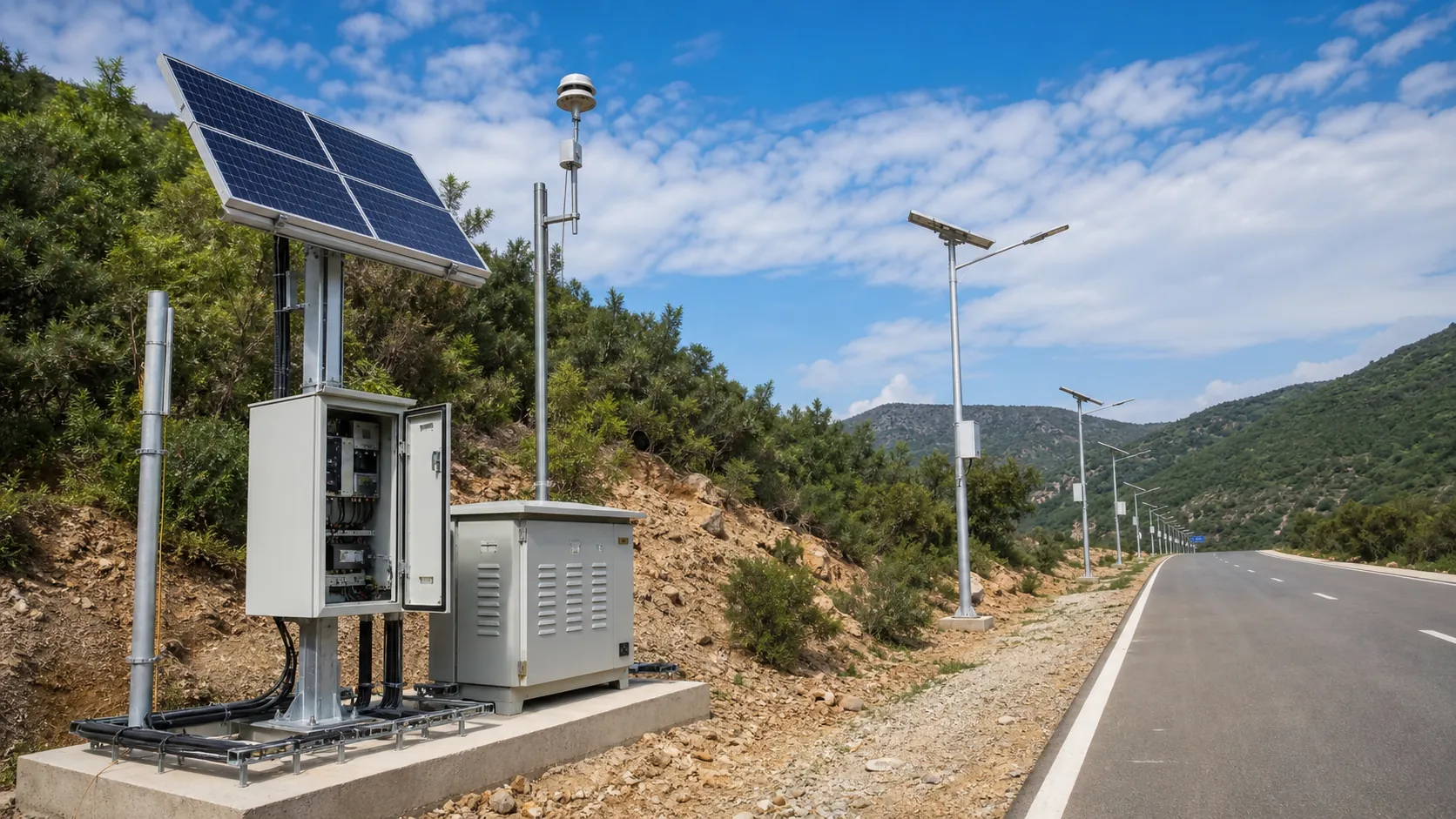
Ports and Logistics
Outdoor IoT infrastructure for ports, yards and logistics areas: lighting, guidance, safety, solar power, monitoring and maintenance visibility.
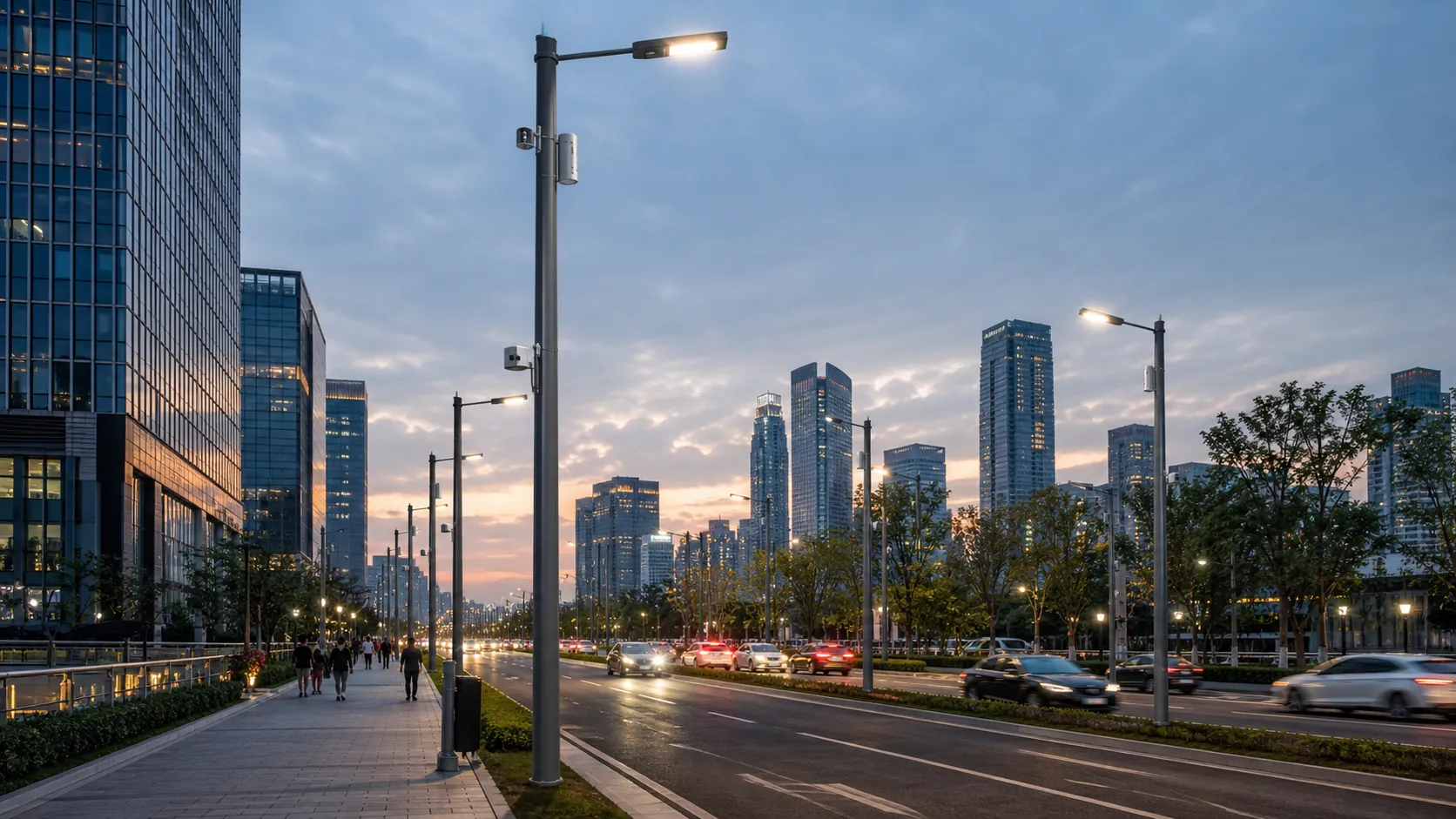
Smart Street Lighting
Plan an IoT street lighting system with LED luminaires, pole controllers, adaptive dimming, fault alarms, asset management and platform integration.
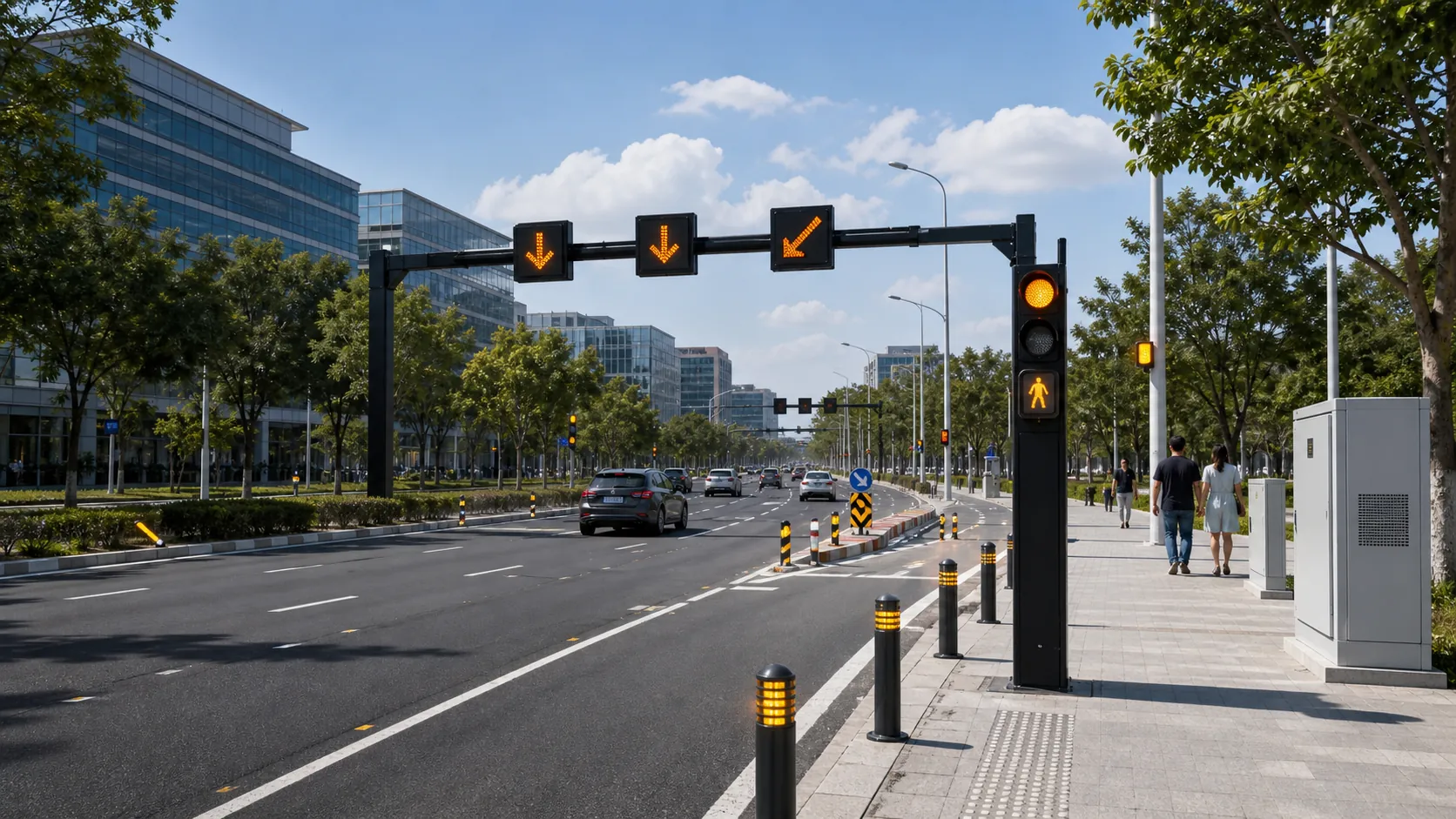
Airports and Hubs
IoT infrastructure for transport hubs: parking guidance, road safety, outdoor lighting, signage, monitoring and operational dashboards.
Frequently Asked Questions
How long can a solar light tower run without sunlight?
The RC-SLT-800 carries a 300–800 Ah LiFePO4 bank sized for 2–4 nights of autonomous operation with no solar charging, depending on configuration and dimming level. For guaranteed uptime through extended overcast periods, an optional diesel/LPG hybrid auto-start can be added so the engine runs only when battery charge drops below a set threshold.
How bright is the RC-SLT-800 compared to a diesel light plant?
It uses four high-efficacy LED floodlights producing up to roughly 100,000 lumens total at up to 150 lm/W. This is comparable to or brighter than typical metal-halide diesel light plants while using far less energy, and the LED optics control glare better. Lower-power 4×100 W configurations are available for perimeter and yard tasks.
Can the light tower be monitored and controlled remotely?
Yes. A built-in IoT telematics gateway with GPS streams location, battery state of charge, runtime and fault status to a web and mobile dashboard over 4G/5G. Operators can change lighting schedules and dimming remotely, and a geofence provides anti-theft alerts. NB-IoT and LoRa options are available for fleet-status reporting.
Is the trailer road-towable and how is it deployed?
It ships on a DOT-style road trailer that can be specified to regional towing requirements. Deployment takes minutes: tow to site, lower the four stabiliser jacks, raise the telescopic mast (manual winch or electric/pneumatic), aim the heads, and the controller runs the unit automatically from dusk. No foundation or grid hook-up is needed.
What environments can the solar light tower handle?
The electrical enclosure is rated IP66 and the unit operates from -30 to +60 °C. Optional C5-M coastal anti-salt coating and desert dust-sealing handle marine and arid sites. The mast withstands over 120 km/h winds when lowered, and the frame uses galvanised steel with a smooth powder-coated finish for corrosion protection.
Does REDCOAST.LTD manufacture the electronics or just assemble the tower?
REDCOAST.LTD delivers the tower together with its own web/mobile monitoring platform, and designs and fabricates the core electronics in-house — the hybrid MPPT power-management board, the intelligent LED dimming driver and the IoT telematics gateway. This means the tower's autonomy, light output, connectivity and climate hardening can all be tailored per project rather than locked to off-the-shelf modules.
What is the typical solar and battery configuration?
A common setup is 2–4 monocrystalline PV panels of 400–600 W each (800–2000 W array) charging a 48 V LiFePO4 bank of 300–800 Ah through the self-developed hybrid MPPT controller. Sunnier regions can use smaller banks; cloudy climates or multi-night autonomy step up storage or add the hybrid generator option.
Which standards and certifications apply?
The platform is designed toward CE / RoHS and EMC directives, IP66 ingress protection, IEC 62133 and UN38.3 for the LiFePO4 battery, and IEC 61215 / 61730 for the PV modules. Trailer build can meet regional road regulations. Exact certifications are aligned to each destination market on a per-project basis.