Overview
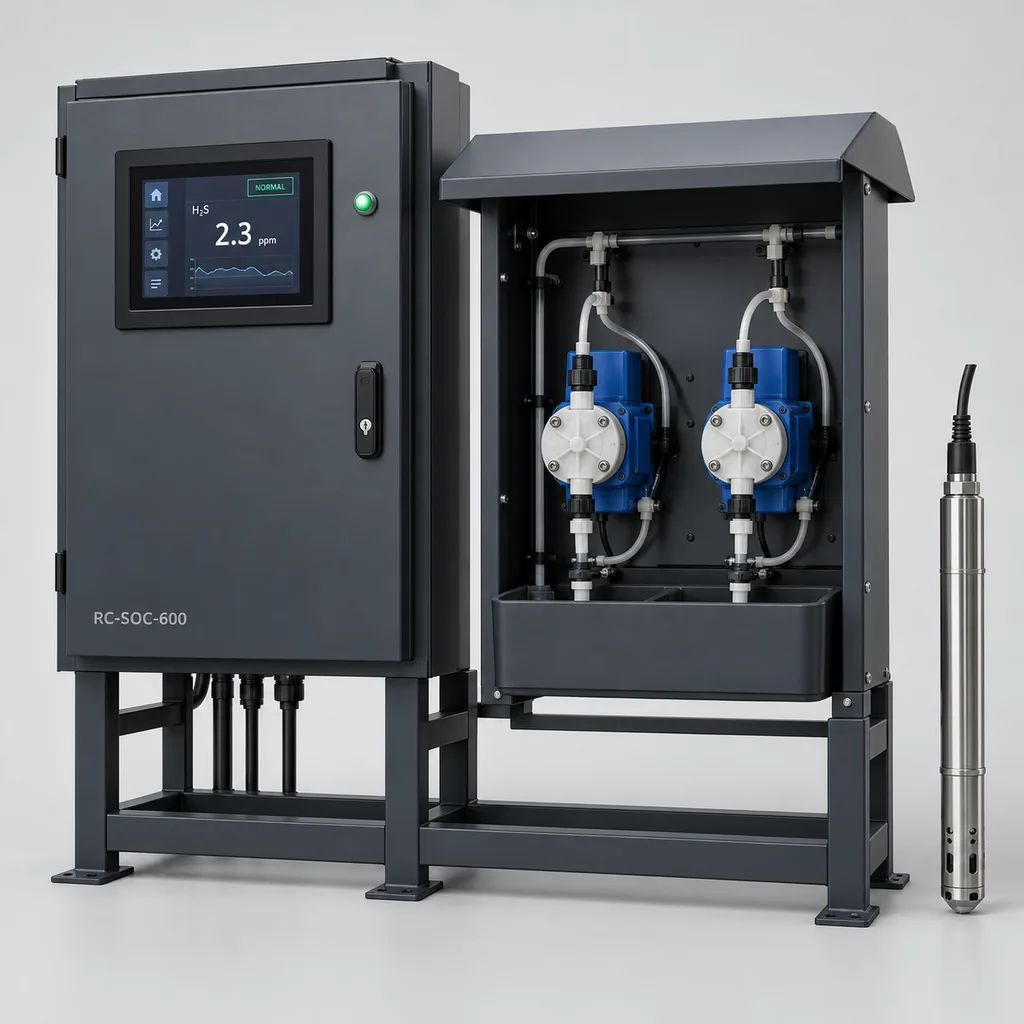
The RC-SOC-600 is a grid-powered sewer hydrogen sulfide monitoring and chemical dosing station for municipal utilities, campus wastewater operators, and infrastructure integrators. It combines continuous process measurements, two metering pumps, local control, and Web/App supervision to help operators manage odor complaints and sulfide-related corrosion risks. The system is intended for powered lift stations, force-main discharge facilities, and wastewater inlet compounds where chemical storage and maintenance access are available. REDCOAST.LTD delivers the complete project package, supported by in-house controller PCB development and board-level customization, with the reference configuration below serving as the basis for engineering and quotation.
Key Features
- Continuous H2S process monitoring: A sewer-grade headspace probe tracks concentration trends; an optional liquid-phase probe measures dissolved molecular H2S where direct wastewater feedback is required.
- Flow-paced chemical delivery: The controller calculates a base dosing rate from measured wastewater flow and an operator-approved recipe, then applies bounded corrections using validated process measurements.
- Duty/standby pumping: Two diaphragm metering pumps serve one injection point, with automatic changeover following a qualifying individual pump fault and scheduled rotation to distribute running hours.
- Local protective interlocks: A hardwired stop chain handles emergency stop, chemical low-low level, and containment leakage independently of cloud availability; process permissives prevent dosing without confirmed wastewater flow.
- Response-aware control: Configurable transport delay, filtering, output limits, and rate limiting prevent rapid dose changes from chasing delayed downstream measurements.
- Measured operating records: Trends combine H2S, wastewater flow, dosing commands, pump status, and tank inventory; commanded chemical volume is distinguished from independently measured delivery.
- Existing-system integration: Isolated 4–20 mA channels, pulse inputs, RS-485, Ethernet, and optional cellular backhaul connect the station to established utility SCADA.
- Project-specific electronics: REDCOAST.LTD can develop the analog acquisition, isolated pump interface, interlock monitoring, and power-supervision PCBs around the required field instruments and operating sequence.
Technical Architecture
The reference package contains a sealed electrical cabinet, a physically separate chemical pump panel with a splash cover and collection tray, two metering pumps, one headspace H2S probe, and the local operator interface. Wastewater flow is imported from an existing meter or supplied through an optional meter package. Tank low-level switches, a containment leak detector, pump fault contacts, and delivery verification complete the operating picture. Chemical storage is specified separately so that tank capacity, containment, delivery access, and reagent compatibility match the installation.
Within the cabinet, the REDCOAST.LTD controller digitizes isolated analog signals, checks instrument fault states, and executes the dosing sequence locally. The initial command follows wastewater flow multiplied by the approved chemical dose per unit volume. A downstream H2S measurement can slowly trim that command after the hydraulic and chemical response delay has been established during commissioning. Headspace concentration also depends on ventilation and turbulence, so it is not treated as a direct measurement of dissolved sulfide loading. Commercial wastewater probes demonstrate that both headspace and liquid-phase measurements are practical, with different measurement ranges and operating limits. SulfiLogger measurement ranges and probe operating specifications
The controller enforces minimum and maximum dosing rates and records every mode change. A common discharge blockage, containment leak, or empty tank stops both pumps instead of triggering standby changeover. Loss of a critical flow signal stops automatic dosing; loss of H2S feedback invokes the commissioned stop or bounded flow-paced fallback policy. Historical doses are never replayed as catch-up injections after a restart. The Web platform and mobile App provide trends, alarm acknowledgment, calibration reminders, and controlled recipe changes, while essential control remains at the station.
Connectivity & Power
The station uses AC 100–240 V, 50/60 Hz from the site's electrical distribution. This configuration is intended for facilities with existing mains power and includes neither photovoltaic generation nor an energy-storage package. A protected 24 V DC supply serves the controller and instruments; the metering pumps have separately protected supply circuits. The reference electrical allowance is 150 W without cabinet heating and 300 W with the optional 150 W anti-condensation heater, excluding chemical-store heating or cooling.
Ethernet is the preferred backhaul inside treatment works and managed campuses. Optional LTE Cat 1 or Cat 4 provides connectivity where a utility network connection is unavailable, with modem bands and carrier acceptance selected for the destination. Modbus RTU and Modbus TCP support local integration; MQTT over TLS and HTTPS support platform exchange. Remote access uses a site VPN or controlled gateway, individual accounts, and recorded configuration changes.
A 30-day local buffer is specified for 32 process channels logged once per minute, with timestamps and quality flags. Buffered records upload after communications recover without triggering historical control actions. A mains outage stops dosing, and restart requires healthy permissives and the configured restart sequence.
Protection & Reliability
The electrical enclosure has an IP66 design requirement, with sealed cable entries, a lockable door, and separate routing for instrument signals and pump power. Its steel shell and mounting frame use a hot-dip galvanized corrosion-protection base followed by a smooth matte powder-coated finish; a fluorocarbon-painted finish is an option for exposed coastal sites. Chemical tubing, pump heads, seals, and the containment tray are selected for the actual reagent rather than relying on the cabinet coating for chemical resistance.
Temperature ratings are intentionally separated. The shaded control cabinet is specified for an ambient range of -20 to +50 °C, while the standard pump and chemical compartment must remain between +5 and +40 °C and the selected wastewater probe operates between 0 and +40 °C. Sites outside those wet-side limits need a separately engineered conditioned shelter, protected pipework, or a different qualified instrument package. The cabinet heater controls condensation and does not heat the chemical tank.
The cabinet is installed above the project flood level and outside the assessed hazardous area. Coastal exposure, airborne chemicals, dust, solar loading, and anchoring loads are reviewed during mechanical design. Pump diaphragms, valves, probes, glands, and coating damage remain maintainable items. Service intervals follow operating history and component instructions; the proposal identifies warranty coverage, consumables, spare modules, and the conditions needed to maintain coverage.
Application Scenarios
- Neighborhood wastewater lift stations: Install the cabinet and contained dosing panel inside the fenced station compound, with a probe at the relevant wet well or downstream observation point. Operators can relate odor events to pumping cycles and adjust a verified treatment recipe using recorded evidence.
- Force-main discharge chambers: Dose at an engineered upstream point and measure the receiving chamber or wastewater stream after the required contact time. The station helps manage variable sulfide arrival without assuming that a downstream reading responds immediately to an upstream dose change.
- Wastewater treatment inlet works: Connect to the inlet flow meter and existing SCADA to supervise an approved sulfide-treatment program. Liquid-phase feedback can be selected where changing ventilation would make headspace-only feedback difficult to interpret.
- Campus and mixed-use development sewer networks: Place the equipment at a powered central collection facility serving buildings, public spaces, and service roads. Centralized monitoring helps the operator distinguish recurring process patterns from isolated complaints and organize maintenance.
- Industrial estate wastewater collection: Use the station where multiple approved wastewater discharges create changing flow and sulfide conditions. Recipe limits, material selection, and operating permissions are set around the accepted effluent characteristics and downstream treatment requirements.
Case-style Examples
The following examples are illustrative engineering configurations, not claims of completed REDCOAST.LTD installations or measured savings.
Residential lift-station retrofit: An operator receives intermittent odor complaints but currently uses a fixed pump setting. A proposed package combines the standard headspace probe, an existing wastewater flow signal, two duty/standby pumps, and Ethernet SCADA integration. The resulting operating workflow provides event-linked trends and adjustable flow-paced dosing; acceptance compares H2S exposure patterns, chemical consumption, and complaint records over an agreed trial period.
Long force-main receiving facility: A collection network has a substantial delay between an upstream injection point and the downstream chamber where H2S is observed. The proposed configuration adds a liquid-phase sensor, synchronized records from both locations, and bounded feedback adjusted only after the transport delay is characterized. The intended result is a more stable dosing sequence with a traceable response history, rather than rapid corrections based on stale process conditions.
Existing chemical-skid modernization: A treatment operator wants to retain a serviceable tank and pumps while replacing an obsolete timer-based controller. REDCOAST.LTD can supply the RC-SOC-600 controller package with matched analog interfaces, pump fault feedback, and independent delivery verification. This creates a documented control and maintenance workflow while allowing the operator to retain compatible equipment.
Customization & Selection Guide
Start with the injection location, minimum and peak wastewater flow, available contact time, observed H2S profile, chemical formulation, and actual injection pressure. The reference wet package uses two 0.1–17 L/h pumps rated up to 7 bar, with one pump operating at a time. A 0.1–30 L/h, 4 bar alternative addresses higher flow at lower pressure; flow and pressure ratings belong to the selected pump variant and must not be combined across variants. These are realistic commercial metering-pump envelopes. Grundfos chemical dosing specifications
For sizing arithmetic only, 50 m³/h of wastewater multiplied by 20 mL/m³ of chemical solution equals 1 L/h of dosing. This example is not a treatment recommendation: the required dose depends on chemistry, sulfide loading, contact time, and the downstream process. A nitrate-based treatment program is a reference option, with the reagent supplier and process engineer establishing the formulation and operating recipe. An iron-salt program requires a separate review of materials, process effects, and control settings.
Choose a 0–100 ppmv headspace range for lower process concentrations or 0–1000 ppmv for higher peaks; the wider range sacrifices low-concentration sensitivity. Select liquid-phase measurement when the control objective needs direct wastewater feedback. These process ranges are not intended for trace community-odor measurement. Sensor-informed dosing is established field practice, including recent collection-network projects, but another operator's results are not a performance guarantee for this station. Manufacturer field case, June 2026
Deployment & After-sales
Site engineering establishes the electrical feeder, cabinet foundation, safe equipment location, chemical delivery route, containment arrangement, and injection assembly. The chemical circuit includes isolation, a pressure-relief return, anti-siphon or back-pressure provisions as required, and an injection non-return valve. The pressure rating of the lowest-rated wetted component governs the assembled circuit. Probe mounts should permit retrieval from a safe working position, and cable routes should preserve separation between intrinsically safe and ordinary circuits where applicable.
Factory acceptance covers I/O simulation, protective stops, duty/standby changeover, signal-loss behavior, power recovery, alarm handling, and platform data mapping. Site acceptance adds pump calibration against delivered volume, verification of flow scaling, sensor checks, hydraulic checks, and a supervised treatment trial. A typical commissioning plan starts with 7–14 days of baseline monitoring where operating conditions permit, followed by a separately agreed optimization period.
Delivery timing is confirmed after the drawings, bill of materials, software scope, and component availability are agreed. A newly developed PCB includes prototype and qualification stages in that schedule. Handover includes wiring diagrams, I/O lists, control narratives, configuration backups, calibration instructions, and operator training, with remote diagnostics and replacement electronics available under the project service agreement.
Standards & Compliance
The compliance plan distinguishes component documentation from verification of the assembled station. The enclosure's IP66 requirement is evaluated using the applicable tests under IEC 60529. Electrical safety and EMC assessment are scoped against the applicable parts of IEC 61010-1 and IEC 61326-1:2020, together with the destination's installation requirements.
Where probes enter a classified sewer atmosphere, select an appropriately certified probe and compatible barrier or isolator, and verify the complete loop and installation. IEC 60079-14:2024 addresses selection, installation, and initial inspection of equipment associated with explosive atmospheres. An Ex-certified probe does not make the entire cabinet or dosing station explosion-proof.
Applicable CE marking, RoHS documentation, radio authorization, or other local conformity evidence is defined for the ordered configuration. This product description does not claim completed certification or a functional-safety rating. Process H2S monitoring does not replace personal gas detection, confined-space procedures, or an independently engineered life-safety system, and an H2S result alone is not proof of total odor removal.
Why REDCOAST.LTD
REDCOAST.LTD supplies a coordinated hardware, Web-platform, and mobile-App solution with one project interface for instrumentation, control behavior, data presentation, and maintenance support. In-house PCB and board-level development allows the acquisition channels, isolation, pump interfaces, power supervision, and mechanical arrangement to follow the project instead of forcing the site to fit a fixed controller. Specialist probes and metering pumps are selected for their documented performance, while REDCOAST.LTD develops the control electronics and application software that connect them into a maintainable system.
Send REDCOAST.LTD your wastewater flow range, H2S records, chemical details, injection pressure, site layout, and SCADA requirements to request a tailored RC-SOC-600 configuration.
Specifications
Process Measurement
- Headspace H2S measurement range
- 0–100 standard; 0–1000 optional ppmv
- Optional dissolved molecular H2S range
- 0–0.5 or 0–5; separate liquid-phase probe mg/L
- Selected probe operating temperature
- 0 to +40 °C
- Selected headspace probe humidity range
- 0–100; sewer-service probe % RH
- Controller analog sampling interval
- 1; probe response time is separate s
- Process logging interval
- 10–3600; default 60 s
- Reference probe detection limit
- 1% of selected full scale; 1 ppmv on the 0–100 ppmv range
- Reference probe response time
- Less than 25; final probe datasheet governs s
Chemical Dosing & Hydraulics
- Reference pump arrangement
- 2 diaphragm metering pumps; 1 duty + 1 standby
- Reference dosing capacity
- 0.1–17 per pump; one pump active L/h
- Reference maximum discharge pressure
- 7 at the selected pump rating; assembled circuit limited by its lowest-rated component bar
- Alternative pump envelope
- 0.1–30 L/h at up to 4 bar; separate pump selection
- Reference wetted materials
- PVDF pump head; PTFE seals; ceramic check balls
- Optional chemical storage
- 200 / 500 / 1000; separate contained tank package L
- Chemical delivery verification
- Pump-integrated flow monitoring or external flow sensor
Controller & Field Interfaces
- Analog inputs
- 8 × isolated 4–20 mA; 16-bit conversion
- Analog outputs
- 2 × isolated 4–20 mA; 12-bit conversion
- Digital inputs
- 12 × 24 V DC; 2 configurable for flow pulses
- Relay outputs
- 6 × dry contact; 2 A at 30 V DC resistive; interposing relays for larger loads
- Serial interfaces
- 2 × isolated RS-485
- Local display
- 7-inch color touchscreen; 1024 × 600 pixels
- Control modes
- Manual commissioning; flow-paced; bounded H2S feedback trim
Mains Power
- Input voltage
- AC 100–240; single phase V
- Input frequency
- 50 / 60 Hz
- Internal instrument supply
- 24 V DC; 120 W rated supply
- Reference station maximum power
- 150; controller, instruments, and pumps; heating excluded W
- Optional cabinet heater
- 150; thermostatic anti-condensation control W
- Maximum power with cabinet heater
- 300; chemical-store HVAC and external loads excluded W
Communications & Data
- Ethernet
- 1 × 10/100BASE-T
- Optional cellular modem
- LTE Cat 1 or LTE Cat 4; destination-specific bands
- Local integration protocols
- Modbus RTU; Modbus TCP
- Platform protocols
- MQTT over TLS 1.2 or later; HTTPS
- Local record capacity
- 30 days for 32 channels at 60-second intervals, including timestamps and quality flags
- Platform upload interval
- 60–900; default 60; alarms transmitted on detection when connected s
- Operator interfaces
- Local HMI; Web dashboard; mobile App
Enclosure & Operating Conditions
- Electrical cabinet dimensions
- 800 × 600 × 300; H × W × D; pump panel and tank separate mm
- Electrical enclosure protection
- IP66 design requirement; completed assembly subject to verification
- Cabinet surface treatment
- Hot-dip galvanized base with smooth matte powder coat; RAL 7016
- Shaded control cabinet ambient
- -20 to +50; electrical cabinet only °C
- Pump and chemical compartment ambient
- +5 to +40; conditioned shelter required outside this range °C
- Cabinet humidity
- 5–95; non-condensing internally % RH
- Standard installation
- Above-ground plinth or wall mounting; assessed non-hazardous area
Capabilities — configurable per project
Specifications are tailored to each project — the options below show what we can support.
Measurement package
- Headspace H2S process monitoring
- Headspace plus dissolved molecular H2S
- Upstream/downstream measurement pair
Dosing package
- Two 17 L/h, 7 bar duty/standby pumps
- Two 30 L/h, 4 bar duty/standby pumps
- Controller retrofit for verified existing pumps
Backhaul and hosting
- Ethernet to utility SCADA
- LTE Cat 1 or Cat 4 with secure gateway
- Customer-hosted Web/App backend
Mechanical package
- Separate cabinet and covered dosing panel
- Conditioned chemical equipment shelter
- Coastal fluorocarbon-painted cabinet and frame
Board-level customization
- Additional isolated analog acquisition
- Pump-specific command and diagnostic interface
- Project-specific interlock monitoring and power supervision
Related solution guidance
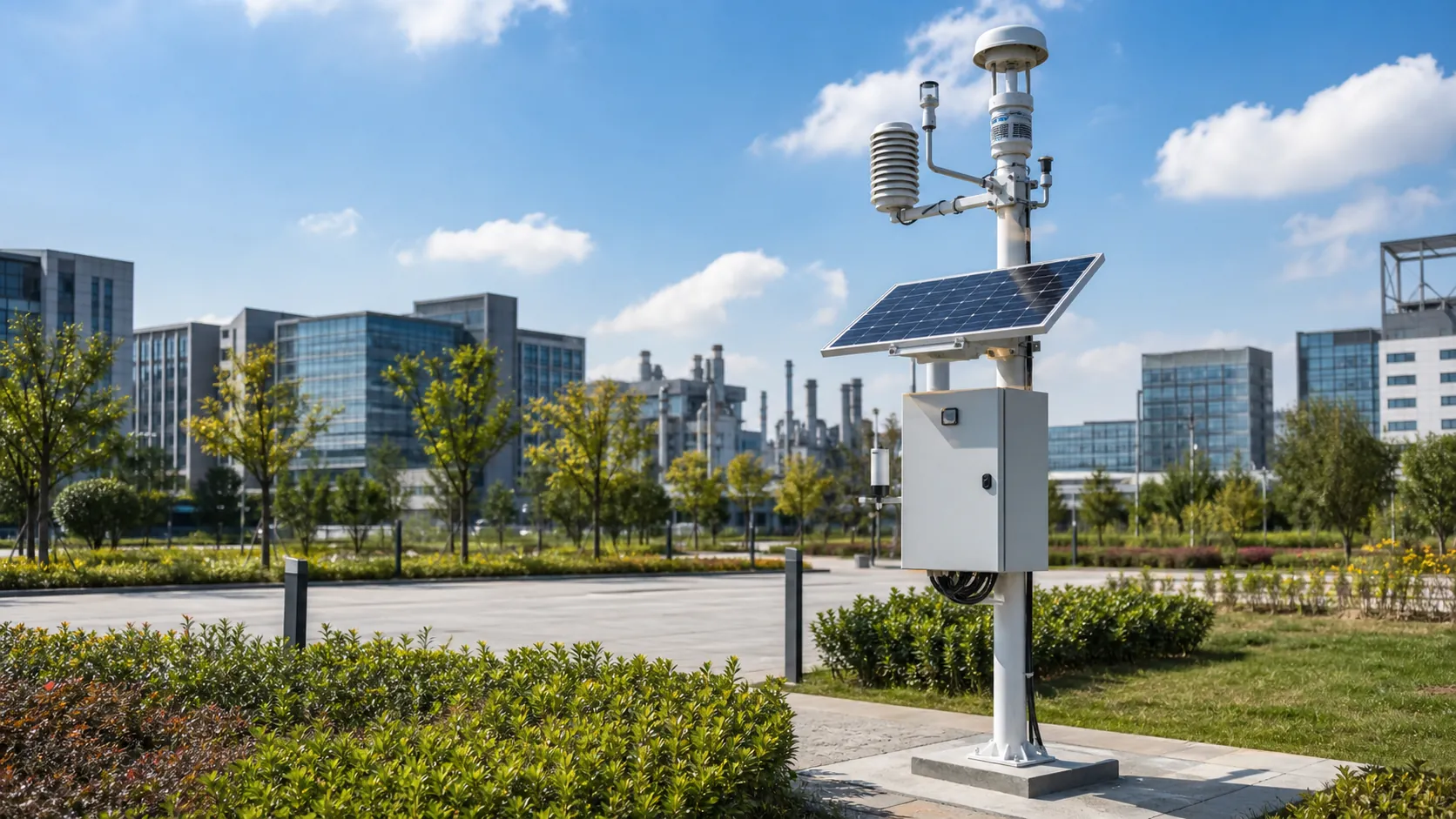
Environmental Monitoring
Deploy environmental monitoring stations with sensors, solar power, gateways, dashboards, alarms and data integration for city and industrial sites.
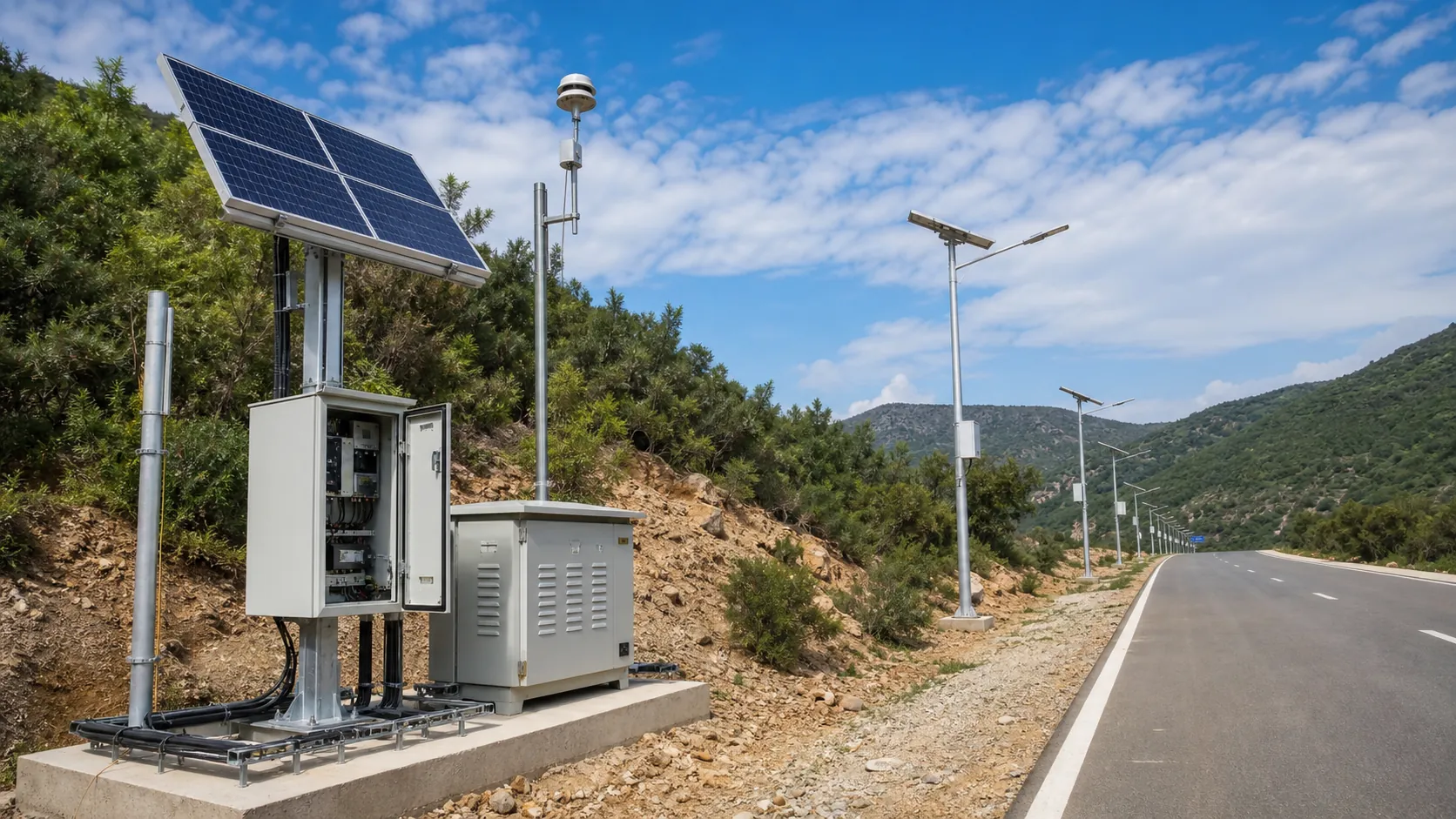
Power and Connectivity
How to choose power, battery, solar, NB-IoT, LTE, LoRaWAN, gateways and monitoring strategy for outdoor IoT infrastructure.
Solar IoT Guide
A design guide for solar-powered outdoor IoT: load calculation, battery autonomy, low-power firmware, telemetry and maintenance planning.
Frequently Asked Questions
How is this different from a smart manhole monitoring device?
A smart manhole device primarily reports conditions such as level, gas concentration, or cover movement. The RC-SOC-600 adds controlled chemical delivery, pump supervision, and protective interlocks at a powered wastewater facility. Its treatment configuration requires an engineered injection point, chemical containment, and an approved operating recipe.
Does the station remove all sewer odors or guarantee a fixed H2S reduction?
No fixed removal percentage is specified because performance depends on wastewater composition, reagent selection, mixing, contact time, and dosing limits. H2S monitoring addresses one important odor-related compound and does not measure total odor concentration. Acceptance should compare agreed process indicators and chemical consumption during a supervised site trial.
Does the RC-SOC-600 require solar panels or batteries?
The reference configuration runs from AC 100–240 V, 50/60 Hz and includes neither solar panels nor batteries. It is intended for lift stations, treatment facilities, and campus collection points with existing electrical service. Dosing stops during a mains outage and resumes only through the configured restart sequence when power and process permissives are healthy.
What is the difference between headspace H2S and liquid-phase sulfide measurement?
The headspace probe reports gaseous H2S in ppmv, while the optional liquid-phase probe reports dissolved molecular H2S in mg/L. Dissolved molecular H2S is not the same as total dissolved sulfide, whose distribution depends on factors including pH and temperature. A direct conversion between gas and liquid readings is not used for dosing without an appropriate process model and validation.
Will chemical dosing continue if the internet connection fails?
Local control continues while electrical power, valid process inputs, and protective permissives remain available. The station buffers measurements and uploads them after connectivity returns. Loss of a critical process signal follows a separate commissioned policy, and buffered records never generate catch-up chemical injections.
Can the probes be installed in a hazardous sewer atmosphere?
A classified location requires a suitably certified probe, compatible barriers or isolators, and verification of the complete installation against the site classification. The standard control cabinet and dosing panel are installed outside the assessed hazardous area. Probe certification does not certify the complete station, and process monitoring does not replace personnel gas detection.
How should buyers select pump capacity and chemical tank size?
Calculate the required solution flow from wastewater throughput and the treatment dose established by the process engineer, then check injection pressure, viscosity, and the pump operating range. The reference duty pump supplies 0.1–17 L/h at a maximum rated pressure of 7 bar; the second pump provides standby capacity rather than doubling delivery. Select storage from expected daily consumption, refill logistics, reagent storage limits, and the engineered containment arrangement.
Does REDCOAST.LTD develop the hardware or only integrate purchased equipment?
REDCOAST.LTD develops the station controller, board-level interfaces, embedded control software, Web platform, and mobile App, including new PCB layouts where the project requires them. Specialist metering pumps and H2S probes are selected from qualified components with documented operating limits. Electrical drawings, control behavior, component documentation, and assembled-system acceptance requirements are defined together in the project package.