Overview
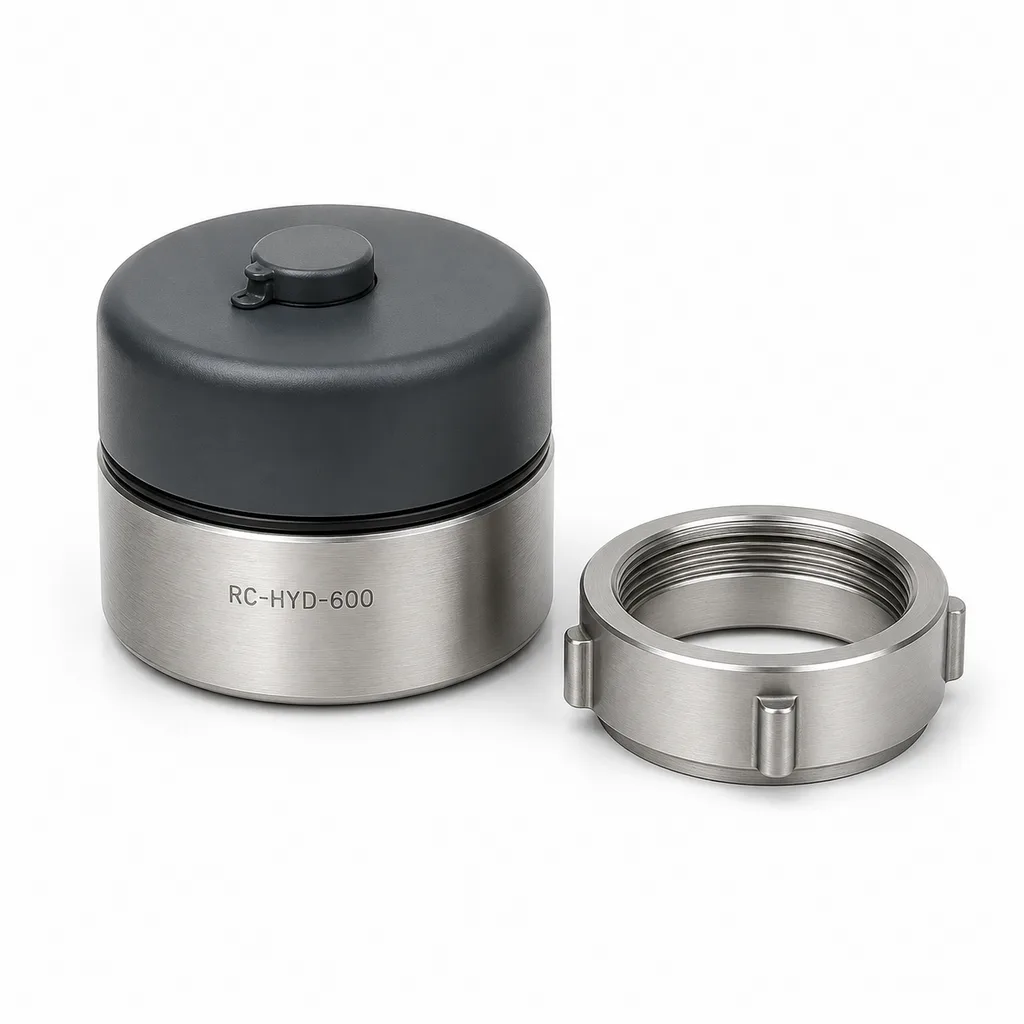
The RC-HYD-600 is a battery-powered IoT monitoring system that turns fire hydrants and buried water distribution assets into connected, supervised infrastructure. It is built for water utilities, municipalities, fire departments and industrial campuses that today have no visibility into hydrant status, network pressure or leakage between the treatment plant and the customer meter. The system combines three interoperable field devices — a hydrant monitoring node, a DMA pressure logger and an optional correlating acoustic leak noise logger — all reporting over NB-IoT or LoRaWAN into one GIS-based cloud platform with a field-crew mobile app. Because non-revenue water commonly reaches 20–40% of production in many networks and hydrant tampering or vehicle knock-overs often go unnoticed for days, RC-HYD-600 directly converts invisible losses and safety risks into actionable, time-stamped alarms. REDCOAST.LTD engineers the complete solution in-house, from the ultra-low-power sensor electronics to the platform and app, so every deployment can be tailored to local hydrant types, pipe materials and network topology.
Key Features
- Hydrant tamper and water-theft detection: a 3-axis accelerometer plus magnetic cap-opening sensing detects unauthorized opening, illegal water draw, impact and knock-over events and pushes an alarm within seconds.
- Continuous network pressure monitoring: hydrant nodes and DMA loggers record pressure with up to ±0.1% FS accuracy, revealing low-pressure complaints, pump issues and pressure transients that fatigue pipes.
- Acoustic leak pre-location: optional leak noise loggers listen during quiet night hours; cloud-side correlation between neighbouring loggers pre-locates leaks to within a few metres, even before water surfaces.
- Freeze and flow-condition warnings: temperature sensing flags freeze risk in hydrant barrels; water-presence probes detect barrel flooding or drained-barrel faults in dry-barrel hydrants.
- Up to 10-year battery life: lithium thionyl chloride (LiSOCl₂) packs and a self-developed nanoamp-sleep power architecture eliminate mains wiring and solar panels entirely — correct for street-side and in-chamber assets where no power exists.
- IP68 sealed, chamber-ready hardware: 316L stainless steel and glass-fibre-reinforced housings survive flooded valve chambers, de-icing salt, desert heat and -40 °C winters.
- Retrofit-first mechanical design: under-cap and outlet-cap adapter kits fit common dry-barrel, wet-barrel and pillar hydrants without replacing the hydrant itself.
- Unified GIS platform and app: one map shows every hydrant, logger and alarm; crews receive dispatch tickets, scan assets via QR/Bluetooth on site and close events with photos.
- Open integration: REST API, MQTT push and scheduled exports feed SCADA, hydraulic modelling and smart-city platforms; multi-tenant mode lets utilities host multiple districts.
- Custom electronics by design: REDCOAST.LTD develops the main MCU board, pressure signal-conditioning PCB, piezo acoustic front-end and RF section in-house and can spin project-specific PCB variants for special hydrant geometries or extra sensors.
Technical Architecture
The field layer consists of three device families sharing one electronics platform. The RC-HYD-600-HN hydrant node mounts under the hydrant bonnet or inside an outlet cap adapter. Its self-developed signal-conditioning PCB reads a piezoresistive pressure transducer (0–2.5 MPa), a 3-axis MEMS accelerometer for impact/tilt/opening signatures, a magnetic cap sensor, a water-presence probe and an internal temperature sensor. An ultra-low-power ARM Cortex-M0+ main board wakes on motion interrupts or on a configurable sampling schedule, evaluates event rules at the edge (so routine noise is filtered locally and airtime is saved), and transmits only condensed reports and alarms. The RC-HYD-600-PL DMA pressure logger uses the same core with a higher-grade transducer (±0.1% FS) and deep local memory, logging at 15-second to 15-minute intervals with an optional 128 S/s transient-capture mode for water-hammer studies. The RC-HYD-600-AL acoustic leak logger clamps magnetically to valves, hydrant feet or fittings; its piezo hydrophone front-end PCB samples structure-borne noise in the 0–2.5 kHz band during a programmable night window, computes level/spread statistics on-device and uploads compressed spectra.
On the platform side, all devices report over NB-IoT (or LoRaWAN where a private network is preferred) using MQTT or CoAP secured with TLS/DTLS. The REDCOAST.LTD water-network platform stores time-series data, runs leak-correlation between adjacent acoustic loggers, computes minimum night flow and pressure KPIs per District Metered Area, and drives an alarm engine with escalation rules. Dashboards are GIS-native: every asset is a georeferenced object with installation photos, battery state and event history. The mobile app supports installation commissioning (Bluetooth local configuration), inspection rounds and work-order closure, so the same system serves both the control room and the crew in the street.
Connectivity & Power
Connectivity. NB-IoT (3GPP bands B1/B3/B5/B8/B20/B28) is the default carrier because it penetrates cast-iron chambers and offers city-wide coverage with no gateway investment; LTE-M is available as a fallback on the same module. Where utilities prefer a private network — industrial plants, ports, campuses without reliable cellular indoor-chamber coverage — the same devices ship in LoRaWAN variants (EU868/US915/AS923) working with REDCOAST.LTD or third-party gateways. Reporting frequency is remotely configurable from 1 to 24 uplinks per day, with event-driven alarms pushed immediately regardless of schedule.
Power. This product family is deliberately battery-powered — hydrants and buried chambers have no mains supply, and solar panels are impractical and theft-prone at street level. Field devices run on replaceable LiSOCl₂ packs (19 Ah standard, 38 Ah extended): up to 10 years for hydrant nodes at one report per day, and 5+ years for pressure loggers at hourly uplinks. Battery voltage is telemetered and the platform raises a replace-battery ticket at 20% remaining, so fleets can be maintained on planned rounds rather than emergency visits.
Protection & Reliability
All enclosures are rated IP68 (2 m continuous immersion) per IEC 60529 and are designed for flooded valve chambers, not just rain. Wetted and exposed metal parts use 316L stainless steel; polymer parts are UV-stabilised glass-fibre-reinforced nylon, and mounting brackets are finished with corrosion-proof coating systems rather than bare zinc. The electronics operate from -40 °C to +70 °C, and conformal-coated PCBs resist condensation and H₂S-laden chamber atmospheres. Devices withstand the shock of hydrant operation and traffic vibration, and the firmware is watchdog-protected with automatic reconnection and store-and-forward buffering, so no data is lost during network outages. Design life is 10 years, backed by accelerated life testing of the power path and a standard 3-year warranty (extendable under project contracts).
Application Scenarios
- Municipal fire hydrant fleets: utilities and fire departments monitor thousands of hydrants for tampering, water theft, vehicle knock-over and pressure availability, guaranteeing that hydrants actually work when an engine company connects.
- Non-revenue water (NRW) reduction programmes: DMA pressure loggers and acoustic leak loggers give leakage teams night-flow context and pre-located leak positions, cutting survey time from weeks of listening-stick work to targeted digs.
- Freeze-prone networks: in cold climates, barrel temperature and water-presence alerts identify hydrants at risk of freezing or with failed drain valves before winter emergencies.
- Industrial parks, ports and airports: private fire-water ring mains feeding hydrants and monitor systems are supervised for pressure and unauthorized use, supporting insurance and fire-code compliance audits.
- Construction-season protection: temporary alarm zones around road works flag hydrant impacts and illegal draws by tankers, with time-stamped evidence for cost recovery.
- Pressure management projects: transient-capture loggers document water hammer around pump stations and PRVs, guiding valve tuning that extends pipe life.
Case-style Examples
City-wide hydrant supervision retrofit. A water utility responsible for a large urban hydrant fleet suffered repeated water theft by tanker operators and discovered broken hydrants only during fire incidents. Hydrant nodes with under-cap mounting were retrofitted without replacing any hydrant; NB-IoT reporting once daily plus instant tamper alarms gave the control room a live availability map. Illegal draws now generate evidence-grade event logs, and hydrant out-of-service time dropped sharply because knock-overs are dispatched within minutes.
DMA leakage reduction deployment. A distribution operator divided its network into metered districts and installed RC-HYD-600-PL pressure loggers at DMA boundaries plus acoustic loggers every 300 m on metallic mains in the worst-performing zones. Night-time correlation pre-located seventeen invisible leaks in the first quarter; repair crews confirmed digs within two metres of the predicted positions, and district minimum night flow fell measurably after each repair cycle.
Industrial fire-water ring main compliance. A petrochemical-adjacent logistics park needed documented proof that its private fire-water network held required standby pressure. Pressure loggers on the ring main and hydrant nodes at each riser feed a tenant-visible dashboard; scheduled PDF reports satisfy the insurer's quarterly audit, and a pump-start pressure anomaly was caught and corrected before it affected sprinkler coverage.
Customization & Selection Guide
Start from the asset mix: choose hydrant nodes for supervision and theft prevention, PL pressure loggers for DMA and pressure-management analytics, and add AL acoustic loggers where pipes are metallic or leakage is chronic (spacing 200–500 m on metal, 50–100 m on plastic pipe). Select mounting kits by hydrant type — under-bonnet for dry-barrel, outlet-cap adapter for wet-barrel and pillar hydrants, chamber bracket for underground hydrants and valves. Pick NB-IoT where public coverage exists; specify LoRaWAN with gateways for private sites. Cold-climate projects should order the extended 38 Ah battery and freeze-alert firmware profile; high-theft areas benefit from the tamper-evident locking cap option. The platform is available as REDCOAST.LTD-hosted SaaS, an on-premise installation for utilities with data-sovereignty rules, or headless API mode feeding an existing SCADA/GIS. For non-standard hydrant geometries or extra sensing (e.g. chamber flooding plus gas), REDCOAST.LTD can develop a project-specific sensor PCB variant.
Deployment & After-sales
Installation is retrofit-friendly: a two-person crew fits a hydrant node in 15–30 minutes without shutting down the main, commissioning each device via Bluetooth in the app (auto-binding GPS position, photos and asset ID). Typical projects run as a pilot batch (50–200 points) followed by district-wide rollout; standard lead time is weeks-scale for catalogue configurations, with project-specific variants scheduled after design review. REDCOAST.LTD provides mounting-kit engineering against customer hydrant drawings, platform training, and remote FOTA firmware updates across the fleet. Support includes a named technical contact, spare battery packs and sensor modules, and optional annual health reports covering battery fleet status and data quality.
Standards & Compliance
Designed toward CE (RED 2014/53/EU, EMC 2014/30/EU), RoHS and REACH; ingress protection IP68 per IEC 60529; cellular modules with GCF/PTCRB-certified radio cores; security via TLS 1.2/DTLS with per-device credentials. Mechanical adapter kits are engineered for hydrants manufactured to EN 14384 / EN 14339 and AWWA C502/C503 patterns, among others. Data practices align with utility NRW methodology (IWA water-balance terminology, ISO 24528 guidance on leakage management practice). Project-specific certifications and country approvals can be arranged per contract.
Why REDCOAST.LTD
REDCOAST.LTD delivers complete, end-to-end smart-infrastructure solutions — field hardware, management platform and mobile app from one engineering team. What makes that credible is in-house hardware development: the low-power main controller, pressure signal-conditioning board, acoustic front-end and power-management PCBs in RC-HYD-600 are all designed by REDCOAST.LTD, so we can adapt the electronics to your hydrant types, sensor mix, radio bands and enclosure constraints instead of forcing your network to fit an off-the-shelf box. One vendor owns the whole chain — sensing, firmware, connectivity, platform — which means faster integration, accountable support and genuinely customizable deployments for utilities, integrators and government buyers worldwide, across any climate or regulatory environment.
Ready to supervise your hydrants and cut network losses? Contact REDCOAST.LTD with your hydrant types, pipe materials and district map for a tailored RC-HYD-600 configuration and quotation.
Specifications
Hydrant Monitoring Node (RC-HYD-600-HN)
- Pressure Range
- 0-2.5 MPa
- Pressure Accuracy
- ±0.5 % FS
- Tamper Sensing
- 3-axis MEMS accelerometer, ±16 g, motion-wake interrupt
- Knock-over / Tilt Alarm Threshold
- configurable, default 15 °
- Cap-Opening Detection
- magnetic sensor + acceleration signature
- Water Presence Probe (dry-barrel)
- conductive, barrel flooding / drain-fault detection
- Temperature Sensing / Freeze Alert
- -40 to +85, alert threshold default +2 °C
DMA Pressure Logger (RC-HYD-600-PL)
- Pressure Range
- 0-20 (options 0-10 / 0-40) bar
- Accuracy
- ±0.1 % FS
- Sampling Interval
- 15 s - 15 min, remotely configurable
- Transient Capture Mode (optional)
- 128 S/s
- Local Data Memory
- up to 4,000,000 data points
- Process Connection
- G1/2 or G1/4, 316L wetted parts
Acoustic Leak Noise Logger (RC-HYD-600-AL, optional)
- Sensor Type
- piezoelectric accelerometer (hydrophone front-end PCB)
- Frequency Band
- 0-2500 Hz
- Listening Window
- programmable, default 02:00-04:00 nightly
- Leak Pre-location (cloud correlation)
- ±1-2 (metallic pipe, typical) m
- Recommended Spacing
- 200-500 metallic / 50-100 plastic pipe m
- Mounting
- magnetic clamp on valve, fitting or hydrant foot
Connectivity
- Primary Radio
- NB-IoT, 3GPP bands B1/B3/B5/B8/B20/B28
- Fallback / Options
- LTE-M; LoRaWAN EU868/US915/AS923 variant
- Protocols
- MQTT / CoAP over TLS 1.2 / DTLS
- Reporting Rate
- 1-24 uplinks/day, remotely configurable
- Alarm Latency
- <30 (event-driven push) s
- Local Commissioning
- Bluetooth 5.0 via mobile app
- Firmware Update
- FOTA, fleet-wide
Power (battery-powered; no mains, no solar at street level)
- Battery Type
- LiSOCl2, replaceable pack
- Battery Capacity
- 19 standard / 38 extended Ah
- Battery Life - Hydrant Node
- up to 10 (at 1 report/day) years
- Battery Life - Pressure Logger
- ≥5 (at hourly uplink) years
- Battery Telemetry
- voltage reported; low-battery ticket at 20%
- Sleep Current
- <10 µA
Mechanical & Environmental
- Ingress Protection
- IP68 (2 m continuous immersion, IEC 60529)
- Housing Materials
- 316L stainless steel + glass-fibre-reinforced nylon (UV-stabilised)
- Operating Temperature
- -40 to +70 °C
- PCB Protection
- conformal coated, condensation / H2S resistant
- Mounting Kits
- under-bonnet (dry-barrel), outlet-cap adapter (wet-barrel/pillar), chamber bracket
- Design Life
- 10 years
Cloud Platform & Mobile App
- Dashboard
- GIS map, asset registry, DMA KPIs, minimum night flow analytics
- Alarm Types
- unauthorized opening, water theft, knock-over, low/high pressure, leak noise, freeze, flooding, low battery
- Leak Analytics
- logger-pair correlation, leak probability scoring, dig-site pre-location
- Integration
- REST API, MQTT push, scheduled CSV/PDF export, SCADA/GIS interface
- Deployment Model
- REDCOAST.LTD-hosted SaaS / on-premise / headless API
- Mobile App
- Android / iOS: commissioning, inspection rounds, work orders
Capabilities — configurable per project
Specifications are tailored to each project — the options below show what we can support.
Device Type
- Hydrant monitoring node (HN)
- DMA pressure logger (PL)
- Acoustic leak noise logger (AL)
- Mixed fleet per district plan
Connectivity
- NB-IoT
- LTE-M
- LoRaWAN (private network with gateways)
Hydrant Mounting Kit
- Dry-barrel under-bonnet
- Wet-barrel / pillar outlet-cap adapter
- Underground hydrant chamber bracket
- Custom kit engineered from hydrant drawings
Battery Pack
- 19 Ah standard
- 38 Ah extended (cold climate / high report rate)
Platform Delivery
- REDCOAST.LTD cloud SaaS
- On-premise server
- API-only integration into existing SCADA/GIS
Related solution guidance

Environmental Monitoring
Deploy environmental monitoring stations with sensors, solar power, gateways, dashboards, alarms and data integration for city and industrial sites.
Power and Connectivity
How to choose power, battery, solar, NB-IoT, LTE, LoRaWAN, gateways and monitoring strategy for outdoor IoT infrastructure.
Solar IoT Guide
A design guide for solar-powered outdoor IoT: load calculation, battery autonomy, low-power firmware, telemetry and maintenance planning.
Frequently Asked Questions
Can the hydrant sensor be retrofitted to existing fire hydrants without replacing them?
Yes. The RC-HYD-600-HN node mounts under the bonnet of dry-barrel hydrants or inside an outlet-cap adapter on wet-barrel and pillar hydrants, so no hydrant replacement or main shutdown is needed. A two-person crew typically installs and commissions one unit in 15-30 minutes via the Bluetooth app. REDCOAST.LTD also engineers custom adapter kits from your hydrant drawings for non-standard patterns.
How long does the battery last and how is it replaced?
Hydrant nodes run up to 10 years on a 19 Ah LiSOCl2 pack at one report per day; DMA pressure loggers achieve 5+ years at hourly uplinks, and a 38 Ah extended pack is available for cold climates or higher report rates. Battery voltage is telemetered and the platform opens a replacement ticket at 20% remaining. Packs are field-replaceable in minutes without removing the device.
How does the system detect water theft or unauthorized hydrant use?
A 3-axis accelerometer recognises the vibration signature of cap removal and valve operation, a magnetic sensor confirms cap opening, and the pressure channel shows draw-down during an actual water draw. Events are time-stamped and pushed as alarms within about 30 seconds, giving utilities evidence-grade logs for enforcement or cost recovery against tanker operators and contractors.
How accurately can the acoustic loggers locate a leak?
Loggers record structure-borne noise in the 0-2.5 kHz band during a quiet night window, and the cloud correlates recordings from neighbouring loggers using pipe material and distance data. On metallic mains this typically pre-locates leaks to within 1-2 metres; plastic pipe attenuates noise faster, so closer logger spacing (50-100 m) is recommended there. Crews then confirm with a ground microphone before digging.
What happens if there is no NB-IoT coverage at my site?
The same devices are available with LTE-M fallback on the identical module, or as LoRaWAN variants (EU868/US915/AS923) working with REDCOAST.LTD or third-party gateways for private networks such as industrial parks, ports and campuses. Devices also buffer data locally and forward it automatically after any network outage, so records are not lost.
Can the data integrate with our existing SCADA or GIS system?
Yes. The platform exposes a REST API and MQTT push interface, supports scheduled CSV/PDF exports, and can run in headless API-only mode feeding your existing SCADA, hydraulic model or GIS. On-premise installation is available for utilities with data-sovereignty requirements, alongside the standard REDCOAST.LTD-hosted SaaS.
Will the devices survive flooded underground chambers and freezing winters?
All field units are rated IP68 for 2 m continuous immersion per IEC 60529, use 316L stainless steel and UV-stabilised glass-fibre nylon housings with conformal-coated PCBs, and operate from -40 to +70 °C. The hydrant node additionally provides freeze-risk alerts from barrel temperature and detects standing water in dry-barrel hydrants caused by failed drain valves.
Is this a standard catalogue product or can it be customized?
Both. Catalogue configurations cover common hydrant patterns (EN 14384/14339, AWWA C502/C503) and typical DMA deployments. Because REDCOAST.LTD designs the controller, signal-conditioning and acoustic front-end PCBs in-house, the electronics, sensor mix, radio bands, enclosure and platform features can all be adapted per project — including fully custom sensor board variants for special hydrant geometries.