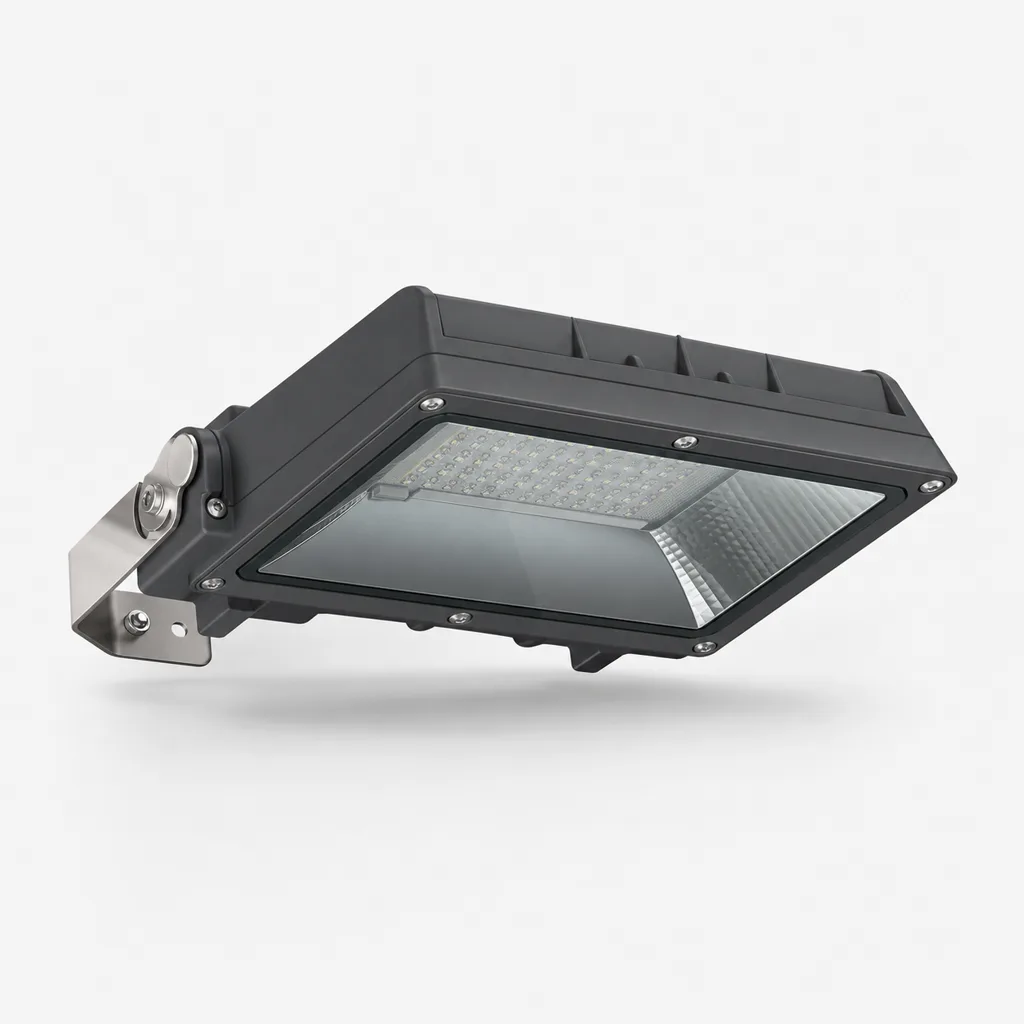
Overview
The Redcoast RC-TL-200 is a mains-powered, fully smart LED tunnel lighting and adaptive control system engineered for road, rail, urban and pedestrian tunnels of every length. It combines high-efficacy LED tunnel luminaires, in-house designed constant-current LED driver PCBs, and a CIE 88-compliant zone controller that automatically adapts threshold, transition, interior and exit zone luminance in real time, based on outside-tunnel L20 luminance measurement, time-of-day, traffic flow and weather. Built for highway authorities, tunnel operators, municipal road departments, rail infrastructure owners and electrical contractors, RC-TL-200 directly tackles the two stubborn pain points of tunnel lighting: portal-zone glare and the black-hole effect that cause accidents at tunnel entries, and the 24/7 energy waste of legacy fixed-output HPS or first-generation LED tunnel installations.
Unlike products that simply rebadge OEM tunnel luminaires, every layer of RC-TL-200 — the LED driver electronics, the zone controller, the central management gateway and the CMS web app — is designed and built by Redcoast, so the lighting, optics, dimming logic and SCADA interface can be tuned to the exact geometry, country standard and operational concept of each tunnel.
Key Features
- In-house designed constant-current LED driver PCB with DALI-2, DALI-DT8 and 0–10 V dimming, >0.95 power factor and <10 % THD
- Full CIE 88:2004 / EN 13201 / IES RP-22 compliant adaptive zone control (threshold, transition 1, transition 2, interior, exit)
- Real-time L20 luminance probe input (RS-485 Modbus / 4–20 mA) for true outside-tunnel ambient sensing, not a fixed daily schedule
- Selectable counter-beam (CBL), symmetric (SYM) and pro-beam optics — chosen per zone to maximise pavement luminance per watt
- IP66 (IP67 optional) sealed die-cast aluminium housing with tempered low-iron glass cover and marine-grade stainless steel fasteners
- 10 kV / 10 kA surge protection, Class I/II options, short-circuit, over-temperature and open-load protection on every luminaire
- Self-developed tunnel CMS gateway: Modbus TCP / BACnet/IP / OPC UA / MQTT upstream, PLC / RS-485 / wireless downstream to every single luminaire
- Emergency lighting mode integrated with central battery, UPS or self-contained backup, plus SCADA / fire alarm signal interlock
- Smooth matte powder-coated finish (RAL 7016 anthracite, RAL 9006 silver-grey or custom), not raw galvanized steel — finished-product appearance suitable for prestige infrastructure
Technical Architecture
The RC-TL-200 system is built in three engineered layers, all designed in-house by Redcoast.
Luminaire and Driver Layer. Each tunnel luminaire integrates a high-efficacy SMD or COB LED module rated 90 W to 360 W per fixture, paired with a Redcoast-designed constant-current LED driver board. The driver accepts a wide AC 100–305 V input at 50/60 Hz, holds power factor above 0.95 across the full dimming range, keeps THD below 10 %, and provides individually addressable 1–100 % dimming over DALI-2 / DALI-DT8 / 0–10 V. The board carries 10 kV / 10 kA surge protection, NTC over-temperature foldback that protects LED L70 lifetime in hot tunnels, and per-string current balancing so a single failed LED never takes a whole module offline.
Zone Control Layer. A Redcoast tunnel zone controller is installed at each portal or per ring main. It reads L20 luminance from outside-mounted CIE 88 luminance probes (typically 100–200 m before the portal, on the access road), maps probe luminance to required threshold-zone luminance per CIE 88, applies time-of-day overrides, vehicle-flow-based dimming through traffic loop or radar input, and weather correction, then dispatches dimming commands group-by-group to luminaires along the tunnel length. A deterministic failsafe is built into the firmware: if probe data is lost, the controller falls back to a safe fixed luminance level rather than going dark or stuck on full power.
Central Management & Cloud Layer. A Redcoast CMS gateway aggregates one or more tunnel zone controllers and exposes Modbus TCP, BACnet/IP, OPC UA and MQTT to existing tunnel SCADA, traffic control centres, asset management platforms and BMS. The gateway logs per-luminaire energy, dimming history, fault events, driver temperature and operating hours, and pushes them either to Redcoast's tunnel CMS web app or to any third-party platform via standard protocols.
Connectivity & Power
RC-TL-200 is mains-powered by design — tunnels invariably have grid supply, and continuous, reliable operation is non-negotiable for road safety. Each luminaire accepts AC 100–305 V at 50/60 Hz directly off the tunnel lighting feeder. The zone controller operates from AC 110–240 V and provides a 24 V / 48 V DC backup interface for emergency lighting batteries.
Connectivity options include:
- Wired downstream to luminaires: PLC over the existing lighting power line (no extra cable needed for retrofits), RS-485 trunk, or industrial Ethernet (PoE optional for short tunnels).
- Wireless downstream: sub-GHz mesh or LoRa-based luminaire control, useful for retrofits where new cabling is impractical.
- Upstream from controller to CMS: fibre optic (recommended for highway and rail tunnels), 4G LTE backup, wired Ethernet or Wi-Fi.
- Sensor integration: L20 luminance probes, traffic loop detectors, AID (automatic incident detection) cameras, CO / NOx sensors, anemometers (for ventilation interlock), and smoke detectors.
Protection & Reliability
- Housing: die-cast LM6 aluminium, IP66 sealed (IP67 optional for washdown areas and undersea tunnels).
- Surface finish: smooth matte powder-coated finish in RAL 7016 anthracite or RAL 9006 silver-grey (custom RAL on request) — not raw galvanized steel.
- Cover: tempered low-iron glass, optical transmission >91 %, suitable for high-pressure tunnel pavement-cleaning trucks.
- Impact: IK09 standard, IK10 option for vandal-prone urban underpasses.
- Operating temperature: -30 to +55 °C ambient; -40 °C cold-start option for mountain and cold-climate tunnels.
- Salt mist: IEC 60068-2-52 Severity 3 for sea-tunnel and coastal road tunnel variants.
- Surge protection: 10 kV / 10 kA per IEC 61643-11 on every luminaire and controller.
- L80 lifetime: 50,000 h at Tq = 25 °C; L70 at 70,000 h. Five-year standard warranty, extendable to ten years.
Application Scenarios
- Long highway tunnels (>500 m). Full five-zone CIE 88 adaptive control with counter-beam optics in the threshold zone to combat the black-hole effect, reduce stopping-sight-distance accidents at portal entry, and cut energy bills by 60–75 % against legacy HPS.
- Urban underpasses and short tunnels (50–500 m). Simplified three-zone control with symmetric optics, often integrated with traffic camera lighting, ANPR illumination and pedestrian detection.
- Rail and metro tunnels. Maintenance walkway lighting, evacuation route lighting and battery-backed emergency lighting integrated with railway SCADA and ventilation systems.
- Mining and industrial tunnels. Higher IP and IK ratings, intrinsically-safe variants on request, integrated with gas, dust and ventilation monitoring.
- Pedestrian and cycling underpasses. Lower wattage symmetric optics with motion-triggered dimming for energy savings overnight, while keeping CCTV imaging requirements satisfied.
- Cross-river and undersea tunnels. Marine-grade stainless steel hardware, salt-mist tested housings, higher condensation tolerance and IP67 sealed bodies for splash-prone areas.
Case-style Examples
Highway tunnel modernization (1,800 m, two-tube). A two-lane highway tunnel was retrofitted from HPS to RC-TL-200 with full CIE 88 five-zone adaptive control. Measured energy consumption dropped by 62 %, and portal-zone incident reports fell sharply once threshold luminance tracked real L20 readings instead of a fixed schedule. Counter-beam optics in the first 100 m delivered the required pavement luminance with 40 % fewer fixtures than the previous symmetric layout.
Urban underpass safety upgrade (320 m). A high-traffic urban underpass was equipped with symmetric optics and a three-zone control scheme, supplemented by motion-triggered overnight boost lighting. Integration with the city central management system allowed remote per-luminaire fault detection and ended the previous monthly patrol-and-replace maintenance cycle.
Mountain rail tunnel (4.5 km, single-track). RC-TL-200 maintenance and evacuation lighting was deployed on a PLC backbone, integrating with the railway SCADA and providing battery-backed emergency lighting with 90-minute autonomy along the full evacuation walkway.
Customization & Selection Guide
- Luminaire wattage: 90 W for short underpasses, 120 W / 180 W for standard highway main lighting, 240 W / 300 W / 360 W for high-mounting, wide-lane and threshold-zone counter-beam.
- Optics: CBL (counter-beam) for threshold and transition zones, SYM for interior zone, pro-beam for very long tunnels with low ceilings, road-asymmetric for short urban underpasses.
- Mounting: ceiling-recessed, ceiling surface, side-wall or cornice profile; tunnel-mouth portal luminaires available with separate IP67 enclosure.
- Control sophistication: from simple 0–10 V daylight harvesting (lowest cost) up to full CIE 88 adaptive control with L20 probe + traffic input + SCADA integration (recommended for highways).
- Emergency lighting: self-contained 1-hour blocks, central battery system with 3-hour+ autonomy, or interlock with central UPS.
- CMS backhaul: fibre (recommended for highway / rail), 4G LTE backup, wired Ethernet or Wi-Fi.
Deployment & After-sales
Redcoast supports the full project lifecycle: photometric design per EN 13201 / CIE 88 using Dialux or Relux, factory acceptance testing, on-site or remote commissioning, integration testing with the tunnel SCADA, and operator training on the CMS web app. The five-year standard warranty can be extended to ten years, and regional spare-part stock can be arranged for fast replacement. Remote diagnostics via the CMS gateway let Redcoast support engineers triage faults without sending a crew into the tunnel, reducing tunnel closure time during maintenance.
Standards & Compliance
- CIE 88:2004 — Guide for the Lighting of Road Tunnels and Underpasses
- EN 13201-2 / -3 / -4 — Road and tunnel lighting performance and calculation
- IES RP-22 — Tunnel Lighting (North American projects)
- IEC 60598-1 and IEC 60598-2-3 — Luminaire safety, street and tunnel luminaires
- IEC 61347 — LED driver safety
- IEC 62471 — Photobiological safety
- IEC 61000-6-2 / -6-4 — EMC immunity and emissions
- CE, RoHS, REACH standard; UL / cUL and CB scheme certification optional
Why Redcoast
Redcoast designs and builds its own LED drivers, zone controllers and CMS gateway PCBs in-house, so every tunnel project gets electronics tuned to its photometric design, optics layout, control scheme and SCADA environment — not off-the-shelf parts forced into a brief. Our software-hardware co-design puts CIE 88 zone control logic directly on the controller PCB, not at the end of a sluggish cloud round-trip, so portal-zone luminance reacts to changing outside light in under a second. Because we own the firmware, we can adapt the control algorithm to your country's specific tunnel lighting standard, your operator's safety concept and your existing SCADA points list. One supplier, one accountable team: photometric calculation, BOM, factory test, commissioning and a CMS web app.
Talk to Redcoast about your tunnel project — share the geometry, traffic volumes and country standard, and we will return a turnkey design with detailed optics, drivers, control logic and CMS plan tuned exactly to your tunnel.
Specifications
Lighting Performance
- Luminaire Wattage
- 90-360 W
- Luminous Flux
- 14,400-57,600 lm
- Luminous Efficacy
- up to 160 lm/W
- Correlated Color Temperature
- 4000 / 5000 / 5700 K
- Color Rendering Index
- ≥70 (≥80 option) Ra
- Optics
- CBL / SYM / Pro-beam / Asymmetric road
- Dimming Range
- 1-100 %
Adaptive Zone Control (CIE 88)
- Zones Supported
- 5 (threshold, transition 1, transition 2, interior, exit)
- L20 Probe Input
- RS-485 Modbus / 4-20 mA
- Dimming Step
- 1 %
- Control Response Time
- ≤1 s
- Schedules
- 64 zones x 32 events
- Failsafe Luminance
- Configurable, default 60% interior
- Traffic-flow Dimming
- Loop / radar / camera input
Power (Mains)
- Input Voltage
- AC 100-305 V
- Frequency
- 50 / 60 Hz
- Power Factor
- >0.95
- Total Harmonic Distortion
- <10 %
- Driver Efficiency
- >92 %
- Surge Protection
- 10 kV / 10 kA
- Standby Power
- <0.5 W
Protection & Mechanical
- Ingress Protection
- IP66 (IP67 option)
- Impact Protection
- IK09 (IK10 option)
- Housing Material
- Die-cast LM6 aluminium
- Surface Finish
- Smooth matte powder coat (RAL 7016 / RAL 9006 / custom)
- Cover
- Tempered low-iron glass, transmission >91%
- Operating Temperature
- -30 to +55 (-40 cold-start option) °C
- Relative Humidity
- 5-95 non-condensing %
- Salt Mist Resistance
- IEC 60068-2-52 Severity 3
Control & Connectivity
- Per-luminaire Dimming Protocols
- DALI-2 / DALI-DT8 / 0-10 V
- Per-luminaire Bus
- PLC / RS-485 / sub-GHz mesh
- Upstream Protocols
- Modbus TCP / BACnet/IP / OPC UA / MQTT
- CMS Backhaul
- Fibre / Ethernet / 4G LTE / Wi-Fi
- SCADA Integration
- Yes, points list configurable
- Sensor Inputs
- L20 probe, traffic loop, radar, CO/NOx, anemometer
Reliability & Lifetime
- L80 Lifetime
- 50,000 @ Tq=25°C h
- L70 Lifetime
- 70,000 @ Tq=25°C h
- Driver MTBF
- >100,000 h
- Standard Warranty
- 5 (extendable to 10) years
- Emergency Lighting Autonomy
- 1-3 (configurable) h
Compliance & Certification
- Tunnel Lighting Standard
- CIE 88:2004 / EN 13201 / IES RP-22
- Luminaire Safety
- IEC 60598-1, IEC 60598-2-3
- LED Driver Safety
- IEC 61347
- Photobiological Safety
- IEC 62471
- EMC
- IEC 61000-6-2 / IEC 61000-6-4
- Standard Certification
- CE, RoHS, REACH
- Optional Certification
- UL / cUL / CB scheme
Capabilities — configurable per project
Specifications are tailored to each project — the options below show what we can support.
Optics
- Counter-beam (CBL)
- Symmetric (SYM)
- Pro-beam
- Asymmetric road
Luminaire Wattage
- 90 W
- 120 W
- 180 W
- 240 W
- 300 W
- 360 W
Control Sophistication
- Standalone time-clock
- 0-10 V daylight harvesting
- DALI-2 networked
- CIE 88 full adaptive zone
CMS Backhaul
- Fibre optic
- Wired Ethernet
- 4G LTE
- Wi-Fi
Mounting
- Ceiling recessed
- Ceiling surface
- Side-wall
- Cornice profile
- Portal IP67
Related solution guidance
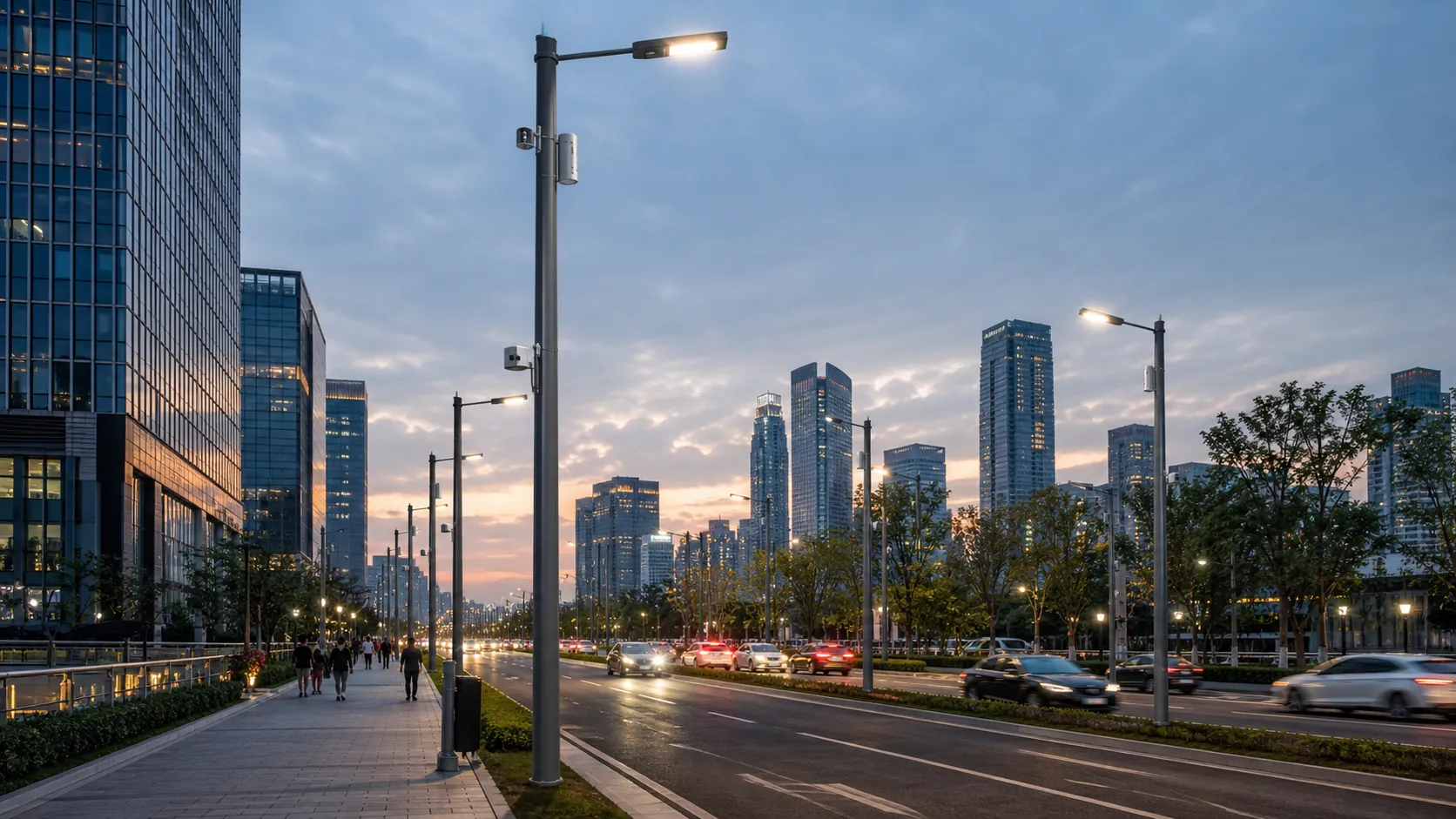
Smart Street Lighting
Plan an IoT street lighting system with LED luminaires, pole controllers, adaptive dimming, fault alarms, asset management and platform integration.
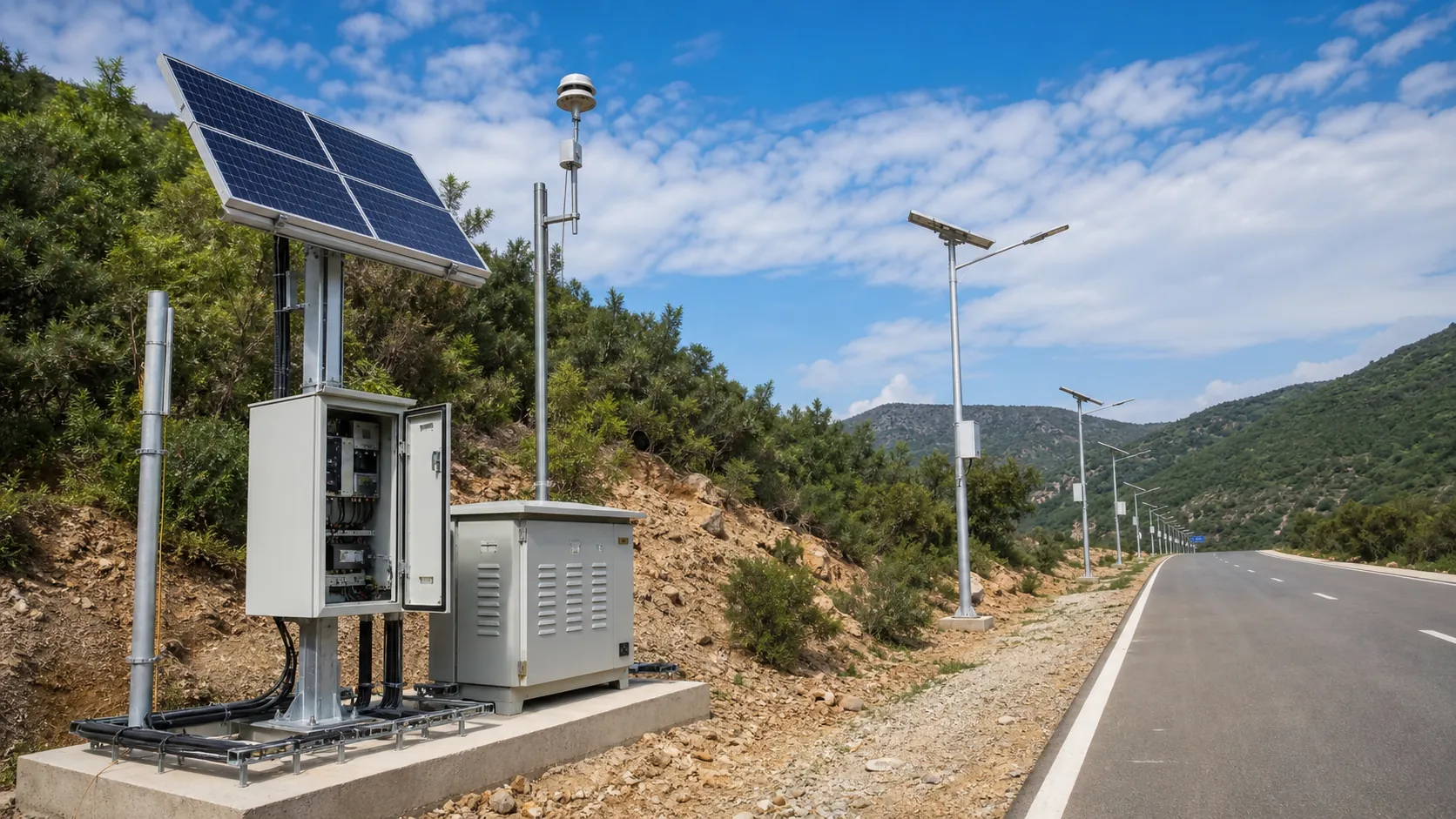
Power and Connectivity
How to choose power, battery, solar, NB-IoT, LTE, LoRaWAN, gateways and monitoring strategy for outdoor IoT infrastructure.
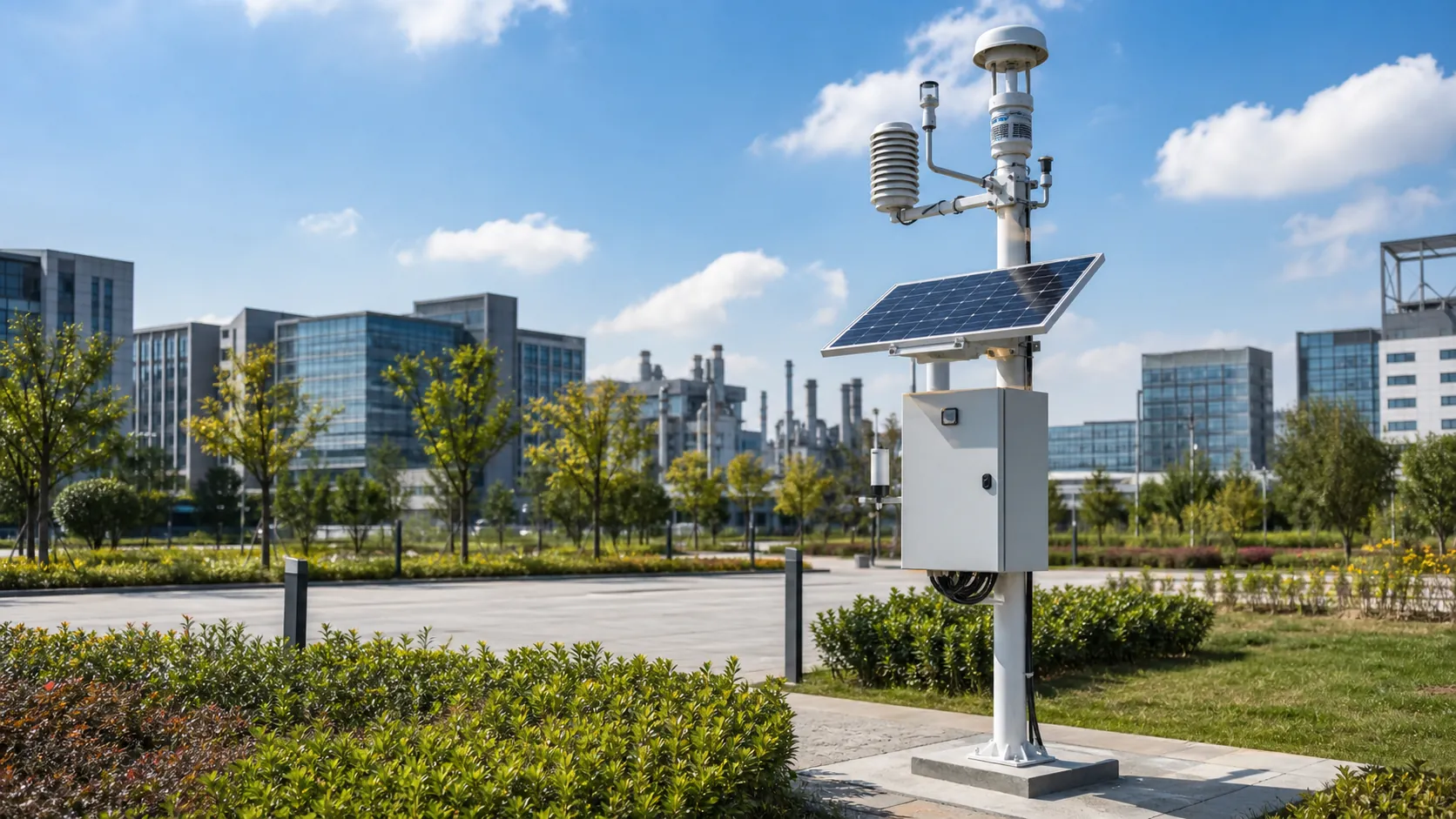
Industrial Parks
Industrial park IoT for lighting, access areas, environmental monitoring, energy visibility, parking and maintenance operations.
Frequently Asked Questions
What tunnel lighting standards does the RC-TL-200 follow?
The RC-TL-200 is engineered around CIE 88 for road-tunnel lighting, with luminaire photometry and installation practice aligned to EN 13201 roadway lighting and IEC-rated LED drivers. REDCOAST.LTD confirms the exact standard set per project, tunnel geometry and market.
Why use CIE 88 adaptive zone control instead of fixed-output tunnel lighting?
CIE 88 divides a tunnel into threshold, transition, interior and exit zones so brightness tracks daylight at the portal and steps down inside. Five-zone adaptive control matches output to real conditions, avoiding the over-lighting and wasted energy of fixed-output systems.
Can REDCOAST.LTD integrate the tunnel lighting CMS with our existing SCADA?
Yes. The CMS gateway is SCADA-ready, so zone dimming, luminaire status and fault reporting can be exposed to an existing tunnel SCADA or control room. REDCOAST.LTD aligns the integration interface with your platform during design.
What is the difference between counter-beam and symmetric tunnel optics?
Counter-beam optics project light against the direction of travel to raise the contrast of obstacles on the road, which helps most in the threshold zone; symmetric optics spread light evenly and are typically used in interior zones. The RC-TL-200 supports counter-beam optics.
Is the RC-TL-200 tunnel lighting system grid-powered?
Yes. It is a mains-powered system intended for road, rail and underpass tunnels with grid supply, and power and backup arrangements are configured to each tunnel's electrical and safety requirements.
Can REDCOAST.LTD support both new tunnel builds and retrofits of legacy HPS tunnels?
Yes. The system suits new construction and retrofits that replace legacy HPS luminaires with LED, reusing existing mounting where practical and upgrading control to CIE 88 five-zone adaptive dimming.
Does REDCOAST.LTD design the LED drivers in-house?
Yes. The luminaires use in-house LED drivers, which lets REDCOAST.LTD tune dimming behavior, control interfaces and reliability for tunnel duty rather than relying only on off-the-shelf parts.
What does REDCOAST.LTD deliver beyond the luminaires?
REDCOAST.LTD delivers an end-to-end system: tunnel luminaires with counter-beam optics, in-house LED drivers, CIE 88 five-zone adaptive control and a SCADA-ready CMS gateway, integrated as one hardware-plus-software package per project.