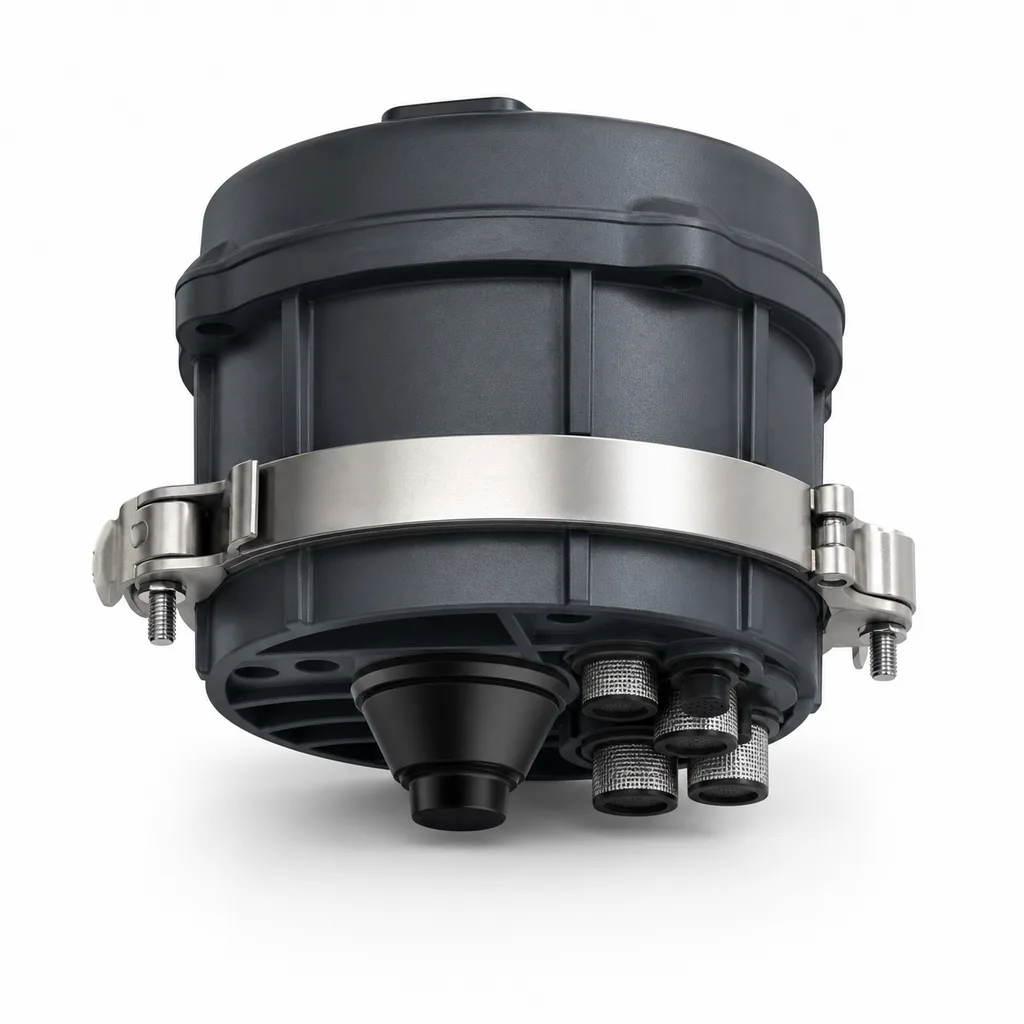
Overview
Underground infrastructure — sewers, stormwater drains, telecom ducts, electric cable pits and water-valve chambers — is invisible, unmanned and hazardous, yet one blocked drain, a lifted cover or a pocket of hydrogen sulphide can trigger urban flooding, a traffic accident, asset theft or a fatal confined-space incident. The RC-MH-300 Smart Manhole & Underground Chamber Monitoring System from REDCOAST.LTD turns every manhole into a self-reporting IoT node. A single sealed IP68 unit continuously measures toxic and explosive gases, liquid level and overflow, cover displacement and theft, plus temperature and humidity, then pushes real-time alarms over NB-IoT or LoRaWAN to a cloud platform and mobile app. Water utilities, municipalities, telecom operators and campus facility teams gain live visibility of thousands of underground assets, early warning of blockages and floods, audit-grade overflow records, and safer conditions for maintenance crews — with no trenching for power and no one sent below ground just to "check".
Key Features
- 4-in-1 gas detection (H2S, CH4/LEL, CO, O2) with configurable multi-level alarms for confined-space safety and explosion prevention.
- Non-contact level measurement via 80 GHz radar or ultrasonic sensing (±2 mm) for blockage, surcharge and combined-sewer-overflow (CSO/EDM) detection — no contact with corrosive effluent.
- Cover security: a 3-axis MEMS accelerometer detects tilt, lift and theft within seconds and pinpoints the affected cover on a GIS map.
- True ultra-low-power design: 3–10 year field-replaceable lithium battery, engineered for sealed chambers where solar is impossible and grid trenching is uneconomic.
- Deep-coverage connectivity: NB-IoT, LTE-M or LoRaWAN with up to ~20 dB extra link budget for reliable telemetry from below street level.
- Edge alarm logic transmits instantly on threshold events plus scheduled heartbeats, so the radio sleeps between reports to preserve battery life.
- REDCOAST-designed multi-gas signal-conditioning PCB with per-channel temperature compensation and drift correction for stable readings in humid, corrosive sewer atmospheres.
- Intrinsically safe option (Ex ia, ATEX/IECEx) for methane-bearing sewers and other explosive-gas environments.
- End-to-end platform: web dashboard, iOS/Android app, GIS asset map, EDM spill reporting, automated work-order dispatch, and open REST API / Modbus for SCADA and GIS integration.
Technical Architecture
At the field layer, each node is a compact, fully potted IP68 unit that clamps beneath the cover or onto the chamber wall or step-iron. A REDCOAST-designed mainboard carries a low-power ARM Cortex-M microcontroller, the cellular/LoRa radio, a lithium battery pack and — the core of our custom hardware — a multi-gas signal-conditioning front end. Electrochemical cells (H2S, CO, O2) and a catalytic or NDIR channel (CH4/LEL) are read through low-noise, temperature-compensated analogue chains that we design and tune per gas, so readings stay stable despite condensation, high humidity and the acidic atmosphere typical of wastewater. A separate non-contact radar or ultrasonic probe measures liquid level and derives fill state, surcharge and overflow duration; a MEMS inertial sensor watches the cover.
The edge controller runs the intelligence locally. Sampling intervals, alarm thresholds and hysteresis are all configurable; the device compares each reading against limits, logs to on-board memory, and wakes the radio only for scheduled heartbeats or event-driven alarms. This event-plus-heartbeat model is what allows multi-year battery life while still delivering sub-minute alerting when a gas limit is breached, a cover is lifted or a level rises toward flood stage. Firmware and configuration are updated over the air.
At the platform layer, data lands in the REDCOAST cloud (SaaS or on-premise), where a web dashboard and mobile app present live status on a GIS map, trend analytics, threshold and anomaly alarms via SMS/email/push/webhook, and regulator-ready overflow (EDM) and event reports. Open REST APIs and Modbus/MQTT bridges let the system feed existing SCADA, GIS, asset-management and city IOC platforms rather than replacing them — the whole hardware-plus-software stack is delivered and integrated by one REDCOAST team.
Connectivity & Power
Communication is chosen to match the site. NB-IoT is the default for dense urban single-point assets thanks to its deep in-ground penetration and low power; LTE-M (Cat-M1) suits assets that need faster or roaming data; LoRaWAN (EU868/US915/AS923/IN865) is ideal for campuses, industrial parks and utility corridors running a private gateway network; an optional 4G Cat-1 module handles high-frequency streaming where a larger battery or external power is available. An external, near-surface antenna option restores signal in exceptionally deep or shielded chambers.
Power follows the deployment, not a default. A sealed underground chamber gets no sunlight, so solar is not an option here — and trenching mains power to every manhole is uneconomic. The RC-MH-300 therefore runs on a high-capacity, field-replaceable lithium (LiSOCl₂) battery delivering 3–10 years of life depending on reporting rate and sensor payload, with a rechargeable LiFePO₄ variant available. Where a chamber already carries power — for example electrified cable pits or pump wet-wells — an external 12–24 VDC input (or a surface-mounted powered gateway) can run the node continuously and drive optional local sounder/strobe entry warnings.
Protection & Reliability
Every unit is rated IP68 for permanent submersion, with a corrosion-resistant glass-fibre-reinforced polymer or 316L stainless enclosure selected for the aggressive H2S atmosphere of sewers. The electronics operate from −30 to +70 °C at 0–100 % RH condensing. Gas cells are specified for 2–5 year service life with in-field calibration/replacement, and the edge continues logging even if connectivity drops, back-filling the cloud on reconnection. The intrinsically safe (Ex ia) variant is certified for use in explosive methane zones. Component selection, sealing and potting are validated to REDCOAST's outdoor-infrastructure reliability standard, and the platform's watchdog flags any node that misses heartbeats so a "silent" sensor is never mistaken for "all clear".
Application Scenarios
- Urban drainage & stormwater: continuous level and blockage monitoring across drainage networks gives operators early warning of surcharge and street flooding, so crews clear a blockage before water reaches the road.
- Combined sewer overflow (CSO/EDM): level and event-duration monitoring at overflow points produces the continuous, audit-ready spill records increasingly demanded by environmental regulators, replacing manual inspections.
- Confined-space worker safety: fixed continuous gas monitoring gives crews a live gas profile before and during entry, complementing portable detectors and reducing the risk of H2S and oxygen-deficiency incidents.
- Manhole cover theft & displacement: tilt/lift detection instantly flags a stolen or dislodged cover — a serious road-safety hazard — and locates it on the map for rapid replacement.
- Telecom & electric cable chambers: water-ingress level alarms and intrusion (cover-open) detection protect valuable cabling and equipment from flooding and unauthorised access.
- Water-supply valve & meter chambers: chamber flooding, temperature and cover-status monitoring protect metering and control assets and support non-revenue-water programmes.
Case-style Examples
- City-wide drainage flood-prevention rollout: A municipality retrofits several hundred critical drainage manholes with RC-MH-300 radar-level and cover-security nodes on NB-IoT. Operators receive rising-level alerts during storms and dispatch clearance teams pre-emptively, cutting surface-flooding incidents and the after-hours emergency call-outs that follow them.
- Wastewater utility CSO compliance: A water utility instruments its overflow points with level plus event-duration nodes feeding automated EDM reports to the regulator via the platform API. Manual site visits fall sharply while spill evidence becomes continuous and defensible.
- Industrial park underground-asset & safety programme: A campus operator deploys 4-gas plus level nodes with an intrinsically safe rating on a private LoRaWAN network across sewer and utility chambers, giving facilities one dashboard for flood risk, confined-space gas status and cover integrity ahead of every maintenance entry.
Customization & Selection Guide
Start with the hazard you are managing. Flood/blockage-first sites need the radar or ultrasonic level module and can often skip full gas sensing. Safety-first wastewater sites should specify the 4-gas payload and, where methane is expected, the intrinsically safe (Ex ia) variant. Asset-security-first telecom/electric pits typically pair cover-tilt detection with a water-ingress level sensor. For connectivity, choose NB-IoT/LTE-M where a public cellular network exists, or LoRaWAN where you run (or want) a private gateway network. For power, the long-life lithium battery fits virtually every unpowered chamber; specify external DC only where a chamber is already electrified. REDCOAST tunes reporting cadence, thresholds and enclosure/mounting to your covers and budget, and can add CO₂, NH₃ or flow-velocity channels on request.
Deployment & After-sales
Installation needs no trenching and no civil works: the node clamps under the existing cover or to the chamber wall in minutes, is commissioned and geo-tagged from the mobile app, and self-registers to the platform. Typical projects move from sample validation to volume delivery on a project-defined schedule, with pre-configuration and pre-provisioning done in the factory to speed field rollout. REDCOAST provides commissioning support, OTA firmware maintenance, a gas-cell calibration/replacement programme, spare-parts supply and remote technical support, backed by a warranty aligned to the deployment environment.
Standards & Compliance
The RC-MH-300 is designed to relevant international norms: IP68 per IEC 60529; enclosure and cover-interface practice referencing EN 124 manhole standards; optional ATEX/IECEx Ex ia (IEC 60079) intrinsic safety for explosive-gas zones; CE and RoHS; 3GPP NB-IoT/LTE-M and LoRaWAN radio conformance; gas-sensing performance aligned to applicable EN/ISO gas-detection practice; and end-to-end TLS-encrypted data with role-based access. REDCOAST supports the specific certification path a project or jurisdiction requires.
Why REDCOAST.LTD
REDCOAST.LTD delivers the complete solution — hardware, web platform and mobile app — as one integrated, project-tailored package rather than a bag of parts. Because we design and fabricate our own PCBs in-house (including the custom multi-gas signal-conditioning front end at the heart of this product), we control accuracy, power budget, form factor and integration, and can adapt sensing payload, radio, enclosure and firmware to exactly what your network and regulations demand. That software-and-hardware, one-team model is why our outdoor IoT deployments stay reliable across widely different climates, grid conditions and compliance environments worldwide.
Tell us your chamber types, target parameters and network, and REDCOAST.LTD will configure an RC-MH-300 deployment for your project — contact us for a tailored proposal and quotation.
Specifications
Gas Detection
- H2S Range
- 0-100 ppm
- CH4 / LEL Range
- 0-100 %LEL
- CO Range
- 0-500 ppm
- O2 Range
- 0-30 %vol
- Optional Gases
- CO2 (0-5 %vol), NH3 (0-100 ppm)
- Sensor Type
- Electrochemical / catalytic / NDIR
- Gas Sensor Life
- 2-5 years
Level & Overflow Monitoring
- Radar Level Range
- 0.15-15 m
- Radar Accuracy
- ±2 mm
- Ultrasonic Range
- 0.25-8 m
- Submersible Pressure Range
- 0-10 m H2O
- Functions
- Level, surcharge, overflow / EDM duration
Cover Security & Environment
- Tilt Sensor
- 3-axis MEMS, 0.1° resolution
- Alarm Threshold
- 3-30 (configurable) °
- Detection
- Tilt, lift/open, vibration, theft
- Ambient Temperature
- -30 to +70 °C
- Humidity
- 0-100 (condensing) %RH
Edge Controller & Data
- Processor
- Low-power ARM Cortex-M
- Reporting Interval
- 1 min - 24 h (configurable)
- Alarm Latency
- <60 s
- Local Log
- ≥100,000 records
- Firmware Update
- OTA
Connectivity & Integration
- Cellular
- NB-IoT (Rel-14), LTE-M (Cat-M1), 4G Cat-1
- LPWAN
- LoRaWAN EU868/US915/AS923/IN865
- Protocols
- MQTT/TLS, CoAP, HTTPS, Modbus RTU/TCP
- Platform
- Cloud SaaS / on-premise + iOS/Android app
- Integration
- REST API, SCADA, GIS
Power (battery-powered node)
- Primary Battery
- LiSOCl2 3.6 V, 19-76 Ah
- Battery Life
- 3-10 years
- Sleep Current
- <15 µA
- Rechargeable Option
- LiFePO4
- External Input (optional)
- 12-24 VDC (electrified chambers)
- Solar
- Not applicable (sealed underground)
Enclosure & Protection
- Ingress Protection
- IP68
- Enclosure Material
- GF-reinforced polymer / 316L stainless
- Hazardous Area (optional)
- Ex ia IIB/IIC T4 (ATEX/IECEx)
- Mounting
- Under-cover / wall / step-iron clamp
- Controller Weight
- 1.5-3 kg
- Cable
- PUR, 2-10 m
Capabilities — configurable per project
Specifications are tailored to each project — the options below show what we can support.
Sensing Payload
- 4-Gas (H2S/CH4/CO/O2)
- Radar/Ultrasonic level
- Cover tilt & lift
- Flow velocity
Connectivity
- NB-IoT
- LTE-M (Cat-M1)
- LoRaWAN
- 4G Cat-1
Power
- Long-life lithium (LiSOCl2)
- Rechargeable LiFePO4
- External 12-24 VDC (electrified chambers)
Hazardous Area Rating
- General industrial
- Intrinsically safe Ex ia (ATEX/IECEx)
Deployment
- Drainage/sewer manhole
- Telecom/electric chamber
- Water-supply valve chamber
Related solution guidance
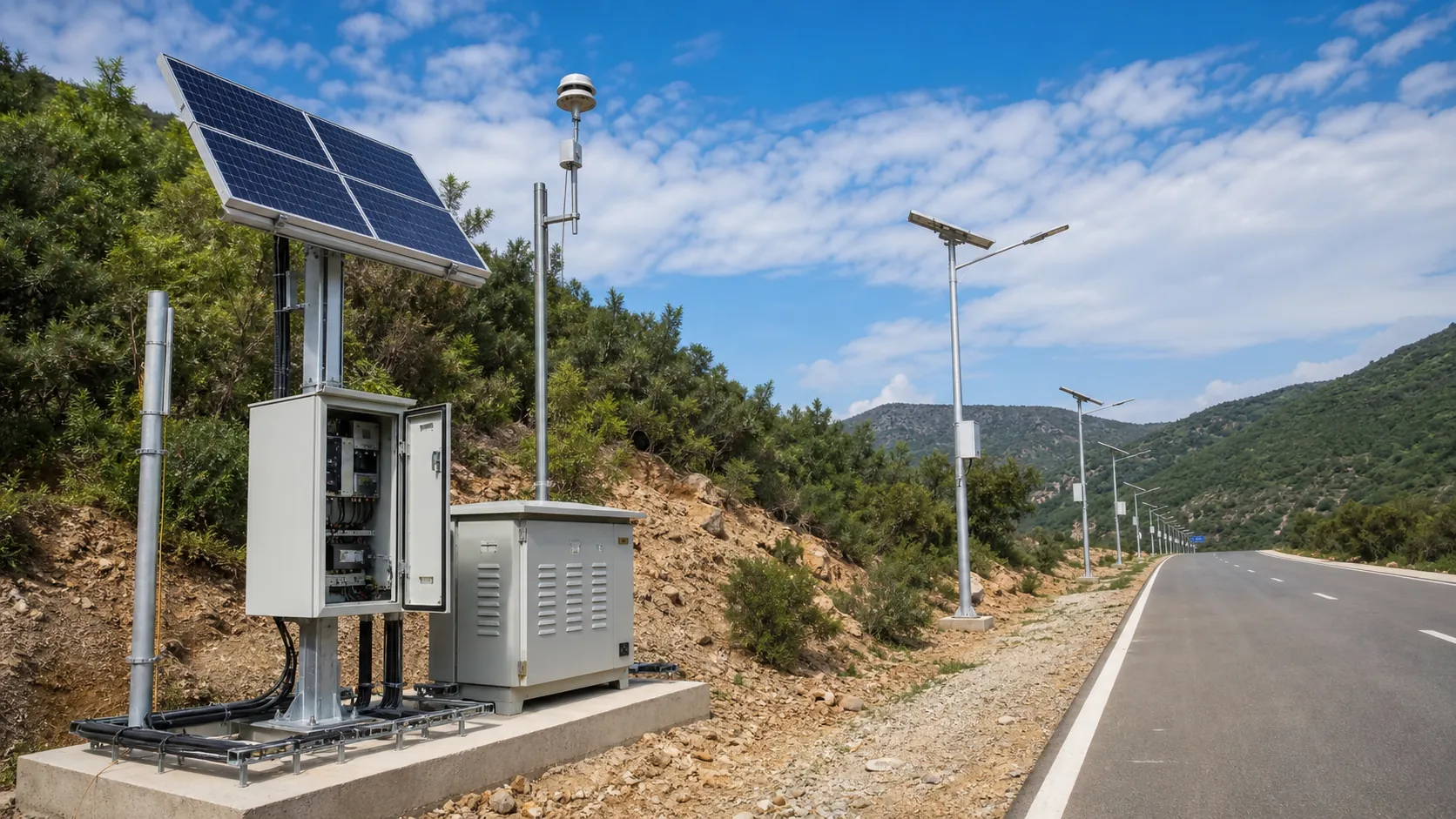
Power and Connectivity
How to choose power, battery, solar, NB-IoT, LTE, LoRaWAN, gateways and monitoring strategy for outdoor IoT infrastructure.
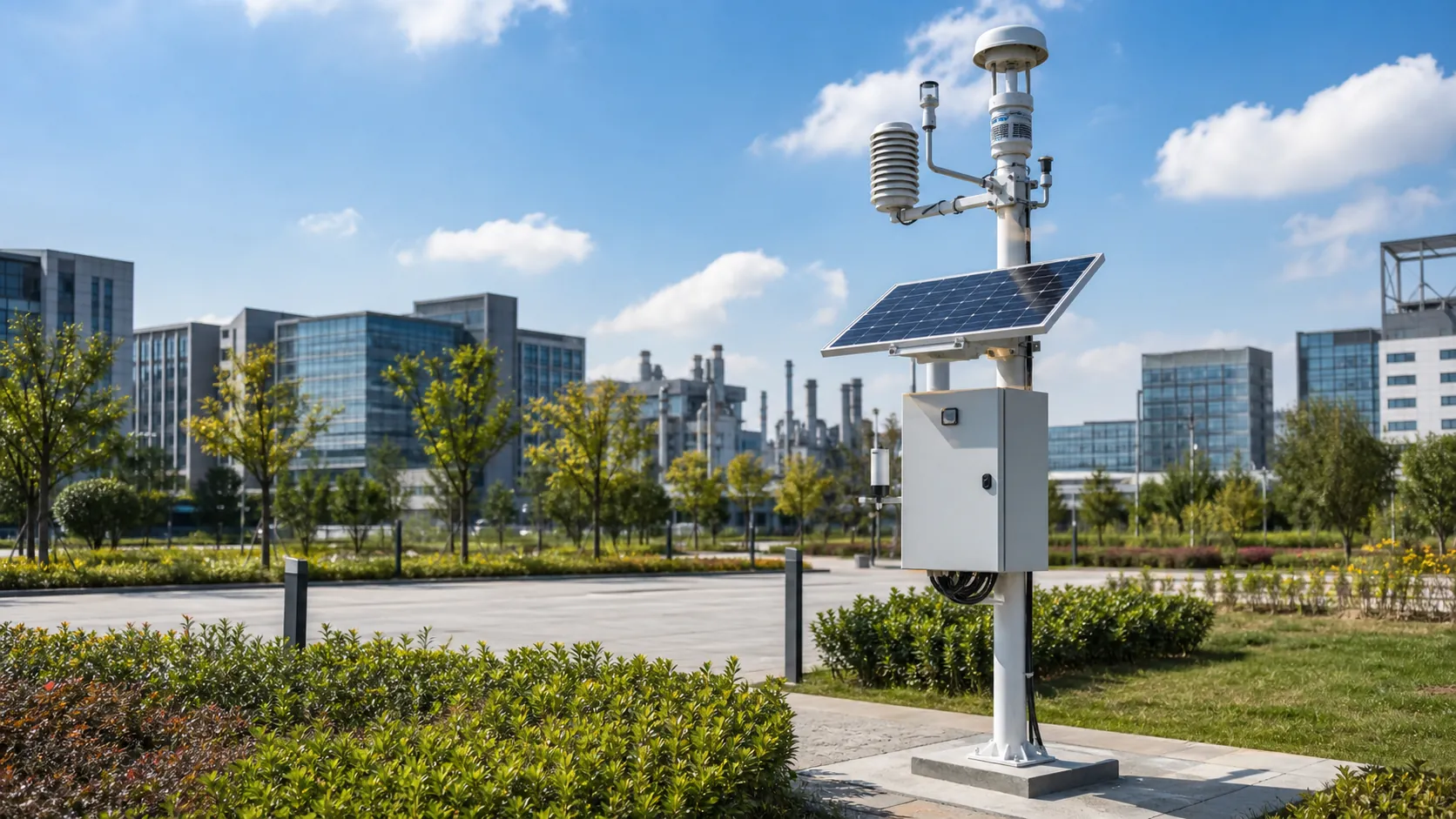
Environmental Monitoring
Deploy environmental monitoring stations with sensors, solar power, gateways, dashboards, alarms and data integration for city and industrial sites.
Solar IoT Guide
A design guide for solar-powered outdoor IoT: load calculation, battery autonomy, low-power firmware, telemetry and maintenance planning.
Frequently Asked Questions
How can a sensor work inside a sealed manhole with no mains power?
The RC-MH-300 is fully self-powered by a high-capacity lithium battery giving 3–10 years of service and communicates over low-power NB-IoT or LoRaWAN. Solar is impossible underground and trenching mains to every cover is uneconomic, so battery plus LPWAN is the correct fit. Electrified chambers can optionally use a 12–24 VDC input instead.
Which gases does it detect and what are the measuring ranges?
The standard 4-gas payload covers hydrogen sulphide (H2S, 0–100 ppm), methane/combustibles (CH4, 0–100 %LEL), carbon monoxide (CO, 0–500 ppm) and oxygen (O2, 0–30 %vol). Optional CO2 and NH3 channels can be added. Every channel has configurable multi-level alarm thresholds.
How does manhole cover theft or displacement detection work?
A 3-axis MEMS accelerometer continuously monitors the cover's orientation. Any tilt beyond a configurable angle (typically 3–30°), a lift/open event or unusual vibration raises an alarm within seconds. The platform then highlights the exact cover on a GIS map for rapid response.
Can it integrate with our existing SCADA and GIS?
Yes. The platform exposes an open REST API and supports MQTT and Modbus RTU/TCP, so data flows into existing SCADA, GIS, asset-management or city operations platforms. It can run as cloud SaaS or fully on-premise to meet local data policies.
What battery life can we expect, and is the battery replaceable?
Depending on reporting cadence and sensor payload, the field-replaceable LiSOCl2 battery lasts 3–10 years. The event-plus-heartbeat model keeps the radio asleep between reports, and the platform warns you well before a battery reaches end of life so replacement can be scheduled.
Is it safe to install in methane-bearing sewers?
An intrinsically safe (Ex ia, ATEX/IECEx per IEC 60079) variant is available for explosive-gas zones. It limits stored electrical energy so the device cannot ignite a flammable atmosphere, making it suitable for methane-prone sewers and other gas-risk chambers.
Will the signal reach the surface from deep underground?
NB-IoT and LoRaWAN are designed for deep in-ground penetration, with roughly 20 dB more link budget than legacy cellular. For exceptionally deep or shielded chambers, an optional near-surface external antenna restores reliable connectivity.
How is it different from a portable gas detector?
A portable detector protects one worker for one entry. The RC-MH-300 is a fixed, always-on node that monitors gas, level and cover status 24/7 and alerts a control room remotely, giving continuous asset and safety visibility instead of a single spot check.