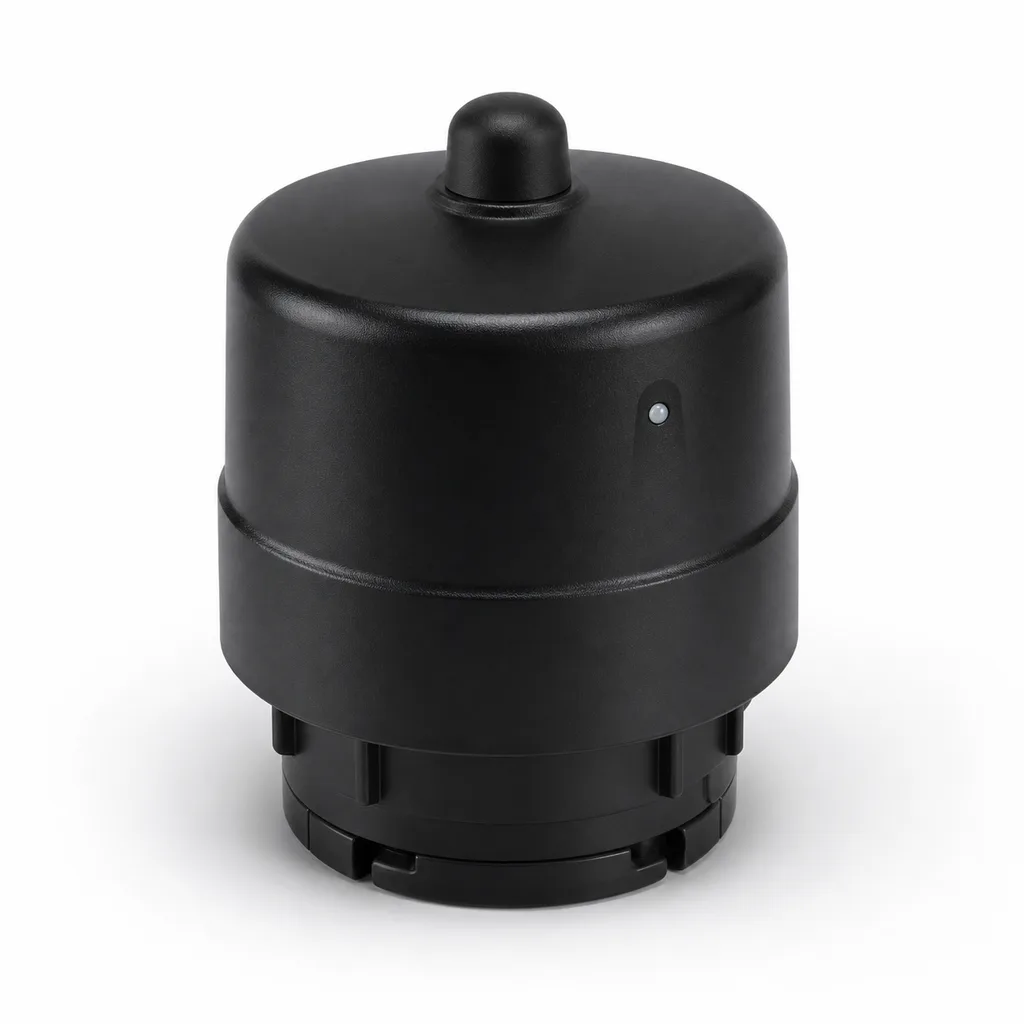
Overview
The Redcoast RC-OLC-200 is a self-developed, board-level outdoor lighting controller (OLC) that turns any conventional or LED street light into a remotely managed, individually addressable light point. Designed for utilities, municipalities, road authorities, industrial parks, and lighting integrators, it plugs into a standard NEMA ANSI C136.41 seven-pin socket or a Zhaga Book 18 (D4i) four-pin receptacle, then talks to Redcoast's own Central Management System (CMS) over the carrier or LPWAN network of your choice. The result: per-pole on/off and dimming control, accurate energy metering, fault and theft detection, and astronomical/photocell scheduling — without sending a crew to the pole. For asset owners drowning in over-lit, unmonitored streets, the RC-OLC-200 cuts energy bills by 30–60%, slashes maintenance truck-rolls, and delivers the granular consumption data that smart-city and ESG reporting now demand.
Key Features
- Dual hardware interface — one product line covers both NEMA C136.41 (3/5/7-pin) retrofit poles and Zhaga Book 18 D4i luminaire receptacles, eliminating dual sourcing.
- Multi-protocol dimming — native 0-10V, 1-10V, PWM, DALI-2 and D4i driver control, so it works with virtually any LED driver on the market.
- Class-1 embedded energy metering — measures voltage, current, active/reactive power, power factor and cumulative kWh per light point (±1%, ±0.5% optional) for billing-grade consumption data.
- Carrier-agnostic connectivity — selectable NB-IoT, LTE Cat-M1, LTE Cat-1/4G, LoRaWAN, or self-healing RF mesh (868/915 MHz) on the same board family.
- GNSS positioning + astronomical clock — every node geolocates itself on a map and computes local sunrise/sunset, with an integrated light sensor for lux-based override.
- Robust surge protection — 10 kV / 10 kA (20 kV / 20 kA optional) line protection to survive grid transients and lightning-prone regions.
- Tamper, fault & theft alarms — detects lamp failure, driver fault, abnormal current, mains loss, tilt and unauthorized removal, pushing real-time events to the CMS.
- Open API & CMS interoperability — integrates with Redcoast's web + mobile platform and exposes MQTT/REST APIs and standard headers (TALQ-aligned data model) for third-party smart-city platforms.
- Wide voltage, global ready — 90–305 VAC universal input suits any electrical grid worldwide.
- Field-customizable PCB — Redcoast designs the board in-house and re-spins pinout, radio, sensor and connector options per project.
Technical Architecture
At the core of the RC-OLC-200 is a Redcoast-designed multilayer PCB built around a low-power MCU, an embedded metrology front-end, a solid-state or magnetic-latching relay for the lighting load, and a swappable radio module socket. The MCU runs Redcoast firmware that handles the dimming engine, the metering pipeline, the local astronomical/photocell scheduler, and the secure network stack. The metrology section samples line voltage and load current continuously, computing active power, power factor and accumulated energy on-device so that only compact, summarized telemetry is sent uplink — minimizing data cost on metered LPWAN networks.
Control logic operates on a hierarchical model. Each node executes its local schedule autonomously (so lights stay correct even if the network drops), while the CMS pushes group commands, dimming profiles, calendar exceptions and firmware updates downstream. Sensor and meter data, alarms and heartbeats flow upstream. In edge-autonomous mode the controller keeps running dim/brighten profiles, motion-triggered boosts (via an external sensor input) and failure detection without cloud dependency; in cloud-coordinated mode the Redcoast CMS aggregates city-wide data, runs reporting and analytics, and lets operators address single lamps or thousands at once. Over-the-air firmware update (FOTA) keeps the entire deployed fleet current.
Connectivity & Power
The controller is offered across a single board family with selectable communication back-ends so the same product fits very different deployment environments. NB-IoT and LTE Cat-M1 suit dense urban and suburban grids with good cellular coverage and deep building penetration, with very low per-node data and power. LTE Cat-1/4G suits projects needing higher throughput or firmware-heavy fleets. LoRaWAN and Redcoast self-healing RF mesh (868/915 MHz, ~500–1000 m node-to-node line of sight) suit large campuses, highways and rural corridors where a private gateway is more economical than per-node cellular SIMs. Power is drawn directly from the lighting circuit across a 90–305 VAC, 50/60 Hz universal input; on Zhaga D4i installations the controller can also accept the luminaire's clean 24 VDC AUX rail for improved longevity. The switching path handles loads up to 1200 W (10 A) by default, with higher-current variants available.
Protection & Reliability
The RC-OLC-200 carries an IP66 sealed enclosure (UV-stabilized polycarbonate) rated for continuous outdoor exposure across a -40 °C to +70 °C operating range, condensing humidity, salt fog and blowing dust. Integrated 10 kV / 10 kA surge protection (20 kV / 20 kA optional) defends both the controller and the downstream driver against grid transients and nearby lightning. A magnetic-latching relay option holds state with zero coil power and survives high switching cycle counts. The design targets a >10-year field life with a typical 5-year warranty, and self-diagnostics continuously report internal health so failing nodes are flagged before they go dark.
Application Scenarios
- Citywide road & avenue lighting — utilities retrofit existing NEMA sockets to gain remote dimming, fault alarms and meter-grade energy data across tens of thousands of poles, billing by measured consumption instead of estimates.
- Highway & expressway corridors — LoRaWAN/RF-mesh nodes manage long linear runs with adaptive dimming during low-traffic hours, cutting energy while keeping junctions bright.
- Industrial parks & logistics zones — operators schedule perimeter and yard lighting by shift, with motion-boost on access roads and instant fault reporting to facility teams.
- Ports, airports & large campuses — high-mast and area lighting is grouped, scheduled and monitored centrally, with tamper alarms protecting high-value fixtures.
- Tunnel & underpass lighting — daylight-linked dimming via the lux sensor and DALI-2 control maintains safe luminance transitions while saving energy.
- Heritage & tourism districts — fine-grained scene control and calendar exceptions create event lighting and curfew dimming without manual switching.
Case-style Examples
Main-arterial retrofit upgrade. A road authority operating thousands of NEMA-socket sodium and early-LED lights needed measurable energy savings and an end to manual fault patrols. They specified RC-OLC-200 NEMA nodes with NB-IoT and Class-1 metering. After plug-in retrofit (no rewiring), the CMS exposed per-lamp consumption and pushed a midnight dimming profile, delivering roughly 35–45% energy reduction and replacing scheduled patrols with alarm-driven maintenance.
Off-grid park remote-monitoring deployment. An industrial park lit by Redcoast solar luminaires wanted unified visibility over both solar and grid-fed lights. Zhaga D4i variants drawing the 24 VDC AUX rail were paired with a single LoRaWAN gateway, giving the operations team one dashboard for the whole site, motion-boost on internal roads, and theft alarms on perimeter fixtures.
Remote highway corridor rollout. For a long rural road run with sparse cellular coverage, an integrator chose RF-mesh variants forming a self-healing chain back to a gateway at a service plaza. Adaptive dimming between traffic peaks reduced energy use while the mesh maintained connectivity across the corridor without per-node SIM costs.
Customization & Selection Guide
Choose the interface by your pole stock: NEMA C136.41 for existing socketed poles, Zhaga D4i for modern luminaires with a Book 18 receptacle. Choose connectivity by coverage and economics: NB-IoT/Cat-M1 where carrier coverage is strong and SIM costs acceptable; LoRaWAN/RF-mesh for large private estates, highways or weak-coverage rural sites where a gateway pays back. Choose metering class by purpose: ±1% (Class 1) for operational analytics, ±0.5% where consumption is used for billing or settlement. Add the motion/sensor input and DALI-2/D4i option when you need adaptive lighting and deep driver diagnostics. For lightning-prone or unstable grids, specify the 20 kV surge and magnetic-latching relay options. Redcoast can re-spin the PCB for non-standard pinouts, regional radio bands, or integrated sensors on project volume.
Deployment & After-sales
Installation is tool-light: twist the NEMA node onto the socket or seat the Zhaga node and twist-lock — typically under a minute per pole, no electrician rewiring for socketed poles. New nodes auto-register, geolocate and appear on the CMS map for grouping and commissioning. Redcoast supports staged pilots before full rollout, provides commissioning documentation and operator training, and ships firmware/CMS updates over the air. Lead times scale with project volume and customization depth, communicated per quotation. After-sales covers a typical 5-year hardware warranty, remote diagnostics, FOTA maintenance, and engineering support for integration with existing smart-city platforms.
Standards & Compliance
The RC-OLC-200 is engineered toward ANSI C136.41 (NEMA dimming receptacle), Zhaga Book 18 and DiiA DALI-2 / D4i interfaces, CE and RoHS for the European market, IEC/EN 62386 (DALI), IP66 ingress protection, and a TALQ-aligned data model for CMS interoperability. Radio variants are built to the relevant regional approvals (CE RED, FCC, etc.) for the band selected. Exact certifications are confirmed per configuration and target market.
Why Redcoast
Redcoast designs the controller PCB and board-level hardware in-house and develops the CMS web and mobile platform — so the node, the radio choice, the metering front-end, the connector pinout and the software all come from one team that can adapt them to your project. We are not a reseller bolting together off-the-shelf parts; we open new PCB designs to match real deployment constraints, then deliver the integrated software-plus-hardware system. That control over the full stack is what lets us tune cost, function and compliance to each client.
Tell us your pole stock, network environment and fleet size — Redcoast will configure (or custom-design) the right RC-OLC controller and CMS for your project.
Specifications
Interface & Compatibility
- Socket Standards
- NEMA ANSI C136.41 (3/5/7-pin), Zhaga Book 18 (D4i) 4-pin
- Dimming Protocols
- 0-10V, 1-10V, PWM, DALI-2, D4i
- Driver Diagnostics
- DALI-2 / D4i luminaire & driver data
- Sensor Inputs
- Motion (PIR/radar), ambient light, external
- CMS Integration
- MQTT / REST API, TALQ-aligned data model
Electrical & Switching
- Input Voltage
- 90-305 VAC
- Mains Frequency
- 50/60 Hz
- Max Switching Load
- 1200 (10A); higher-current variants available W
- Relay Type
- Magnetic-latching / solid-state (selectable)
- Standby Power
- < 0.5 W
- Zhaga AUX Power
- 24 (D4i variant) VDC
Energy Metering
- Measured Quantities
- Voltage, current, active/reactive power, PF, kWh
- Metering Accuracy
- Class 1 (±1%); ±0.5% optional
- Current Range
- 0.05-10 A
- Power Factor Range
- 0.1-1.0
Connectivity & Positioning
- Cellular / LPWAN
- NB-IoT, LTE Cat-M1, LTE Cat-1/4G
- Private Network
- LoRaWAN, self-healing RF mesh
- RF Mesh Bands
- 868 / 915 MHz
- Mesh Node Range
- 500-1000 (line of sight) m
- Positioning
- GNSS (GPS/BeiDou) + astronomical clock
- OTA Update
- Firmware-over-the-air (FOTA)
Protection & Environment
- Ingress Protection
- IP66
- Surge Protection
- 10kV/10kA; 20kV/20kA optional
- Operating Temperature
- -40 to +70 ℃
- Relative Humidity
- 0-100 (condensing) %
- Enclosure
- UV-stabilized polycarbonate
Reliability & Compliance
- Design Life
- > 10 years
- Warranty
- 5 (typical) years
- Standards
- ANSI C136.41, Zhaga Book 18, IEC/EN 62386, CE, RoHS
- Self-Diagnostics
- Lamp/driver fault, mains loss, tamper, tilt
Capabilities — configurable per project
Specifications are tailored to each project — the options below show what we can support.
Interface
- NEMA C136.41 (7-pin)
- NEMA C136.41 (3/5-pin)
- Zhaga Book 18 D4i
Connectivity
- NB-IoT
- LTE Cat-M1 / Cat-1 / 4G
- LoRaWAN
- RF mesh 868/915 MHz
Dimming Control
- 0-10V / 1-10V
- PWM
- DALI-2
- D4i
Metering Class
- Class 1 (±1%)
- ±0.5% billing-grade
Add-on Options
- Motion sensor input
- 20kV surge module
- Magnetic-latching relay
- Custom PCB pinout / radio band
Related solution guidance

Smart Street Lighting
Plan an IoT street lighting system with LED luminaires, pole controllers, adaptive dimming, fault alarms, asset management and platform integration.
Street Lighting Guide
A practical guide to choosing smart street lighting controllers, connectivity, platform features, dimming logic and acceptance tests.
Municipalities
Municipal smart city programs for lighting, traffic safety, parking, smart poles and environmental monitoring with one hardware and software partner.
Frequently Asked Questions
What is a single-lamp street light controller and why do I need one?
It is a small device fitted to each street light that enables remote on/off, dimming, scheduling, energy metering and fault monitoring of that individual light point. It lets cities and utilities cut energy 30-60%, bill by measured consumption, and replace manual fault patrols with alarm-driven maintenance.
Does the RC-OLC-200 support both NEMA and Zhaga D4i sockets?
Yes. The same product family is offered in a NEMA ANSI C136.41 (3/5/7-pin) twist-lock version for retrofitting socketed poles and a Zhaga Book 18 (D4i) version for modern luminaires. You choose the interface that matches your pole stock.
Which dimming protocols does it work with?
It natively supports 0-10V, 1-10V, PWM, DALI-2 and D4i, so it is compatible with virtually any LED driver. DALI-2/D4i additionally returns driver and luminaire diagnostics for predictive maintenance.
What connectivity options are available and how do I choose?
NB-IoT, LTE Cat-M1, LTE Cat-1/4G, LoRaWAN and self-healing RF mesh are all available on the same board family. Cellular/NB-IoT suits cities with good coverage; LoRaWAN or RF mesh suits large campuses, highways and rural sites where a private gateway is more economical than per-node SIMs.
How accurate is the built-in energy metering?
Standard accuracy is Class 1 (±1%) for operational analytics, with an optional ±0.5% billing-grade variant. It measures voltage, current, active and reactive power, power factor and cumulative kWh per light point.
Can it integrate with an existing smart-city or third-party CMS platform?
Yes. It works natively with the REDCOAST.LTD web and mobile CMS, and exposes MQTT/REST APIs with a TALQ-aligned data model so it can integrate with third-party central management software.
Will the lights keep working if the network goes down?
Yes. Each controller runs its astronomical/photocell schedule and dimming profiles autonomously at the edge, so lighting stays correct during network outages. Telemetry and alarms resume syncing once connectivity is restored.
How is the controller installed and is rewiring required?
For NEMA socketed poles it twist-locks onto the existing socket in under a minute with no rewiring. Zhaga versions seat into the Book 18 receptacle. New nodes auto-register, geolocate and appear on the CMS map for commissioning.