Overview
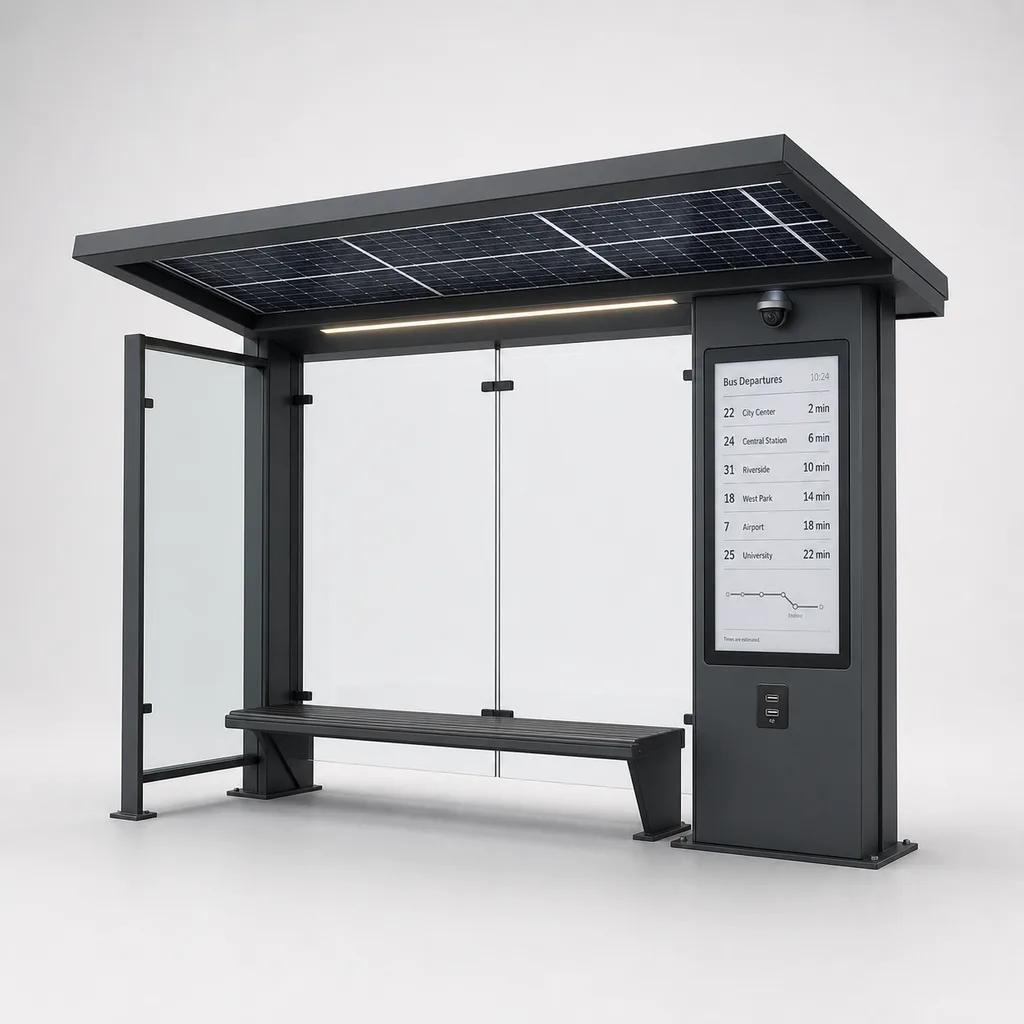
The Redcoast RC-BSS-200 is a fully off-grid Solar Smart Bus Shelter that turns an ordinary roadside bus stop into a self-powered piece of smart-city infrastructure. It combines glare-free LED canopy lighting, a sunlight-readable e-paper passenger information display, an AI safety camera, USB / USB-C device charging and live IoT telemetry — all running on rooftop solar and a LiFePO4 battery, with no trenching, no grid connection and no monthly electricity bill. It is built for transit authorities, municipalities, business parks, campuses, airports and integrators who need to upgrade or extend stops where bringing mains power is slow, expensive or simply impossible. Redcoast designs the core electronics in-house — the MPPT power-management board, the LED driver, the e-paper display controller and the edge IoT gateway are all custom PCBs we can re-spec per project, so the shelter is tuned to the route, climate and budget rather than forced into a fixed catalogue product.
Key Features
- True off-grid operation — rooftop monocrystalline solar array plus LiFePO4 storage delivers 3–5 days of lighting and electronics autonomy with no grid connection.
- Sunlight-readable e-paper passenger display — 31.5" / 42" reflective e-paper shows live timetables, route maps and service alerts, drawing only a few watts and remaining crisp in direct sun.
- Glare-free smart canopy lighting — 12–40 W LED luminaire with PIR-based dimming that brightens on passenger approach and idles low when the stop is empty.
- AI safety camera (optional) — edge-processed CCTV with people-presence and loitering detection for passenger security and incident review.
- Device charging for waiting passengers — USB-A, USB-C PD and optional Qi wireless pads, current-limited and load-shed automatically to protect overnight reserve.
- In-house custom electronics — Redcoast-developed MPPT controller, LED driver, display controller and IoT gateway, re-spinnable per project.
- Remote management & telemetry — every shelter reports battery state, panel yield, display content status, lighting health and camera uptime to the Redcoast cloud and mobile app.
- Modular street-furniture frame — hot-dip galvanized steel base with a smooth powder-coated finish, tempered glass / polycarbonate panels and ADA-friendly seating options.
- Environmental sensing (optional) — air-quality, temperature, humidity and noise sensors feed open APIs for city dashboards.
- Advertising-ready — backlit ad light boxes or a second display panel can be added as a revenue surface for operators.
Technical Architecture
At the heart of the RC-BSS-200 is the Redcoast custom MPPT power-management board, which harvests energy from the roof-mounted solar array, charges the LiFePO4 battery and distributes regulated 12/24 V DC to every subsystem. Maximum-power-point tracking keeps harvest efficient under partial shade and changing sun angles, while a configurable battery-management layer enforces low-temperature charge cut-off, deep-discharge protection and intelligent load-shedding — when reserve runs low overnight, non-critical loads (advertising backlight, wireless charging) are shed first so that lighting and safety functions stay alive.
Loads are split into three planes. The lighting plane is run by an in-house LED driver with PWM dimming, tied to a PIR/microwave occupancy sensor for approach-based brightening. The information plane is the e-paper display controller, which renders timetables and alerts pushed from the cloud and only consumes power during refresh — ideal for an energy-constrained, always-on display. The smart plane is the edge IoT gateway: a low-power compute module that aggregates sensor data, runs optional on-camera AI inference (so only events, not raw video streams, leave the shelter), and manages connectivity. The gateway speaks to the Redcoast platform over the chosen radio, exposing a single normalized data model for fleet operators. Edge/cloud split is deliberate: time-critical control (dimming, load-shed, camera alerts) happens locally and survives connectivity loss, while content updates, analytics and firmware come down from the cloud.
Connectivity & Power
Connectivity is selectable per deployment. 4G/5G suits standalone urban and suburban stops that need bandwidth for camera events and frequent display refreshes. NB-IoT / LTE-M is the low-power choice for dense networks of timetable-only stops where data volumes are small and battery life is paramount. LoRa links clusters of nearby shelters back to a single backhaul gateway, cutting recurring SIM cost on campuses and BRT corridors. Wi-Fi access-point mode can be offered to waiting passengers where policy allows.
On the power side the standard configuration is a 150–400 W solar array with a 100–300 Ah LiFePO4 battery, sized to climate and load. High-latitude or low-irradiance sites take a larger array and battery for the same autonomy; equatorial sites can downsize. A grid-tie or grid-assist option is available where mains is present but unreliable, using the solar/battery as a UPS so the display and lighting never go dark during outages.
Protection & Reliability
Electronics enclosures are rated IP66 against dust and heavy rain; the canopy and frame are engineered for sustained wind loading and the structure is built on a hot-dip galvanized steel core for corrosion resistance. The LiFePO4 chemistry tolerates a wide temperature window and offers far longer cycle life than lead-acid, supporting a multi-year maintenance-free service profile. LED luminaires are rated to ~50,000 hours. The system is specified for a -30 to +60 ℃ operating range, with coastal salt-fog, desert sand/dust and high-altitude variants available. Surge protection guards the solar input, display and communications lines. Remote telemetry turns reliability into something measurable — operators see degrading battery health or a failing display before a passenger ever reports it.
Application Scenarios
- Urban transit network upgrade — retrofit hundreds of existing stops with live e-paper arrival times and lighting without trenching for power, rolling out a city-wide passenger-information system in weeks.
- Bus rapid transit (BRT) corridors — high-traffic stations get bright safety lighting, AI cameras and large displays, clustered over LoRa to one backhaul point.
- Business parks & campuses — private shuttle stops gain charging, Wi-Fi and lighting on internal roads where extending the grid is costly.
- Tourist and heritage zones — discreet, cable-free shelters add wayfinding and lighting without disturbing paving or historic ground.
- Rural and intercity stops — remote roadside stops far from the grid get safe lighting and a solar-powered timetable display that runs for years unattended.
- Airport, hospital and stadium pickup zones — high-footfall waiting areas get crowd lighting, charging and surveillance with rapid, low-disruption installation.
Case-style Examples
City-wide stop modernization. A transit operator needed live arrival times at stops where digging up sidewalks for power was politically and financially impossible. The RC-BSS-200 was configured with 31.5" e-paper displays, NB-IoT backhaul and modest 150 W / 100 Ah power kits sized for timetable-only loads. Crews swapped shelters in single-day visits with no electrical permits, and the operator now pushes service alerts to every screen from one dashboard.
BRT corridor safety deployment. Along a busy bus rapid transit line, the priority was passenger security and night visibility. Shelters were specified with 40 W lighting, AI safety cameras and 42" displays, drawing larger 350 W / 250 Ah power kits and clustered on LoRa to cut SIM count. On-camera analytics flag loitering and crowding to the control room without streaming raw video over the air.
Off-grid campus shuttle network. A logistics park running internal shuttles wanted charging and lighting at stops far from any feeder. A solar-only configuration with USB-C charging and Wi-Fi was deployed; telemetry to the Redcoast app lets facilities staff monitor battery health across all stops centrally.
Customization & Selection Guide
Start from the load profile. A timetable-only stop (display + light) runs comfortably on the small power kit and NB-IoT — the lowest-cost, longest-autonomy option. Adding an AI camera and USB charging moves you to the mid kit (250–300 W array, 150–250 Ah battery) and usually 4G/5G for bandwidth. High-footfall stations with large displays, advertising backlight and crowd lighting take the large kit (350–400 W, 250–300 Ah). For climate, oversize the array and battery in low-irradiance or far-north sites and choose the coastal/desert variant where corrosion or dust demands it. Display size follows viewing distance: 31.5" for standard stops, 42" for islands and BRT platforms. Where mains exists but is unreliable, add the grid-assist option for UPS behavior.
Deployment & After-sales
The shelter ships as pre-wired modules — frame, glazed panels, solar canopy and a factory-integrated electronics enclosure — so site work is mechanical assembly and commissioning rather than field wiring. Off-grid units need no electrical permit or trenching, which is the single biggest schedule saver versus mains shelters. Each unit is provisioned to the Redcoast platform before shipment so it appears on the operator dashboard the moment it powers on. Lead time scales with order size and customization depth; pilot quantities ship faster than full city rollouts. After-sales covers remote monitoring, OTA firmware and content updates, spare-board supply and engineering support; because we hold the PCB designs, board-level fixes and revisions are handled directly by us rather than a third party.
Standards & Compliance
The RC-BSS-200 is engineered toward CE and RoHS conformity, with electronics enclosures rated to IP66 and solar/battery subsystems designed against relevant IEC norms (e.g. IEC 62109 for power conversion and IEC 62133 for battery safety). Structural design targets local wind-load codes, and ADA / accessibility-friendly layouts are available. Exact certification scope is aligned to the destination market during the project phase.
Why Redcoast
Redcoast is a software-and-hardware solution builder, not a box reseller. We develop the MPPT controller, LED driver, e-paper controller and IoT gateway as our own PCBs, and we build the management web platform and mobile app that run them. That means a bus shelter can be re-specified to your route, climate, display size, connectivity and budget at the board level — and supported by the people who designed it.
Talk to Redcoast about a custom Solar Smart Bus Shelter for your transit network — tell us your routes, climate and feature set, and we'll spec the shelter, boards and platform to match.
Specifications
Lighting
- LED Power
- 12-40 W
- Luminous Efficacy
- up to 150 lm/W
- Color Temperature
- 3000-5700 K
- Dimming
- PIR/microwave occupancy, 10-100% %
- LED Lifetime
- up to 50,000 h
Passenger Information Display
- Display Type
- Reflective e-paper (sunlight-readable)
- Screen Size
- 31.5 / 42 in
- Refresh Power
- 3-8 W
- Content
- Live timetable / route map / service alerts
- Update Path
- Cloud push (OTA)
Power
- Solar Panel
- 150-400 W
- Battery
- LiFePO4 100-300 Ah
- System Voltage
- 12 / 24 V DC
- Autonomy
- 3-5 days
- Charge Controller
- In-house MPPT, BMS-integrated
Smart & Connectivity
- Connectivity
- 4G/5G, NB-IoT/LTE-M, LoRa, Wi-Fi
- Edge Gateway
- In-house low-power IoT controller
- AI Camera
- Optional, edge person/loitering detection
- Charging Ports
- USB-A, USB-C PD, optional Qi wireless
- USB-C PD Output
- up to 30 W
- Environmental Sensors
- Optional air quality / temp / humidity / noise
Structure & Materials
- Frame
- Hot-dip galvanized steel, powder-coated finish
- Glazing
- Tempered glass / polycarbonate
- Canopy
- Solar-integrated roof
- Seating
- ADA-friendly bench (optional)
- Footprint
- Customizable 3-8 m length m
Protection & Environment
- Electronics IP Rating
- IP66
- Operating Temperature
- -30 to +60 ℃
- Surge Protection
- Solar / display / comms lines
- Environmental Variants
- Coastal salt-fog / desert dust / high-altitude
- Wind Resistance
- Designed to local wind-load codes
Capabilities — configurable per project
Specifications are tailored to each project — the options below show what we can support.
Power Source
- Solar off-grid
- Solar + grid-assist (UPS)
- Wind-solar hybrid
Connectivity
- 4G/5G
- NB-IoT/LTE-M
- LoRa
- Wi-Fi AP
Display
- 31.5" e-paper
- 42" e-paper
- No display (lighting only)
- Advertising light box add-on
Smart Modules
- AI safety camera
- USB/USB-C charging
- Wireless Qi pad
- Environmental sensors
Environment Build
- Standard
- Coastal
- Desert
- High-altitude
Related solution guidance
Smart Street Lighting
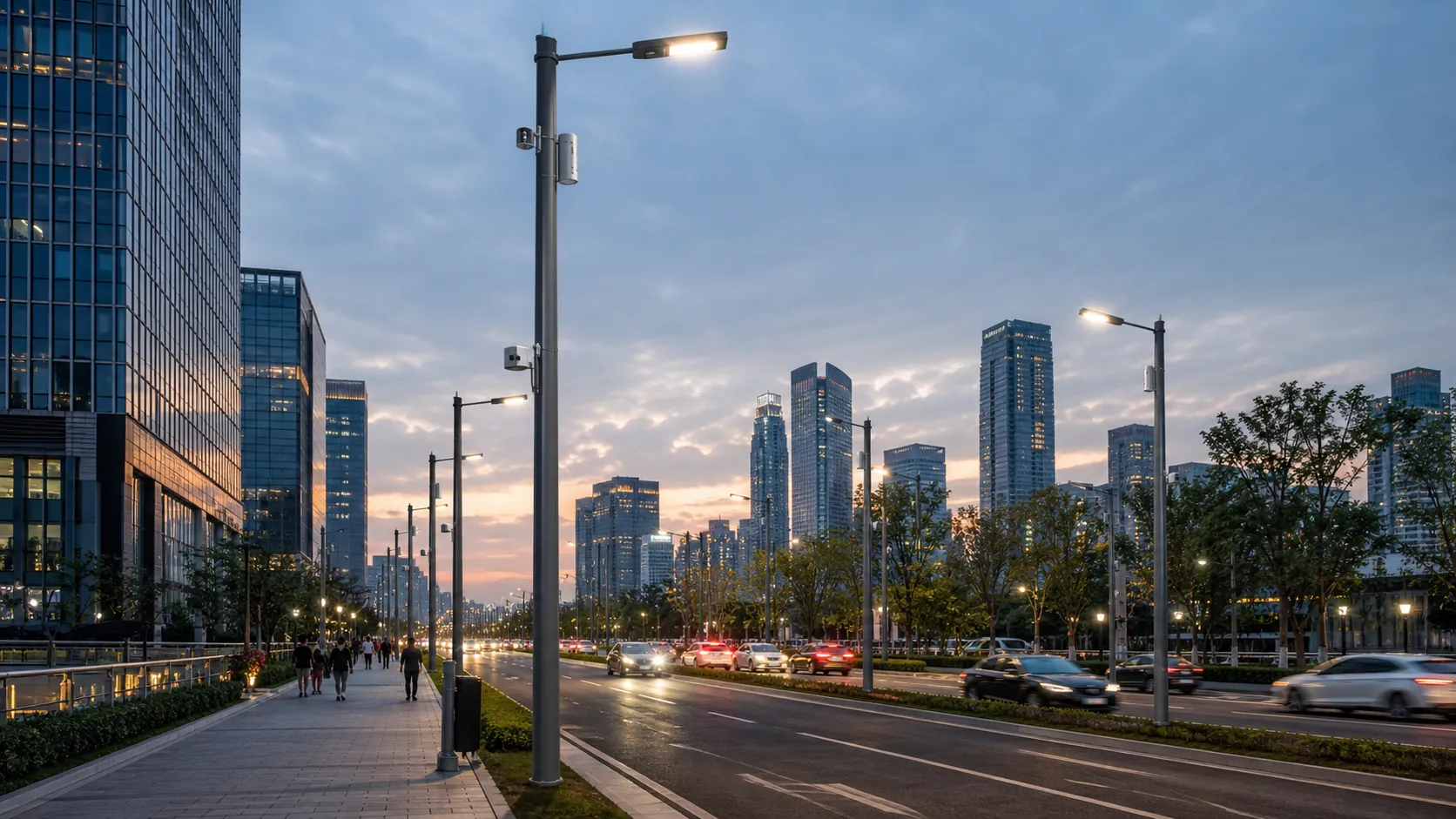
Plan an IoT street lighting system with LED luminaires, pole controllers, adaptive dimming, fault alarms, asset management and platform integration.
Power and Connectivity
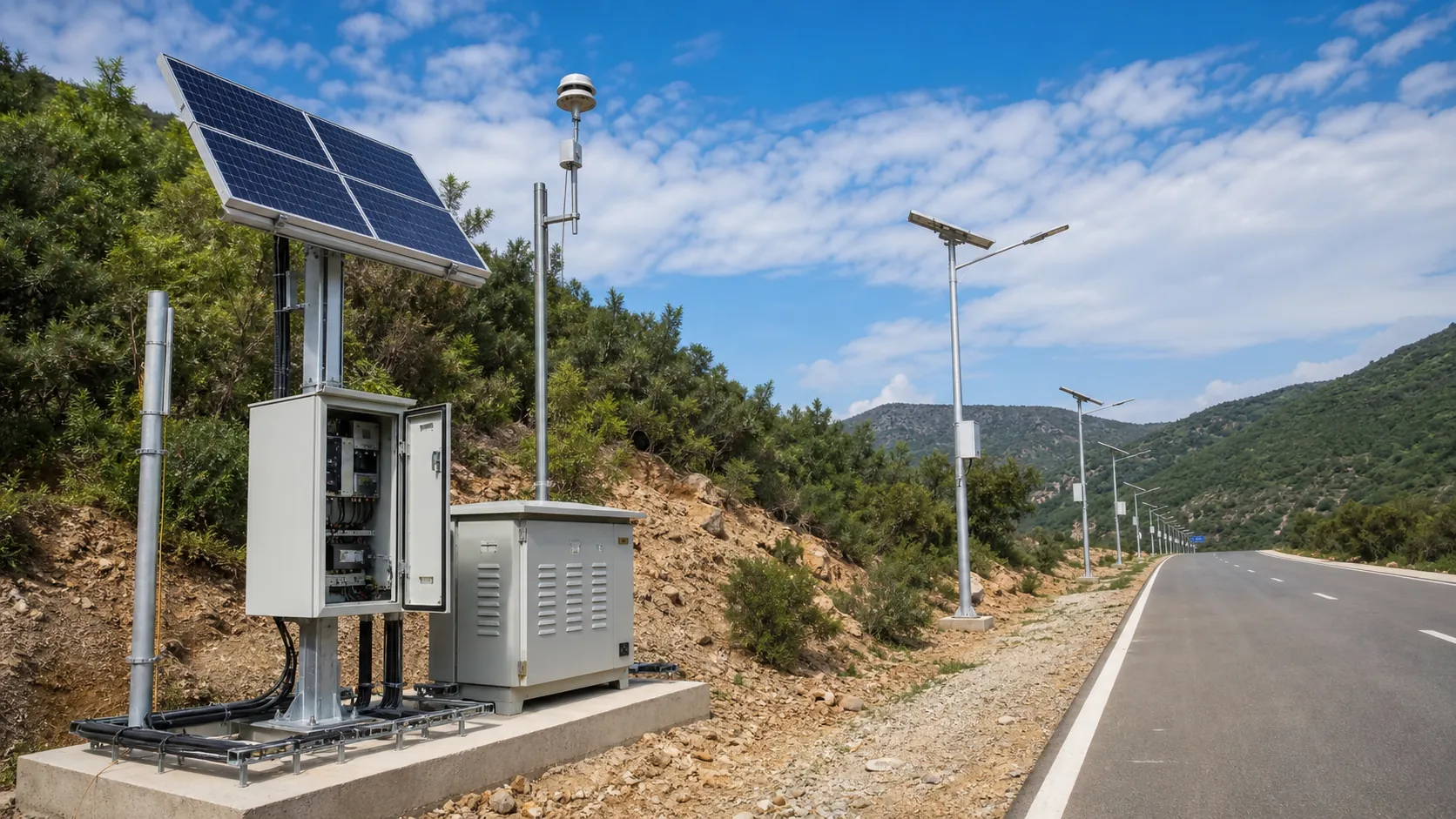
How to choose power, battery, solar, NB-IoT, LTE, LoRaWAN, gateways and monitoring strategy for outdoor IoT infrastructure.
Municipalities
Municipal smart city programs for lighting, traffic safety, parking, smart poles and environmental monitoring with one hardware and software partner.
Frequently Asked Questions
Does a solar smart bus shelter work without any grid connection?
Yes. The RC-BSS-200 is fully off-grid: a 150-400 W solar array charges a 100-300 Ah LiFePO4 battery bank sized for about 3-5 days of autonomy, powering the lighting, display and telemetry without trenching or mains cabling.
Why use an e-paper display instead of an LCD or LED screen for bus timetables?
E-paper is reflective, so it stays readable in direct sunlight and draws only 3-8 W during refresh — a far better fit for a solar power budget than backlit LCD or LED panels.
How is the passenger information on the display updated?
Content is pushed remotely over the shelter's IoT connectivity, so timetables and notices are updated from the management platform without site visits.
Can the bus shelter include security cameras?
Yes. An optional AI camera with edge processing supports people-presence and loitering detection, operating within the shelter's solar power and connectivity budget.
Does REDCOAST.LTD design the shelter electronics or assemble bought-in parts?
REDCOAST.LTD delivers the shelter as an end-to-end solution — hardware, web management platform and mobile app from one team — with self-developed PCBs for power and control, so each project can be customized in depth.
How long does installation take compared to a mains-powered shelter?
Because there is no grid connection, trenching or metering work, installation is much faster: the shelter is anchored, the solar and battery system is commissioned, and the site goes live.
What passenger amenities does the shelter provide?
Solar LED lighting, sunlight-readable e-paper passenger information, USB-A and USB-C PD charging up to 30 W, optional Qi wireless charging pads and IoT-supervised operation.
What environments can the solar bus shelter handle?
The shelter uses a weather-resistant structure and materials for permanent outdoor transit use, and the solar array and battery autonomy are sized per site so it keeps operating through several days of poor sun.