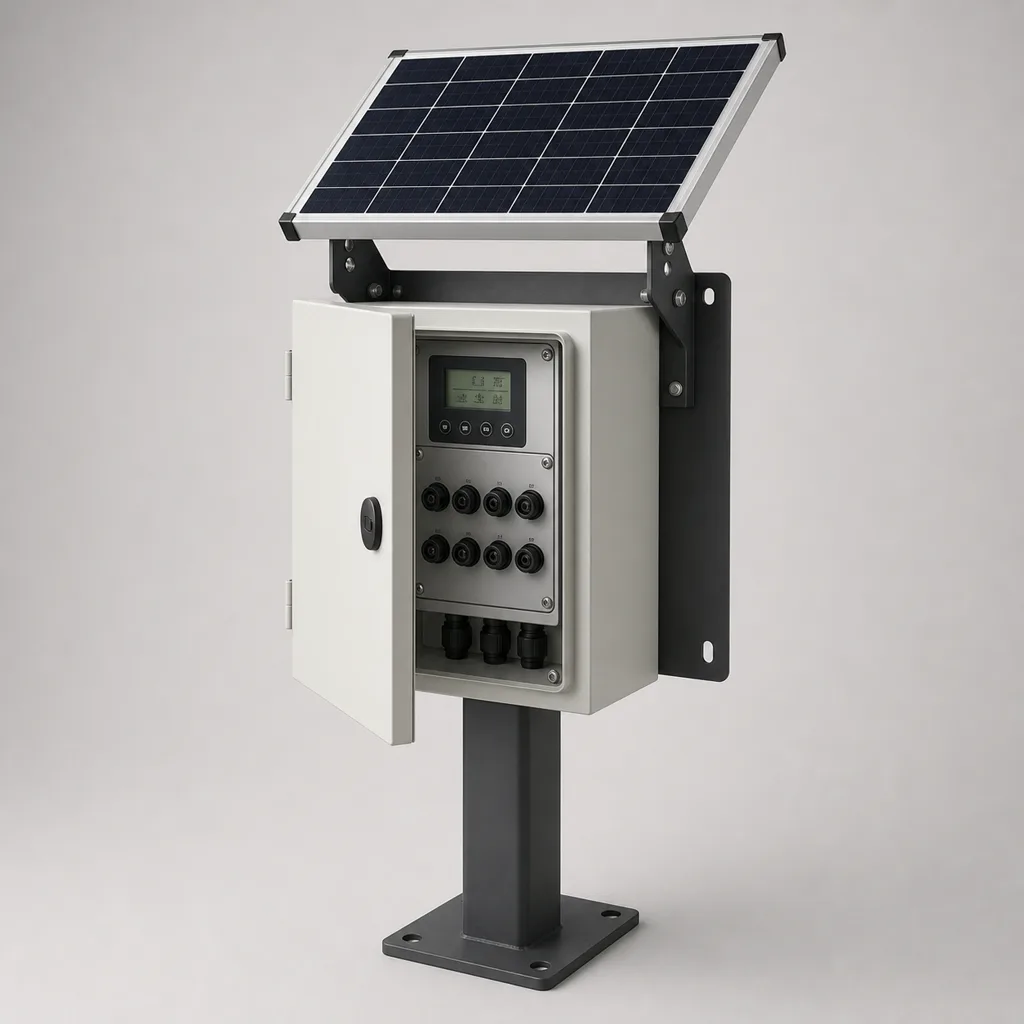
Overview
Water scarcity and rising energy costs are pushing farms, orchards, vineyards, greenhouse operators, and landscape managers worldwide to replace manual or timer-only irrigation with data-driven, self-powered control. The REDCOAST RC-IRR-420 Solar-Powered Smart Irrigation & Soil Moisture Monitoring Controller is a fully off-grid, field-deployable irrigation management platform built around a REDCOAST-designed multi-channel sensor and valve-driver PCB. It reads real-time soil moisture, salinity (EC), temperature, and line pressure/flow, then automatically opens and closes up to 16 independent irrigation zones according to threshold, evapotranspiration (ET0), or time-based schedules — with no mains power and no cellular tower required to keep running. For growers, irrigation districts, landscape contractors, and systems integrators serving regions without reliable grid coverage, it replaces guesswork and manual valve operation with measurable water savings and remote visibility from any smartphone.
Key Features
- Self-developed multi-channel signal-conditioning PCB reads capacitive soil moisture, EC, and temperature probes across up to 8 sensing channels simultaneously
- Drives up to 16 independent solenoid valve zones (DC latching, AC 24V, or DC pulse types) from a single controller
- MPPT solar charge management with LiFePO4 battery buffer keeps the system running through 7–10 days without sun
- Threshold-, ET0 weather-, and calendar-based irrigation logic runs at the edge — irrigation continues correctly even if connectivity drops
- LoRaWAN long-range wireless backbone links controller, remote sensor nodes, and valve stations without trenching cable across large plots
- Optional NB-IoT/4G Cat-1 uplink pushes live data and alerts to REDCOAST's cloud dashboard and mobile app
- Integrated pulse flow meter and line pressure monitoring detect leaks, pipe bursts, and clogged drippers automatically
- Optional 1–2 channel fertigation/chemical injection output for combined water and nutrient dosing
- IP68-rated buried probes and IP65 field cabinet withstand dust, driving rain, and agricultural chemical exposure
- Local LCD + keypad and Bluetooth commissioning app allow setup and diagnostics without a network connection
Technical Architecture
At the core of the controller is a REDCOAST-designed mixed-signal PCB that combines analog front-end signal conditioning for capacitive soil moisture/EC/temperature probes, a multi-channel latching-solenoid valve driver stage, pulse counting circuitry for flow meters, and an MPPT solar charge controller — all on one board to minimize enclosure size and wiring complexity in the field. An onboard low-power MCU runs the irrigation control logic locally, evaluating soil moisture readings against configurable thresholds (or ET0 values computed from an optional integrated weather module) and firing valve outputs directly, so irrigation scheduling does not depend on a live network connection or cloud round-trip.
For multi-zone or multi-hectare deployments, the controller acts as a LoRaWAN gateway/coordinator for lower-cost remote sensor nodes and valve stations scattered across the field, eliminating the need to trench control cable to every zone. Data — soil moisture trends, valve run times, water volume delivered per zone, battery state of charge, and fault alerts — is queued locally in flash memory and uplinked opportunistically over LoRaWAN, NB-IoT, or 4G Cat-1 to REDCOAST's cloud platform, where growers and irrigation managers view dashboards, set schedules, and receive push alerts through the companion mobile app. The same hardware and firmware base is shared across REDCOAST's outdoor IoT product line, so a project team already running REDCOAST monitoring or lighting infrastructure can integrate irrigation into the same management platform.
Connectivity & Power
The controller ships with an MPPT-regulated solar power stage sized to the zone count and communication load — a compact 20 W panel suffices for a 4-zone LoRaWAN-only node, while an 8-zone unit with 4G uplink and fertigation dosing typically uses a 60–80 W panel. Energy is buffered in a LiFePO4 battery pack (10–30 Ah depending on configuration) selected for its cycle life and safe operation across the -20 °C to +60 °C range farms and open-field sites experience. Autonomy is engineered for 7–10 days without sunlight so irrigation scheduling is never interrupted by a run of cloudy or rainy days. Because valve solenoids and remote sensor nodes are wireless, deployment does not require running mains power to every zone — only the central controller cabinet needs a solar panel and clear sky view, while satellite valve stations run on their own small solar or long-life battery packs. Where a pump house or equipment shed with grid power already exists, the same platform can optionally be configured for AC mains input; solar is the default because most irrigation infrastructure sits well beyond convenient grid reach.
Protection & Reliability
The field cabinet is rated IP65 and built from UV-stabilized polycarbonate or powder-coated aluminum to resist decades of direct sun, blowing dust, and agricultural chemical spray without cracking or corroding. Buried and submersible components — soil probes, flow meter bodies, and valve solenoids — carry IP68 ratings for continuous underground or underwater service. Surge protection on both the solar input and valve output lines guards against lightning-induced transients common on exposed farmland, and the enclosure design keeps electronics serviceable without exposing them to irrigation-line moisture. The controller is engineered for a multi-season service life with minimal maintenance beyond periodic probe calibration checks.
Application Scenarios
- Row-crop and broadacre farming: schedule zone-by-zone irrigation across large fields based on real soil moisture rather than fixed timers, cutting water use while protecting yield during dry spells.
- Orchards and vineyards: drip-line zones tied to individual sensor nodes let growers manage water stress precisely by block, supporting deficit-irrigation strategies for fruit quality.
- Greenhouse and covered cultivation: combine soil/substrate moisture with fertigation dosing for controlled, repeatable feeding schedules without a technician on site.
- Municipal and commercial landscaping/turf: parks, golf courses, and highway median plantings hold to a water budget automatically, with alerts on line breaks or clogged heads.
- Remote research and demonstration plots: agricultural universities and extension programs log soil and irrigation data for trials without running power or network cable to test sites.
- Water-scarce reforestation and land-reclamation projects: off-grid operation lets young plantings receive metered irrigation in areas with no infrastructure at all.
Case-style Examples
Open-field crop irrigation retrofit: A commercial farm operating on flood/timer irrigation wanted to cut water use ahead of a regional drought restriction. REDCOAST supplied an 8-zone RC-IRR-420 with soil moisture and EC sensing across the property, LoRaWAN-linked to individually valved zones up to several kilometers from the central cabinet. Solar-only power meant no trenching for mains cable. Within the first season the operator reported materially reduced water draw per hectare against prior timer-based scheduling, verified against the platform's per-zone volume logs.
Vineyard deficit-irrigation deployment: A vineyard sought block-level control to manage water stress for fruit quality rather than simple survival. A 4-zone controller with individual soil moisture/temperature nodes per block and a fertigation channel let the vineyard manager adjust thresholds per block from the mobile app during the growing season, with alerts flagging a clogged drip line within a day instead of being found on a routine walk-through weeks later.
Off-grid reforestation site: A land-reclamation project needed to establish irrigation for a newly planted area with no grid power or existing infrastructure nearby. A solar RC-IRR-420 unit with a satellite battery-powered valve station and LoRaWAN link allowed scheduled irrigation to start immediately after planting, with remote monitoring confirming valve operation without a site visit.
Customization & Selection Guide
Zone count and sensor channel count should match the plot layout: start from a 4-zone configuration for small blocks, greenhouses, or landscape sections, and scale to 8 or 16 zones for larger farms or multi-crop layouts. Choose LoRaWAN-only connectivity where a private gateway or REDCOAST-supplied gateway already covers the site; add NB-IoT/4G Cat-1 uplink where no local gateway infrastructure exists and direct cellular coverage is available. Specify the fertigation/chemical injection channel only where combined water-and-nutrient dosing is required — omitting it simplifies the cabinet and reduces cost for pure irrigation-only sites. Solar panel and battery sizing should be selected against local solar irradiance data and the required autonomy days for the region's typical cloudy-weather runs; REDCOAST's project team sizes this per site rather than shipping a single fixed configuration.
Deployment & After-sales
Installation follows a standard sequence: mount the central cabinet on a post or pump-house wall with clear sky view for the solar panel, bury or insert soil probes at the recommended root-zone depth per crop type, wire or wirelessly pair valve stations, and commission thresholds and schedules through the local keypad or Bluetooth app before enabling cloud connectivity. REDCOAST supports project teams from site survey and zone planning through commissioning, with configuration files and firmware tuned to the crop, soil type, and local weather profile. Ongoing technical support covers firmware updates, sensor calibration guidance, and spare-parts supply for valves, probes, and battery packs across the system's service life.
Standards & Compliance
The platform is designed toward CE and RoHS conformity for electronics and electrical safety, IP65/IP68 ingress protection for cabinet and buried components respectively, and standard agricultural wiring and low-voltage DC practices for valve and sensor circuits. Radio modules used for LoRaWAN, NB-IoT, and 4G Cat-1 connectivity comply with regional telecom certification requirements (FCC/CE-RED/local type approval) appropriate to the deployment country.
Why REDCOAST.LTD
REDCOAST.LTD delivers this as a complete solution — self-developed sensor/valve-driver PCB, solar power management, edge control firmware, cloud dashboard, and mobile app — engineered and integrated by one team rather than assembled from disparate off-the-shelf modules. Because the hardware is custom-designed in-house, zone counts, sensor types, fertigation channels, and communication protocols can be adjusted to a specific crop, plot layout, or regional connectivity environment without waiting on a third-party module vendor's fixed feature set. Contact REDCOAST.LTD to configure a solar smart irrigation system for your site's crop, layout, and climate.
Specifications
Irrigation Control
- Valve Output Zones
- 4-16 zones
- Valve Types Supported
- DC latching / AC 24V / DC pulse
- Valve Driver Current
- up to 1.5 A per channel
- Fertigation Injection Channels
- 1-2 (optional) channel
- Irrigation Logic Modes
- Threshold / ET0 weather-based / Time-based / Manual
Sensing & Monitoring
- Soil Moisture Channels
- 4-8 channel
- Soil Moisture Range
- 0-100 % VWC
- Soil Moisture Accuracy
- ±3 % VWC
- Soil EC / Salinity Range
- 0-20 mS/cm
- Soil Temperature Range
- -20 to +60 °C
- Flow Meter Input
- 1-60 m³/h
- Line Pressure Sensor
- 0-1.6 MPa
Power (Off-Grid Solar)
- Solar Panel
- 20-80 W
- Panel Voltage
- 12 / 18 V
- Battery
- LiFePO4 12.8V, 10-30 Ah
- Charge Controller
- MPPT
- Autonomy (no sunlight)
- 7-10 days
- Valve Bus Voltage
- 9-12 VDC
Connectivity
- Wireless (primary)
- LoRaWAN 868/915 MHz
- Cellular (optional)
- NB-IoT / 4G Cat-1
- Wired (optional)
- RS485 Modbus RTU
- LoRa Range (open field)
- up to 8-15 km
- Local Interface
- LCD + keypad, Bluetooth config app
Protection & Environmental
- Cabinet Ingress Rating
- IP65
- Buried Probe Rating
- IP68
- Operating Temperature
- -20 to +60 °C
- Humidity
- 0-95 %RH non-condensing
- Surge Protection
- 10 kA (solar & valve lines)
Mechanical
- Enclosure Material
- UV-stabilized polycarbonate / powder-coated aluminum
- Mounting
- Post / wall / pump-house
- Controller Weight
- 3-8 kg (excl. panel)
Capabilities — configurable per project
Specifications are tailored to each project — the options below show what we can support.
Power
- Solar (MPPT + LiFePO4)
- Wind-solar hybrid
- Grid (AC mains, pump-house option)
Connectivity
- LoRaWAN 868/915MHz
- NB-IoT
- 4G Cat-1
- RS485 Modbus RTU (wired)
Zone Count
- 4-zone
- 8-zone
- 16-zone
Sensor Package
- Soil moisture only
- Soil moisture + EC + temperature
- Full agronomic package with weather station integration
Deployment
- Open-field row crop
- Orchard / vineyard drip
- Greenhouse / covered cultivation
- Municipal landscape / turf
Related solution guidance
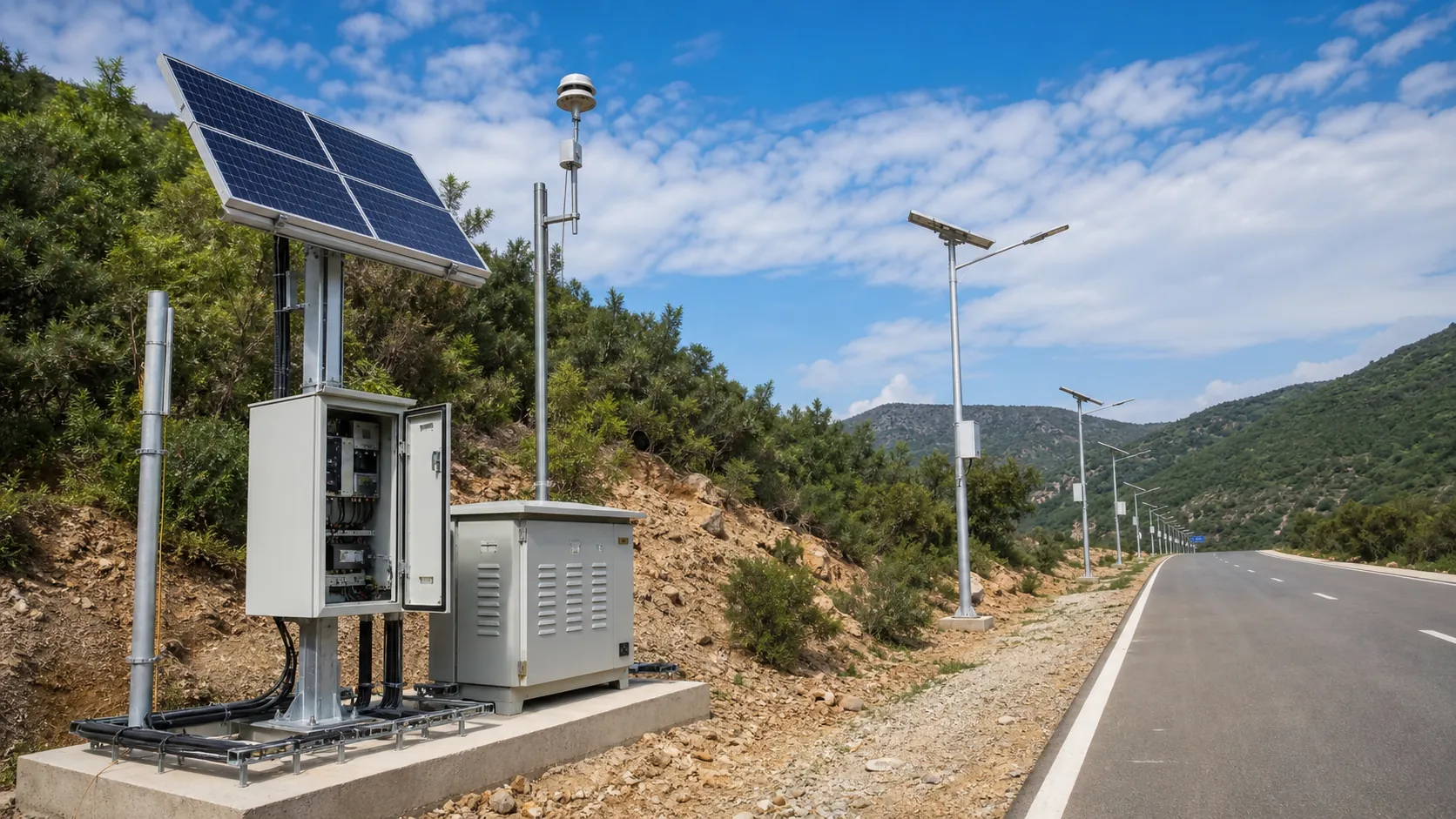
Solar IoT Guide
A design guide for solar-powered outdoor IoT: load calculation, battery autonomy, low-power firmware, telemetry and maintenance planning.
Solar Off-Grid IoT
Design solar-powered outdoor IoT systems with panels, batteries, controllers, low-power devices, gateways and remote power monitoring.
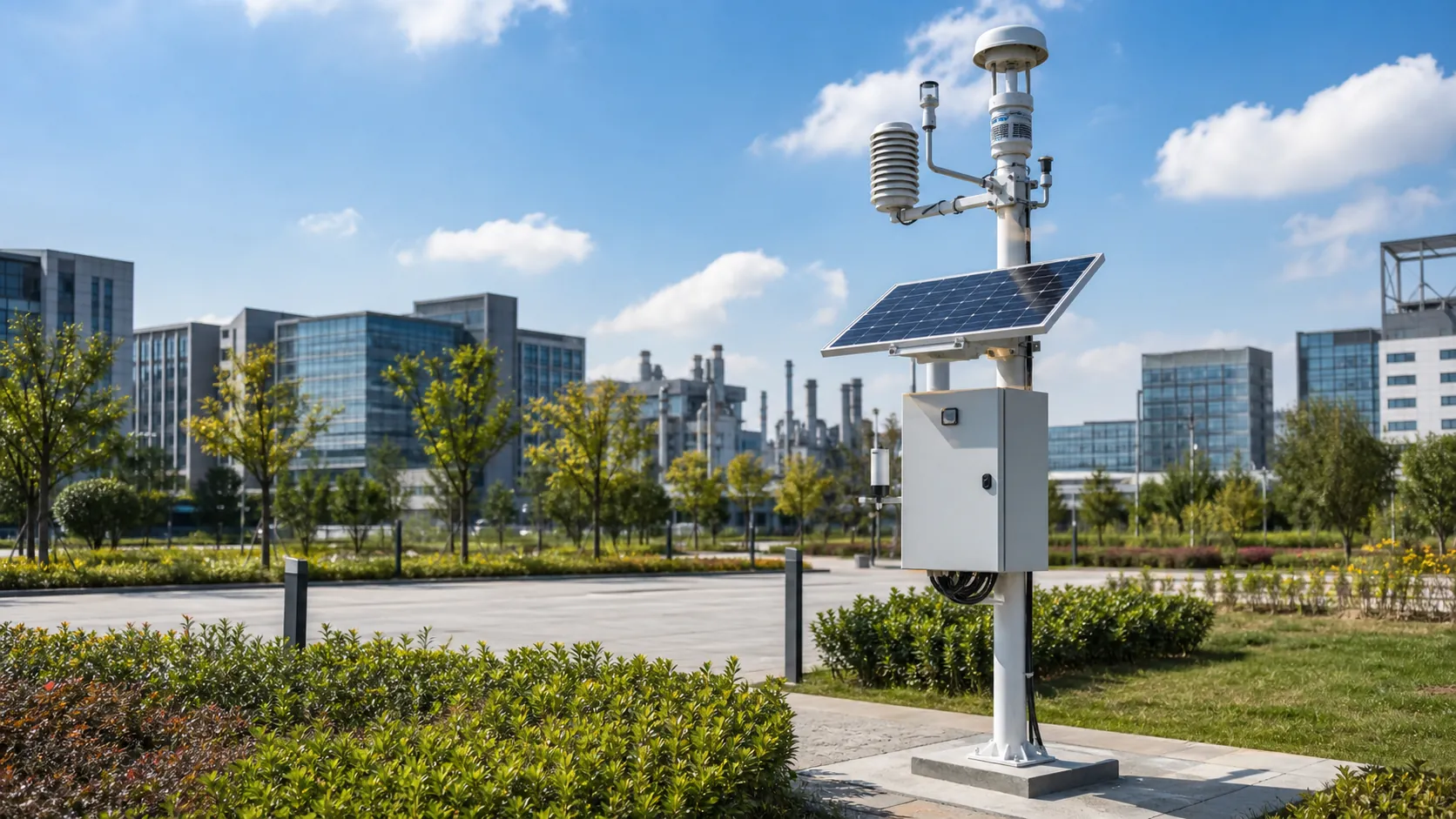
Environmental Monitoring
Deploy environmental monitoring stations with sensors, solar power, gateways, dashboards, alarms and data integration for city and industrial sites.
Frequently Asked Questions
How does the controller decide when to irrigate a zone?
It compares live soil moisture readings — and optionally EC and a calculated ET0 evapotranspiration value from an integrated weather module — against configurable per-zone thresholds, then fires valve outputs directly from onboard edge logic, so scheduling continues correctly even without an active network connection.
Can it run entirely without grid power or cellular coverage?
Yes. The controller and remote valve stations are solar-powered with MPPT charging and a LiFePO4 battery buffer sized for 7-10 days of autonomy, and LoRaWAN links the units locally without needing cellular or internet access; NB-IoT/4G is only added when remote cloud visibility is required.
How many irrigation zones can one controller manage?
A single controller supports 4, 8, or 16 independent valve zones depending on configuration, with remote zones linked wirelessly over LoRaWAN so cable does not need to be trenched to every valve.
What happens during several consecutive cloudy or rainy days?
The LiFePO4 battery is sized for 7-10 days of autonomy without solar charging, and the system automatically reduces communication frequency at low battery state so irrigation control functions are preserved first.
Can the system dose fertilizer or chemicals along with water?
Yes, an optional 1-2 channel fertigation/chemical injection output can be added to the controller for combined water-and-nutrient dosing on the same irrigation schedule.
Does it detect line breaks, leaks, or clogged emitters?
Yes, the integrated pulse flow meter and line pressure sensor compare actual flow and pressure against expected values per zone and raise an alert when a run indicates a burst line, leak, or blockage.
Can REDCOAST.LTD customize the controller for a specific crop or region?
Yes. Because the sensor/valve-driver PCB, firmware, solar sizing, and communication protocol are all developed in-house, REDCOAST.LTD configures zone count, sensor package, and connectivity for the specific crop, plot layout, and regional climate.
What communication range does LoRaWAN provide in open farmland?
Typical open-field line-of-sight range is 8-15 km between the central controller/gateway and remote sensor or valve nodes, though actual range depends on terrain, vegetation, and antenna height.