Overview
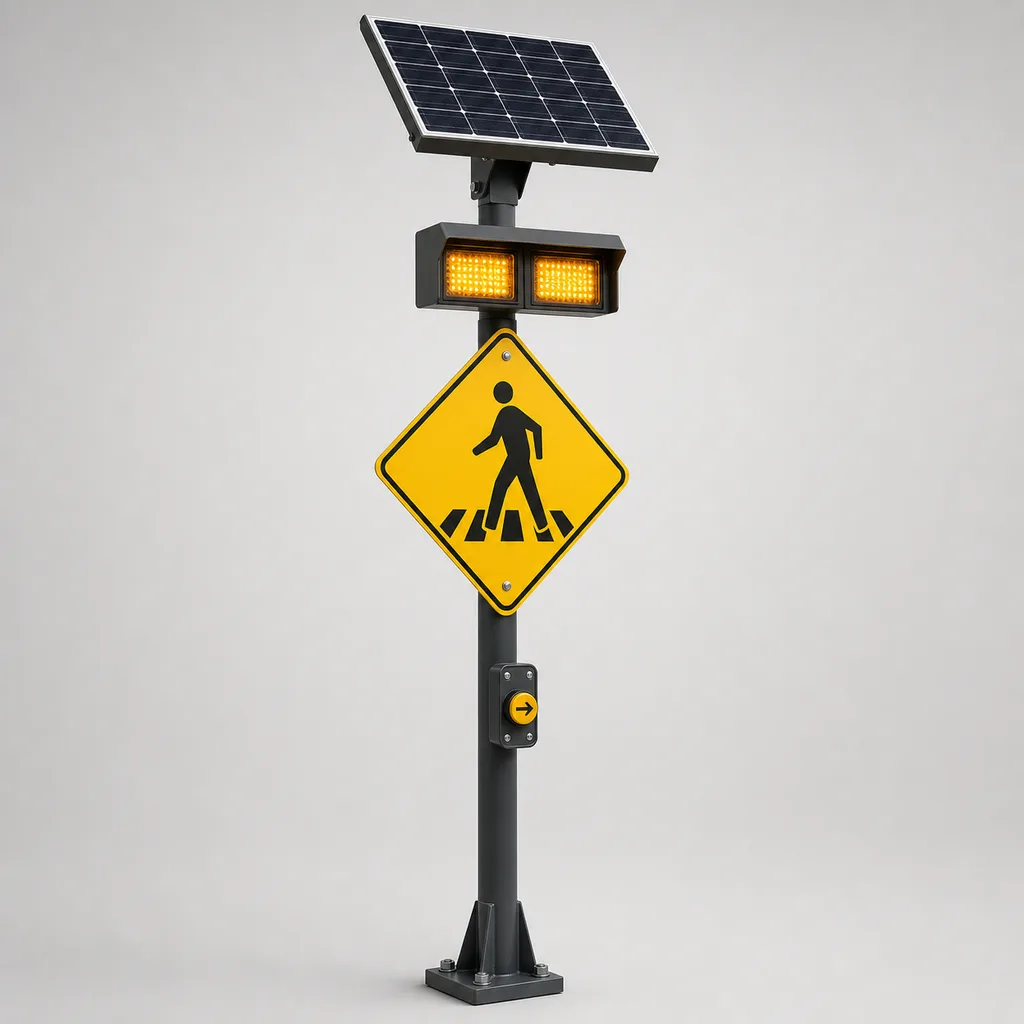
The Redcoast RC-XWALK-300 is a fully off-grid, solar-powered active crosswalk warning system engineered to make uncontrolled and mid-block pedestrian crossings dramatically safer. It combines high-intensity Rectangular Rapid Flashing Beacons (RRFB), embedded in-road LED studs, multi-mode pedestrian detection (push-button, PIR and microwave radar) and an IoT telemetry gateway into one coordinated, self-powered installation. The system targets road authorities, municipalities, school-zone programs, industrial parks and EPC/integration partners that need to raise driver yield rates at crossings where running mains power is costly, slow to permit, or simply unavailable. Field studies of RRFB-class devices show driver yield improvements of up to 80% at uncontrolled crossings, and the RC-XWALK-300 packages that proven safety physics into a rugged, remotely manageable, software-hardware product that Redcoast designs at the board level and tunes per project.
Key Features
- FHWA/MUTCD-style WW+S flash pattern: alternating wig-wag plus simultaneous high-flash sequence proven to maximize driver attention, with selectable flash frequency from 1–4 Hz.
- Redcoast self-developed beacon driver PCB: custom constant-current LED driver board controls each RRFB head, road-stud string and detection input, with on-board fault diagnostics and surge protection.
- Embedded in-road LED studs: cast-aluminum, 400 kN compression-rated luminous studs delineate the crossing path; nighttime visibility distance exceeds 800 m, brightness ≥ 30,000 mcd per stud.
- Multi-mode activation: tactile push-button, passive PIR presence sensing, and microwave radar that detects approaching pedestrians for hands-free, contactless triggering.
- True off-grid power: high-efficiency monocrystalline panel + LiFePO4 storage with MPPT energy management supports 180–350+ daily activations and several days of autonomy without sun.
- Wireless cross-road synchronization: beacons on opposing approaches stay perfectly in phase via licence-free 868/915 MHz radio — no trenching across the carriageway.
- IoT remote monitoring: 4G/5G or NB-IoT uplink reports battery state, activation counts, lamp/stud health and fault alarms to the Redcoast cloud platform and mobile app.
- Automatic adaptive dimming: ambient-light-driven dimming cuts glare at night while preserving daytime conspicuity, extending battery life.
- Vandal-resistant, painted enclosures: powder-coated aluminum beacon housings and detection units rated for harsh outdoor service.
Technical Architecture
The RC-XWALK-300 is built around a Redcoast-designed central controller board that orchestrates every subsystem. On the input side, the controller fuses signals from the push-button, the PIR module and the microwave radar detector; a configurable detection logic layer debounces and prioritizes these inputs so a single confirmed pedestrian event launches the warning sequence while spurious triggers are rejected. On the output side, the custom constant-current driver stage powers the RRFB LED heads and the in-road stud string with tightly regulated current for stable brightness and long LED life.
A dedicated power-management PCB sits between the solar panel, the LiFePO4 pack and the loads. It runs MPPT charging, multi-stage battery protection (over-charge, over-discharge, temperature and short-circuit), and a load-budgeting scheduler that guarantees a minimum daily activation count even after consecutive overcast days. Two beacon assemblies — one per approach — communicate over a licence-free sub-GHz radio link so their flash patterns remain synchronized to the millisecond without any cabling across the road. The IoT gateway module collects telemetry (battery voltage and state-of-charge, panel current, per-channel LED health, daily activation histograms, fault flags) and pushes it over cellular or NB-IoT to the Redcoast platform, where operators monitor a whole network of crossings, receive predictive low-battery and lamp-failure alarms, and adjust flash frequency, dimming and detection sensitivity remotely. Edge logic keeps the crossing fully functional even if the network is temporarily down, with data buffered and back-filled on reconnection.
Connectivity & Power
For inter-device coordination across the carriageway the system uses licence-free 868/915 MHz radio (region-selectable), which avoids cross-road trenching and keeps installation fast and low-impact. For backhaul telemetry, three uplink options cover different deployment contexts: 4G/5G for high-bandwidth, real-time fleet management in urban and suburban areas; NB-IoT for ultra-low-power, deep-coverage reporting at remote or rural crossings; and LoRa for clustering multiple crossings into a private long-range network where carrier coverage is poor. Power is fully off-grid: a 30–120 W monocrystalline panel feeds a LiFePO4 battery (typically 30–100 Ah) through the MPPT power board. The solar-storage budget is sized per project to the local solar-insolation profile and the expected daily activation load, with grid-tie / AC-assist available as an option for very high-traffic crossings.
Protection & Reliability
Above-ground enclosures are rated IP66 against dust and heavy rain; the in-road studs are fully sealed and IP68-rated for submersion and road-surface wash-down. The system operates from −30 °C to +60 °C and is specified for high-humidity, salt-fog coastal, desert sand/dust and high-UV environments thanks to powder-coated or fluorocarbon-painted aluminum housings over corrosion-protected substrates. Road studs carry a 400 kN compression rating for heavy-vehicle traffic. LED heads use long-life LEDs (50,000+ h) and the LiFePO4 chemistry delivers 2,000+ deep cycles for multi-year service. Surge and reverse-polarity protection on the Redcoast boards guard against lightning-induced transients and field wiring errors, and on-board self-diagnostics report degraded channels before they fail outright.
Application Scenarios
- School zones: contactless radar/PIR activation warns drivers as children approach, with scheduled high-alert windows around school hours — no mains trenching near the campus.
- Mid-block and uncontrolled crossings: high-visibility RRFB plus in-road studs lift driver yield rates on roads without signals, reducing conflicts at the most dangerous crossing type.
- Rural and intercity highways: off-grid power and NB-IoT/LoRa backhaul bring active warning to isolated crossings far from the grid and cellular cores.
- Industrial parks and logistics yards: alert drivers at internal pedestrian/forklift crossings where 24/7 shift traffic mixes people and vehicles.
- Tourist, beachfront and coastal promenades: salt-fog-resistant build serves seaside resorts and waterfront boulevards with heavy foot traffic.
- Construction and temporary work zones: rapidly deployable, self-contained units protect temporary pedestrian routes without permanent infrastructure.
Case-style Examples
Mid-block crossing retrofit on an urban arterial: A city needed to calm a high-incident mid-block crossing where running new mains power meant months of road-opening permits. A pair of RC-XWALK-300 solar beacons with radar activation and a centerline stud string was retrofitted to existing crossing signage in days. Operators monitor activation counts and battery health from the Redcoast app, and driver yield at the crossing improved markedly after commissioning.
Off-grid school-zone deployment: A rural school sat on a road with no nearby grid connection. Two crossings were fitted with 80 W panels and 60 Ah LiFePO4 packs sized for cloudy-season autonomy, scheduled to flash at higher intensity during arrival and dismissal windows and dim automatically overnight. NB-IoT telemetry lets the district manage all crossings from one dashboard.
Coastal promenade pedestrian corridor: A waterfront tourism authority needed salt-fog-durable crossings along a beach boulevard. Fluorocarbon-painted enclosures, IP68 studs and PIR contactless activation were specified; the cloud platform tracks per-unit health across the corridor so maintenance crews are dispatched only when a fault alarm fires.
Customization & Selection Guide
Start with traffic and pedestrian volume: low-to-moderate crossings suit the 15 W-class RRFB heads, while busy multi-lane crossings should specify the 30 W-class heads and a larger panel/battery budget. Choose activation mode by context — push-button for deliberate crossings, PIR/radar for hands-free school zones and high-throughput corridors, or a combination. Size the solar-storage package to local insolation and required daily activations (Redcoast runs the energy budget per site). Add in-road studs where lane delineation and long-range nighttime conspicuity matter most. Select the backhaul (4G/5G vs NB-IoT vs LoRa) by carrier coverage and fleet size, and pick enclosure finish/coating grade by environment (standard inland, coastal salt-fog, or desert high-UV). AC-assist is available for crossings where continuous high activation exceeds a practical solar budget.
Deployment & After-sales
Each unit ships as a self-contained, pole-ready assembly with the panel, battery, controller and beacon pre-integrated, minimizing on-site work — typical installations need no cross-road trenching thanks to wireless synchronization. Foundation, pole and stud-embedding guidance is provided per layout. Redcoast supports remote commissioning and configuration through the cloud platform, delivers firmware updates over the air, and provides project-based lead times, spare-parts kits and multi-year warranty options. Remote diagnostics let technicians triage issues before a site visit, reducing maintenance cost across distributed networks.
Standards & Compliance
The warning behavior follows FHWA/MUTCD-style RRFB flash-pattern conventions (WW+S), and the product is engineered toward CE, RoHS and IEC environmental/EMC directions, with IP66 (above-ground) and IP68 (in-road studs) ingress protection and IK-rated impact resistance for the enclosures. Battery and charging subsystems follow LiFePO4 safety and protection best practices. Exact certification scope is aligned to each destination market's road-safety and electrical regulations during the project phase.
Why Redcoast
Redcoast is not a box-shifting integrator: we design the beacon driver, the detection-input logic and the solar power-management boards at the PCB level, and we build the web + mobile platform that runs them. That means flash patterns, detection sensitivity, energy budgets, enclosure finishes and connectivity can all be tuned to a specific road, climate and regulatory environment instead of forcing a project to fit an off-the-shelf SKU. Software and hardware are delivered as one accountable system, with PCBs opened to order for the job.
Contact Redcoast to discuss a custom solar crosswalk warning configuration for your roads — share your crossing layout, traffic profile and local climate, and our team will engineer a tailored RC-XWALK-300 package and energy budget for your project.
Specifications
Warning Beacons (RRFB)
- Beacon LED Power (per head)
- 15-30 W
- Flash Pattern
- FHWA/MUTCD WW+S (wig-wag + simultaneous)
- Flash Frequency
- 1-4 (selectable) Hz
- LED Color
- Amber (590 nm)
- Daytime Visibility
- up to 300 m
- Adaptive Dimming
- ambient-light auto, 10-100 %
In-Road LED Studs
- Brightness
- ≥30,000 mcd
- Nighttime Visibility
- >800 m
- Compression Rating
- 400 kN
- Housing Material
- Cast aluminum, sealed
- Studs per Crossing
- 6-20 (layout-dependent) pcs
Detection & Activation
- Push-Button
- Tactile, IP66, ADA-style
- PIR Range
- up to 8 m
- Microwave Radar Range
- up to 15 m
- Activation Logic
- Multi-input fusion, debounced
- Warning Hold Time
- 5-60 (configurable) s
Power & Energy
- Solar Panel
- 30-120 W
- Battery
- LiFePO4 30-100 Ah
- Charge Control
- MPPT
- Daily Activations
- 180-350+ /day
- Autonomy (no sun)
- 3-5 days
- Battery Cycle Life
- ≥2,000 cycles
Connectivity
- Cross-Road Sync
- 868/915 MHz licence-free radio
- Backhaul
- 4G/5G, NB-IoT, LoRa
- Telemetry
- Battery, activations, LED/stud health, alarms
- Management
- Redcoast web + mobile app, OTA updates
Protection & Environment
- Enclosure IP Rating
- IP66
- In-Road Stud IP Rating
- IP68
- Impact Rating
- IK09
- Operating Temperature
- -30 to +60 ℃
- Surge Protection
- Integrated SPD + reverse-polarity
- LED Lifetime
- ≥50,000 h
Capabilities — configurable per project
Specifications are tailored to each project — the options below show what we can support.
Activation Mode
- Push-button
- PIR presence
- Microwave radar
- Combined multi-input
Power Source
- Off-grid solar
- Solar + AC-assist
- Grid-tie with battery backup
Backhaul Connectivity
- 4G/5G
- NB-IoT
- LoRa
Beacon Class
- 15 W standard crossing
- 30 W high-traffic crossing
Enclosure Finish
- Powder-coated inland
- Fluorocarbon coastal salt-fog
- Desert high-UV grade
Related solution guidance
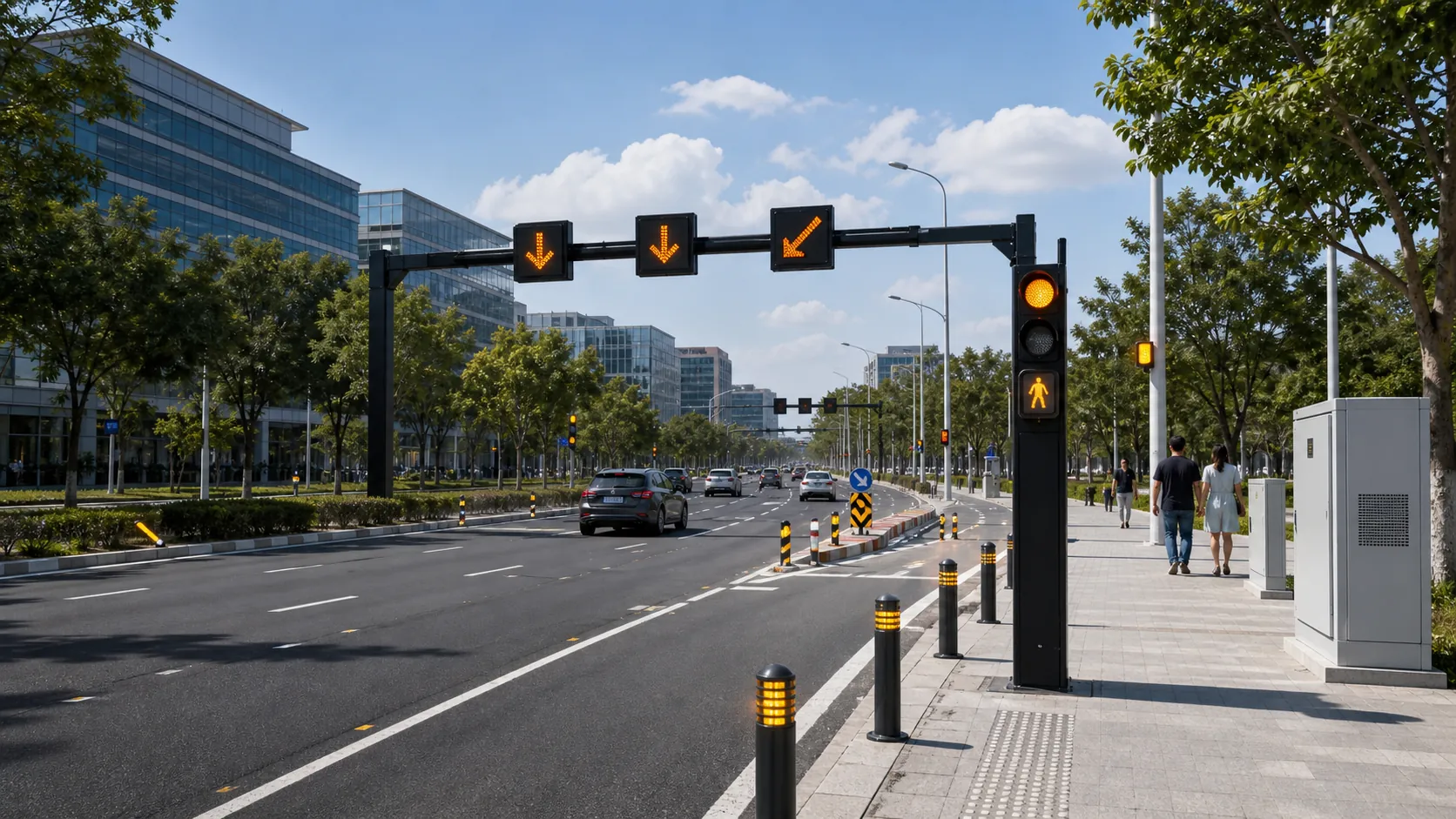
Traffic Safety Checklist
Deployment checklist for connected traffic warning signs, beacons, road guidance devices, power, visibility, monitoring and acceptance tests.
Traffic Safety
Plan connected traffic safety systems with warning beacons, LED signs, road guidance devices, sensing, control cabinets and monitoring software.
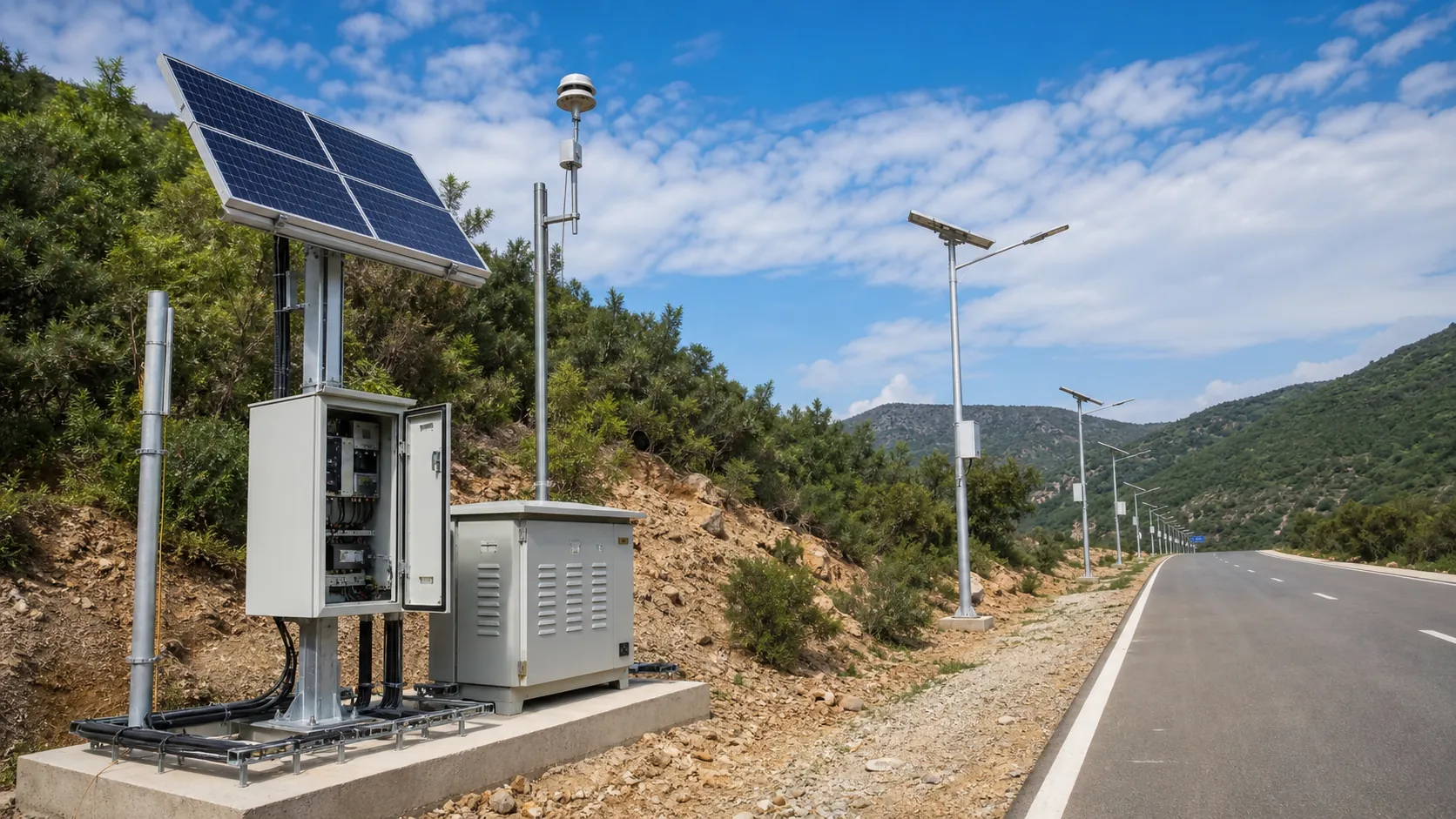
Ports and Logistics
Outdoor IoT infrastructure for ports, yards and logistics areas: lighting, guidance, safety, solar power, monitoring and maintenance visibility.
Frequently Asked Questions
Does the solar crosswalk system work fully off-grid without mains power?
Yes. The RC-XWALK-300 runs entirely on a monocrystalline solar panel and LiFePO4 battery managed by an MPPT power board. It supports 180–350+ daily activations and 3–5 days of autonomy with no sun, sized per site. A grid-tie or AC-assist option is available for very high-traffic crossings.
What flash pattern do the RRFB beacons use and is it standards-compliant?
The beacons use the FHWA/MUTCD-style alternating wig-wag plus simultaneous (WW+S) pattern proven to maximize driver attention, with flash frequency selectable from 1 to 4 Hz. The exact configuration is aligned to each destination market's road-safety regulations during the project phase.
How do pedestrians trigger the warning?
Three modes are supported and can be combined: a tactile push-button, passive PIR presence sensing, and a microwave radar detector that senses approaching pedestrians for hands-free activation. The REDCOAST.LTD controller fuses these inputs and debounces them so genuine crossings trigger the beacons while spurious events are rejected.
Do I need to trench across the road to synchronize both sides?
No. The two beacon assemblies synchronize wirelessly over a licence-free 868/915 MHz radio link, keeping their flash patterns in phase to the millisecond. This avoids cross-carriageway trenching and makes installation fast and low-impact.
Can the in-road LED studs survive heavy vehicle traffic?
Yes. The studs are cast-aluminum, fully sealed to IP68, and rated to 400 kN compression so they withstand trucks and buses. Their nighttime visibility exceeds 800 m at ≥30,000 mcd, clearly delineating the crossing path.
How is a network of crossings monitored and maintained?
Each unit reports battery state, daily activation counts, per-channel LED/stud health and fault alarms over 4G/5G, NB-IoT or LoRa to the REDCOAST.LTD web and mobile platform. Operators get predictive low-battery and lamp-failure alerts and can push OTA firmware and configuration updates remotely, so crews are dispatched only when needed.
What environments can it be deployed in?
Above-ground enclosures are IP66 and studs are IP68, with an operating range of −30 °C to +60 °C. Powder-coated or fluorocarbon-painted aluminum housings suit inland, coastal salt-fog and desert high-UV conditions, selectable per project.
Does REDCOAST.LTD design the electronics or just assemble off-the-shelf parts?
REDCOAST.LTD delivers the crossing as one hardware-plus-software solution: it designs the beacon driver, detection-input logic and solar power-management boards at the PCB level and builds the management software, opening custom PCBs per project. Flash patterns, detection sensitivity, energy budgets and connectivity are tuned to each road and climate rather than forced into a fixed SKU.